“PM Modi urged citizens, government departments, and private corporations to reduce unnecessary fuel consumption. The appeal was clearevery liter of fuel saved reduces the burden on the country’s import bill.”
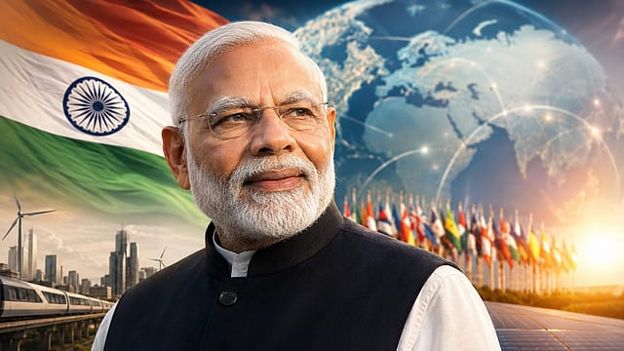 The escalating conflict involving United States, Israel and Iran sent shockwaves across global markets, exposing the deep economic vulnerabilities of oil-dependent nations. As military tensions in the Middle East intensified, the immediate fallout was felt in energy markets, shipping corridors, and global commodity chains. Crude oil prices surged, insurance costs for tankers spiked, and fears of a prolonged supply disruption began to dominate international economic discourse. For India the world’s third-largest crude oil importer, the crisis posed a serious threat. Nearly 85 percent of India’s oil needs are met through imports, making the country highly sensitive to volatility in the Gulf. Rising energy costs threatened to fuel inflation, weaken the rupee, widen the trade deficit, and place heavy pressure on foreign exchange reserves. Yet, as markets braced for deeper instability, Prime Minister Narendra Modi’s government responded with a strategy that stood apart for its measured discipline and broad-based public participation. Instead of resorting to panic-driven economic controls, the government launched a sweeping voluntary austerity drive aimed at conserving foreign exchange, reducing avoidable imports, and strengthening economic resilience. The approach transformed a looming economic shock into a test of national discipline.
Nation’s Response To Global Shock: The USA–Israel–Iran war was not merely a geopolitical event unfolding far from India’s borders. It carried immediate domestic consequences. The Middle East remains central to global oil supply, and any conflict involving key regional players creates ripple effects across the world economy. For India, the threat extended beyond crude oil. The country also relies heavily on imports of fertilizers, petrochemicals, and precious metals such as Gold. During global crises, these imports become more expensive, increasing pressure on foreign exchange reserves and contributing to imported inflation. The government recognized early that the crisis demanded proactive intervention. Rather than waiting for inflationary pressures to spiral, it adopted a strategy centered on demand management, behavioral shifts, and supply diversification. This approach reflected a deeper understanding of modern economic resilience: in times of crisis, macroeconomic stability depends not only on state action but also on collective public behavior.
Voluntary Fuel Conservation As Economic Defense: One of the most visible pillars of the government’s response was voluntary fuel conservation. Prime Minister Modi urged citizens, government departments, and private corporations to reduce unnecessary fuel consumption. The appeal was clear—every liter of fuel saved reduces the burden on the country’s import bill. The Government encouraged companies to revive work-from-home models wherever operationally feasible. Virtual meetings were promoted over physical travel. Citizens were advised to use public transport, carpool, and avoid unnecessary long-distance commuting. This strategy targeted urban centers, where commuter traffic contributes heavily to fuel demand. Metropolitan congestion is not just a transportation problem—it is also an economic one. Daily traffic translates into massive fuel consumption. Reducing even a small percentage of urban commuting can generate significant aggregate savings. What made this policy notable was its voluntary nature. There was no coercive rationing, no abrupt restrictions, and no emergency fuel caps. Instead, the government relied on persuasion and civic responsibility. This reflected confidence in citizen participation. By framing fuel conservation as an act of national contribution, the government converted everyday choices into economic instruments. A worker attending a meeting online instead of driving across the city became part of a larger macroeconomic defense.
Reducing Non-Essential Dollar Outflows: The second major component of the austerity strategy focused on reducing non-essential foreign exchange expenditure. Prime Minister Modi specifically urged citizens to delay non-essential foreign travel, destination weddings, and luxury international vacations. He also called for postponing large-scale gold purchases for at least a year. At first glance, these appeals appeared symbolic. But from a macroeconomic perspective, they were highly strategic. India is among the largest importers of Gold in the world. Gold remains deeply embedded in Indian culture, especially during weddings and festivals. Families buy it for tradition, security, and investment. Yet large-scale gold imports also create substantial dollar outflows. During periods of geopolitical instability, such outflows can weaken the rupee and strain foreign exchange reserves. Similarly, outbound tourism represents a major source of discretionary foreign currency expenditure. Every international vacation, luxury shopping trip, or destination wedding involves spending dollars abroad. The Government’s message was not anti-consumption. It was about prioritization. Essential imports and productive economic activity had to be protected. Non-essential spending that placed avoidable stress on foreign exchange reserves could wait. This distinction was critical. Instead of imposing harsh import restrictions or capital controls, the government opted for voluntary moderation. Such a strategy preserved consumer freedom while encouraging economic responsibility.
Protecting The Rupee, Trade Balance: Currency stability became a central concern during the conflict. When oil prices rise sharply, import-dependent countries require more dollars to buy the same volume of crude. This increases pressure on the domestic currency. A weaker rupee then makes imports even more expensive, worsening inflation. This cycle can become dangerous if not managed carefully. The austerity drive helped address this by targeting avoidable dollar outflows. Reduced foreign spending meant lower pressure on reserves. Lower import demand for non-essential goods improved trade balance management. The psychological impact was equally important. Financial markets closely watch government responses during external shocks. Panic measures can trigger investor anxiety. Calm, disciplined messaging signals institutional strength. The Modi Government’s communication emphasized resilience rather than fear. This helped stabilize expectations among businesses, consumers, and investors.
Energy Diversification As Strategic Shield: Perhaps the most crucial pillar of the government’s response was energy diversification. The Ministry of Petroleum and Natural Gas moved swiftly to secure alternative crude supplies and diversify procurement routes. This was not an overnight effort. It reflected years of strategic energy diplomacy. Under PM Modi, India has actively expanded energy partnerships beyond traditional suppliers. Relations with producers in the Gulf, Russia, the United States, Africa, and Latin America have broadened sourcing options. This diversification proved invaluable during the war. When supply risks emerged in one region, India could redirect procurement to alternative suppliers. This reduced dependence on any single corridor and helped ensure continuity. Retail fuel availability remained stable. Cooking gas supplies continued without major disruption. Large-scale shortages were avoided. The significance of this cannot be overstated. In crisis situations, panic buying often worsens shortages. When citizens fear scarcity, they hoard fuel and essential goods. By ensuring supply continuity, the government prevented panic from becoming a second crisis.
Managing Inflation Expectations: Inflation is not driven solely by actual shortages. Expectations also matter. If businesses expect rising costs, they increase prices preemptively. If consumers fear scarcity, they hoard. Such behavior can create self-reinforcing inflationary spirals. The Government’s communication strategy played a major role in containing these risks. PM Modi consistently emphasized discipline, resilience, and national cooperation. His messaging avoided alarmist rhetoric. This calm communication reduced panic-driven behavior. In economic crises, perception can influence outcomes as strongly as policy. By projecting confidence and control, the government helped anchor inflation expectations. This strengthened macroeconomic stability.
Strong Economic Foundations Matter: India’s response was also strengthened by improved macroeconomic fundamentals. Compared to previous global crises, India entered this conflict with stronger institutional resilience. Foreign exchange reserves remained relatively healthy. Banking sector stability had improved. Tax collections were stronger. Digital governance systems had enhanced state capacity. Structural reforms over the past decade contributed to this resilience. Programs promoting tax digitization, infrastructure expansion, manufacturing incentives, and financial inclusion improved economic flexibility. When external shocks occur, stronger fundamentals allow governments more room to maneuver.This was evident during the crisis. India did not need to resort immediately to emergency borrowing or aggressive market intervention. Its economic buffers provided breathing space. That space made disciplined policymaking possible.
“Renewable energy expansion remains critical. Strategic petroleum reserves need strengthening. Electric mobility requires greater adoption. Public transport infrastructure must improve.”
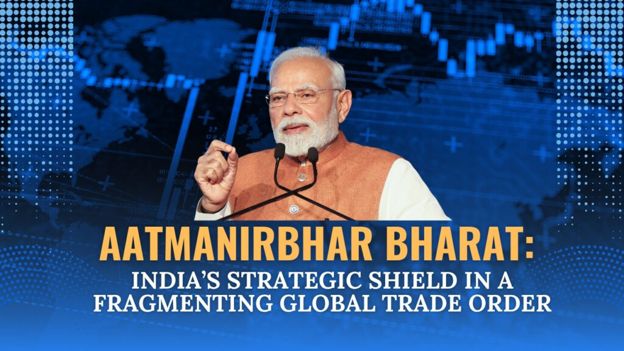
Atmanirbhar Bharat In Action: Despite optimistic messaging, significant challenges remain in achieving large-scale return. Atmanirbhar Bharat in Action. The austerity strategy also reflected a larger ideological framework central to PM Modi’s governance—self-reliance with global competitiveness. The vision of Atmanirbhar Bharat under the Government of India emphasizes reducing structural dependence on critical imports while strengthening domestic capability. The USA–Israel–Iran war underscored why this vision matters. Dependence on imported fuel, electronics, fertilizers, and industrial inputs creates strategic vulnerabilities. External conflicts can quickly disrupt domestic economic stability. Self-reliance does not mean isolation. It means building capacity to withstand external shocks. The crisis became a powerful reminder that economic sovereignty is increasingly tied to supply chain resilience.
Austerity As Participatory Patriotism: Historically, austerity has often carried negative connotations—cuts, hardship, and sacrifice imposed from above. PM Modi’s approach attempted something different.He reframed austerity as participatory patriotism.The focus shifted from deprivation to contribution. Working from home became an economic contribution. Using public transport became a patriotic act. Delaying gold purchases became support for national stability. Choosing domestic tourism over foreign vacations became both forex conservation and local economic support. This reframing mattered politically and socially. Policies succeed more easily when citizens understand their purpose and feel included in the solution. The austerity drive was designed to create that sense of shared responsibility.
Fiscal Discipline Over Populism: Another important feature of the response was the government’s commitment to fiscal discipline. Governments facing energy shocks often rely heavily on subsidies to shield consumers. While subsidies can provide immediate relief, excessive expansion strains public finances and increases fiscal deficits. India chose a more balanced path. Rather than aggressively expanding subsidies, the government focused on conserving demand, managing supply, and encouraging behavioral adjustments. This approach protected both short-term economic stability and long-term fiscal health.
Fiscal Credibility Matters: Global investors monitor how emerging markets respond to shocks. Overreaction can trigger capital outflows. Disciplined policy strengthens confidence. India’s measured response signaled institutional maturity.
Economic Security Is National Security: One of the clearest lessons from the USA–Israel–Iran war is that modern national security extends far beyond military preparedness. Oil routes, shipping lanes, supply chains, fertilizer imports, semiconductor access, and foreign exchange reserves are now critical security assets. Economic warfare and geopolitical disruption increasingly shape domestic stability. In this environment, governments must think beyond conventional defense. PM Modi’s response reflected this broader understanding. The crisis highlighted that economic resilience is itself a form of strategic defense. A nation with diversified supply chains, strong reserves, and disciplined consumption can better withstand external shocks.
Kashmir Horizon View: The long-term significance of this crisis lies in the lessons it offers. The austerity drive exposed sectors where India remains vulnerable. It also highlighted areas where reform must accelerate. Renewable energy expansion remains critical. Strategic petroleum reserves need strengthening. Electric mobility requires greater adoption. Public transport infrastructure must improve. Domestic manufacturing of key industrial inputs needs continued investment. India has already made major progress in solar energy, clean mobility, and digital infrastructure. Further investment in these sectors will reduce future exposure to external crises. The war served as both a warning and an opportunity. It reminded policymakers that resilience is built before emergencies occur. The USA–Israel–Iran war tested the resilience of global economies. For import-dependent nations, the crisis posed severe risks. For India, the challenge was especially significant due to its dependence on imported energy and strategic commodities. Yet India avoided severe economic disruption through a combination of decisive leadership, disciplined governance, diversified energy sourcing, and citizen participation. Prime Minister Narendra Modi’s austerity call was more than a temporary economic appeal. It reflected a broader philosophy: nations become strongest when governments and citizens act together during crises. That alignment became India’s greatest strength. The crisis demonstrated a defining truth of modern economics: resilience is not only built through spending or intervention—it is also built through discipline, strategic foresight, and collective responsibility. In turning restraint into resilience, the Modi government offered a model of crisis management rooted in pragmatism and participation. And in a world increasingly shaped by geopolitical volatility, that model may prove invaluable for India’s future.
(“Team Kashmir Horizon” is committed to continuous improvement and invites feedback and suggestions from readers and its followers on social media sites. Reader insights are considered vital for enhancing content quality and empowering the community. The team encourages open communication and values the thoughts and ideas of its audience, believing that such input will enable them to serve the public more effectively. The initiative aims to ensure that readers have the best possible experience with “Kashmir Horizon”. Interested individuals can reach out to us via email at [email protected].)