“The rehabilitation of terror victim families was not merely a welfare measure but a “national obligation”, asserting that the government would continue to pursue pending cases and ensure that families affected by terrorism were not left without institutional support…”
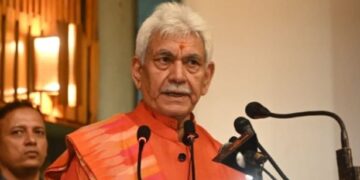
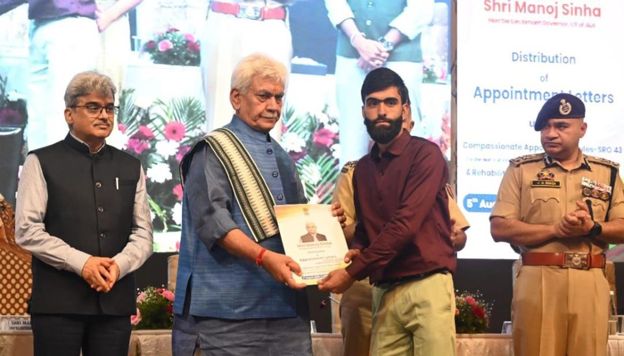
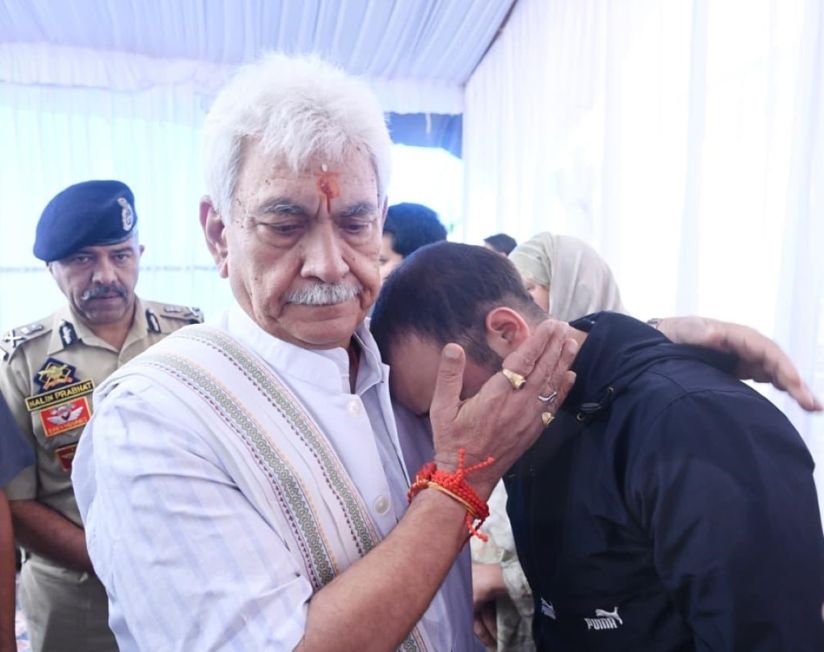 This week, Jammu and Kashmir Lieutenant Governor Manoj Sinha handed over jobs to the Next of Kins (NoKs) of 37 civilians killed in terrorism-related violence, describing the move as an effort to deliver justice, dignity and livelihood to families that have waited for decades. Thirty-three years after a Shopian civilian was killed by terrorists, his family on Wednesday received also a government appointment letter from the LG Sinha in a ceremony in Srinagar. LG Sinha said rehabilitation of terror victim families was not merely a welfare measure but a “national obligation”, asserting that the government would continue to pursue pending cases and ensure that families affected by terrorism were not left without institutional support. Among the cases highlighted by the LG was that of Wali Mohammad Wani of Shopian, who was killed by terrorists on July 16, 1993. His family received an appointment after 33 years. “Today, after 33 years, a lamp of hope and prosperity has been lit in the home of martyr civilian Wali Mohammad Wani of Shopian,” Sinha said, adding that the development represented a connection between the victim’s family, Shopian and the national mainstream. The ceremony also saw appointment letters being handed over to 32 beneficiaries under the Compassionate Appointment Rules, SRO-43, and the Rehabilitation Assistance Scheme (RAS). The government presented the initiative as part of a wider effort to resolve long-pending cases of families affected by terrorism and provide them with sustainable livelihood opportunities.
37 Terror Victim Families Receive Appointment Letters: Sinha said the appointment letters handed over to the 37 NoKs should not be viewed simply as employment documents. He said they represented remembrance of civilians killed by terrorists, recognition of the suffering endured by their families and an assurance that the state and the nation would stand with them. “My heartfelt tribute to the innocent civilians martyred by terrorists and I salute the families who, after decades of anguish and wait, now hold appointment letters that restore dignity and livelihood,” Sinha said. He acknowledged that many of the families had lived with the consequences of terrorism for decades, often after losing their primary breadwinners. “Terrorism tore apart homes and cast futures into uncertainty. No statistic can capture the anguish and suffering of the terror victim families,” he said. The Lt Governor said that cases being addressed had remained pending for years and their resolution was intended to provide both economic support and formal recognition to the families. “Their cases, delayed for decades, have finally been addressed,” Sinha said. He stressed that no government appointment could compensate for the loss of a family member. “This is not compensation for loss because no money, no job, no paper can replace a loved one. It is, however, an assurance that the nation stands beside them and we are determined to help rebuild lives and restore dignity,” he said. The Government’s focus on employment is significant because families affected by terrorism often faced not only emotional loss but also long-term economic hardship following the death of an earning member. By linking rehabilitation with livelihood, the administration has sought to make employment a key component of its response to the legacy of terrorism.
Wali Mohammad Wani’s Family Waited For 33 Years: The case of Wali Mohammad Wani emerged as one of the central points of the ceremony. Wani was killed by terrorists on July 16, 1993, during a period when civilian killings and militant violence were widespread across Jammu and Kashmir. More than three decades later, his family received an appointment letter. Sinha said the development carried significance beyond the individual family, describing it as a message that the passage of time would not erase the state’s responsibility towards victims of terrorism. “Today, after 33 years, a lamp of hope and prosperity has been lit in the home of martyr civilian Wali Mohammad Wani of Shopian,” he said. The LG said that the appointment represented a renewed sense of recognition for the family and asserted that the entire Shopian region could identify with the development. The case also illustrates the long-term impact of terrorism on families. While security operations and counter-terror measures address the immediate threat posed by militant violence, the economic and social consequences of killings can continue for generations. The administration has now sought to address some of those consequences through employment and rehabilitation assistance.
‘No Family Will Be Left Invisible’: Lt Governor Manoj Sinha said the Government was moving towards a more responsive approach to terror victim families, with an emphasis on clearing grievances and resolving pending cases. “Justice for terror victims is moving with speed and sincerity because it is a national obligation. No grievance is being ignored, no family will be left invisible,” he said. The Lt Governor acknowledged that delays in addressing such cases had added to the suffering of families. “Justice delayed has caused enough suffering. Now justice to the terror victim families is timely, humane, responsive and consistent,” he said. The administration’s message was that rehabilitation would remain an important component of its broader response to terrorism. The appointment exercise is also significant because it moves the focus from the immediate circumstances of terrorist violence to the long-term needs of survivors. While security agencies continue to target terrorist networks, the government is simultaneously seeking to provide affected families with employment, access to welfare measures and institutional recognition.
LG Links Rehabilitation With Post-2019 Transformation: Sinha used the occasion to place the rehabilitation initiative within the broader political and administrative changes that followed August 5, 2019. He said the abrogation of Article 370 marked what he described as a “constitutional correction” and a new beginning for Jammu and Kashmir. According to Sinha, the changes removed discriminatory barriers and extended equal rights to sections of the population that, he said, had remained disadvantaged under the earlier system. “The transformation we witness today in Jammu Kashmir is due to the historic changes of 5th August 2019,” he said. The Lt Governor said marginalized groups, tribals, displaced persons from PoJK and Chhamb and refugees had received legal rights including citizenship, voting rights and ownership rights over property under the Constitution of India. He argued that the expansion of rights was part of a larger framework of social justice and inclusive development. Sinha also connected these changes with the government’s approach towards terror victim families, saying their cases were among the beneficiaries of the new administrative order. “Their cases, delayed for decades, have finally been addressed,” he said. The Government has repeatedly placed rehabilitation, development and equal access to rights alongside its security strategy in Jammu and Kashmir.
“We are absolutely resolved to dismantle the terror network, to bring its perpetrators and enablers to justice and to secure for every citizen of UT a life of peace, equality, and hope,” Sinha said.”
Security Remains Central to Government’s Approach: While the event focused on victim rehabilitation, the LG also reiterated the government’s determination to dismantle terrorist networks and pursue their perpetrators and support structures. “We are absolutely resolved to dismantle the terror network, to bring its perpetrators and enablers to justice and to secure for every citizen of UT a life of peace, equality, and hope,” Sinha said. He claimed that after August 5, 2019, the administration had dismantled the terror ecosystem to a large extent, strengthened law and order and created conditions for greater economic and social opportunity. Sinha said terrorism had sought to fracture society, create fear and disrupt the aspirations of ordinary citizens. He said the government was determined to ensure that young people had alternatives through education, employment and economic opportunities. “The people of Jammu Kashmir have chosen peace over violence, education over indoctrination, jobs over dependency, and dignity over despair,” he said. The Lt Governor’s remarks underlined the administration’s position that long-term peace requires both effective security measures and opportunities for citizens, particularly the younger generation.
Strong Message To Terror Handlers: Lt Governor also issued a warning to terrorist handlers operating from across the border. “Terrorist handlers from across the border may conspire in darkness, but the light and long arms of justice will find them,” he said. He described the rehabilitation of terror victim families as part of a larger message that terrorism could not permanently suppress the aspirations of the people. “This day also sends a message to the enemies of peace that terrorism cannot defeat a determined nation,” Sinha said. The LG said the government’s resolve to pursue those responsible for violence would continue, while reiterating that its larger objective was to provide citizens with a life based on peace, equality and opportunity. He also warned individuals attempting to disrupt the system or exploit instability for personal interests, saying those with “corrupt intentions” and those trying to influence the system would face consequences.
“Peace Must Be Backed by Jobs, Opportunity”: The Lt Governor placed employment and education at the centre of the administration’s approach towards sustaining peace. “A society that trusts its institutions becomes resilient against fear. A family that receives services without discrimination becomes a stakeholder in peace and progress. A youth empowered with education and employment is empowered to fight separatism and terrorism,” Sinha said. The argument reflects the government’s broader emphasis on economic opportunity as an important element of stability. The appointment of terror victim NoKs is one example of this approach, with the government providing employment to families that suffered direct losses during the period of terrorism. Lt Governor Sinha said Jammu and Kashmir’s future would be shaped by its youth, workers, farmers, teachers and women, as well as all those committed to peace and development. “Jammu Kashmir’s future will be written by its youth, its workers, its farmers, its teachers, its women and all who believe in peace and progress,” he said.
Investment Rises To ₹ 5,824 Cr: The Lt Governor also highlighted economic indicators and infrastructure development to underline what he described as Jammu and Kashmir’s changing development landscape. According to Sinha, investment in Jammu and Kashmir during the financial year 2025-26 stood at Rs 5,824 crore. He said this represented 13 times the average investment recorded during the period before 2021. The figure was cited by the LG as evidence of increased economic activity and investor confidence in the Union Territory. Sinha said industrial growth in Jammu and Kashmir following the abrogation of Article 370 had been “unprecedented”. The Government has been seeking to attract investment into manufacturing, services, tourism, agriculture and other sectors, with employment generation remaining a major objective.The government has also positioned improved connectivity and infrastructure as important drivers of this economic expansion.
Rail, Airports, Power Projects Highlighted: Lt Governor Sinha highlighted the expansion of Jammu and Srinagar airports and ongoing efforts by the Government of India to strengthen connectivity. He also referred to the long-awaited railway connectivity between Kashmir and the rest of the country, describing the link as the fulfilment of a decades-old aspiration. The expansion of rail connectivity is expected to have wider implications for tourism, trade, transportation and movement of people. For Jammu and Kashmir, improved connectivity has also been presented as an important component of economic integration, allowing local producers and businesses better access to markets outside the region. The Lt Governor further said Prime Minister Narendra Modi was committed to doubling hydroelectric power generation in Jammu and Kashmir by 2028. The Union Territory possesses substantial hydropower potential, and greater generation capacity is being projected as an important component of its future economic growth. Increased power availability can support industrial activity, infrastructure and household requirements while also creating opportunities for investment in energy-intensive sectors.
Kashmir Horizon View: The Government’s broader approach, as articulated by Sinha, rests on the idea that security gains must be accompanied by visible improvements in people’s lives. The rehabilitation of terror victim families is therefore being presented alongside infrastructure expansion, industrial investment, improved connectivity, education and employment opportunities. Sinha said the government was working to ensure that development was not restricted to major urban centres or a limited section of society. “By ending the system that bred discrimination and terrorism, the Hon’ble Prime Minister Shri Narendra Modi made it clear that in Jammu Kashmir, lamps of prosperity would not burn only in a select few palaces but also in the huts of the poor,” he said. He said farmers and artisans were creating new opportunities, while universities, colleges, research institutions and incubation centres were preparing young people for global competition. The Government’s emphasis on these sectors reflects an effort to connect development with livelihood creation and social stability. The ceremony was not limited to terror victim families. Appointment letters were also distributed to 32 beneficiaries under the Compassionate Appointment Rules SRO-43 and the Rehabilitation Assistance Scheme. Such appointments are intended to provide employment support to families facing hardship following the death of an earning member or other circumstances covered under the relevant provisions. The inclusion of these beneficiaries alongside terror victim families reflected the government’s broader focus on compassionate and rehabilitation-based employment assistance. For the administration, such measures form part of a social-security framework aimed at helping vulnerable families regain economic stability.
(“Team Kashmir Horizon” is committed to continuous improvement and invites feedback and suggestions from readers and its followers on social media sites. Reader insights are considered vital for enhancing content quality and empowering the community. The team encourages open communication and values the thoughts and ideas of its audience, believing that such input will enable them to serve the public more effectively. The initiative aims to ensure that readers have the best possible experience with “Kashmir Horizon”. Interested individuals can reach out to us via email at [email protected].)