“Modi government’s approach has been the emphasis on inclusive development. The administration has consistently argued that economic growth must be accompanied by measures that directly improve the lives of ordinary citizens, particularly those belonging to vulnerable sections of society.”
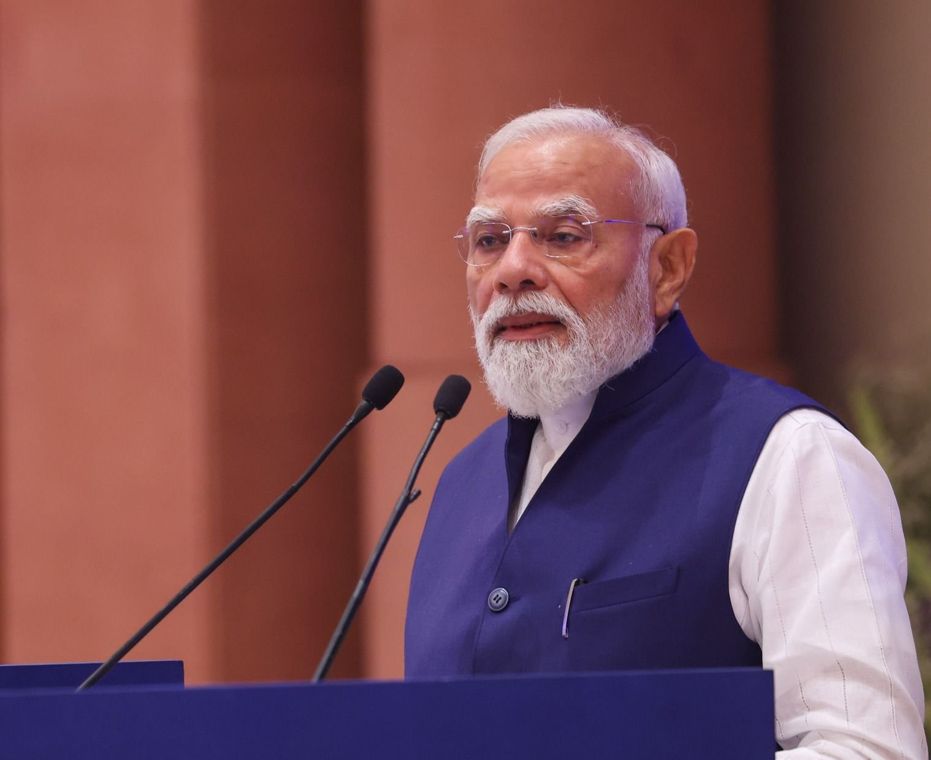
This week, Prime Minister Narendra Modi completed twelve consecutive years in office, becoming India’s longest continuously serving elected Prime Minister and surpassing the record set by Jawaharlal Nehru. Since taking oath on May 26, 2014, Modi has led a period of governance marked by ambitious welfare programmes, large-scale infrastructure development, digital transformation, economic reforms and a renewed focus on national security and global engagement. The twelve-year journey of the National Democratic Alliance (NDA) government has been shaped by the guiding principles of “SabkaSaath, Sabka Vikas, Sabka Vishwas and SabkaPrayas.” While political opinions may differ on the government’s policies and outcomes, there is little doubt that the scale and scope of interventions undertaken during this period have significantly influenced India’s developmental trajectory. From providing houses to the poor and free food grains to millions of families, to expanding healthcare coverage, promoting digital payments, constructing highways and strengthening India’s international standing, the Modi government has sought to redefine governance through a combination of welfare delivery and structural reforms. As the government completes twelve years in office, an assessment of its achievements provides insights into how India’s development model has evolved during this period.
A Governance Model Centered On Inclusion: One of the central themes of the Modi government’s approach has been the emphasis on inclusive development. The administration has consistently argued that economic growth must be accompanied by measures that directly improve the lives of ordinary citizens, particularly those belonging to vulnerable sections of society. This philosophy has been reflected in a series of flagship programmes targeting the poor, women, farmers, youth and middle-class families. Unlike traditional welfare approaches that often focused on subsidies alone, the government has attempted to combine welfare assistance with empowerment, financial inclusion and improved access to opportunities. The objective has been to ensure that government support reaches beneficiaries directly while simultaneously creating pathways for long-term socio-economic advancement. A key component of this strategy has been the use of technology to improve service delivery and reduce leakages. Through the integration of bank accounts, Aadhaar identification and mobile connectivity, the government established a framework for direct benefit transfers that has transformed the delivery of welfare schemes.
Welfare Expansion On An Unprecedented Scale: Perhaps the most visible aspect of the Modi government’s twelve-year tenure has been the expansion of welfare programmes. The government has implemented multiple schemes aimed at addressing basic needs such as housing, food security, healthcare, sanitation and clean cooking fuel. Collectively, these initiatives have sought to improve living standards while strengthening social protection for vulnerable households. Housing has emerged as a major focus area. Under the Pradhan Mantri Awas Yojana-Gramin, more than four crore houses have been sanctioned for economically weaker families in rural areas. The programme seeks not only to provide shelter but also to enhance dignity, security and quality of life. For millions of rural families, a permanent house represents a transformative asset. Beyond improving living conditions, housing contributes to better health outcomes, social stability and economic resilience. The programme has also generated employment opportunities in construction and related sectors, creating additional economic benefits. Similarly, food security has remained at the centre of the government’s welfare agenda. Through the Pradhan Mantri Garib Kalyan Anna Yojana, free food grains are being provided to more than 81 crore beneficiaries. The initiative gained particular prominence during the COVID-19 pandemic when economic disruptions threatened the livelihoods of millions. By ensuring access to food, the programme helped shield vulnerable families from hunger and financial distress. For many households, the availability of free food grains has reduced monthly expenditure burdens and improved household food security.
Healthcare As A Tool For Social Protection : Healthcare has emerged as another major pillar of welfare governance during the Modi era. Medical expenses often push low-income families into debt and poverty. Recognizing this challenge, the government launched the Ayushman Bharat-Pradhan Mantri Jan Arogya Yojana (AB-PMJAY), one of the world’s largest publicly funded health insurance programmes. The scheme provides annual health coverage of up to ₹5 lakh per family for secondary and tertiary healthcare services. More than ten crore beneficiaries have reportedly availed cashless treatment under the programme. For many families, access to healthcare has become significantly easier as expensive medical procedures and hospitalizations are covered under the scheme. The programme has also expanded access to healthcare facilities in regions where affordability previously posed a major barrier. Complementing Ayushman Bharat is the Pradhan Mantri Jan Aushadhi initiative, which promotes the availability of affordable generic medicines. By reducing medicine costs, the programme seeks to lower healthcare expenses and improve access to treatment.
Together, these initiatives represent a shift toward strengthening healthcare as an essential component of social security.
Women’s Empowerment Through Welfare: Women’s welfare and empowerment have been central themes of government policy over the past twelve years. The Pradhan Mantri Ujjwala Yojana stands out as one of the most significant interventions in this regard. More than 10.55 crore women have received free LPG gas connections under the scheme. Before the programme’s launch, millions of households relied on firewood, coal and other traditional fuels for cooking. These fuels generated harmful indoor smoke, contributing to respiratory diseases and other health problems. The shift to LPG has improved household health outcomes while reducing the time and effort required to collect fuel. The programme has also enhanced convenience and safety for women. Importantly, the initiative has carried symbolic significance by placing women at the centre of household welfare interventions. By providing LPG connections in their names, the government sought to strengthen women’s agency and participation in household decision-making. Sanitation initiatives have similarly focused on improving women’s dignity and safety through the construction of household toilets and expansion of sanitation coverage.
Financial Inclusion, Digital Governance: One of the defining features of the Modi government’s governance model has been its emphasis on financial inclusion and digital transformation. The Pradhan Mantri Jan Dhan Yojana enabled millions of previously unbanked citizens to open bank accounts, laying the foundation for direct benefit transfers and financial empowerment. These accounts became critical instruments for delivering welfare benefits directly to beneficiaries without intermediaries. The digital revolution accelerated further through the rapid expansion of digital payments. India’s Unified Payments Interface (UPI) has transformed the country’s financial landscape, making digital transactions accessible to individuals, businesses and small entrepreneurs. Today, India is among the world’s leading digital payment economies. The growth of digital payments has enhanced transparency, reduced transaction costs and supported the formalization of economic activity. Similarly, direct benefit transfers have enabled the government to transfer subsidies and welfare benefits directly into beneficiaries’ bank accounts, reducing leakages and improving efficiency. These initiatives illustrate how technology has become an integral part of governance and service delivery.
Economic Reforms, Structural Changes: Beyond welfare programmes, the Modi government has pursued significant economic reforms aimed at modernizing India’s economy. Among the most consequential was the implementation of the Goods and Services Tax (GST), which replaced multiple indirect taxes with a unified national tax regime. The GST sought to simplify taxation, improve compliance and facilitate the creation of a common national market. While its implementation faced initial challenges, it represented one of the most significant tax reforms in independent India’s history. The government has also focused on improving ease of doing business through regulatory reforms, digitization and simplification of procedures. Efforts to attract investment, promote manufacturing and strengthen entrepreneurship have formed important components of the broader economic strategy. The emphasis on digital governance has further supported economic modernization by reducing paperwork, increasing transparency and improving access to government services.
Infra A Growth Multiplier: Infrastructure development has been another defining characteristic of the Modi government’s tenure. Over the last twelve years, India has witnessed unprecedented investments in roads, highways, railways, airports, ports, tunnels and urban infrastructure. The government has argued that infrastructure serves as a critical growth multiplier by improving connectivity, reducing logistics costs and generating employment. Major highway projects have expanded transportation networks across the country, while railway modernization initiatives have sought to improve efficiency and passenger experience. Large-scale projects such as expressways, border roads, tunnels and multimodal logistics corridors have become symbols of the government’s infrastructure push. Infrastructure development has also played an important role in strengthening connectivity in remote and border regions, supporting both economic development and national security objectives. The emphasis on connectivity reflects the government’s broader belief that infrastructure is fundamental to economic growth and social progress.
National Security, Foreign Policy: The Modi government has consistently highlighted national security as a key governance priority. Measures aimed at strengthening border infrastructure, modernizing security forces and enhancing counter-terrorism capabilities have formed important components of the government’s agenda. The administration has also intensified efforts against Left Wing Extremism and sought to improve coordination among security agencies. On the foreign policy front, India has pursued a more visible and assertive global role. Over the past decade, India has expanded strategic partnerships, strengthened engagement with major powers and increased participation in multilateral forums. The country’s growing influence in global discussions on trade, climate change, technology and geopolitics has become a notable feature of this period.
Supporters argue that India’s international profile has risen significantly under Modi’s leadership, while critics continue to debate the long-term implications of various foreign policy decisions.
Heritage, Culture, Environment: The government’s development agenda has also extended beyond economics and welfare. Significant attention has been devoted to heritage conservation, cultural promotion and environmental protection. Projects aimed at preserving historical sites, revitalizing pilgrimage destinations and promoting cultural tourism have been undertaken across the country. Environmental initiatives have focused on renewable energy, wildlife conservation and sustainable development. The Government has emphasized the importance of balancing economic growth with environmental responsibility, although debates continue regarding the effectiveness of specific policies.
“Medical expenses often push low-income families into debt and poverty. Recognizing this challenge, the government launched the Ayushman Bharat-Pradhan Mantri Jan Arogya Yojana (AB-PMJAY), one of the world’s largest publicly funded health insurance programmes.”
Poverty Reduction, Social Protection: One of the Government’s most frequently cited achievements is the expansion of social protection coverage. According to official estimates, India’s social protection coverage increased from approximately 19 percent in 2015 to more than 64 percent in 2025, covering nearly 94 crore citizens under various welfare programmes. The government also points to estimates suggesting that around 25 crore people have moved out of poverty over the past decade. While economists continue to debate measurement methodologies and the precise impact of individual programmes, there is broad recognition that welfare expansion and improved service delivery have contributed to improving living standards for millions of Indians. The growth of social protection mechanisms reflects a governance approach that seeks to combine economic growth with targeted support for vulnerable populations.
Looking Ahead: As the Modi Government completes twelve years in office, the focus increasingly shifts toward the future. India’s aspirations of becoming a developed nation by 2047 will require continued progress in employment generation, skill development, healthcare, education and industrial growth. While welfare programmes have helped address immediate needs, long-term development will depend on creating sustainable opportunities that enable citizens to move beyond dependence on state support. The next phase of governance may therefore require balancing welfare expansion with investments in productivity, innovation and human capital.
Kashmir Horizon View: The last twelve years under Prime Minister Narendra Modi have witnessed a significant transformation in the scale and nature of governance in India. From welfare expansion and social security initiatives to economic reforms, digital transformation, infrastructure development and national security measures, the government has pursued an ambitious agenda aimed at reshaping the country’s developmental landscape. Programmes targeting housing, food security, healthcare, sanitation, financial inclusion and women’s empowerment have touched millions of lives, while initiatives such as GST, digital payments and direct benefit transfers have altered the functioning of the economy and public administration. The Modi government’s supporters view this period as one of unprecedented welfare outreach, infrastructure creation and global engagement. Critics continue to debate the effectiveness and outcomes of specific policies. Yet, irrespective of political perspectives, the scale of change undertaken during these twelve years remains one of the most defining features of contemporary India. As Prime Minister Modi enters his thirteenth year in office, the legacy of the past twelve years will ultimately be judged not only by schemes launched or projects completed, but by their long-term impact on poverty reduction, economic opportunity, social mobility and the quality of life of more than 1.4 billion Indians.
(“Team Kashmir Horizon” is committed to continuous improvement and invites feedback and suggestions from readers and its followers on social media sites. Reader insights are considered vital for enhancing content quality and empowering the community. The team encourages open communication and values the thoughts and ideas of its audience, believing that such input will enable them to serve the public more effectively. The initiative aims to ensure that readers have the best possible experience with “Kashmir Horizon”. Interested individuals can reach out to us via email at [email protected].)