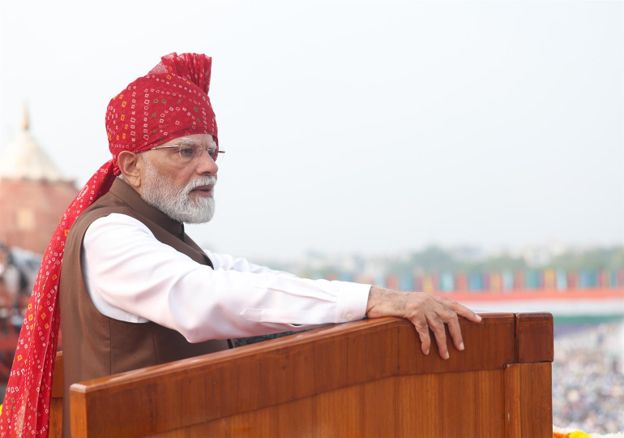
“At the heart of the address was the idea that the transformation of the last decade-plus should now provide the foundation for the next phase of development, with young Indians, women, farmers, entrepreneurs, researchers and innovators expected to play a central role in building a “ViksitBharat”….”
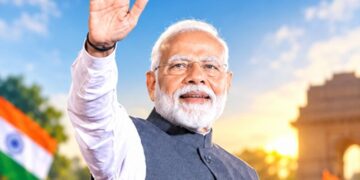
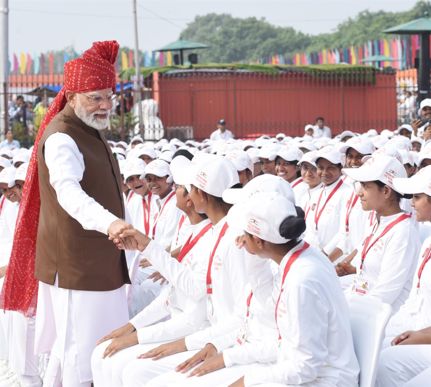 Prime Minister Narendra Modi on Saturday used his Independence Day address to present a sweeping account of India’s transformation over the past 12 years, placing manufacturing, digital infrastructure, energy security, technological innovation, social welfare and youth empowerment at the centre of the country’s journey towards a developed India. In an address that combined economic achievements with a roadmap for emerging sectors, PM Modi highlighted what he described as a dramatic expansion in India’s productive capacity, digital ecosystem and delivery of basic amenities. From defence production and electronics to semiconductor manufacturing, nuclear technology, artificial intelligence and space, the Prime Minister said India was steadily moving from dependence towards self-reliance. The address also placed significant emphasis on the ordinary citizen, with PM Modi citing the expansion of tap-water connections, LPG access, toilets, housing and social security as indicators of a faster delivery of welfare and basic services. At the heart of the address was the idea that the transformation of the last decade-plus should now provide the foundation for the next phase of development, with young Indians, women, farmers, entrepreneurs, researchers and innovators expected to play a central role in building a “Viksit Bharat”.
Manufacturing Emerges As A Pillar Of Self-Reliance: Highlighting the scale of change in the manufacturing sector, PM Modi said India’s defence production had increased nearly four times over the last 12 years, while production in Khadi and Village Industries had grown nearly five times. Electronics manufacturing, he said, had increased nearly seven times, while modern railway coach production had expanded 21 times. Mobile phone production, one of the most visible symbols of India’s manufacturing ambitions, had increased 35 times. The figures were presented as evidence of a broader shift in India’s economic model, with domestic production and self-reliance emerging as key policy priorities. The Prime Minister’s emphasis on manufacturing comes at a time when India is seeking to strengthen its position in global supply chains and attract investment into sectors ranging from electronics and defence to automobiles, renewable energy and advanced technology.
Digital India, Innovation Reshape The Economy: The Prime Minister also highlighted the expansion of India’s digital ecosystem, saying internet consumers had increased nearly four times during the period. Digital transactions, he said, had increased around 100 times, while patent grants had risen four times. The expansion of digital infrastructure has become one of the most visible aspects of India’s economic transformation, connecting consumers, businesses, government services and financial institutions through increasingly accessible digital platforms. PM Modi presented this growth as a foundation for innovation and entrepreneurship, particularly among young Indians. The increase in patent grants, he said, reflected the emergence of a stronger culture of research, innovation and intellectual property creation.
Basic Amenities Delivered At A Faster Pace: Beyond manufacturing and technology, PM Modi placed substantial emphasis on the expansion of basic amenities. He said tap-water connections were now being provided at an annual pace nearly 15 times faster than before, while LPG connections were being provided at nearly six times the earlier annual pace. The pace of toilet construction for poor households, he said, had increased nearly four times, while the provision of pucca houses had accelerated nearly three times. The Prime Minister also referred to the abolition of hundreds of obsolete laws and the expansion of modern public transport, including metro systems in several cities. The broader argument was that development must be measured not only through macroeconomic indicators but also by the speed with which essential services reach households.
Semiconductors Become Central To India’s Technology Ambition: One of the strongest themes in the address was India’s attempt to establish a domestic semiconductor ecosystem. Prime Minister Modi said India had earlier lacked a major semiconductor manufacturing plant, but the country was now building a complete semiconductor ecosystem. Three semiconductor plants, he said, had been initiated, while India had also begun exporting chips. Semiconductors are increasingly central to modern economies, powering everything from mobile phones and automobiles to artificial intelligence systems, defence platforms and data centres.
Critical Minerals Linked To Strategic Self-Reliance: The Prime Minister also highlighted the National Critical Mineral Mission and the proposed Critical Mineral Corridor announced in the Budget. He said India had signed agreements with several countries to secure supplies of critical minerals. Critical minerals have become increasingly important because they are essential for electric vehicles, renewable energy systems, batteries, electronics, defence technologies and advanced manufacturing. Prime Minister Modi linked access to these resources with India’s larger ambition of technological and industrial self-reliance.
Energy Security Seen As Essential For Viksit Bharat: Energy security emerged as another major pillar of the Prime Minister’s vision. Prime Minister Modi pointed out that emerging technologies such as semiconductors, artificial intelligence and data centres require enormous quantities of electricity. He highlighted the SHANTI Act as a major reform in the nuclear energy sector and referred to India crossing an important milestone in Fast Breeder Nuclear Technology. Prime Minister said that technology could eventually play a major role in making India self-reliant in nuclear fuel. The emphasis on nuclear energy was part of a wider argument that a developed economy requires a reliable, diversified and secure energy system capable of supporting industrial expansion.
Offshore Exploration Moves From ‘No-Go’ to ‘Go Ahead’: The Prime Minister also highlighted changes in India’s approach to offshore oil and gas exploration. He said nearly 99 per cent of India’s offshore area had earlier been classified as a “No-Go Area”, but the approach had now shifted towards opening previously restricted areas for exploration. Prime Minister Modi said this could create possibilities for discovering new oil and gas reserves. The move, he suggested, was part of a broader strategy to strengthen domestic energy security while India simultaneously expands renewable and alternative energy sources.
India’s Resilience Tested By Global Crises: Prime Minister Modi said the capabilities built over the past decade were tested by a series of global disruptions, including the COVID-19 pandemic, the Russia-Ukraine war and conflicts in West Asia. The reference to these crises underlined the importance of domestic capacity in food, energy, manufacturing, technology and essential supplies. Prime Minister argued that India’s growing capabilities had helped the country navigate a rapidly changing global environment while continuing to pursue its development agenda.
Farmers Protected From Global Fertiliser Price Shocks: The Prime Minister also highlighted fertiliser prices as an area where government support had insulated Indian farmers from international price volatility. He said urea costs around ₹3,000 per bag internationally but is made available to Indian farmers for less than ₹300. DAP, which costs more than ₹5,000 internationally, is available to farmers in India for ₹1,350, he said. The figures were cited as an example of government intervention aimed at protecting agricultural incomes and maintaining access to essential farm inputs.
Trade Agreements Open New Export Opportunities: India’s expanding trade relationships were another focus of the address. PM Modi said India had entered into free trade agreements with around 40 countries since 2014, opening new opportunities for Indian producers. He identified agriculture, fisheries, MSMEs and textiles among sectors that could benefit from greater access to international markets. The Prime Minister’s emphasis on exports reflected the government’s ambition to integrate Indian businesses more deeply into global supply chains while creating new markets for domestic producers.
“PM Modi said initiatives such as Startup India had created new pathways for entrepreneurship and innovation, while a ₹1 lakh crore research fund would provide new opportunities for young researchers……”
Youth Placed at the Centre of Viksit Bharat: The Prime Minister repeatedly returned to the role of young Indians in shaping the country’s future. He said initiatives such as Startup India had created new pathways for entrepreneurship and innovation, while a ₹1 lakh crore research fund would provide new opportunities for young researchers. Digital India, he said, had empowered young people through affordable data, while Skill India was building a national skills ecosystem. The opening of the space sector to private participation and the National Drone Policy were cited as examples of new fields where young entrepreneurs and innovators could participate. Khelo India, meanwhile, was highlighted as part of efforts to strengthen the country’s sporting ecosystem.
Education, Research Expansion: The Prime Minister also highlighted changes in higher education and school-level innovation. He pointed to the National Education Policy 2020, introduced after a gap of 35 years, as a major reform aimed at reshaping India’s education system. According to the figures cited by PM Modi, India had fewer than 350 universities during the 2004–2014 period, while around 650 new universities were added in the following decade. Medical colleges, he said, had increased from fewer than 400 before 2014 to around 850 today. More than 10,000 Atal Tinkering Labs have also been established in schools, he said, with the objective of developing a culture of technology, creativity and innovation among students from an early age.
Startups, Space, AI Open New Frontiers: India’s startup ecosystem was presented as another major symbol of transformation. PM Modi said the country now had around 2.5 lakh registered startups and highlighted the achievement of an Indian space startup launching a Made-in-India rocket. Artificial intelligence, he said, was creating new opportunities for young Indians. India’s hosting of the AI Impact Summit was cited as an indication of the country’s growing role in global conversations surrounding artificial intelligence. The Prime Minister’s emphasis on AI also reflected the changing nature of the global economy, where access to computing, data, chips, energy and skilled human capital is increasingly shaping national competitiveness.
Defence Production, Exports Mark Strategic Shift: Defence manufacturing was another major theme of the address. Prime Minister Modi said India’s defence exports had increased more than 50 times and that Indian defence equipment was now being exported to around 100 countries. The growth in exports was presented as evidence that India was moving beyond being a major importer of defence equipment towards becoming a producer and exporter. This shift also forms part of the larger emphasis on strategic autonomy and domestic manufacturing capacity.
Women-Led Development Gains Momentum: The Prime Minister also placed women at the centre of his development narrative, highlighting the Lakhpati Didi initiative. He said the target of creating three crore LakhpatiDidis had been achieved. Women from general, Dalit, backward and tribal families, he said, had become Lakhpati Didis. The emphasis on women-led development reflects the government’s broader argument that economic growth must involve women as entrepreneurs, workers, producers and decision-makers.
Social Security Coverage Expands: PM Modi also highlighted the expansion of social security coverage over the past decade. Before 2014, around 25 crore people were covered by social security schemes, he said. Today, around 100 crore Indians are covered by one or another social security programme. The expansion was presented as an important component of inclusive development, particularly for vulnerable and economically weaker sections.
Ayushman Bharat Offers Financial Protection: Healthcare was another major component of the Prime Minister’s account of welfare expansion. Prime Minister Modi said beneficiary families under Ayushman Bharat had avoided an estimated ₹2 lakh crore in medical expenditure. The figure was cited as an indication of the financial protection provided by the scheme to families facing significant healthcare costs.
Kashmir Horizon View: The Prime Minister’s Independence Day message ultimately placed young Indians at the centre of the next stage of the country’s development. The challenge ahead, as reflected in the address, is to convert the expansion of infrastructure and capabilities into sustained employment, innovation, productivity and improved living standards. The transformation of the past 12 years, PM Modi argued, has created the foundations for that next phase. India now has a larger digital economy, expanded manufacturing capabilities, a growing startup ecosystem, greater renewable energy capacity, a rapidly expanding education system and a broader social security network. The emerging challenge is to ensure that these capabilities translate into opportunities across regions and sections of society. The Prime Minister’s vision of Viksit Bharat therefore extends beyond economic growth. It combines manufacturing with innovation, infrastructure with social security, energy with technology and national self-reliance with global engagement. As India marks its Independence Day, PM Modi’s address seeks to frame the country’s recent journey not simply as a record of government schemes and numerical expansion but as a larger transition in national confidence. From producing more mobile phones and railway coaches to developing semiconductors, hydrogen trains, rockets, electric vehicles and advanced defence systems, the Prime Minister argued that India is increasingly capable of designing, building and scaling technologies at home. His message was that the next chapter must build upon these foundations. With youth, women, farmers, entrepreneurs, researchers and innovators positioned at the centre of the development agenda, the road towards Viksit Bharat is being presented as a national project whose success will depend on converting India’s growing capabilities into broad-based opportunity.
(“Team Kashmir Horizon” is committed to continuous improvement and invites feedback and suggestions from readers and its followers on social media sites. Reader insights are considered vital for enhancing content quality and empowering the community. The team encourages open communication and values the thoughts and ideas of its audience, believing that such input will enable them to serve the public more effectively. The initiative aims to ensure that readers have the best possible experience with “Kashmir Horizon”. Interested individuals can reach out to us via email at [email protected].)