

A few days ago, I had the opportunity to engage in a long and thought-provoking telephone conversation with a very dear friend residing in Kuala Lumpur. Although he is a businessman by profession, what distinguishes him is not merely his success in commerce but the depth of his intellectual engagement with contemporary issues. He combines practical experience with serious reading, observation, and analytical reflection. Every discussion with him opens new avenues of thought and often leaves me contemplating important questions long after the conversation has ended.
On this occasion, our conversation lasted for almost an hour. Having read some of my recent social media posts on Zakat, he raised a seemingly simple but profoundly significant question: “How do you define poverty?” The question itself was important, but what followed was even more intriguing. He referred to the famous English translator of the Qur’an, Marmaduke Pickthall, who translated Zakat as “the poor due.” My friend observed that this translation captures an essential dimension of the Islamic understanding of wealth. Zakat is not merely charity, generosity, or voluntary benevolence. It is the right of the poor embedded within the wealth of the rich. Consequently, withholding Zakat is not merely neglecting a religious obligation; it is, in a moral sense, depriving the poor of a right that God has already assigned to them.
His observation immediately brought to mind several Qur’anic passages that challenge the notion of absolute ownership. The Qur’an repeatedly reminds believers that wealth is ultimately a trust from God and that others have legitimate claims upon it. Describing the righteous, the Qur’an states:
“And in their wealth there was a recognized right for the beggar and the deprived” (Qur’an 51:19). Similarly, another verse declares: “And in their wealth there was a known right for the one who asks and the one who is deprived” (Qur’an 70:24–25). These verses establish a radically different conception of property from that which dominates much of the modern world. Wealth in Islam is not an unrestricted personal possession. It is an amanah—a trust—and with trust comes responsibility.
The affluent are not merely encouraged to assist the poor; they are required to recognize their rights. This perspective becomes particularly relevant in an age characterized by unprecedented economic inequality. While technological advancement and globalization have generated immense wealth, they have also widened the gap between rich and poor. Entire societies are structured around the accumulation of capital, often with little regard for social justice or moral responsibility. Within such a context, Zakat stands as one of Islam’s most revolutionary institutions. It reminds humanity that wealth is not an end in itself but a means of fulfilling higher ethical and spiritual purposes.
As our conversation continued, my friend made another observation that lingered in my mind long after we had ended the call. He remarked that for many people today, banks have effectively become their religion, and insurance their form of worship. He did not mean this literally, of course. Rather, he was pointing to a profound psychological reality. Modern individuals often place greater trust in financial institutions than in God. Their sense of security depends less upon divine providence and more upon savings accounts, investment portfolios, insurance policies, and market forecasts. The statement may appear exaggerated at first glance, yet it contains a disturbing truth. The modern economic order has subtly reshaped human consciousness. Financial security has become the supreme objective of life.
Success is increasingly measured not by character, wisdom, piety, or service to humanity but by income, assets, purchasing power, and social status. The question is not whether wealth is useful. Islam never condemns wealth itself. Indeed, many of the Prophet’s Companions were successful merchants and landowners. Wealth becomes problematic only when it ceases to be a means and becomes an end; when it occupies a place in the heart that belongs to God alone. During our discussion, I was reminded of the Prophetic traditions concerning the trials associated with the coming of the Dajjal. Among the characteristics attributed to this great deception is the manipulation of material resources and economic power. While it would be simplistic and irresponsible to identify any contemporary institution directly with the Dajjal, the traditions do alert us to the possibility that economic dependence can become a powerful instrument of spiritual corruption. Never before in human history have financial systems exercised such influence over people’s hopes, fears, decisions, and relationships. Individuals often evaluate themselves and others according to economic criteria.
Nations are judged by their GDP.
Educational institutions emphasize employability above wisdom. Even moral choices are frequently reduced to financial calculations. Against this backdrop, I found myself reflecting on a fundamental question: What constitutes genuine Tawhid in our age? When the Qur’an speaks of Tawhid, it does not present it merely as an abstract theological doctrine. Tawhid is not simply the belief that there is one God. Rather, it is a comprehensive orientation of the heart. It requires that our fears, hopes, loves, loyalties, and dependencies ultimately converge upon Allah. This is why the Qur’an repeatedly links faith with Rizq and Tawakkul. God declares: “There is no creature on earth but that its provision rests upon Allah” (Qur’an 11:6). Elsewhere, He promises: “And whoever fears Allah, He will make for him a way out and provide for him from where he does not expect” (Qur’an 65:2–3).These verses do not call upon believers to abandon effort or reject worldly means. Rather, they seek to liberate the heart from servitude to those means. Islam does not teach passivity. It teaches freedom from dependence upon anything other than God.
“True faith in Al-Razzaq (the Provider) is proven not by mere claim, but through practical action in an era obsessed with material certainty. By maintaining a detached relationship with wealth (Rizq), recognizing it as a divine trust through Zakat (charity), and placing absolute reliance (Tawakkul) in God rather than financial institutions, a believer demonstrates a living faith. This alignment of wealth and trust serves as the modern litmus test and practical examination of Tawhid (monotheism), separating nominal belief from true conviction.”
The Prophet Muhammad (SAW) offers the perfect example of this balance. During the migration from Makkah to Madinah, he undertook meticulous planning. He arranged guides, selected routes carefully, prepared supplies, and implemented security measures. Yet despite employing every available means, his trust remained firmly anchored in Allah. This is the essence of Tawakkul: utilizing means without becoming enslaved by them. Therefore, the central question is not whether one uses a bank account, purchases insurance, invests money, or plans for the future. The real question is where one’s ultimate trust resides. Does one regard these things merely as instruments, or does one unconsciously treat them as saviors?
Here lies the profound significance of my friend’s reflections. If we wish to identify the practical test of Tawhid in today’s materialistic world, perhaps we need look no further than a person’s attitude toward Rizq. How does one react when income decreases? How does one respond to financial uncertainty? Does economic hardship destroy one’s inner peace? Does fear of poverty overwhelm faith in God? Or does one continue to trust in the Divine Provider while responsibly pursuing lawful means?
The true believer is not one who abandons business but one who refuses to become its slave. He earns wealth but does not worship it. He plans for the future but does not imagine that planning controls destiny. He maintains bank accounts but does not derive ultimate security from the numbers they contain. His confidence rests not in economic systems but in the promises of Allah.
Conversely, when a person becomes so consumed by financial anxiety that all hopes and fears revolve around material considerations, something essential has been lost. Such an individual may continue to profess faith verbally, yet the practical reality of Tawhid has been weakened. The Qur’an consistently warns against allowing worldly concerns to dominate the heart.
Every age has its unique trial. Some generations faced the temptation of idol worship. Others endured political oppression, intellectual confusion, or moral decadence. The defining trial of our age may well be materialism itself—the belief that security, dignity, and happiness can be achieved solely through economic means. This does not mean that poverty is inherently virtuous or that wealth is inherently evil. Islam rejects both romanticized poverty and unrestrained consumerism. Rather, it seeks a balanced path in which material resources serve spiritual and ethical goals.
This is precisely where Zakat assumes its transformative significance. Zakat is not merely a fiscal mechanism. It is a spiritual discipline. It weakens the ego’s attachment to wealth. It reminds the affluent that their possessions are not exclusively theirs. It restores dignity to the poor by recognizing their rights. Most importantly, it affirms that Allah—not wealth—is the true source of provision. The same can be said of Sadaqah, generosity, contentment (Qana’ah), and Tawakkul. These virtues represent a form of spiritual resistance against the idolization of wealth. They remind believers that human value cannot be measured by market standards and that genuine success lies in divine pleasure rather than financial accumulation.
Indeed, one of the greatest tragedies of contemporary life is that many people possess more wealth than any previous generation yet experience unprecedented anxiety. Despite insurance, investments, pensions, and technological conveniences, fear continues to dominate modern existence. This paradox reveals an important truth: material security alone cannot satisfy the deeper needs of the human soul. The heart seeks certainty, meaning, and transcendence. These cannot be purchased in financial markets. They emerge from faith, trust, and a living relationship with God. It is for this reason that I have come to view Tawakkul upon the Divine Provider as one of the most important indicators of authentic Tawhid in our time. It functions as a kind of spiritual litmus test. It distinguishes between verbal belief and existential faith, between religious identity and genuine reliance upon Allah. The issue is not whether one possesses wealth. The issue is whether wealth possesses the individual. The issue is not whether one uses worldly means. The issue is whether one’s heart becomes captive to them. As our world becomes increasingly driven by economic fears, financial competition, and material aspirations, believers face a profound challenge. They must live within the world of causes without becoming prisoners of those causes. They must work diligently while recognizing that results ultimately belong to Allah. They must plan wisely while remembering that the future remains in His hands.
The challenge of our age, therefore, is not merely to affirm Tawhid intellectually but to embody it practically. The believer must demonstrate through his relationship with Rizq that he truly believes in Al-Razzaq, the Ultimate Provider. He must show through Zakat that wealth is a trust. He must reveal through Tawakkul that his deepest security lies not in financial institutions but in the Lord of the Worlds. In an era obsessed with material certainty, this may well be the most powerful testimony of faith. It is the practical examination of Tawhid, the defining spiritual challenge of our time, and perhaps the clearest litmus test separating appearance from reality, claim from conviction, and nominal belief from living faith.
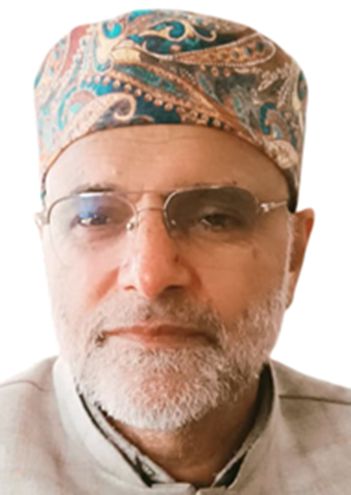
(The author a veteran academician is a former Professor and Head Department of Islamic Studies, Kashmir University. The views, opinions and conclusions expressed in this article are those of the author and aren’t necessarily in accord with the views of “Kashmir Horizon”)







