Productivity should be measured not only in tonnes per hectare, but in stability of livelihoods
Dr. Roohi Jan
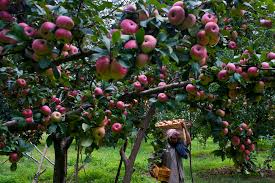
For generations, the apple tree has been more than an agricultural crop in Kashmir. It has been a family heirloom, an economic lifeline and a defining feature of the Valley’s landscape. The towering canopies of Red Delicious, Maharaji and Ambri orchards have shaped not only the rural economy but also the cultural identity of Kashmir. Today, however, the Valley is witnessing one of the most significant transformations in its horticulture history. Traditional orchards are rapidly giving way to high-density (HD) plantations under the Holistic Agriculture Development Programme (HADP), raising an important question: can Kashmir modernise its apple industry without sacrificing its ecological and cultural heritage?
The case for high-density orchards is compelling. Traditional apple orchards, planted decades ago, have become increasingly unproductive. Most yield barely 10 to 12 tonnes per hectare, while modern orchards in countries such as Italy, the United States and New Zealand produce five to six times more. Farmers face shrinking profits as labour costs rise, climate variability increases and markets demand uniform, export-quality fruit. High-density plantations, built on dwarf rootstocks and scientific management, begin bearing fruit within three years instead of seven or eight, offer higher productivity and produce apples that meet the standards of organised retail and international markets.
For many growers, the transition is no longer a choice but an economic necessity. Kashmir contributes nearly three-fourths of India’s apple production, yet growers struggle to compete with imported apples and highly efficient global producers. Frequent untimely snowfall, hailstorms and erratic weather linked to climate change have exposed the vulnerability of ageing orchards. Smaller trees in HD systems are easier to manage, harvest earlier and reduce the risk of weather-related losses. Yet, the rush towards high-density farming should not blind policymakers and farmers to what stands to be lost.
Traditional orchards are far more than low-yielding plantations. They are living ecosystems supporting birds, pollinators, beneficial insects and healthy soil microorganisms. Their deep-rooted trees improve soil structure, sequester carbon and have adapted over decades to Kashmir’s unique climate. Heritage varieties such as Ambri possess distinctive flavour, aroma and resilience that cannot easily be replicated by imported cultivars.
Replacing thousands of mature trees with a handful of commercial varieties also narrows the genetic base of Kashmir’s apple industry. Monoculture may improve efficiency, but it increases vulnerability to future pests, diseases and climatic shocks. Agricultural history offers countless examples of how dependence on a limited genetic pool can prove disastrous. There is another challenge that deserves greater attention—the economics of transition.
“Kashmir’s apple industry must balance essential modernization for competitiveness with preserving biodiversity and traditional knowledge for long-term sustainability.”
Establishing a high-density orchard requires heavy investment in imported rootstocks, trellis systems, drip irrigation, anti-hail nets and intensive nutrient management. Even after government subsidies, many small and marginal growers must borrow substantial amounts to finance these orchards. Success depends not only on cultivation but also on access to quality planting material, scientific guidance, cold storage and reliable markets. Without these supporting systems, the promise of higher income could easily turn into a debt burden.
The shift also changes the very nature of farming. Traditional orchards depended on local knowledge passed down through generations. High-density farming demands precision agriculture, regular pruning, fertigation, pest monitoring and scientific management. Farmers require continuous technical support rather than one-time financial assistance.
The debate, therefore, should not be framed as heritage versus modernity. Both systems have strengths that deserve recognition. High-density orchards provide efficiency, faster returns and global competitiveness. Heritage orchards preserve biodiversity, cultural identity and environmental sustainability. Rather than pursuing wholesale replacement, Kashmir should adopt a balanced strategy that allows both systems to coexist.
This requires thoughtful public policy. Heritage apple varieties should be conserved through dedicated orchard zones, research programmes and premium branding that rewards their unique taste and history. At the same time, expansion of high-density orchards must be accompanied by affordable credit, insurance, extension services, cold-chain infrastructure and scientific advisory support. Agricultural universities should focus on developing indigenous dwarf rootstocks suited to local conditions instead of relying heavily on imported planting material.
Consumers also have a role to play. Markets increasingly reward authenticity, geographical identity and sustainable production. Heritage apples, artisanal ciders, juices and agri-tourism can create premium niche markets that complement, rather than compete with, commercial HD production.
Kashmir’s apple industry stands at a historic crossroads. The chainsaws clearing old orchards may symbolise progress, but they also remind us that development should not come at the cost of resilience and identity. Modernisation is essential if growers are to remain competitive, yet preserving biodiversity and traditional knowledge is equally important for long-term sustainability.
(The author is a freelancer. The views, opinions and conclusions expressed in this article are those of the author and aren’t necessarily in accord with the views of “Kashmir Horizon”)
[email protected]