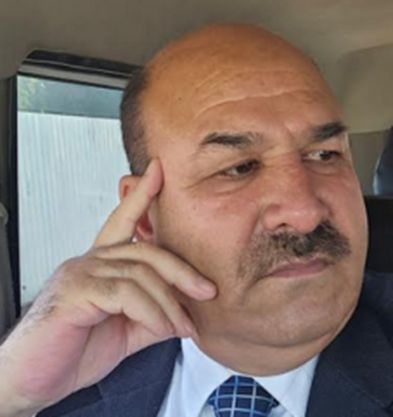
Mohd Rafique Rather
Politics, at its noblest, is an act of public trust. It is not merely about contesting elections or occupying positions of power, it is about carrying the hopes of a people, defending their dignity, and leading society through times of uncertainty with courage, wisdom, and moral conviction. Kashmir once produced politicians who, despite profound ideological and political differences, commanded respect because they possessed character. They spoke with restraint, disagreed with dignity, and understood that public life demanded sacrifice rather than self-promotion. Their politics was measured not by the offices they occupied but by the confidence they inspired among the people. That politics is steadily disappearing. Today, one of the greatest tragedies confronting Kashmir is not merely political uncertainty but the collapse of political credibility. The tragedy lies in the fact that an entire generation is no longer inspired by politics. The young men and women who should have been the future architects of democratic leadership are instead distancing themselves from political life. Many view politics not as a noble mission but as a profession synonymous with opportunism, deception, fraud and endless power struggles and nothing could be more alarming for a democratic society.
This decline did not occur overnight. It is the cumulative outcome of years of ethical erosion, political expediency, and the gradual replacement of principles with personalities. Public life has increasingly become a refuge for disgruntled elements, habitual defectors, individuals rejected elsewhere, and those who see politics as the easiest route to influence rather than service. Their entry has not enriched democracy, it has impoverished it. When integrity ceases to be the qualification for leadership, politics inevitably loses its moral authority. The watershed moment of August 5, 2019, fundamentally altered Kashmir’s political landscape. Whatever one’s political position on the constitutional changes, there was a widespread expectation that the extraordinary circumstances would compel political leaders to introspect. It was hoped that they would abandon the politics of convenience, reconnect with the people, admit past mistakes where necessary, and rebuild public confidence through honesty and consistency.
History had presented them with an opportunity for redemption. Regrettably, that opportunity has been squandered. Instead of embracing reform, much of the political class appears to have returned to familiar patterns grand promises followed by silence, carefully crafted narratives replacing genuine accountability, factional intrigues overshadowing public concerns, and political manoeuvring taking precedence over principled leadership. The vocabulary may have changed, but the methods remain painfully familiar. The people notice.
More importantly, the youth notice.
Unlike previous generations, today’s young Kashmiris possess instant access to information. Every speech is recorded. Every promise is archived. Every contradiction is exposed within minutes. They judge politicians not by slogans but by consistency, not by rhetoric but by conduct. They are far less willing to excuse hypocrisy or reward opportunism. That is why politics no longer inspires them. A politician’s greatest asset is not influence, wealth, or proximity to power. It is credibility. Once credibility is lost, public office becomes little more than a title devoid of moral legitimacy. It is therefore time for serious self-introspection within the political class.
“While rich in educated and articulate youth, Kashmir lacks ethical political role models. Restoring long-term stability and progress requires reviving moral integrity in politics—beyond mere economic or administrative fixes—to engage young idealists in shaping the region’s future.”
Every politician must ask a simple but uncomfortable question: What image do I present before society? A politician should be recognised as a symbol of honesty, integrity, character, credibility, humility, and public service. He or she should inspire confidence through conduct and earn respect through truthfulness. Public life demands higher standards than ordinary life because those who seek to lead others must first lead themselves. Unfortunately, politics today too often rewards the opposite. Dishonesty is rationalised as strategy. Broken promises are dismissed as political compulsions. Coarse language replaces civil discourse. Personal attacks overshadow reasoned debate. Opportunism is celebrated as pragmatism. Such behaviour does not strengthen democracy it corrodes it from within. No society can produce inspiring political leadership if its public life begins to normalise arrogance, questionable conduct, and the abandonment of ethical restraint.
When politics ceases to value character, society eventually ceases to value politics. This is precisely the crossroads at which Kashmir stands today. The consequences extend beyond elections. When educated and capable young people withdraw from politics, leadership spaces are increasingly occupied by those who possess louder voices rather than deeper ideas. Democracy becomes poorer. Public debate becomes shallower. Institutions weaken, and citizens begin to lose faith not merely in politicians but in the democratic process itself. Yet the situation is not beyond repair. The first step towards political revival is moral renewal. Political parties must stop treating integrity as an inconvenience. Internal democracy must replace sycophancy. Merit must prevail over favouritism. Loyalty should never mean unquestioning obedience, and criticism should not be mistaken for disloyalty.
Politics flourishes where ideas compete not where personalities dominate. Most importantly, leaders must recognise that respect cannot be manufactured through publicity campaigns or social media optics. It is earned slowly through honesty, consistency, humility, and the courage to stand by one’s convictions even when they are politically inconvenient. Kashmir does not suffer from a shortage of educated, articulate, and committed young people. It suffers from a shortage of political role models worthy of emulation. If politics is to reclaim its lost dignity, it must first reclaim its conscience. The future of Kashmir will not be secured merely through economic packages, administrative reforms, or electoral arithmetic. It will depend equally upon whether politics can once again become a vocation of honour rather than a marketplace of convenience. For unless politics regains its soul, it will continue to lose its most precious constituency the young minds whose idealism alone can build a better tomorrow.
(The author is a former Trade Union Leader and District President J&K People’s Democratic Party- J&K PDP. The views, opinions and conclusions expressed in this article are those of the author and aren’t necessarily in accord with the views of “Kashmir Horizon”)