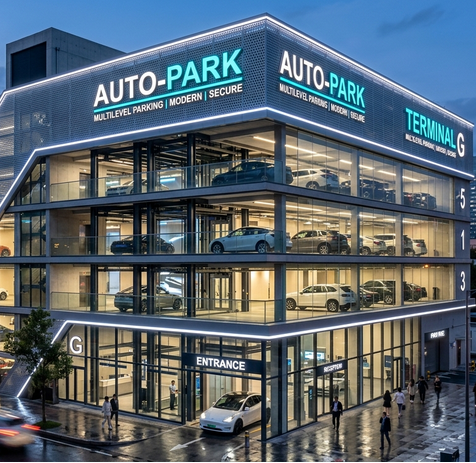
Srinagar :Despite the construction of multiple multilevel parking facilities, traffic congestion continues unabated in key commercial areas of Srinagar, raising serious questions over the effectiveness of standalone infrastructure solutions in addressing urban mobility challenges.
Busy corridors such as Lal Chowk, Residency Road, and Hari Singh High Street continue to witness heavy congestion, even as authorities had projected multilevel parking projects as a key measure to decongest the city centre.
The Srinagar Development Authority’s multilevel parking facility near Lal Chowk, built at the old bus stand, was envisioned as a major intervention. However, the anticipated relief has remained limited due to persistent issues such as roadside parking, encroachments, narrow access points, and weak traffic enforcement.
Officials and observers note that many motorists still prefer roadside parking for convenience, avoiding structured parking spaces that require additional time and movement. This behavioral pattern, combined with inadequate enforcement of no-parking zones, has undermined the intended impact of such projects.
Urban planners point out that congestion in Srinagar’s commercial hubs is not merely a function of parking shortages, but a result of broader systemic gaps, including unplanned commercial concentration, insufficient public transport systems, and lack of pedestrian-friendly infrastructure.
Experts warn that relying solely on parking infrastructure addresses only the symptoms of congestion, not its root causes. Globally, studies have shown that increasing parking capacity can encourage higher private vehicle usage—a phenomenon referred to as “induced demand.”
They emphasize that Srinagar requires a comprehensive mobility strategy, including efficient public transport networks, improved feeder services, pedestrian-centric market redesign, strict regulation of roadside parking, and scientific traffic planning.
Without such integrated measures, experts caution, additional parking structures risk becoming underutilized assets, while congestion on city roads remains largely unchanged.