“Going forward, PRAGATI must move beyond resolving delays to anticipating them. Greater use of technology, data-driven monitoring and PRAGATI-like mechanisms at state and district levels—especially in the social sector—will be key to strengthening last-mile delivery and improving outcomes that citizens can directly feel.”
This week, Prime Minister Narendra Modi’s articulation of the “reform, perform, transform” mantra at the 50th meeting of PRAGATI marked more than a ceremonial milestone. It was a moment of reflection on a decade-long experiment in governance that has sought to address one of India’s most persistent administrative challenges — the gap between decision-making and delivery. With projects worth over Rs 85 lakh crore accelerated since 2014, the Pro-Active Governance and Timely Implementation (PRAGATI) platform has emerged as a central pillar of the Modi government’s administrative philosophy, blending technology, accountability and cooperative federalism.
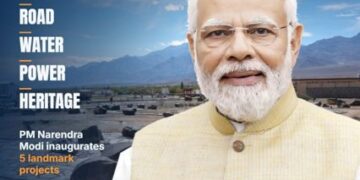
PRAGATI At 50| More Than a Number: The 50th PRAGATI meeting symbolised what the Prime Minister described as a “deep transformation in the culture of governance.” Unlike traditional review mechanisms, PRAGATI was conceived as a problem-solving platform, not merely a reporting forum. It integrates the highest levels of political authority with bureaucratic machinery, ensuring that decisions taken at the top translate into action on the ground. At the meeting, Modi reviewed five critical infrastructure projects across roads, railways, power, water resources and coal sectors, spanning five states and involving investments exceeding Rs 40,000 crore. These reviews were not isolated assessments but part of a larger framework that prioritises time-bound execution, cost discipline and outcome-based governance.
Reform| From Process To Solutions: The first pillar of Modi’s mantra — reform — was defined not as change for its own sake, but as simplification with purpose. The Prime Minister stressed that reform must mean moving away from process-heavy, file-driven systems towards solution-oriented governance. In practical terms, this implies reducing procedural bottlenecks, leveraging technology for transparency, and designing systems that enhance “ease of living” and “ease of doing business.” PRAGATI embodies this reformist approach by replacing fragmented, silo-based reviews with a unified, technology-enabled platform. By integrating project monitoring, grievance redressal and inter-ministerial coordination, PRAGATI reduces duplication of effort and ensures that issues are addressed holistically rather than in isolation. The platform’s roots can be traced back to Modi’s tenure as Gujarat Chief Minister, where he launched the SWAGAT (State Wide Attention on Grievances by Application of Technology) initiative. PRAGATI expanded this concept nationally, scaling up the use of technology to monitor large infrastructure projects and flagship welfare programmes.
Perform|Time, Cost, Quality As Equal Priorities: Performance, in Modi’s framework, is not defined solely by speed. At the 50th PRAGATI meeting, he emphasised that delivery must balance time, cost and quality. This triad reflects a shift from the earlier tendency to prioritise project approval over project completion. Since 2014, 377 projects have been reviewed under PRAGATI. Of the 3,162 issues identified across these projects, 2,958 — approximately 94 per cent — have been resolved. This high resolution rate has contributed to significant reductions in delays, cost overruns and coordination failures, long considered endemic to India’s infrastructure sector. The Prime Minister noted that PRAGATI has helped institutionalise accountability by creating a system of continuous follow-up. Projects are no longer reviewed once and forgotten; instead, unresolved issues are tracked until closure, ensuring that commitments made at review meetings translate into tangible outcomes.
Transform|Measuring Impact Through Citizen Experience: Transformation, Modi argued, must ultimately be judged by what citizens experience. Faster service delivery, timely grievance redressal and improved quality of life are the true metrics of governance success. PRAGATI’s focus on outcomes rather than outputs aligns with this philosophy. By accelerating long-stalled infrastructure projects, PRAGATI has contributed to tangible improvements in connectivity, power availability and industrial capacity. The Prime Minister cited several emblematic examples: the Bogibeel rail-cum-road bridge in Assam, conceived in 1997; the Jammu-Udhampur-Srinagar-Baramulla rail link, initiated in 1995; the Navi Mumbai International Airport, conceptualised in 1997; and major power and steel projects approved over a decade ago but delayed due to coordination failures. These projects, once symbolic of bureaucratic inertia, were decisively unlocked through PRAGATI’s integrated review mechanism. Their completion underscores how governance reform, when combined with political will and administrative follow-through, can convert long-standing plans into operational assets.
Cooperative Federalism In Practice: One of PRAGATI’s defining features is its emphasis on cooperative federalism. By bringing together Union secretaries and state chief secretaries on a single platform, PRAGATI breaks down institutional silos and aligns stakeholders around shared objectives. Since its inception, around 500 Union government secretaries and state chief secretaries have participated in PRAGATI meetings. This sustained engagement reflects the platform’s role as a bridge between the Centre and the states, particularly in sectors where project implementation depends on seamless coordination across jurisdictions. At the 50th meeting, Modi encouraged states to institutionalise similar PRAGATI-like mechanisms, especially in the social sector, at the level of chief secretaries. Such decentralised adoption, he suggested, could replicate the platform’s success in areas like education, health and nutrition.
Education Reform| PM SHRI As A Test Case : The review of the PM SHRI (Prime Minister Schools for Rising India) scheme highlighted how PRAGATI’s principles are being extended beyond physical infrastructure into the social sector. Modi emphasised that PM SHRI must become a national benchmark for holistic and future-ready education, with a focus on outcomes rather than infrastructure alone. He urged chief secretaries to closely monitor the scheme and encouraged senior officers to undertake field visits to evaluate school performance. The objective, he said, should be to make PM SHRI schools role models for other state-run institutions, thereby triggering a ripple effect of quality improvement across the education system. This emphasis reflects a broader shift in governance thinking — from measuring success by assets created to assessing impact through learning outcomes, teacher performance and student preparedness for future challenges.
Technology The Backbone of Governance: Technology, according to the Prime Minister, must be embedded in every phase of a project’s life cycle — from conception and planning to execution and monitoring. PRAGATI’s digital architecture enables real-time data sharing, video conferencing-based reviews and issue tracking, reducing dependence on physical meetings and paper-based reports. This technology-driven approach has proven particularly effective in addressing inter-ministerial and Centre-state coordination challenges. By providing a shared digital workspace, PRAGATI ensures that all stakeholders have access to the same information, reducing misunderstandings and delays. As India moves at a faster pace, Modi noted, the relevance of such platforms has only increased. Rapid urbanisation, large-scale infrastructure expansion and ambitious national targets like Viksit Bharat@2047 demand governance systems capable of matching speed with precision.
Unlocking Stalled Projects| Lessons In Governance: A recurring theme in Modi’s address was the observation that projects often fail not due to lack of intent, but due to lack of coordination. PRAGATI addresses this structural weakness by aligning ministries, state governments and implementing agencies around clearly defined outcomes. The revival of projects stalled for decades offers valuable lessons. First, political leadership at the highest level can break deadlocks that persist across administrative tenures. Second, transparency and accountability mechanisms can reduce risk aversion among officials. Third, continuous monitoring creates momentum, ensuring that once a project is revived, it is seen through to completion. These lessons are particularly relevant as India undertakes complex, multi-sectoral initiatives such as high-speed rail, renewable energy transitions and large-scale urban infrastructure development.
“In conclusion, the 50th PRAGATI meeting highlights a clear shift in India’s governance culture under the “reform, perform, transform” mantra. By ensuring coordination, accountability and timely execution, PRAGATI has proven that effective governance can translate intent into impact, making it a vital tool in achieving the vision of Viksit Bharat@2047.”
PRAGATI, Viksit Bharat@2047 : The Prime Minister positioned PRAGATI as a critical accelerator for achieving the vision of Viksit Bharat@2047 — a developed India by the centenary of Independence. This vision, he said, is both a national resolve and a time-bound target, requiring sustained investment, institutional reform and delivery-focused governance. By ensuring that national priorities receive adequate resources and timely execution, PRAGATI contributes to creating the physical and social infrastructure necessary for long-term growth. Its emphasis on accountability and outcomes aligns with the broader shift towards performance-based governance.
Challenges And The Road Ahead: While PRAGATI’s achievements are significant, its future effectiveness will depend on continuous adaptation. As the scale and complexity of projects increase, the platform must evolve to incorporate advanced data analytics, predictive monitoring and greater public transparency. Institutionalising PRAGATI-like mechanisms at state and district levels, as suggested by the Prime Minister, could deepen its impact. However, this will require capacity building, political commitment and cultural change within administrative systems.
Governance Paradigm In Motion: The 50th PRAGATI meeting was not merely a review of past achievements but a reaffirmation of a governance paradigm centred on reform, performance and transformation. By combining technology, accountability and cooperative federalism, PRAGATI has demonstrated that systemic change is possible within India’s complex administrative landscape. As Modi underscored, timely decisions, effective coordination and fixed accountability naturally increase the speed and impact of government functioning. In an era where citizens increasingly judge governance by outcomes rather than intentions, PRAGATI offers a template for how India can bridge the gap between ambition and achievement. A decade into its journey, PRAGATI stands as a reminder that governance reform is not a one-time event but a continuous process — one that must evolve, deepen and adapt to meet the aspirations of a rapidly changing nation.
Kashmir Horizon View: As PRAGATI enters its next phase after completing a decade and 50 high-level review meetings, the challenge before the government is not merely to sustain momentum but to deepen and widen its impact. The platform has already demonstrated that technology-enabled, top-level monitoring can break long-standing bottlenecks. The way forward lies in institutionalising these gains and extending the PRAGATI ethos across sectors, levels of governance and stages of public service delivery. The 50th PRAGATI meeting marks a significant milestone, but more importantly, it underscores a broader movement in India’s governance culture. Over the past decade, PRAGATI has shown that political will, when combined with technology and accountability, can convert intent into impact. By resolving nearly 94 per cent of identified issues across hundreds of projects, the platform has challenged the long-held belief that delays and inefficiencies are inevitable in public administration. Prime Minister Narendra Modi’s articulation of the “reform, perform, transform” mantra provides a clear framework for the future. Reform simplifies systems and makes them citizen-friendly; performance ensures timely, cost-effective and high-quality delivery; and transformation measures success through real improvements in people’s lives. PRAGATI sits at the intersection of these three principles, acting as both a catalyst and a compass for governance reform. As India moves towards the ambitious goal of Viksit Bharat@2047, the relevance of PRAGATI will only grow. The scale of national aspirations demands governance systems that are agile, coordinated and outcome-driven. PRAGATI’s emphasis on cooperative federalism, breaking silos and aligning stakeholders around shared goals offers a replicable model for other sectors and levels of government.
(“Team Kashmir Horizon” is committed to continuous improvement and invites feedback and suggestions from readers and its followers on social media sites. Reader insights are considered vital for enhancing content quality and empowering the community. The team encourages open communication and values the thoughts and ideas of its audience, believing that such input will enable them to serve the public more effectively. The initiative aims to ensure that readers have the best possible experience with “Kashmir Horizon”. Interested individuals can reach out to us via email at [email protected].)