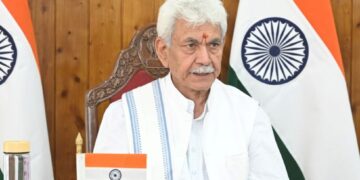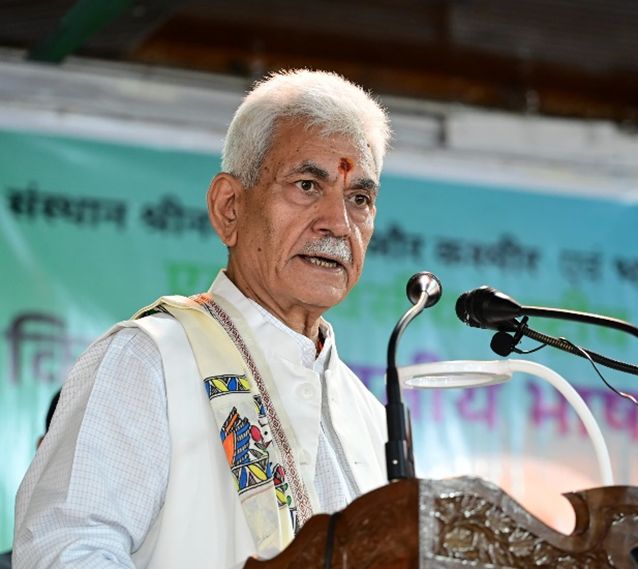
“It is a “matter of pride that Jammu and Kashmir is among the first in the country to fully integrate NEP across all Higher Educational Institutions.” Universities and colleges across the UT are building a “future-ready academic ecosystem—one that is inclusive, innovative, and impactful,” where every student is empowered to realize their potential and contribute meaningfully to Viksit Bharat @2047.”
By Mohammad Irfan
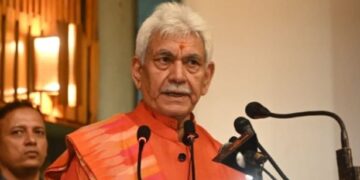
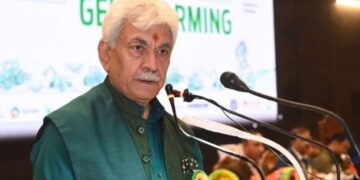
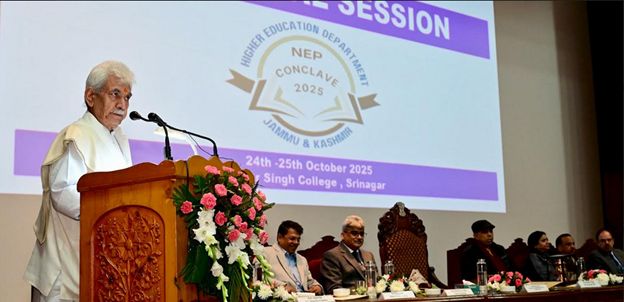
A crisp autumn morning in Srinagar marked a significant chapter in Jammu and Kashmir’s educational journey. The lawns of SKICC overlooking the Dal Lake buzzed with energy as educators, administrators, and scholars gathered for the National Education Policy (NEP) Conclave 2025. The event, organized by the Higher Education Department, was more than an academic congregation — it was a reaffirmation of a shared vision: to transform education into the most powerful tool for empowerment and nation-building. The spotlight of the day was on Lieutenant Governor Manoj Sinha, who delivered the inaugural address. His speech was not merely ceremonial; it was a blueprint for how education could anchor J&K’s social and economic progress in the coming decades. “It is a matter of pride that Jammu and Kashmir is among the first in the country to implement the National Education Policy across all Higher Educational Institutions in the Union Territory,” he declared, setting the tone for a day of reflection and resolve.
The Spirit Of Reform, Renaissance: In his address, the Lieutenant Governor lauded the collective efforts of universities, colleges, and policymakers who have embraced the NEP framework with determination and speed. He described the policy as a “historic and visionary reform” that seeks to dismantle outdated systems and replace them with models that are more flexible, inclusive, and innovation-driven. “We are building a future-ready academic ecosystem — one that is inclusive, innovative, and impactful,” Sinha said, his words resonating with optimism. “Our aim is to empower every student of Jammu and Kashmir to realise their potential, uphold the spirit of Viksit Bharat @2047, and emerge as proud contributors to the nation’s growth story.” His vision positioned education as the cornerstone of a modern, self-reliant India — one where young people are not merely job-seekers but knowledge creators and social innovators. Under his leadership, Jammu and Kashmir has accelerated NEP implementation, aligning curriculum reforms, faculty development, and infrastructure upgrades to meet national benchmarks.
A Confluence Of Tradition, Technology: One of the key themes of the Lieutenant Governor’s speech was the delicate balance between technological progress and Indian values. He noted that as the world stands at the dawn of what he called the “Artificial Intelligence Age,” the need to preserve India’s civilizational ethos has never been greater. “The amalgamation of technological advancement and Indian ethos in higher educational institutions will address future challenges and spur strong economic growth,” he remarked. The line drew a thoughtful response from the audience — a reminder that true progress is not just about coding and computation, but also about compassion, ethics, and human values. In Sinha’s words, the dream of a developed India — Viksit Bharat — will be realized when technological innovation operates in harmony with traditional ideals of wisdom, self-discipline, and community welfare. This fusion, he said, would allow education to move beyond classrooms and degrees, becoming an instrument of moral and intellectual awakening.
NEP|Reducing Inequality, Expanding Opportunity: The National Education Policy 2020 represents one of India’s most ambitious education reforms in decades. It envisions an education system rooted in Indian culture yet aligned with global standards — one that breaks barriers of inequality and nurtures excellence. The Lieutenant Governor reiterated that vision, saying, “The National Education Policy’s aim is to reduce inequality and expand opportunity in higher education.” He emphasized that NEP’s core philosophy is about inclusion — bringing rural, marginalized, and underrepresented students into the mainstream of learning. In Jammu and Kashmir, this philosophy is especially relevant. With its unique geography and socio-economic diversity, the region’s educational landscape requires a policy that can address disparities and open new pathways to learning. Over the past three years, the UT administration has worked extensively to expand access to higher education — from building new colleges in remote districts to digitizing learning materials for online use. These measures, combined with NEP’s flexibility, have begun to create a more equitable academic environment.
Beyond Classrooms: The Shift To Experiential Learning: A striking feature of Sinha’s address was his insistence on transforming how students learn. He spoke passionately about the shift from rote learning to experiential, interdisciplinary, and project-based education — a move that aligns with NEP’s focus on critical thinking and creativity. “Our higher educational institutions have embraced interdisciplinary and project-based learning,” he said. “We are moving away from traditional, siloed subjects to break the barriers between the real world and the academic world. This will empower our youth, enhance skills and knowledge, and ensure their professional growth.” This philosophy is already visible across several universities in J&K. The University of Kashmir, for instance, has introduced interdisciplinary programs in environmental sustainability and artificial intelligence. Similarly, Jammu University is piloting flexible “Design Your Own Degree” modules, allowing students to customize their learning trajectories based on interests and career aspirations. These innovations, Sinha noted, reflect the evolving definition of education — not as a rigid structure of exams and grades, but as a dynamic process that nurtures curiosity, problem-solving, and lifelong learning.
A Call For Innovation, Accountability: While applauding the progress made, the Lieutenant Governor also called for continuous introspection and accountability in research and teaching. He highlighted the importance of establishing a robust monitoring mechanism to ensure that research projects are “future-oriented, generating new ideas, and introducing fresh perspectives into society’s knowledge flow.” He emphasized that every university and college must become a hub of creativity and social impact. “All higher education institutions should implement innovative programs like ‘Design Your Own Degree’ in a time-bound manner,” he urged. “Institutions should also share resources, expertise, and best practices to bring about holistic transformation in higher education.”
This spirit of collaboration, he said, is crucial for creating a sustainable academic ecosystem. He urged administrators and educators to think beyond their institutional boundaries — to share research facilities, exchange faculty, and jointly host innovation programs that can benefit students across regions.
Voices From The Conclave: The event was graced by several dignitaries and education leaders who echoed the Lieutenant Governor’s vision. Atal Dulloo, Chief Secretary of J&K, underscored the importance of aligning institutional priorities with NEP’s national framework. Prof. Dinesh Singh, Vice Chairman of the Higher Education Council, emphasized interdisciplinary learning as the foundation of modern education, while Shantmanu, Additional Chief Secretary, highlighted the need for digital tools and global partnerships to make J&K’s universities globally competitive. Vice Chancellors from universities across the Union Territory — including the Cluster University Srinagar, Islamic University of Science and Technology, Central University of Jammu, and Sher-e-Kashmir University of Agricultural Sciences and Technology — attended the inaugural ceremony. Faculty members, students, and policymakers participated in thematic discussions on curriculum reform, technology integration, and entrepreneurship in higher education.
Education The Engine Of Economic Growth : In a larger national context, Sinha’s address mirrored the government’s focus on education as a catalyst for Atmanirbhar Bharat — a self-reliant India. By equipping students with 21st-century skills and fostering innovation, the education sector can directly fuel economic growth. He observed that as India enters an era defined by automation, robotics, and artificial intelligence, higher education institutions must evolve rapidly to prepare students for jobs that don’t yet exist. At the same time, they must instill timeless human values — empathy, ethics, and teamwork — which remain central to leadership and progress. “The rise of the Artificial Intelligence Age and traditional Indian ideals will make the developed India dream come true,” he said. “We must ensure that the brilliance of our technology is guided by the wisdom of our culture.”
A Future-Focused Academic Culture: Sinha’s vision of a future-ready academic ecosystem goes beyond policy implementation — it’s about cultural transformation. In his address, he spoke about creating a mindset among educators and students that values curiosity, research, and social contribution. He encouraged young scholars to engage in problem-solving research that directly addresses local challenges — from climate adaptation in the Himalayas to rural entrepreneurship and digital governance. “Our institutions must be laboratories of social change,” he said. “When education connects to the real needs of people, it becomes a force for inclusive growth.” This alignment of academia with community aspirations reflects the broader NEP philosophy — education not as an isolated pursuit, but as a living force that shapes livelihoods, governance, and innovation.
“The amalgamation of technological advancement and Indian ethos in higher educational institutions will address future challenges and spur strong economic growth. NEP’s essence lies in reducing inequality and expanding opportunity. Universities should establish robust monitoring mechanisms for research and to implement innovative models like Design Your Own Degree programs to keep learning relevant and future-oriented.”
Jammu & Kashmir| A Model for Reform: In recent years, Jammu and Kashmir has quietly emerged as a model of NEP implementation. The UT’s higher education department has rolled out a series of reforms, from credit-based multidisciplinary programs to faculty development initiatives. New universities and colleges have been established to improve access, while student exchange programs and digital libraries have widened exposure. Perhaps most notably, the region has integrated skill-based training into its higher education curriculum, bridging the gap between academia and industry. This has opened new avenues for youth employment and entrepreneurship — a vital step in translating education into tangible outcomes. At the conclave, participants praised the UT’s swift adoption of NEP reforms, describing it as an example of effective governance and visionary planning. With digital innovation hubs, incubation centers, and research partnerships on the rise, Jammu and Kashmir’s education sector is steadily aligning itself with global best practices.
Empowering The Next Generation: As the conclave drew to a close, the Lieutenant Governor’s message remained clear: education is the bedrock of progress, and its reform is not a policy exercise but a moral mission. His address struck a balance between pride in past achievements and a clear-eyed vision for the future. He reaffirmed the administration’s commitment to ensuring that every student — whether in the city or a remote mountain village — has access to quality education and opportunities for growth. “Our aim is not just to educate but to empower,” he said. “We want every young mind in Jammu and Kashmir to dream big, think critically, and contribute meaningfully to the nation’s journey toward 2047.” The conclave ended with applause, but its true resonance lay in the resolve it ignited — a collective promise that education in Jammu and Kashmir will continue to evolve, inspire, and lead.
Kashmir Horizon View : The NEP Conclave 2025 in Srinagar was more than a policy dialogue — it was a celebration of the region’s educational resurgence. Under the leadership of Lieutenant Governor Manoj Sinha, Jammu and Kashmir has positioned itself at the forefront of India’s education reform movement, proving that even in regions shaped by complexity, transformation is possible through vision, collaboration, and willpower. As the sun set over Dal Lake, the message from the conclave lingered: the classrooms of today are shaping the citizens of tomorrow. In the fusion of tradition and technology, discipline and creativity, lies the promise of a new India — one where every learner from Jammu and Kashmir can stand tall as a symbol of resilience, progress, and hope.
(In commitment to continuous improvement the “Team Kashmir Horizon” invites it’s valuable readers to share their valuable feedback and suggestions with the “Team Kashmir Horizon”. The insights of readers will surely play a vital role in improving the content quality of “Kashmir Horizon” and contribute more for the empowerment of people. Please feel free to reach out to us at editor@ thekashmirhorizon.com. Team “Kashmir Horizon” eagerly anticipates thoughts and ideas of it’s readers, which will help us serve people and even more effectively. The inputs of valuable readers are highly valued as “Kashmir Horizon” strives to provide it’s readers the best possible experience.)