“Four years after the historic Darbar Move was halted, Chief Minister Omar Abdullah, fulfilling a key poll promise, announced its revival restoring the century-old practice. The tradition reflects our unity, our history, and our shared identity. Government’s commitment to regional balance and institutional continuity.”
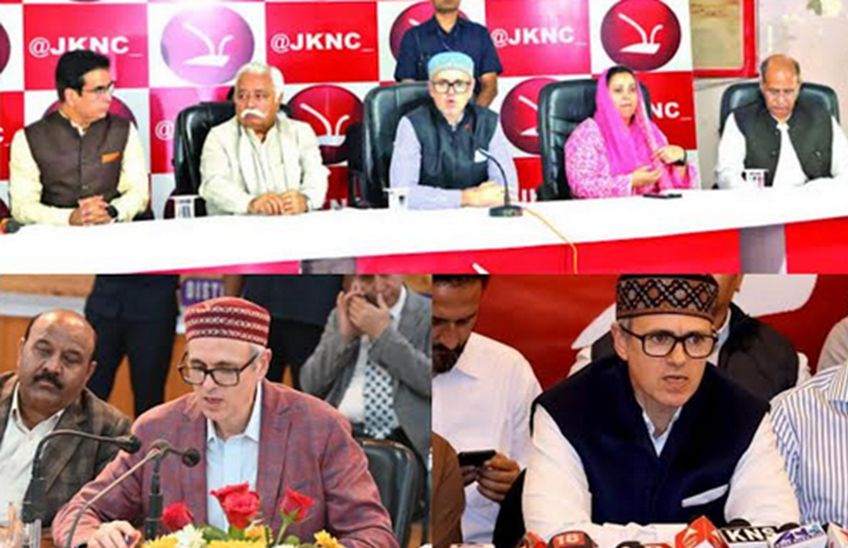
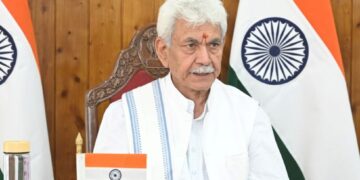
Four years after the centuries-old biannual Darbar Move was halted in Jammu and Kashmir, Chief Minister Omar Abdullah has formally announced its revival fulfilling one of the National Conference’s most symbolic electoral promises. The decision, cleared earlier by the Union Territory Cabinet and signed by the Lieutenant Governor, marks a return to a tradition that once defined the political rhythm and administrative culture of the erstwhile state. “I have signed the official file today, and the order will be issued shortly. The old tradition of the Darbar Move is being restored,” Omar told reporters in Srinagar, as his government completed one year in office. The move, he said, was not merely about nostalgia or symbolism, but about restoring the “continuity, inclusivity, and administrative balance” that the twin capitals of Jammu and Srinagar historically shared.
The Return Of A Vanished Tradition: The Darbar Move, which traces its origins to 1872 under Maharaja Ranbir Singh, was among the most enduring legacies of the Dogra rulers — a system of seasonal governance under which the Civil Secretariat and top officials shifted from Jammu (November–April) to Srinagar (May–October). The practice ensured administrative accessibility across the geographically and climatically diverse regions of Jammu and Kashmir, while symbolically uniting the two capitals. However, in 2021, the practice was discontinued by the then LG administration, citing financial burden and logistical challenges. The annual shifting of thousands of officials, tons of files, and records between the two cities had been deemed “wasteful expenditure.” The administration, then led by Lieutenant Governor Manoj Sinha, had justified the move by pointing to the transition toward e-office systems, which digitized all records and allowed continuity of work from both locations. But for many in Jammu and Srinagar, the Darbar Move was not just an administrative routine; it was part of the collective psyche of Jammu and Kashmir, a tradition that embodied the region’s cultural unity, economic interdependence, and historical continuity. Traders in Jammu had strongly opposed the 2021 decision, arguing that the Darbar Move generated significant seasonal business and employment. Local hoteliers, transporters, and shopkeepers suffered notable losses after its suspension. Similarly, several social groups viewed the halting of the Darbar as an attempt to erode the shared identity that bound the two capitals.
Omar’s Political Calculus|From Promise To Policy: For Omar Abdullah, the revival of the Darbar Move is not just administrative rectification — it is a deeply political act. The National Conference (NC) had made its restoration one of its two flagship promises in the 2024 Assembly elections, alongside reforming the reservation policy. Both issues carried emotional and political resonance across communities and regions. “Our Cabinet took the decision earlier on restoring the biannual Darbar Move practice. The file was sent to the LG, and he has signed and returned it,” Omar said, adding that the decision “honors the legacy and history” of Jammu and Kashmir. “Those who accused us of disregarding history should see who actually damaged that legacy. No one has harmed the region’s traditions more than the BJP,” he remarked, in a clear jab at the previous administration. By linking the revival of Darbar Move to political accountability and cultural respect, Omar sought to reclaim Jammu and Kashmir’s institutional history while simultaneously signaling a return to elected, people-centric governance after years of centralized rule under the Union Territory framework.
The Cost And The Symbolism: The 2021 decision to end the Darbar Move was justified on economic grounds. Estimates suggested that the biannual shifting cost the exchequer over ₹200 crore annually, including transport, accommodation, and logistics. Critics of revival argue that, with the Civil Secretariat now fully digitized, the need for physical shifting no longer exists. Yet, for Omar, symbolism matters. “Why was the Darbar Move stopped?” he asked rhetorically. “It had been a long-standing tradition — a thread that tied Jammu and Srinagar together. Governance is not only about files and budgets; it’s also about sentiment, inclusivity, and presence.” Analysts view the move as a strategic reassertion of balance — a message that his government seeks to bridge regional divides that have often defined J&K’s politics. In reviving Darbar Move, Omar projects himself as a protector of tradition and identity, contrasting his government’s sensitivity with what he describes as the BJP’s “bureaucratic detachment.”
Reservation Reform|Addressing A Sensitive Fault Line: Alongside the Darbar Move announcement, Omar revealed that the Cabinet Sub-Committee (CSC) on Reservation had submitted its final report, which was cleared by the Cabinet and will soon be referred to the LG for approval. The committee — comprising Sakina Itoo, Javed Rana, and Satish Sharma — was set up in December 2024 after widespread resentment among general category candidates who claimed that their share in government jobs had dropped to just 30 percent due to policy changes. Omar explained that the Social Welfare Department has been directed to prepare a formal memo to send to the LG for assent within a few days. “We hope the process will be completed in three to four days,” he said. This announcement, coming on the same day as the Darbar revival, underlines a pattern of strategic timing — addressing both administrative sentiment (Darbar Move) and social equity (reservation reform) in one stroke. Together, they reflect Omar’s attempt to balance symbolism with substance, and governance with politics.
Statehood, Centre-State Relations: Beyond domestic reforms, Omar used the occasion to renew his demand for restoration of Statehood, accusing the BJP-led Centre of betraying a constitutional promise. “We were hopeful that the Centre would fulfill its commitment to restore Statehood in the first year of our government, but it has not happened,” he said. Taking a direct swipe at Prime Minister Narendra Modi, he added: “The promise was made in Parliament and reiterated before the Supreme Court. What is stopping them now?” Omar dismissed speculation that delay in the restoration of Statehood was meant to politically pressure his government into an alliance with the BJP. “It would be a sad thing if the people of Jammu and Kashmir are deprived of Statehood only because the BJP could not form the government. If people wanted a BJP government, they would have elected one. We will not allow them through the back door,” he asserted.
In his speech, Omar invoked the BJP’s own timeline — “delimitation, election, and Statehood” — insisting that there were “no ifs or buts” in that commitment. His remarks reinforce the political tension between Srinagar and New Delhi, reflecting a broader tug-of-war between regional autonomy and centralized governance that continues to shape Jammu and Kashmir’s political landscape.
A Year In Power|Measuring Omar’s Governance: Marking one year in office, Omar described his government’s tenure as a “period of rebuilding and reconciliation.” He listed several achievements: regularization of 860 CPWs (Contingent Paid Workers) in the Education Department, progress on land-for-homeless schemes, and efforts to secure flood relief and infrastructure rehabilitation packages from the Centre. “We have made a start,” he said. “Be it our promise to bring a resolution in the Assembly on the special status of Jammu and Kashmir, or to pass one in the Cabinet for the restoration of Statehood — we did both.” Omar resisted calls for a “one-year report card,” saying performance should be judged at the end of the full five-year term. “No government fulfills all its promises in six months or one year,” he said. “We will give a report card when we complete our mandate.”
Administrative Partnerships And Political Dynamics: Chief Minister Omar Abdullah acknowledged that his government’s progress depended significantly on bureaucratic cooperation. “The cooperation of officials is essential for fulfilling any government’s agenda,” he said. While admitting that “not all officers are the same,” he added that most have shown “dedication and commitment.” On his relationship with the Lieutenant Governor, Omar avoided controversy. “We are working together for the betterment of Jammu and Kashmir,” he said, refusing to comment on alleged strains. “You should not assume that the relationship is not good. We are working.” The comments reflect Omar’s pragmatic balancing act — maintaining institutional civility with Raj Bhavan while politically differentiating himself from the previous UT administration’s approach.
“Restoring the Darbar Move after four years, Chief Minister Omar Abdullah said his government has honored its promise to the people. The tradition, halted in 2021 to cut costs, will again see the Civil Secretariat function six months each from Srinagar and Jammu. Omar said the step revives a legacy of balance between the two capitals.”
Politics Beyond Governance|Opposition, Alliances, Challenges: Responding to questions about PDP chief Mehbooba Mufti’s conditional support for NC candidates in the upcoming Rajya Sabha elections, Omar said NC president Dr. Farooq Abdullah had spoken to her and sought support to keep the BJP out. “If the vote is not cast in our favour, it will only benefit the BJP. Abstaining is also akin to supporting them,” Omar noted. He also confirmed ongoing talks with the Congress over by-elections in Nagrota and Budgam, hinting at a possible alliance. “We are ready to give Congress the Nagrota seat if they have a stronger candidate,” he said, underlining a coalition-friendly posture in a politically fragmented Union Territory.
Economic Vision|Development, Tourism, Employment: On development, Chief Minister Omar Abdullah outlined his government’s efforts to revitalize tourism and infrastructure, particularly in Jammu. “We want to promote the artificial lake project, border tourism, and facilities for Mata Vaishno Devi pilgrims. If even 15–20% of devotees extend their stay, it will significantly boost Jammu’s economy,” he explained. Omar also said the government was facilitating 5 marlas of land for those who lost homes in floods and was working with the Centre for a cloudburst-prone area assessment survey. “Preparedness is as important as relief,” he added. On prepaid electricity meters, Omar dismissed criticism as misplaced. “When people have no objection to prepaid mobiles, why object to prepaid electricity? It is not privatization,” he said, calling the reform a step toward transparency and accountability.
Reviving Sentiment, Identity: Politically, the revival of the Darbar Move serves multiple purposes: it connects Omar’s government with Jammu’s economic base, appeals to Srinagar’s emotional memory, and reasserts political continuity after the administrative rupture of 2019. Analysts say the move signals the return of people-driven politics in J&K, contrasting sharply with the bureaucratic governance model that prevailed in the interim years. It also subtly challenges the BJP’s narrative that “tradition equals inefficiency,” reframing heritage as an asset, not a liability. Political analyst Dr. Hilal Ahmad explains: “The revival of the Darbar Move is Omar’s way of saying — the union of Jammu and Kashmir is not logistical, it is emotional. It’s a message that heritage and governance can co-exist.”
Kashmir Horizon View: As Omar Abdullah completes one year in office, his government’s decisions — from reviving the Darbar Move to restructuring the reservation policy — illustrate a dual strategy: restoring continuity while reshaping governance. The Darbar revival, while symbolic, reaffirms Jammu and Kashmir’s composite administrative ethos. The reservation reform, on the other hand, addresses modern social equity. Both converge on a larger narrative: a return to democratic normalcy where promises made to people are pursued through institutions, not diktats. In the larger political arc of Jammu and Kashmir, the Darbar Move’s return is more than a logistical shift — it is a statement of identity, belonging, and political reclamation. For Omar Abdullah, it marks not just a policy win but a symbolic restoration of the idea of J&K as a single, living administrative entity united by history, divided by politics, yet bound by hope.
(“Team Kashmir Horizon” is committed to continuous improvement and invites feedback and suggestions from readers and its followers on social media sites. Reader insights are considered vital for enhancing content quality and empowering the community. The team encourages open communication and values the thoughts and ideas of its audience, believing that such input will enable them to serve the public more effectively. The initiative aims to ensure that readers have the best possible experience with “Kashmir Horizon”. Interested individuals can reach out to us via email at [email protected].)