“Between Tuesday and Wednesday, a devastating combination of a cloudburst, flash floods, and landslides triggered by the heaviest 24-hour rainfall ever recorded in the region killed 41 people, most of them Vaishno Devi pilgrims, in Jammu’s Reasi and Doda districts. The disaster has sparked debate on disaster preparedness, pilgrimage management, and the vulnerability of Himalayan states to extreme weather. The government and shrine authorities are also facing scrutiny, with questions raised about whether advance weather alerts were ignored to keep the pilgrimage open.”
This week, at least 41 people, most of them Vaishno Devi pilgrims, lost their lives between Tuesday and Wednesday in Jammu’s Reasi and Doda districts after the heaviest 24-hour rainfall ever recorded in the region triggered a devastating combination of cloudburst, flash floods, and landslides. The tragedy unfolded with a suddenness that left little scope for escape. In Reasi, 34 pilgrims were buried alive near Adhkunwari, midway along the 12-kilometre trek from Katra to the Vaishno Devi shrine, when a cloudburst above the track unleashed torrents of water, mud, and boulders. A temporary iron shelter where devotees had gathered for cover crumpled instantly, trapping them beneath debris. Earlier the same day, four people had died in Doda district due to flash floods, while three more succumbed in separate incidents of house collapses and drowning across the Jammu region. The disaster has plunged dozens of families into grief and reignited debate on disaster preparedness, pilgrimage management, and the vulnerability of Himalayan states to extreme weather events. It has also placed the government and shrine authorities under sharp scrutiny, with questions raised about whether advance weather alerts were ignored in the rush to keep the pilgrimage open despite risks.
The Human Cost| Families Torn Apart: Three days later, the grief was still raw in hospitals and mortuaries. At Government Medical College (GMC) Jammu, officials confirmed that all 34 deceased pilgrims had been identified and their bodies handed over to their families. Deputy Superintendent of GMC, Dr. Bharat Bhushan, explained that the process was conducted with utmost care, involving forensic experts, police, and district administration officials to avoid errors. He said that DNA sampling had been kept as a backup in case of disputed identification, but fortunately all bodies were recognised without the need for genetic testing. The victims came from Punjab, Delhi, Uttar Pradesh, Madhya Pradesh, and Rajasthan, with many members of the same family perishing together. The grief was unbearable for relatives who had arrived in Jammu to claim bodies. On Friday, sorrow gripped the corridors of GMC as coffins draped in white sheets were loaded into ambulances. Relatives, some holding photographs, some breaking down in tears, prepared to return home not with blessings from the Goddess, but with the lifeless bodies of their loved ones. “We came for darshan. We are going back with coffins. How will we face the rest of the family?” sobbed Balwinder Singh from Gurdaspur, Punjab, whose brother and niece were among the victims.
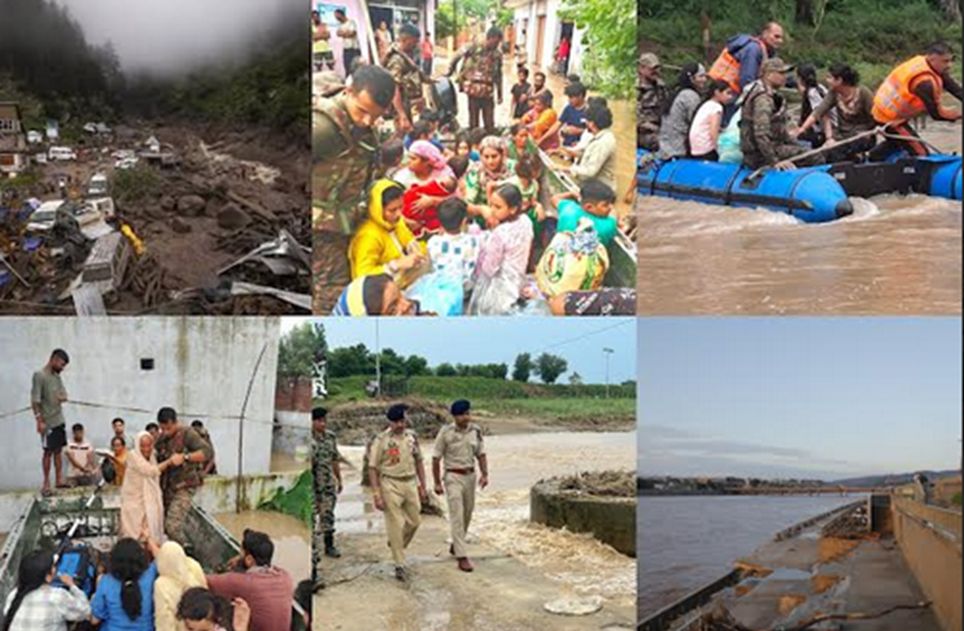
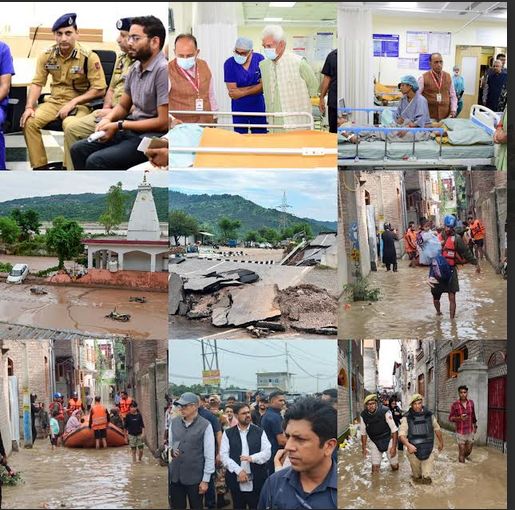
Administrative Response, Relief : In Katra, Lieutenant Governor Manoj Sinha, who also heads the Shri Mata Vaishno Devi Shrine Board, visited hospitals to meet survivors. Calling it a heart-wrenching calamity, he announced ₹9 lakh ex-gratia compensation for each deceased pilgrim’s family and assured the best possible medical care for the injured. Under the official relief policy, ₹5 lakh compensation will be provided to the next of kin while the injured will receive ₹50,000 each. Special ambulances were arranged to transport bodies back to their native states at no cost, with the administration coordinating directly with district authorities across northern India. Sinha also visited Narayana Hospital in Katra, meeting the injured and promising comprehensive rehabilitation support. “Precious lives have been lost in this natural tragedy. My heartfelt condolences to the bereaved families. I pray for the speedy recovery of the injured,” he said, assuring that the government was mobilising all resources to stand by the affected families. Meanwhile, the Indian Army, Air Force, NDRF, SDRF, and police mounted one of the largest humanitarian operations in recent years. Rescue teams were deployed in RS Pura, Garhi Garh, and Shergarh, where civilians were trapped in submerged homes. Army helicopters ferried stranded villagers from remote hamlets such as Kachle, Amli, and Nad. At Sher-e-Kashmir University in Jammu, soldiers carried out dramatic rescues of trapped students, while in Swahanjana, school children were escorted to safety through waist-deep water. Eleven BSF personnel marooned at Nikka Border Outpost were airlifted, while police and Army boats evacuated nearly 70 civilians from Makaura village. The scale of deployment showed the severity of the crisis, yet the administration soon faced sharp criticism for failing to heed advance weather alerts. Former Chief Minister Omar Abdullah questioned why pilgrims were allowed to continue their trek despite forecasts of heavy rain. “When we knew about the weather, should we not have stopped pilgrims from trekking? Why were people not moved to safer places?” he asked. His comments captured the wider unease about whether the administration had prioritised religious tourism over public safety.
Anatomy Of The Disaster: The Vaishno Devi pilgrimage has always been one of India’s most tightly managed yatras, drawing over a crore devotees every year. Two main tracks connect Katra to the shrine: the Himkoti route and the older Ban Ganga–Ardhkuwari path. On Tuesday morning, authorities suspended the Himkoti track due to rain but continued to allow pilgrims on the old route until early afternoon. At around 3 pm, the cloudburst struck, catching hundreds of devotees mid-way. A CRPF officer involved in rescue operations recalled that the sheer suddenness gave people no chance to escape. Within minutes, the pathway was converted into a river of sludge, and the tin-roofed shelter where many had taken refuge collapsed in an avalanche of boulders. Meteorologists later revealed that Jammu had recorded 380 mm of rainfall in just 24 hours, breaking all previous records since 1910. The last highest was 270.4 mm in 1988. This unprecedented intensity compounded the devastation, unleashing floods, landslides, and house collapses across the region.
A Region Brought To A Standstill : The impact of the rainfall paralysed life far beyond Reasi and Doda. Highways connecting Jammu to Srinagar, Pathankot, and Doda–Kishtwar were all blocked by landslides, while a vital bridge on the Tawi collapsed, isolating Kathua and Samba. Rail services were suspended, with 18 trains cancelled and several short-terminated. Air traffic into Jammu was disrupted due to poor visibility, with passengers stranded at airports. Schools and colleges were shut across multiple districts, while the Jammu and Kashmir Board of School Education postponed Class 10, 11, and 12 examinations. In Kashmir, the Divisional Commissioner ordered the closure of schools and universities in Anantnag, Pulwama, Kulgam, Shopian, Budgam, and Srinagar. In Jammu, the Directorate of School Education announced the continued closure of government and private schools till August 27, citing flood-like conditions. Officials said the safety of students was paramount.
Anantnag Under Water: Nowhere was the scale of flooding more visible than in Anantnag town, which resembled a waterlogged island. Streets around Lal Chowk, Mehandi Kadal, and the Deputy Commissioner’s office were submerged. Tractors ferried residents across inundated roads, while police and SDRF teams deployed boats. Even the Principal District Judge had to reach his court by boat. Health Minister Sakina Itoo rushed to hospitals in Srinagar and Anantnag to take stock of the situation. She reminded officials of the horrors of the 2014 floods, when the Jhelum breached its embankments, submerging Srinagar city. “This time, we are determined not to let things spiral,” she said, adding that hospitals were functioning and immediate measures were being taken to safeguard patients. Anantnag Police carried out coordinated rescues, moving families, elderly residents, and children to temporary shelters in schools and community halls. Their statement underlined that despite bad weather and operational difficulties, no lives had been lost during evacuations.
“After a tragedy at a Himalayan pilgrimage site, rescue efforts are shifting to recovery and rehabilitation. This event has exposed the delicate balance between religious faith and safety in these journeys. It has left families grieving and highlights the urgent need for policymakers to improve disaster preparedness and pilgrimage management in the face of unpredictable climate changes. The key question is whether these lessons will be learned and acted upon or simply forgotten over time.”
Echoes Of 2014 Deluge, Climate Warnings : For many residents, the scenes revived haunting memories of September 2014, when the Jhelum’s fury killed over 300 people and destroyed property worth thousands of crores. Experts warned that extreme rainfall events were becoming increasingly common due to climate change. Dr. Altaf Ali, an environmental scientist at Kashmir University, explained that the Himalayas were warming faster than the global average. With more moisture in the atmosphere, cloudbursts and flash floods were occurring more frequently. He said pilgrimage routes, highways, and towns built in fragile zones were particularly at risk, and the need for climate-resilient planning was urgent.
Pilgrimage Under Risk|Faith Versus Safety: The tragedy has also re-ignited the debate on how mass pilgrimages should be managed in ecologically fragile regions. The Vaishno Devi yatra, Amarnath yatra, and Char Dham routes in Uttarakhand all attract millions of devotees each year, often leading to disasters when weather turns extreme. Urban planner Dr. Irfan Shah argued that infrastructure expansion for pilgrimages often ignored safety advisories. “We keep building tunnels, shelters, and concrete paths to accommodate millions, but rarely do we integrate disaster-resilient planning. Safety advisories are ignored in the rush of faith,” he said. Experts have suggested linking yatra permissions directly with real-time weather forecasts, limiting the number of daily pilgrims during monsoon, building safer shelters, and conducting evacuation drills.
Survivors’ Tales Of Narrow Escapes: Survivors of the Adhkunwari tragedy recounted chilling experiences. Sunita Devi, a 42-year-old from Bareilly, said she and her children were just minutes away from the site when they heard a thunderous roar. “The earth shook, water rushed down. People screamed, some fell. We clung to a railing until soldiers pulled us out,” she recalled. Another pilgrim, Rajesh Kumar from Delhi, said he and others were reassured that rain would stop soon, and no one expected the sudden fury. “The shelter where we rested is gone. Most of those sitting inside are dead,” he said, his voice trembling.
Kashmir Horizon View: As rescue operations transition into recovery and rehabilitation, the tragedy has left behind unanswered questions and deep scars. It has exposed once again the precarious balance between faith and safety in Himalayan pilgrimages. For the bereaved families, the journey to Vaishno Devi has ended in grief; for policymakers, it has underscored the urgent need to rethink disaster preparedness and pilgrimage management in an era of increasingly unpredictable climate. Whether these lessons will be acted upon, or forgotten as memories fade, remains to be seen.
(“Team Kashmir Horizon” is committed to continuous improvement and invites feedback and suggestions from readers and its followers on social media sites. Reader insights are considered vital for enhancing content quality and empowering the community. The team encourages open communication and values the thoughts and ideas of its audience, believing that such input will enable them to serve the public more effectively. The initiative aims to ensure that readers have the best possible experience with “Kashmir Horizon”. Interested individuals can reach out to us via email at [email protected].)