Omar’s Call To Empower Students, Educators Alike Fuels Sense Of Equality
“At the NEP 2020 conference in Srinagar this week Chief Minister Omar Abdullah called for a region-specific, inclusive approach to education reform. He emphasized that NEP’s success depends on its practical implementation, especially in remote areas of Jammu and Kashmir. Highlighting teacher shortages, digital gaps, and the need for regional language promotion, he urged educators to focus on grassroots challenges. His vision: an empowered, community-driven system that reflects local culture and addresses real needs.”
Mohammad Irfan
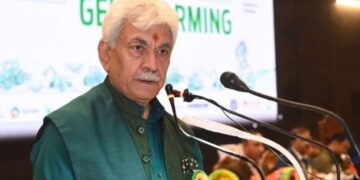
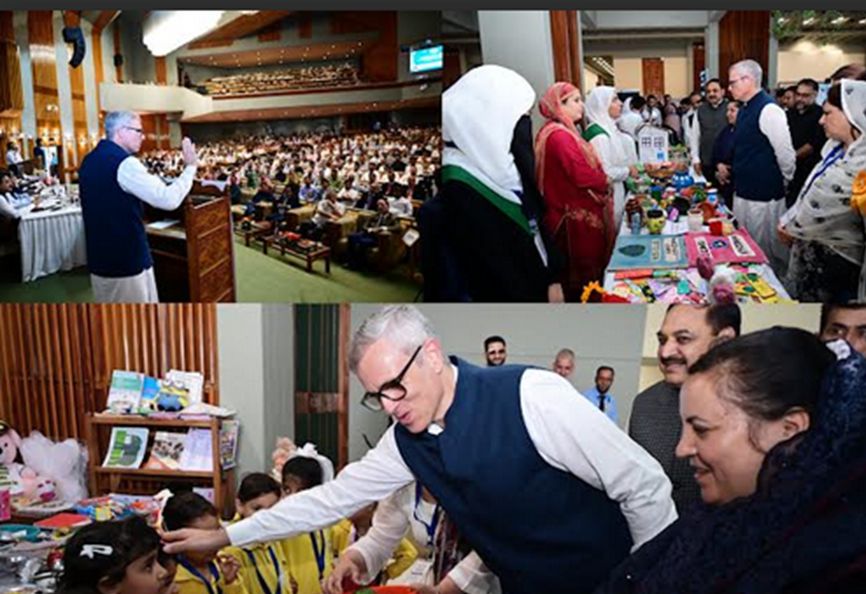
In a powerful and far-sighted address at the Sher-i-Kashmir International Convention Centre (SKICC), Chief Minister Omar Abdullah delivered a clarion call for a holistic and grassroots-level implementation of the National Education Policy (NEP) 2020 in Jammu and Kashmir. Speaking at the One-Day Conference titled “Empowering Education Leaders for Holistic Education”, the Chief Minister articulated a clear vision for the region’s educational transformation—one grounded in inclusivity, innovation, cultural sensitivity, and empowerment of educators. The event, marked by the presence of academic luminaries, policymakers, teachers, and students, offered more than ceremonial rhetoric—it brought to the fore deep reflections on the successes and failures of NEP’s implementation so far, especially in the distinct and often challenging terrain of Jammu and Kashmir.
NEP At Five; Time for Reflection, Recalibration: Calling the NEP a “magnificent and far-reaching” framework, Omar Abdullah reminded stakeholders that five years after its rollout, the policy must now be subjected to critical self-assessment. “This is the time to evaluate where we have succeeded, where we have fallen short, and what more can be done to implement it better,” he said. “A policy is only as effective as its application and understanding.” This emphasis on reflection and recalibration is significant. While the NEP-2020 offers a blueprint for transforming India’s education system through flexibility, multidisciplinary learning, regional language promotion, and experiential education, its actual execution varies widely across states. In a union territory like Jammu and Kashmir—with unique socio-political and geographic challenges—the task is particularly daunting.
Local Needs, Local Solutions; The CM’s Bottom-Up Approach: Perhaps the most compelling aspect of Abdullah’s speech was his insistence on tailoring the NEP to local realities. He acknowledged that true change cannot come from superficial implementation. Instead, success depends on how sensitively the policy is adapted to the cultural, linguistic, and logistical realities of each region. He cited a stark example: “In Jammu, only a few schools offer Urdu; in Kashmir, few offer Hindi. Even regional languages like Kashmiri, Dogri, or Punjabi are taught in a very limited number of institutions.” These gaps, he asserted, must be filled gradually, within available resources, but with determined intent. This point underscores a central flaw in many top-down education reforms in India: their tendency to neglect local cultural and linguistic dynamics. Abdullah’s insistence on regional language promotion aligns closely with the NEP’s own vision, which calls for education in the mother tongue or regional language at least till Grade 5. However, for this to materialize, faculty availability, curriculum design, and community support are non-negotiable prerequisites.
Recognizing The Unsung Heroes; Teachers in Remote Regions: The Chief Minister strongly pushed back against frequent comparisons between private and government schools. “Setting up a school in Srinagar is easy. Try opening one in Gurez, Tangdhar, or Machil,” he said, emphasizing that many government teachers operate in the harshest, most isolated terrains of the UT, often without recognition or support. This statement is particularly relevant for Jammu and Kashmir where difficult topography and weather isolate entire communities for months, making education delivery a logistical challenge. That these teachers continue their service, often walking kilometers through snow or navigating unreliable roads, is testimony to their dedication—and yet, their contributions often go unnoticed. In many ways, Abdullah’s words were a powerful affirmation of the equity principle embedded in NEP-2020: ensuring quality education for all, regardless of geography or socio-economic status. His remarks urged a rethinking of how teacher deployment, incentives, and professional development are structured in far-flung areas.
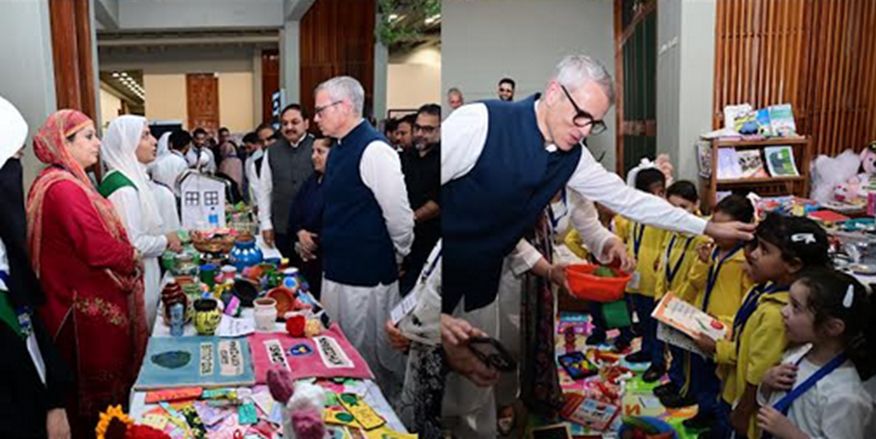
Innovation From The Ground Up; Students As Problem-Solvers: One of the most heartening aspects of the event was the exhibition of student projects—real-life solutions to pressing local problems, including models on water conservation, low-plastic alternatives, winter-specific pipe systems, and awareness campaigns on climate change. “Our children don’t lack talent; they lack exposure and opportunities,” Abdullah said, adding that such displays are a “beacon of hope” and proof that innovation need not be imported—it can be nurtured locally if students are empowered. This is where the vision of NEP intersects organically with ground realities. By promoting problem-solving, design thinking, and experiential learning, the NEP envisages a learning environment where students are not passive recipients of knowledge, but active contributors. Abdullah’s focus on providing platforms for such expression is not just heartening—it’s imperative. The takeaway is clear: educational reforms must go beyond classrooms and textbooks to encourage a culture of innovation. Government and institutional partnerships, funding for student-led projects, and community-level competitions could catalyze this movement further.
Inclusion As The Cornerstone Of Educational Reform: Abdullah’s speech made a heartfelt plea for making education inclusive—not just on paper but in practice. “Every child—regardless of physical or learning challenges—deserves a chance to learn. Are our schools truly inclusive and accessible to all?” he asked. This question is especially urgent for Jammu and Kashmir. Though the NEP advocates inclusive education, the ground reality in many parts of the UT is starkly different. Children with disabilities often face infrastructural barriers, societal stigma, and lack of specialized support staff. While a few model schools and NGOs have taken the lead, a system-wide transformation is overdue. The Chief Minister’s call signals a potential policy pivot—toward Universal Design for Learning (UDL), differentiated teaching methods, and integration of assistive technologies. This shift will require dedicated budgets, teacher training, and legislative push. But the first step—political will—seems to be in place.
Education A Societal Concern: Beyond The Classroom: Omar Abdullah’s remarks also touched upon the unique public discourse around education in Kashmir. “From school holidays to examination schedules, decisions around education often spark debate in every household,” he observed. Indeed, this deep-rooted connection between the society and the education system is a double-edged sword. On one hand, it reflects community involvement—a positive force. On the other, it can sometimes lead to undue politicization or resistance to change. Yet, it offers a strategic opportunity: by leveraging community engagement, reforms can be better communicated, better received, and ultimately, better implemented. The Chief Minister’s emphasis on public sentiment hints at a participatory approach to policy rollout—where parents, teachers, students, and local leaders are brought into the fold of decision-making.
Bridging The Digital Divide: Infrastructure, Equity: Omar Abdullah did not shy away from acknowledging the digital divide—a challenge that became stark during the COVID-19 pandemic. While online learning expanded possibilities, it also widened the equity gap, particularly in regions with poor connectivity and limited access to devices. “As the government’s financial capacity improves, efforts to bridge that divide will be intensified,” he said, signaling a renewed push for digital infrastructure. However, bridging the divide must go beyond hardware. Digital literacy, local content in regional languages, cyber safety education, and teacher training must accompany any infrastructural investment. NEP-2020 talks extensively about digital empowerment, but the CM’s practical framing of the issue grounds it in the lived experiences of Kashmir’s students and teachers.
Institutional Collaboration, Thought Leadership: The conference also saw significant institutional development: a Memorandum of Understanding (MoU) was signed between the Islamic University of Science & Technology (IUST) and the Directorate of School Education, Kashmir, to foster school-university collaboration. Such partnerships are a vital aspect of the NEP ecosystem, especially in fostering academic research, pedagogical innovation, and capacity building. By linking schools to higher education institutions, a bridge is created that can guide curricular improvements, teacher training, and student mentorship. Prof. Shakeel Romshoo, Vice Chancellor of IUST, and Ram Niwas Sharma, Secretary of School Education, spoke about the progress and challenges of implementing NEP, echoing many of the CM’s observations. Minister for Education, Sakina Itoo, reiterated the administration’s commitment to making the education system future-ready and equitable.
Leadership, Vision: Education The Foundation Of Development: Ultimately, the heart of Omar Abdullah’s speech lay in the belief that educators are not merely service providers—they are nation builders. “You are not just teaching curriculum—you are shaping citizens, instilling values, and building futures,” he said. Such framing elevates the role of teachers, principals, and educational leaders to that of agents of social transformation. It aligns with the NEP’s call to empower teachers as co-creators of curriculum and innovation leaders. Abdullah’s address was not a technical policy speech—it was a philosophical reaffirmation of education’s transformative power, deeply rooted in the context of Jammu and Kashmir.
Omar Abdullah’s message was clear—education reform must be rooted in ground realities, not just policy ideals. He stressed collaboration, teacher support, and inclusivity as the pillars of NEP success. With focused effort, Jammu and Kashmir can lead in implementing NEP in a meaningful way—one that delivers quality education for all, from cities to far-off villages.
Charting A Future of Educational Justice, Possibility: As the curtains fell on the NEP conference at SKICC, the mood was reflective but hopeful. The road ahead is not easy—financial constraints, staffing shortages, societal challenges, and political uncertainties still loom large. Yet, Chief Minister Omar Abdullah’s speech offered a roadmap built on key principles: localized adaptation, teacher empowerment, inclusivity, student innovation, and community engagement. If these principles are translated into actionable policy with sustained political and bureaucratic support, Jammu and Kashmir could very well emerge as a model of NEP implementation in challenging environments. More than five years after NEP-2020 was launched, the conversation in Srinagar was not about ticking boxes—it was about imagining a new educational future for a region long marked by disruption, yet filled with potential. With clear-eyed leadership and a bottom-up approach, the dreams articulated at the SKICC may well find ground in the classrooms of Gurez, the labs of Baramulla, and the blackboards of Kishtwar. The challenge is enormous, but so is the opportunity. And if education is, as Omar Abdullah put it, about “building futures,” then today’s conference was one step toward ensuring those futures are inclusive, innovative, and bright.
Kashmir Horizon View: The way forward for implementing the National Education Policy (NEP) 2020 in Jammu and Kashmir must focus on translating its vision into practical, region-specific strategies. As Chief Minister Omar Abdullah emphasized, district-level action plans tailored to local needs are essential to address gaps in infrastructure, language diversity, and faculty shortages, especially in remote areas like Gurez and Machil. Teachers must be empowered through continuous training, recognition, and autonomy, particularly those serving in difficult terrains. Their role should go beyond syllabus delivery they must be recognized as key agents of social transformation. Inclusive education must also become a system-wide priority, with accessibility audits, special educators, and assistive technologies integrated into government schools to support children with disabilities and learning challenges. Reviving regional languages such as Kashmiri, Dogri, and Punjabi through curriculum and trained faculty will help preserve cultural identity while enhancing cognitive development. Simultaneously, efforts to bridge the digital divide must go beyond device distribution to include connectivity, digital literacy, and localized content. The recent MoU between IUST and the Directorate of School Education is a step in the right direction. Strengthening school-university linkages can foster innovation, mentorship, and collaborative learning. Community participation must be institutionalized through School Development Committees and public forums, enabling collective ownership of education reforms. Robust monitoring through a central NEP dashboard and independent status reports will ensure transparency and accountability. Periodic reviews by a dedicated policy council can guide mid-course corrections.
(“Team Kashmir Horizon” is committed to continuous improvement and invites feedback and suggestions from readers and its followers on social media sites. Reader insights are considered vital for enhancing content quality and empowering the community. The team encourages open communication and values the thoughts and ideas of its audience, believing that such input will enable them to serve the public more effectively. The initiative aims to ensure that readers have the best possible experience with “Kashmir Horizon”. Interested individuals can reach out to us via email at [email protected].)