- Says “Onus on SKUAST-K Students to Transform J&K’s Farm Economy”
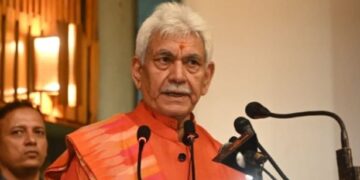
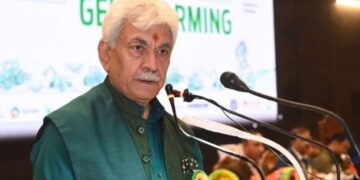
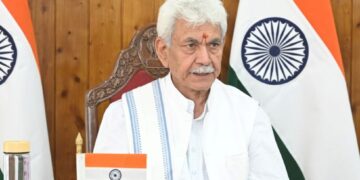
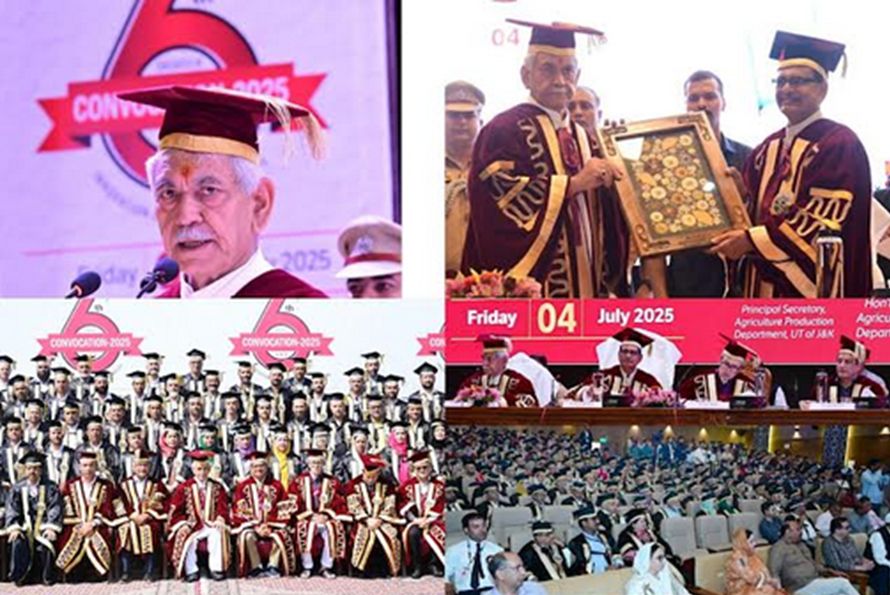
“The 6th Convocation Ceremony of Sher-e-Kashmir University of Agricultural Sciences and Technology (SKUAST)-Kashmir marked a significant moment in the context of Jammu and Kashmir’s transformation. The event, attended by national and regional dignitaries, highlighted key themes such as agricultural advancement, women’s empowerment, academic excellence, and a vision for youth-led development. Lieutenant Governor Manoj Sinha, who serves as the Chancellor of SKUAST-K, presided over the ceremony, while Union Minister of Agriculture & Farmers Welfare and Rural Development, Shivraj Singh Chouhan, attended as the Chief Guest. Their presence underscored the alignment between local aspirations and national developmental goals. Chief Minister Omar Abdullah, acting as the Pro-Chancellor, contributed to the event’s significance by presenting a detailed roadmap aimed at rejuvenating agriculture and rural areas in Jammu and Kashmir. This convocation not only celebrated academic achievements but also reinforced the commitment to fostering growth and development in the region.”
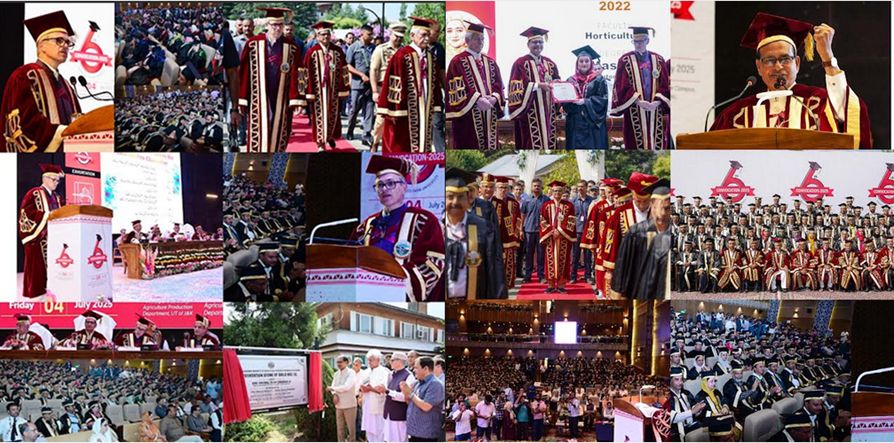
Against the scenic backdrop of Kashmir’s summer capital, the 6th Convocation Ceremony of Sher-e-Kashmir University of Agricultural Sciences and Technology (SKUAST)-Kashmir served not merely as a ceremonial academic farewell but as a powerful affirmation of a transforming Jammu and Kashmir. In the presence of national and regional dignitaries, the convocation encapsulated a compelling narrative of agricultural advancement, women’s empowerment, academic excellence, and a renewed vision of youth-led development. Presided over by Lieutenant Governor Manoj Sinha, who is also the Chancellor of SKUAST-K, and graced by the Union Minister of Agriculture & Farmers Welfare and Rural Development, Shivraj Singh Chouhan, as the Chief Guest, the convocation became a showcase of synergy between local aspirations and national developmental priorities. Chief Minister Omar Abdullah, serving as the Pro-Chancellor of the university, added political gravitas and policy depth to the event by outlining a comprehensive roadmap for agricultural and rural rejuvenation in Jammu and Kashmir.
Women Leading The Agri-Frontier: Among the most defining highlights of the convocation was the remarkable academic performance of women students. Out of the 150 gold medals awarded, 115 were conferred upon female graduates. Similarly, out of 445 Certificates of Merit, 334 were awarded to women. In total, of the 5,250 degrees conferred—including undergraduate, postgraduate, and Ph.D—2,661 went to female students. “Proud to see our daughters breaking barriers and achieving success in Agricultural Science & Technology,” said LG Manoj Sinha. “It reflects a bright future for J&K and the nation.” This data-driven achievement is more than symbolic; it points to a fundamental shift in the gender dynamics of higher education and agricultural science in the region. In a traditionally male-dominated sector, the rise of women at SKUAST-K is a signal that the future of agriculture in Jammu and Kashmir is being shaped with a more inclusive and diverse lens.
A Holistic Vision For Agricultural Reforms: In his address, LG Sinha elaborated on the transformative reforms taking root in the Union Territory’s agriculture and allied sectors. He hailed the Holistic Agriculture Development Programme (HADP) as a model of agricultural revolution not just for the region but for the entire nation. “Under the visionary leadership of Prime Minister Narendra Modi, agriculture has become a mainstay of India’s economy. This change is clearly visible in J&K’s agricultural landscape,” Sinha noted. Launched with an investment exceeding ₹5,000 crore, HADP is not a routine reform package but a comprehensive strategy to transition from subsistence farming to a sustainable, commercial, and tech-enabled agricultural economy. With 29 transformative projects, HADP aims to modernize key sub-sectors including high-density horticulture, dairy farming, sheep husbandry, saffron cultivation, and post-harvest management.
Agriculture The J&K’s identity, An opportunity For Youth To Transform Economy, Say CM Omar : In his inspiring speech, Chief Minister Omar Abdullah echoed the urgency of this transformation while grounding it in the socio-cultural realities of Jammu and Kashmir. “Over 70 percent of our population is directly or indirectly dependent on agriculture. It is not merely an occupation — it defines our way of life,” said Abdullah. He reminded the graduates that they are stepping out not just with degrees, but with the responsibility to be catalysts of change. “Help us shape this new story — not through slogans, but through service. Not through entitlement, but through excellence,” he urged. “As you rise, let others rise with you. Whether you go to Bengaluru or Berlin, carry J&K in your heart.” Omar’s metaphor of the seed—growing through resistance into a tree that provides shade and fruit—symbolized the essence of growth rooted in resilience, empathy, and purpose. His address stood out for its call to innovation, entrepreneurship, and service-oriented leadership, urging the youth to build agri-startups, consult farmer groups, and privatize extension services. “Can you double the income of our small farmers? Can you build climate-smart agri-enterprises? If yes, then know this — you will never walk alone. The government will stand with you,” he said. Before ending his speech, CM Omar Abdullah led a pledge ceremony, reminding the graduates to uphold truth, duty, and perseverance in whatever paths they pursue. “To the daughters of this land — you are scripting a golden future with your brilliance,” he said, receiving heartfelt applause from the audience. He said that the agriculture of yesterday cannot feed the aspirations of tomorrow.” But with a new generation of innovators, scientists, and leaders coming out of institutions like SKUAST-K, tomorrow’s aspirations are already taking root.
Shivraj Singh Chouhan For National vision, local execution: Union Minister Shivraj Singh Chouhan’s participation and words of affirmation added the much-needed national framework to the discussions. Speaking warmly of his interaction with locals and the serene beauty of Kashmir, he called Jammu & Kashmir the “crown jewel of India.” “We are fully committed to developing J&K into a horticultural hub,” he said, emphasizing how SKUAST-K has emerged as an academic institution of national and international relevance, hosting students from across 30 Indian states and abroad. He underscored the importance of practical application over theoretical knowledge. “Convocation is not the end of learning; it is the beginning of knowledge-sharing with society,” he told the graduating batch.
Chouhan Highlights PM Modi’s Six-Point Agricultural Strategy: Increasing production, Reducing the cost of cultivation, Ensuring fair prices, Providing compensation for losses, Diversifying agriculture and promoting natural farming and land conservation These priorities were not listed as distant policy goals, but as guiding principles for graduates, researchers, and institutions alike. He cited practical examples—like the increase in apple yield from 10 to 60 tonnes per hectare due to high-density plantation—to stress how innovation is already delivering results in Jammu & Kashmir. The announcement of a Clean Plant Center with a budget of ₹150 crore under the Mission for Integrated Development of Horticulture (MIDH) highlighted the government’s commitment to minimizing risks from contaminated planting material, an issue that has long plagued fruit growers in the region.
Technology As The New Soil: Both LG Sinha and CM Omar Abdullah placed significant emphasis on leveraging technology and research. SKUAST-K’s initiatives in artificial intelligence, machine learning, gene editing, speed breeding, and regenerative medicine were cited as examples of how the institution is aligning itself with global knowledge paradigms. “Education is not preparation for life; education is life itself,” said LG Sinha, reiterating that future-ready education must align with global industry needs. His praise for Vice Chancellor Prof. Nazir Ahmad Ganai’s leadership in developing state-of-the-art infrastructure, launching new academic programs, and creating Centres of Excellence was evidence of SKUAST-K’s growing prominence. The presence of faculty, scientists, policymakers, and students at the convocation underscored the multi-stakeholder nature of the transformation taking place. Agriculture in Jammu & Kashmir is no longer just about crops and livestock — it is about innovation, data, community, equity, and climate resilience.
Symbolism, Structural Reforms: Symbolically, the laying of the foundation stone for a new Girls’ Hostel by Union Minister Shivraj Singh Chouhan during the ceremony added another layer of commitment toward gender equity in higher education. It’s not just the medals or degrees that matter; infrastructural investments ensure that aspirations can be pursued in a safe and enabling environment. The announcement comes at a time when the government’s larger goal of building a knowledge economy and bio-economy in the UT requires robust educational and research institutions like SKUAST-K to serve as engines of change. The convocation ceremony concluded with the conferral of nearly 5,250 degrees, including 150 gold medals and 445 Certificates of Merit, setting a high benchmark for academic excellence in the agricultural sciences.
“The government’s initiative to promote modern, sustainable, and inclusive agriculture presents an opportunity for young innovators to develop transformative ideas that can enhance rural livelihoods. A strong focus on entrepreneurship within the agricultural sector, particularly through agri-tech startups, consultancy models, and private extension services, is essential. This entrepreneurial spirit must be supported by ongoing access to seed funding, incubation resources, and market connections. Institutions like SKUAST-K are pivotal in fostering robust startup ecosystems that not only encourage innovation but also facilitate its scaling. The recent graduates, equipped with advanced skills, are positioned to become the pioneering agri-entrepreneurs who will redefine agricultural practices in the region. Additionally, the significant achievements of women at SKUAST-K highlight the necessity for their involvement in leadership roles across various sectors, including laboratories, farms, research institutions, and policymaking. Their participation is crucial for driving the agricultural transformation forward.”
Planting Seeds Of A New Era: The 6th Convocation of SKUAST-Kashmir was much more than a formal academic milestone; it served as a platform where local talent, national policy, and global aspirations intersected. The presence and speeches of LG Manoj Sinha, CM Omar Abdullah, and Union Minister Shivraj Singh Chouhan created a powerful alignment between vision, policy, and execution. The emphasis on women empowerment, agri-entrepreneurship, cutting-edge research, and community-focused leadership marks a turning point in the way Jammu and Kashmir is reimagining its agricultural identity. It sent a clear message — that the region is not just responding to challenges but actively shaping opportunities. Whether it’s through clean planting programs, startup ecosystems, or precision farming, SKUAST-K and its graduating class stand poised to lead the way. In a world where agriculture is increasingly shaped by climate, markets, and machines, the convocation proved that human capital — especially educated, empowered, and empathetic youth — remains the most critical input of all.
Kashmir Horizon View: As the graduates step out of the convocation hall and into the fields of practice and policy, their path ahead is marked with opportunity, challenge, and immense responsibility. The government’s push for modern, sustainable, and inclusive agriculture offers fertile ground for these young minds to sow new ideas, cultivate innovation, and harvest solutions that can transform rural livelihoods. The emphasis on entrepreneurship in agriculture—through agri-tech startups, consultancy models, and private extension services—needs to be backed by continued access to seed funding, incubation support, and market linkages. Institutions like SKUAST-K should lead the way in building robust startup ecosystems, where innovation is not only encouraged but also scaled. The alumni of this convocation, with their cutting-edge skills, can serve as the first generation of agri-entrepreneurs who redefine farming in the UT. Equally critical is the role of women in this transformation. Their overwhelming success at SKUAST-K should translate into real-world leadership roles in laboratories, farms, research institutions, and policymaking bodies. The government, in tandem with academic institutions, must create targeted programs that ensure women graduates have equal access to resources, mentorship, and recognition. Technology, too, must be scaled thoughtfully. AI, gene editing, machine learning, and speed breeding are tools that can change agriculture only if integrated meaningfully into local contexts. Research from SKUAST-K must be disseminated through farmer training camps, mobile apps, radio, and field demonstrations. Graduates can act as intermediaries between laboratories and lands, ensuring research finds root in real practice. Moreover, climate change and sustainability must remain at the heart of all future reforms. With shifting weather patterns, declining soil fertility, and resource scarcity becoming more pronounced, the future of agriculture will depend on how resilient and adaptable farming systems can be made. Graduates must view themselves not just as job seekers but as solution seekers—individuals capable of shaping climate-smart agriculture and policy.
(“Team Kashmir Horizon” is committed to continuous improvement and invites readers to provide feedback and suggestions. Reader insights are considered vital for enhancing content quality and empowering the community. The team encourages open communication and values the thoughts and ideas of its audience, believing that such input will enable them to serve the public more effectively. The initiative aims to ensure that readers have the best possible experience with “Kashmir Horizon”. Interested individuals can reach out to us via email at [email protected].)