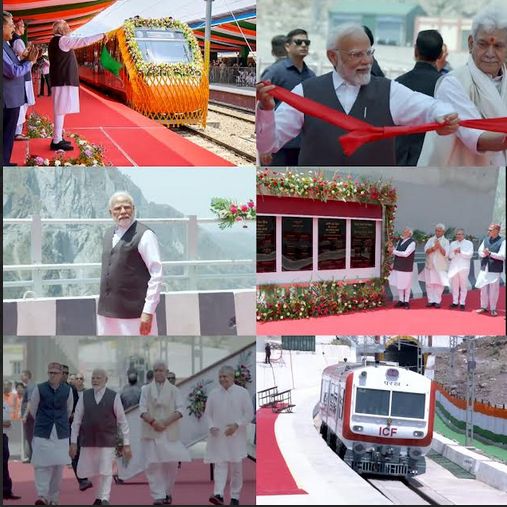
“In 1995, the construction of the Udhampur–Katra section commenced, followed by the Qazigund–Baramulla segment in 1999 and the Katra–Qazigund stretch in 2002. Significant milestones included the inauguration of Jammu–Udhampur in 2005, Baramulla–Mazhom in 2009, and the vital Banihal–Qazigund tunnel in 2013. The most recent major accomplishment occurred on 20 February 2024 with the opening of the Banihal–Sangaldan section, bringing the project closer to its ultimate objective.”
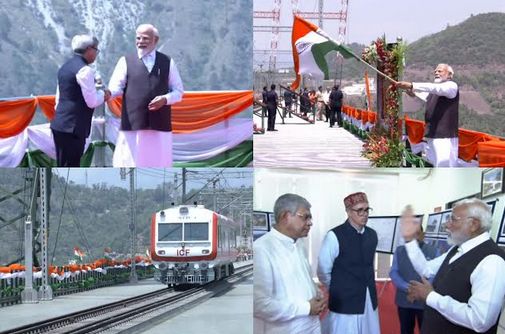
The dream of connecting the Kashmir Valley to the Indian railway network is more than a century old—an aspiration rooted deeply in history, ambition, and national integration. It was first envisaged in 1892 when Maharaja Pratap Singh laid the foundation stone for a Jammu–Srinagar rail link. This vision was further strengthened by Maharaja Ranbir Singh in 1898. At that time, multiple viable routes were considered to connect the Kashmir Valley with the plains of Punjab: the Banihal route from Jammu, the Poonch route via the Jhelum Valley, the Panjar route from Rawalpindi, and the Abbottabad route via Hazara. Surveys were conducted for both metre and broad gauge lines, but the unforgiving terrain, harsh weather, and lack of resources shelved these ambitious plans.
British And Post-Independence Efforts: The British revisited the concept in 1905, with Maharaja Pratap Singh agreeing to a railway line via Reasi along the historic Mughal Road. This narrow gauge line was to cross the Pir Panjal range, but again, political and financial constraints turned the idea into just another dream on paper. After India gained independence, the idea resurfaced several times but remained on hold until 1981 when the Jammu–Udhampur rail link was officially sanctioned. The vision started materializing, and a significant breakthrough came in 1994–95 when the final Udhampur–Srinagar–Baramulla Railway Line (USBRL) was sanctioned. In 2002, it was declared a “National Project,” acknowledging its strategic and developmental importance.
Timeline Of A Monumental Project: The timeline of the USBRL project illustrates the determination of successive governments and engineers to overcome formidable obstacles. In 1981, the first leg from Jammu to Udhampur was approved. In 1995, work on the Udhampur–Katra section began, followed by the Qazigund–Baramulla stretch in 1999 and Katra–Qazigund in 2002. Key milestones included the opening of Jammu–Udhampur in 2005, Baramulla–Mazhom in 2009, and the crucial Banihal–Qazigund tunnel in 2013. The latest significant achievement came on 20 February 2024 with the inauguration of the Banihal–Sangaldan section, inching the project closer to its final goal.
Employment Generation, Skill Development: One of the most tangible impacts has been employment generation. Recognizing the social cost of large-scale land acquisition, the government devised a policy offering jobs to families that lost more than 75% of their land to the railway. Under this provision, over 804 eligible beneficiaries were given direct employment by Indian Railways. Furthermore, project execution agencies generated more than 14,069 jobs during construction, of which around 65% were taken up by locals. The total project is estimated to have created over 5.25 crore man-days of employment—an economic lifeline for thousands of families. The USBRL project also led to enhanced local skills. The highly specialized nature of construction—including tunneling, bridge-building, electrification, and track-laying—demanded a sophisticated workforce trained in cutting-edge techniques. As a result, local artisans and workers received hands-on experience and now serve as skilled technicians across other national infrastructure projects.
Tackling Inaccessibility, Hostile Terrain: The execution of the USBRL project in a conflict-prone and geographically challenging environment brought its own set of hurdles. Terror threats, political instability, and lack of roads made even basic project logistics daunting. One of the major game changers was the construction of over 215 kilometers of approach roads to tunnel sites and bridgeheads. This network of roads not only accelerated the pace of construction but also brought long-isolated villages into the mainstream. To reach the most remote construction site at Sawalkote, army helicopters were deployed. Using MI-26 choppers, heavy construction machinery, including dumpers and excavators, were airlifted from Jammu to Surankote in October 2010. Makeshift helipads carved out with hand tools made this feat even more impressive.
Connecting Remote Communities To Civilization: These newly constructed roads ended the prolonged isolation of nearly 70 villages such as Guni, Paikhad, Gran, Batal Gala, Bakkal, Kauri, Dugga, Surukot, Basindhadhar, Sangaldan, and Bankoot. Home to over 1.5 lakh people, these villages had previously relied on precarious footpaths or boats to access nearby towns. The change has been dramatic. What were once sleepy hamlets with no motorable roads are now connected through a robust road network. As a result, local economies have begun to blossom with the rise of markets, workshops, tea stalls, and small restaurants. These villages are now buzzing with economic activities and are gradually transforming into semi-urban centers.
Enhanced Public Services,Social Mobility: Improved accessibility has also fostered better social integration and enhanced public service delivery. Where once villagers walked for hours to reach healthcare, education, or administrative facilities, they now travel by road or soon, by train. Students from remote areas can now dream of attending institutions in major towns. Patients can access hospitals faster, improving healthcare outcomes. Likewise, government departments find it easier to execute welfare schemes and developmental projects.
Boosting Tourism, Pilgrimage Circuits: Tourism, a mainstay of Jammu and Kashmir’s economy, has received a significant boost. The USBRL railway line is not just a transportation corridor; it is a pilgrimage and tourism lifeline. It connects iconic religious destinations such as the Shri Amarnath cave, Hazratbal shrine, Charar-e-Sharif, and Vaishno Devi temple with mainland India. With quicker, safer, and cheaper transportation, the inflow of tourists and devotees has surged, creating ripple effects across hotels, transport operators, local artisans, and shopkeepers.
Stimulating Trade, Agriculture: On the economic front, the USBRL project is a catalyst for local entrepreneurship. Improved transport facilitates faster and more economical movement of goods, especially perishable agricultural produce such as apples, walnuts, and saffron—signature products of Kashmir. Artisans specializing in carpets, papier-mâché, and Pashmina shawls now have better access to national and international markets. Traders and farmers no longer rely solely on road transport, which is often disrupted by landslides and weather. The reliable rail connectivity ensures reduced wastage, better market prices, and increased incomes.
Industrial Growth, Economic Diversification: Industrial development is another domain poised for growth. With easier transport of raw materials and finished goods, the USBRL opens new avenues for small and medium-sized enterprises (SMEs) in food processing, wool-based manufacturing, cold storage units, and even pharmaceuticals. The enhanced connectivity can trigger the setting up of industrial clusters, thus creating jobs and attracting investment in the long-neglected region.
Fostering National Integration, Social Cohesion: The benefits of the railway line go beyond the economic sphere. Socially, it will bring people from various regions and backgrounds together. Regular interaction through better mobility fosters a sense of shared identity and mutual understanding. Cultural exchanges will increase, encouraging greater tolerance and reducing regional alienation. For decades, inaccessibility has fostered a feeling of isolation among residents of remote districts. The railway acts as a bridge—literally and metaphorically—uniting people across religious, ethnic, and regional divides.
Strategic Significance, National Security: From a strategic perspective, the USBRL project is indispensable to national security. The border districts of Jammu and Kashmir are often sensitive and require rapid mobilization during emergencies. Rail connectivity strengthens the Indian Army’s logistics chain, enabling the swift movement of troops, supplies, and equipment. In times of natural disasters like earthquakes or floods, the rail line offers a lifeline for rescue and relief operations. The enhanced sense of national presence in the region is also a psychological buffer against separatist tendencies.
Environmentally Sustainable Infra: Environmentally, the USBRL offers a sustainable alternative to road transport. The electrified rail line reduces the dependency on diesel trucks, cutting down greenhouse gas emissions and air pollution. As global attention shifts toward climate-sensitive infrastructure, the USBRL stands out as a green initiative in a region already vulnerable to ecological degradation. Moreover, rail transport is more land-efficient and causes less damage to forests compared to expanding roadways.
“The Udhampur–Srinagar–Baramulla Railway Line represents far more than just a transportation initiative; it embodies national unity, economic revitalization, and social change. By creating job opportunities and enhancing trade, as well as linking the most remote communities in the Himalayan area, the USBRL project serves as a guiding light of progress in the face of challenges. Its completion is set to transform travel in Jammu and Kashmir while also serving as a driving force for sustainable, inclusive, and strategic development in the region. The railway tracks that traverse mountains, tunnels, and rivers narrate a tale of determination and hope—a narrative that now belongs to the residents of Jammu and Kashmir and to the future of India.”
Engineering Challenges,Triumphs: Despite its transformative potential, the USBRL project faced monumental challenges. The Himalayan terrain is not just steep and rocky but also geologically unstable. Construction crews had to drill through some of the youngest and most unpredictable mountain formations in the world. Seasonal snow, rainfall-induced landslides, and seismic activity posed constant threats to engineering work. Tunneling through the Pir Panjal range, especially constructing the 11.2 km-long Pir Panjal Tunnel, involved advanced geotechnical methods rarely used in Indian projects before.
Overcoming Law & Order Hurdles: Law and order problems, particularly during periods of terrorism, often brought construction work to a standstill. Project camps and workers occasionally came under threat, and consistent deployment of security forces was necessary to secure equipment and personnel. Land acquisition, too, proved contentious, with compensation disputes delaying progress in several zones. Despite these issues, the resilience of the workforce and the support of local communities kept the project alive through multiple setbacks.
Kashmir Horizon View: In conclusion, the Udhampur–Srinagar–Baramulla Railway Line is much more than a transportation project; it is a symbol of national integration, economic rejuvenation, and social transformation. From generating employment and boosting trade to connecting the most isolated communities of the Himalayan region, the USBRL project stands as a beacon of development amid adversity. Its completion will not only redefine travel in Jammu and Kashmir but also act as a catalyst for sustainable, inclusive, and strategic growth in the region. The tracks that wind through mountains, tunnels, and rivers tell a story of perseverance and promise—a story that now belongs to the people of Jammu and Kashmir and to the future of India.
(In commitment to continuous improvement the “Team Kashmir Horizon” invites it’s valuable readers to share their valuable feedback and suggestions with the “Team Kashmir Horizon”. The insights of readers will surely play a vital role in improving the content quality of “Kashmir Horizon” and contribute more for the empowerment of people. Please feel free to reach out to us at editor@ thekashmirhorizon.com. Team “Kashmir Horizon” eagerly anticipates thoughts and ideas of it’s readers, which will help us serve people and even more effectively. The inputs of valuable readers are highly valued as “Kashmir Horizon” strives to provide it’s readers the best possible experience.)