“Operation Sindoor was launched to deliver justice to the victims of the Pahalgam terror attack and their families. Nine terrorist camps were targeted and successfully destroyed. Locations were so selected to avoid civilian infrastructure and loss of civilian lives. operation hit critical nodes in a vast terror infrastructure across Pakistan and PoK, based on high-confidence intelligence inputs. The strike signifies a new level of operational reach and strategic clarity in India’s response to cross-border terrorism.”
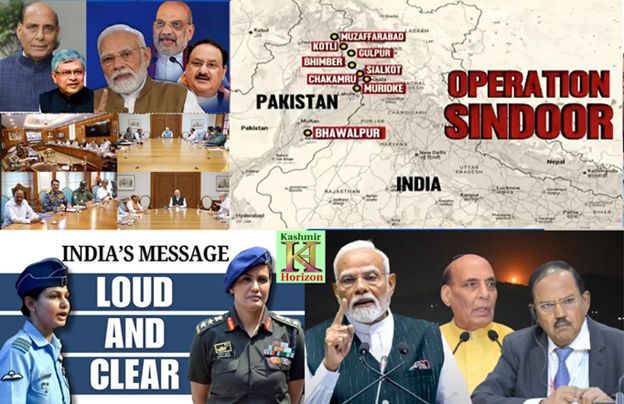
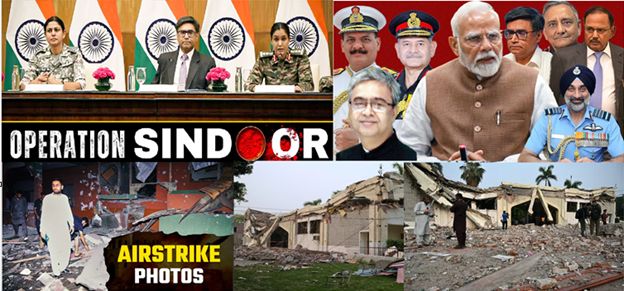
In a decisive military action, India launched Operation Sindoor early this week, targeting and destroying nine terrorist camps deep inside Pakistan and Pakistan-occupied Jammu and Kashmir (PoK), in response to the April 22 Pahalgam terror attack that killed 26 civilians, mostly tourists. The precision strikes were conducted by the Indian Armed Forces and showcased a coordinated tri-services effort aimed at delivering justice to the victims and dismantling key terror infrastructure nurtured on Pakistani soil. Indian officials clarified that the operation was carefully calibrated to avoid civilian casualties and damage to civilian property. At a joint press briefing, Wing Commander Vyomika Singh, Foreign Secretary Vikram Misri, and Colonel Sofiya Qureshi detailed the mission’s scope and impact. “Operation Sindoor was launched to deliver justice to the victims of the Pahalgam terror attack and their families. Nine terrorist camps were targeted and successfully destroyed. Locations were so selected to avoid civilian infrastructure and loss of civilian lives,” Wing Commander Singh said. She revealed that the operation hit critical nodes in a vast terror infrastructure across Pakistan and PoK, based on high-confidence intelligence inputs. The strike signifies a new level of operational reach and strategic clarity in India’s response to cross-border terrorism.
Key Targets And Footage Of Destruction: Colonel Sofiya Qureshi presented drone footage and satellite imagery of the destroyed camps, including several historically significant facilities such as Muridke, the Lashkar-e-Taiba headquarters where 2008 Mumbai attack operatives like David Headley and Ajmal Kasab received training. Other major camps struck were: Sarjal Camp, Sialkot, Markaz Ahle Hadith and Markaz Abbas, Kotli, Barnala Camp, Bhimber, Mehmoona Joya Camp, Sialkot, Syedna Bilal Camp and Shawai Nallah Camp, Muzaffarabad, Gulpur Camp, Kotli, linked to past attacks in Poonch and Jammu. These sites had long been under Indian surveillance and were being used to prepare terrorists for infiltration and strikes in Jammu and Kashmir.
Terror Attack Aimed To Derail Peace Process, Says Misri: Foreign Secretary Vikram Misri described the Pahalgam attack as an attempt to sabotage normalcy and the democratic process in Jammu and Kashmir. “Victims were shot at close range, in front of family members, in a deliberate attempt to instill fear and break the spirit of Kashmiri society. The brutality was meant to send a message and undermine peace,” he said. Misri further warned of impending attacks, based on intelligence assessments. “Our actions were measured and proportionate. India exercised its right to defend itself and prevent further cross-border terrorism,” he added. He also condemned Pakistan’s “provocative and escalatory actions”, including their retaliatory strikes on Thursday night, which he called “blatantly farcical denials” of aggression and reflective of Islamabad’s “duplicity.”
Pakistan’s Retaliation Thwarted By Indian Defences: In a significant escalation, Pakistan launched a coordinated series of drone and missile attacks along India’s western border, attempting to strike Indian military assets and civilian infrastructure. Indian Defence Forces, using systems including the S-400 missile defence system, successfully intercepted and neutralized the majority of incoming threats, preventing major damage.
PM Interacts with Armed Forces Veterans Amid Tensions: Amid the rising hostilities, PM Modi also held an extensive interaction with former chiefs and senior veterans from the Army, Navy, and Air Force. The discussions focused on India’s strategic preparedness and long-term security outlook. The Prime Minister reportedly received inputs from the veterans on deterrence posture, regional stability, and counter-terrorism strategies.
Army Chief Empowered Under Emergency Provisions: In a rare move, the Central Government invoked Rule 33 of the Territorial Army Rules, 1948, empowering the Chief of Army Staff to call out “every office and every enrolled person” of the Territorial Army for active duty. This step underscores the seriousness of the emerging threat landscape and India’s readiness to escalate its defensive capabilities as needed. Operation Sindoor marks a watershed moment in India’s security doctrine. Not only has it showcased India’s capability to launch deep-strike missions with precision and restraint, but it also reinforces the country’s strategic intent to eliminate threats at their source. The subsequent failed retaliation by Pakistan, and India’s robust air defence response, further tilt the strategic balance in India’s favour. Diplomatically, India has conveyed to the international community that its actions were defensive, preemptive, and within the bounds of international law, targeting only verified terrorist assets.
HM Amit Shah’s Review Of Border, Airport Security At High-Level Meet: Union Home Minister Amit Shah convened a high-level meeting in the national capital to review the prevailing border situation and evaluate security arrangements at airports across the country. The meeting focused on reviewing the current situation along India’s borders and assessing the preparedness of security arrangements at airports. The discussion comes amid heightened vigilance in sensitive zones and a renewed push to strengthen national security infrastructure. Officials briefed the home minister about the overall security preparedness and shared updates on the current ground situation, especially in light of recent escalations. This fresh meeting with the top leadership of the BSF, CISF, and BCAS was convened just hours after a major anti-infiltration operation by the BSF along the India-Pakistan border.
DM Rajnath Speaks To Army, Air Force, Navy chiefs following Operation Sindoor: Union Defence Minister Rajnath Singh spoke to chiefs of the Indian Army, Indian Air Force and Indian Navy. The conversation happened in the aftermath of the Operation Sindoor conducted by the Indian Armed Forces where they destroyed terrorist hideouts.
India Strikes Back With Operation Sindoor 2.O: Operation Sindoor 2.O, executed in the pre-dawn hours of May 10, 2025, stands as a bold reaffirmation of India’s unwavering resolve to counter cross-border terrorism. Initiated after Pakistan’s attempted drone and missile strike targeting Indian cities and civilian infrastructure, the second wave of this carefully planned operation showcased the Indian Armed Forces’ unmatched precision, preparedness, and moral clarity in defending the nation.
India Targets Terror At Its Roots: This latest phase of the operation was more than a military response—it was a declaration of India’s strategic intent. Unlike traditional, limited-border skirmishes of the past, Sindoor 2 went deep into Pakistani territory and Pakistan-occupied Jammu and Kashmir, striking at the very roots of terrorism. These were not random targets, but verified terror hubs used to groom, arm, and deploy terror against India.
Surgical Precision, Zero Civilian Casualties: Indian Air Force squadrons, supported by real-time intelligence from ground assets and satellites, struck high-value targets with unmatched accuracy. The strikes were launched using precision-guided munitions from advanced platforms such as Mirage 2000s and Su-30 MKIs, ensuring zero civilian casualties. Targets included terror camps near Jhelum, arms depots in Bhimber, and indoctrination centers near Sialkot.
Key Terror Bases Neutralised: One of the most significant hits came at a fortified ammunition hub in Jhelum province used by Jaish operatives. Another major strike near Daska in Sialkot hit a religious front long used as a cover for radical training. Satellite imagery confirmed secondary explosions, highlighting the scale of destruction inflicted on the terrorist infrastructure.
Moral High Ground Maintained: What sets Sindoor 2 apart is India’s clarity of purpose and ethical conduct. The Indian government made it clear that the operation was aimed at terrorist infrastructure—not civilians. In sharp contrast to the indiscriminate violence unleashed by terrorists trained on Pakistani soil, India’s response was precise, calculated, and principled.
PM Modi Reviews National Security: Prime Minister Narendra Modi, following the success of the operation, held a high-level security meeting to review the situation. “We will not allow the blood of our innocents to be spilled without consequence,” he stated, reinforcing India’s right to self-defense. The meeting was attended by senior leaders including Defence Minister Rajnath Singh and NSA Ajit Doval.
India’s Response Aligned With International Law: Foreign Secretary Vikram Misri addressed the global community, emphasizing that India’s actions were well within its right to self-defense. He condemned Pakistan’s provocative behaviour and briefed key allies, who expressed support for India’s firm but measured response to terrorism. Despite clear evidence—open-source satellite images, intercepted communications, and video proof—Pakistan resorted to outright denial. This duplicity is not new, but it underscores the danger of Islamabad’s continued patronage of terrorist groups within its territory.
A Strategic Shift In India’s Doctrine: From a national security perspective, Operation Sindoor 2 marks a decisive shift in India’s defense doctrine. It highlights a move from reactive to pre-emptive strategy. India’s intent is clear: threats will be neutralised before they can strike, with precision and resolve. The people of India have rallied behind the government and armed forces. Social media is filled with expressions of pride, and even opposition parties acknowledged the operation’s success. Parliament saw rare bipartisan solidarity in support of national security.
“Pakistan’s retaliatory drone and missile strikes—largely neutralised by India’s advanced air defence systems—further underscored the contrast between the two nations’ approaches. While Islamabad resorted to denial and provocation, New Delhi maintained moral high ground by targeting only verified terror bases. The Indian leadership, including Prime Minister Narendra Modi and National Security Advisor Ajit Doval, reinforced the principle that national sovereignty is non-negotiable and civilian lives sacrosanct.”
India Calls For Peace, But Won’t Back Down: Even as Indian forces remain vigilant, New Delhi reiterated its desire for peace. But as Defence Minister Rajnath Singh put it, “Peace is possible only when there is zero tolerance for terror.” Operation Sindoor 2 is a statement: India wants peace, but it will not back down when provoked.
Kashmir Horizon View: Operation Sindoor marks a watershed moment in India’s evolving national security strategy, setting a powerful precedent for how the nation will deal with cross-border terrorism going forward. Launched in the aftermath of the heinous April 22 Pahalgam terror attack—which left 28 civilians dead, including children and tourists—the operation was a calibrated military response aimed at eliminating terrorist infrastructure within Pakistan and Pakistan-occupied Jammu and Kashmir (PoK). With precision strikes targeting nine verified terror camps, India not only avenged the loss of innocent lives but also sent an unambiguous message to its adversaries: terrorism will be met with swift and decisive action. What distinguishes Operation Sindoor from past responses is its strategic clarity and operational finesse. The strikes, conducted by the Indian Armed Forces across land and air, demonstrated unprecedented levels of coordination, intelligence gathering, and technological capability. From drone surveillance to satellite-guided munitions, the mission showcased India’s capacity to neutralise terror threats far beyond its borders without causing civilian casualties. Sites like Muridke, Bhimber, and Sialkot—long identified as breeding grounds for militant activity—were destroyed, disrupting the logistical and training networks of groups like Lashkar-e-Taiba and Jaish-e-Mohammed. India’s measured conduct also garnered international recognition. Unlike the often-indiscriminate tactics employed by non-state actors, India’s action was restrained, targeted, and in accordance with international law. Foreign Secretary Vikram Misri and Defence Minister Rajnath Singh both reiterated that the operation was purely defensive, undertaken to prevent future attacks and uphold national security. Global powers, while urging de-escalation, acknowledged India’s right to defend itself, a significant diplomatic endorsement in a region fraught with volatility. Pakistan’s retaliatory drone and missile strikes—largely neutralised by India’s advanced air defence systems—further underscored the contrast between the two nations’ approaches. While Islamabad resorted to denial and provocation, New Delhi maintained moral high ground by targeting only verified terror bases. The Indian leadership, including Prime Minister Narendra Modi and National Security Advisor Ajit Doval, reinforced the principle that national sovereignty is non-negotiable and civilian lives sacrosanct.
(In commitment to continuous improvement the “Team Kashmir Horizon” invites it’s valuable readers to share their valuable feedback and suggestions with the “Team Kashmir Horizon”. The insights of readers will surely play a vital role in improving the content quality of “Kashmir Horizon” and contribute more for the empowerment of people. Please feel free to reach out to us at editor@ thekashmirhorizon.com. Team “Kashmir Horizon” eagerly anticipates thoughts and ideas of it’s readers, which will help us serve people and even more effectively. The inputs of valuable readers are highly valued as “Kashmir Horizon” strives to provide it’s readers the best possible experience.)