“In the deadliest attack on civilians in Kashmir in over a decade, 26 people — including 25 tourists and one Nepalese national — lost their lives when militants opened fire in the picturesque Baisaran Valley. Emerging from the dense pine forests that embrace the valley, the assailants’ unleashed gunfire on unsuspecting visitors enjoying an idyllic afternoon. In minutes, a scene of joy and leisure turned into one of chaos, horror, and despair. Among those killed were Lieutenant Vinay Narwal, a newlywed Navy officer on his honeymoon; Bitan Adhikari, a young TCS employee from Kolkata; and Syed Adil Hussain Shah, a local pony handler who heroically shielded tourists, sacrificing his own life. The attack’s brutal nature and its strategic timing — coinciding with US Vice-President JD Vance’s high-profile visit to India — raised suspicions about a broader intent to destabilize the region and embarrass India on the global stage.”
The serene hills of Pahalgam, long celebrated for their lush valleys and peaceful allure, were shattered by an act of unimaginable brutality on April 22, 2025. In the deadliest attack on civilians in Kashmir in over a decade, 26 people — including 25 tourists and one Nepalese national — lost their lives when militants opened fire in the picturesque Baisaran Valley. Emerging from the dense pine forests that embrace the valley, the assailants’ unleashed gunfire on unsuspecting visitors enjoying an idyllic afternoon. In minutes, a scene of joy and leisure turned into one of chaos, horror, and despair. Among those killed were Lieutenant Vinay Narwal, a newlywed Navy officer on his honeymoon; Bitan Adhikari, a young TCS employee from Kolkata; and Syed Adil Hussain Shah, a local pony handler who heroically shielded tourists, sacrificing his own life. The attack’s brutal nature and its strategic timing — coinciding with US Vice-President JD Vance’s high-profile visit to India — raised suspicions about a broader intent to destabilize the region and embarrass India on the global stage.
Immediate Aftermath; Valley’s Humanity Shines Through: Despite the horror, what followed was a spontaneous outpouring of courage and compassion from the local community. Members of the Pahalgam Pony Handlers Association, many of whom had known the tourists personally, raced to the site. Without waiting for formal rescue teams, they crafted makeshift stretchers, ferried the injured on ponies, and carried many out of the killing zone. In the following hours, several Gurudwaras across Kashmir opened their doors to stranded tourists, offering them shelter, food, and comfort. Across Srinagar, Anantnag, and Baramulla, locals coordinated through social media, offering rides and safe houses to visitors desperate to flee. Emergency services, alerted within minutes, arrived swiftly. Around 4:30 PM, two critically injured victims were rushed to the Anantnag district hospital, while others were sent to nearby facilities. Those requiring advanced care were later airlifted to a military hospital in Srinagar. A dedicated tourist helpline was activated to assist families seeking information.
A Calculated Attack On Innocence: Investigations quickly revealed chilling details. The attackers had scoped out Baisaran’s vulnerability: an open plateau, few security patrols, a gathering of civilians, and difficult forested terrain for a quick escape. Their assault was methodical — a grim reminder that even Kashmir’s most tourist-friendly spots were not immune to violence. Security agencies believe the attack was orchestrated by a newly-formed faction believed to have links with cross-border handlers. Initial intelligence suggested their objective was twofold: to reignite fear in the valley just as tourism was rebounding post-pandemic, and to internationalize the Kashmir issue amid India’s rising diplomatic clout.
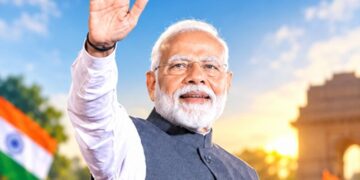
PM Modi: Vow of Justice: At the time of the attack, Prime Minister Narendra Modi was on an official visit to Saudi Arabia. Upon receiving the news, he immediately cut short his engagements, skipping an official banquet, and flew back to Delhi early on April 23. Hours after landing, Modi chaired an emergency meeting with National Security Advisor Ajit Doval, External Affairs Minister S. Jaishankar, Defence Minister Rajnath Singh, and Foreign Secretary Vikram Misri. In a strongly worded post on X (formerly Twitter), Modi condemned the attack as “heinous” and vowed, “Those behind this act will not be spared.” Addressing a rally in Madhubani, Bihar, on April 24, he further declared, “India will hunt down every terrorist and every supporter of terror. We will punish them beyond their imagination. They may hide in caves, they may flee across borders — but Bharat’s resolve is unbreakable.” Later that evening, he chaired a Cabinet Committee on Security (CCS) meeting where tough measures were discussed, including diplomatic steps like suspending talks under the Indus Waters Treaty and temporarily closing the Attari border post. International support poured in. French President Emmanuel Macron personally called Modi to express solidarity. U.S. President Donald Trump condemned the attack in “the strongest terms.” Russian President Vladimir Putin and Saudi Crown Prince Mohammed bin Salman also issued strong statements backing India. However, domestic political criticism arose too. Congress President Mallikarjun Kharge criticized the Prime Minister for not convening an all-party meeting immediately, saying unity across the political spectrum should have been demonstrated more visibly. Still, Modi’s messaging struck a chord — both within India and globally — presenting an image of an India determined not to bow to terror.
Voices Of Grief , Unity: The horror at Pahalgam resonated deeply across the political divide:
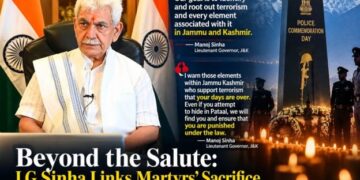
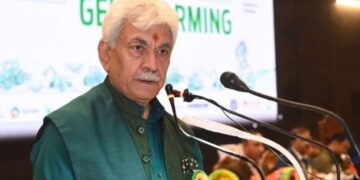
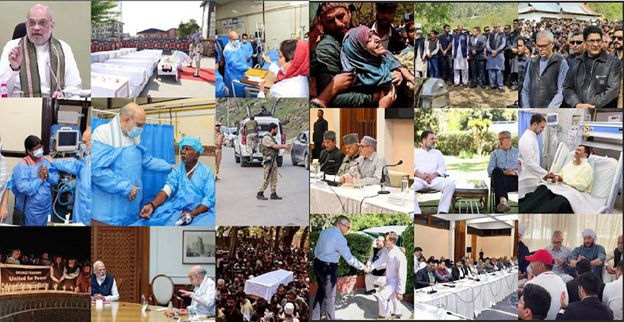
Home Minister Amit Shah assured the nation, saying, “An unrelenting crackdown has begun. The security apparatus is on maximum alert. No perpetrator will be spared.” Defence Minister Rajnath Singh emphasized, “The armed forces are fully prepared to respond decisively to any threat.” Lieutenant Governor Manoj Sinha echoed the public mood: “This act of terror will not succeed. Kashmir’s progress will not be derailed by the designs of a few.” Leaders across parties spoke in rare unison: Omar Abdullah, former Chief Minister, said, “Horrified by the barbarity of the Pahalgam attack. Kashmir must not let hatred divide us.” Mehbooba Mufti, PDP Chief, stated,”No cause, no ideology can justify the slaughter of innocents. Kashmir must reject this violence collectively.” Rahul Gandhi, Congress Vice-President and LOP, who visited injured survivors in Srinagar, emphasized, “Terror must be defeated not just with force, but with unity, compassion, and resilience.”
Response With Outrage From World Leaders:
- UN Secretary-General António Guterres condemned the attack, calling it “a grave violation of international law.”
- U.S. Secretary of State Antony Blinken said, “The United States stands shoulder-to-shoulder with India against terrorism.”
- UK Prime Minister Keir Starmer affirmed”The UK fully supports India’s sovereignty and its right to defend its citizens.”
- Israel’s Foreign Minister Israel Katz said “India is not alone. We are ready to assist with intelligence and operational expertise.”
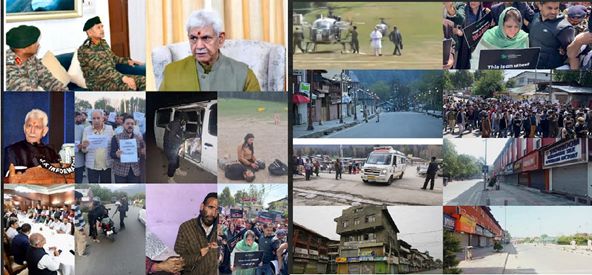
Grief, Defiance In Kashmir & Jammu: The days following the attack saw an unprecedented spontaneous shutdown across Jammu and Kashmir — the first total shutdown since the abrogation of Article 370 in August 2019. Shops, businesses, and educational institutions across the Valley remained closed. In Srinagar’s iconic Lal Chowk, an impromptu candlelight vigil saw people from diverse communities lighting candles, holding placards reading “Terror Has No Religion” and “Kashmir Wants Peace.” Security was beefed up across sensitive areas. Heavy deployments of police and CRPF personnel guarded major markets, public squares, and tourist sites. Mobile checkpoints sprang up across highways, and aerial surveillance drones hovered over towns and cities. Across Baramulla, Bandipora, Kupwara, Pulwama, Shopian, Kulgam, Ganderbal, and Budgam, the mood was somber but defiant. Villages in remote corners also joined in mourning: shops shuttered, flags lowered, and prayers held in mosques and temples alike. In Jammu province, districts like Samba, Kathua, Rajouri, Poonch, Doda, and Udhampur observed full shutdowns. Major markets like Residency Road, Raghunath Bazaar, and Gandhi Nagar fell silent, reflecting collective grief. Civil society organizations, business chambers, trade unions, and student bodies all rallied together, signaling that the Pahalgam tragedy had cut across politics, religion, and geography.
Security Response; Swift, Ruthless: In the aftermath, Indian forces launched sweeping operations across south Kashmir. A massive joint cordon-and-search operation was initiated in Anantnag, Bandipora, and Kulgam. Suspected hideouts were raided; homes of militants and their sympathizers were demolished under newly implemented state laws. Meanwhile, skirmishes erupted along the Line of Control (LoC) as Indian and Pakistani troops exchanged fire. No civilian casualties were reported, but the Army issued a strong warning against any cross-border misadventures. Indian Army Chief General Upendra Dwivedi flew into Srinagar for on-ground assessment. Touring forward areas, he announced new operational guidelines, emphasizing “zero tolerance” for militant activity. Indian Air Force helicopters conducted aerial surveillance over Pahalgam and adjoining forest belts, combing through suspected hideouts. Security forces believe the militants likely escaped towards the dense upper reaches of the Pir Panjal range. Many countries, including France, the U.S., Israel, Japan, and Australia, issued coordinated statements calling for “accountability” for those aiding terrorism. While New Delhi stopped short of announcing a formal suspension of diplomatic relations, backchannel communications indicated serious downgrading of ties was under consideration.
“Special focus must be placed on rebuilding international tourist confidence, with the Ministry of Tourism and state agencies jointly promoting positive stories of Kashmir’s courage and communal harmony. In the end, Kashmir’s soul lies in its people, its meadows, its rivers, and its spirit of compassion. By ensuring security, vigilance, and communal solidarity, the Valley can overcome this dark hour — emerging stronger, united, and ever more beautiful in the eyes of the world.”
A Painful Reckoning, A Steely Resolve: The Pahalgam attack has left scars — on families mourning loved ones, on survivors grappling with trauma, and on a nation forced once again to confront the ugly reality of terrorism. Yet amid the tears and rage, there was a deeper message: that India’s spirit, and Kashmir’s yearning for peace, remained stronger than any bullet fired in hate. In Lal Chowk, a candlelight placard read simply: “They tried to kill love. But love survives.” As Kashmir buries its dead and India plots its response, one thing is clear: terror may cause pain, but it cannot destroy the unbreakable spirit of humanity.
Kashmir Horizon View: The Pahalgam attack has left an indelible mark on Kashmir’s journey toward peace and prosperity. It served as a grim reminder that while violence can temporarily disrupt life, it cannot and should not be allowed to derail Kashmir’s dreams of normalcy. Over the past few years, the Union Territory has witnessed a significant revival in tourism, with visitors from across India and abroad rediscovering the Valley’s breathtaking beauty and warm hospitality. This progress must not be undone. Strengthening security, building community resilience, and reinforcing faith in Kashmir’s future must now be national priorities. A crucial lesson from this tragedy is the urgent need to provide comprehensive security at all tourist destinations, particularly in offbeat and less-patrolled areas like Baisaran. While primary sites such as Pahalgam, Gulmarg, and Sonamarg have visible security grids, peripheral trekking spots and remote valleys often remain lightly guarded. Authorities must now ensure that all trekking routes, picnic spots, and meadow trails are included under regular patrolling and surveillance plans. Strategic placement of mobile security units, use of drone monitoring, and installation of emergency response points can go a long way in preventing future attacks. Moreover, tourist trekking activities must be better regulated without making the experience cumbersome. It should become mandatory for trekkers and pony groups venturing into remote zones to inform the local police post before departure. A simple system of logging names, routes, estimated return times, and mobile numbers can help authorities keep track. Trekkers should also be encouraged — and when needed, gently mandated — to return the same day rather than camping overnight in unsecured zones, particularly during volatile periods. Such a system, already in place at some high-altitude destinations across India, balances adventure with safety. Local communities, particularly those directly involved in tourism like pony handlers, hoteliers, and guides, can be empowered through awareness workshops and basic emergency training. Their swift, selfless response in Pahalgam demonstrated that they are the first line of defense in many cases. Equipping them with better coordination tools, first-aid kits, and emergency contacts can make a real difference in critical moments. Building a robust security ecosystem, however, must not come at the cost of intimidating tourists or locals. The key lies in smart, invisible, and responsive security — ensuring safety without casting a shadow over the Valley’s famed hospitality. The use of modern surveillance, intelligence-sharing with local communities, and periodic security drills in tourist towns will build confidence among both visitors and residents. The government must also continue its public outreach initiatives, assuring citizens and visitors alike that Kashmir remains safe, welcoming, and resilient. Special focus must be placed on rebuilding international tourist confidence, with the Ministry of Tourism and state agencies jointly promoting positive stories of Kashmir’s courage and communal harmony. In the end, Kashmir’s soul lies in its people, its meadows, its rivers, and its spirit of compassion. By ensuring security, vigilance, and communal solidarity, the Valley can overcome this dark hour — emerging stronger, united, and ever more beautiful in the eyes of the world.
(In commitment to continuous improvement the “Team Kashmir Horizon” invites it’s valuable readers to share their valuable feedback and suggestions with the “Team Kashmir Horizon”. The insights of readers will surely play a vital role in improving the content quality of “Kashmir Horizon” and contribute more for the empowerment of people. Please feel free to reach out to us at editor@ thekashmirhorizon.com. Team “Kashmir Horizon” eagerly anticipates thoughts and ideas of it’s readers, which will help us serve people and even more effectively. The inputs of valuable readers are highly valued as “Kashmir Horizon” strives to provide it’s readers the best possible experience.)