

Each year on April 21, the world takes a moment to recognize the quiet power behind progress. That force is creativity. When paired with innovation, it becomes a powerful tool — one that not only solves problems and brings ideas to life but also makes the world more meaningful and human-centered. But what exactly is creativity? Is it just about painting, poetry, or performing arts? Is it limited to musicians and designers? In his book Human Motivation, renowned psychologist Robert E. Franken defines creativity as “the tendency to generate or recognize ideas, alternatives, or possibilities that may be useful in solving problems, communicating with others, and entertaining ourselves and others.” In this sense, creativity is not confined to any one field or profession. It is a thinking process — often deliberate, sometimes spontaneous, and occasionally challenging — that helps us move beyond the obvious. It’s about seeing connections where others see chaos and turning possibilities into solutions. There are several reasons why we are drawn to creativity. We are wired to seek novelty and stimulation; creativity offers an endless playground for both. It also allows us to express ourselves and connect deeply with others. Whether we’re facing personal challenges or global crises, it is creativity that drives the solutions we need. To truly understand the value of creativity in action, we can look at a defining moment in the tech world — the contrasting paths of Apple and BlackBerry. At one point, BlackBerry was a global leader in mobile communication, known for its security, professionalism, and efficiency. However, while BlackBerry focused on refining what already existed, Apple asked a bold, creative question: “What if a phone wasn’t just a phone?” In 2007, Apple launched the iPhone, which redefined the mobile experience. It wasn’t merely a communication device; it became an integrated ecosystem — for music, internet, photography, productivity, and creativity. Apple didn’t just improve the phone; it reimagined it. BlackBerry, on the other hand, failed to innovate and adapt. It stuck to its core model and slowly faded into irrelevance. This real-world case illustrates a vital truth: creativity is not a luxury but a necessity. In today’s rapidly changing world, relying on what has “always worked” can quickly lead to obsolescence. Creativity doesn’t always manifest in predictable, structured ways; it can also show up in the most unexpected moments.
“While creativity is valuable across all levels of society, it is particularly important for students — the thinkers and leaders of tomorrow. As students, you are in a phase of life brimming with potential. You are not bound by outdated systems or rigid roles. You have the freedom to ask big questions, to think differently, and most importantly, the freedom to experiment and explore”
Take Dolly Chaiwala, for example, the Nagpur-based tea vendor who went vi ral by adding flair and presentation to a humble cup of chai. It wasn’t just the tea itself that made him special, but the unique experience he created. Similarly, consider the smart dog that invaded an IPL pitch — or the flying man spotted in a PSL match. These moments, which might have been mere distractions in the past, quickly became viral spectacles, sparking humor, memes, and even brand sponsorships. These instances demonstrate how spontaneous creativity can take over and transform the ordinary into something extraordinary. Who could forget Ranveer Singh, whose fearless fashion choices often defy logic and gravity, yet somehow he owns it. His creativity lies not just in his clothes, but in his mindset: bold, unapologetic, and constantly pushing boundaries. These examples highlight that creativity can be quirky, playful, and bold — it doesn’t always need to be serious or structured. Sometimes, innovation begins with humor, curiosity, or even a willingness to look silly in pursuit of something new. While creativity is valuable across all levels of society, it is particularly important for students — the thinkers and leaders of tomorrow. As students, you are in a phase of life brimming with potential. You are not bound by outdated systems or rigid roles. You have the freedom to ask big questions, to think differently, and most importantly, the freedom to experiment and explore. However, creativity also faces significant challenges. It is often blocked by rigid systems, fear of failure or judgment, and societal pressures to conform. Mental barriers such as low confidence, anxiety, or tunnel vision can further inhibit creativity. To overcome these obstacles, students must be encouraged to embrace a mindset of possibility. Creativity should not be seen as a gift possessed only by a few, but as a skill that can be practiced, nurtured, and applied to any area of life. It’s about learning to ask “what if?” and embracing the freedom to take calculated risks. As Jack Welch, former CEO of GE, famously said, “We know where most of the creativity, the innovation, the stuff that drives productivity lies — in the minds of those closest to the work.” In the context of education, that means you, the students, are key to driving the creative revolution. On World Creativity and Innovation Day, we are reminded that creativity is not just a rare trait or a flash of brilliance. It is a skill, a mindset, and, above all, a way of life. It shows up in viral moments, in groundbreaking products, in classrooms, and even in chai stalls. It shows up in the questions we ask, the problems we solve, and the stories we tell. So, let us not limit creativity to the arts or aesthetics. Let us recognize it for what it truly is — the thinking that leads to progress. Let us create a culture — in our classrooms, on our campuses, and in our communities — where creativity is nurtured, practiced, and celebrated. In a world full of challenges, the most powerful tool we have is our ability to imagine something better and, most importantly, to make it real.
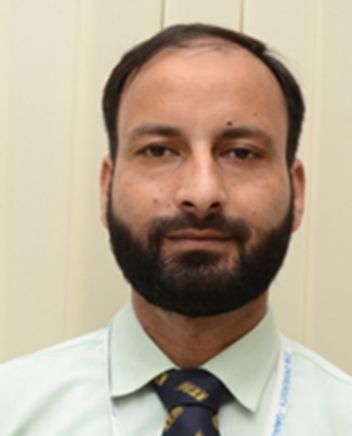
(The author is Associate Professor, Department of Management, Convener Institute’s Innovation Council, ITM Gwalior and an IIMA (FDP) Alumnus. He is also pursuing Advanced Business Consulting Program Of AIMA. The views, opinions and conclusions expressed in this article are those of the author and aren’t necessarily in accord with the views of “Kashmir Horizon”)
Dr. Shahid Amin
[email protected]







