
The modern age has undoubtedly transformed the material conditions of human existence in unprecedented ways. Scientific discoveries, technological innovations, industrial advancement, and modern systems of education have enabled humanity to achieve extraordinary levels of comfort, convenience, and prosperity. Yet, amid this material progress, an uncomfortable question confronts us: Has modern civilization forgotten why human beings exist? Have we reduced the purpose of life to earning a livelihood, accumulating wealth, and satisfying material desires? Have our educational institutions become factories producing skilled professionals rather than enlightened human beings?
The well-known expression, whose meaning is fully affirmed by the Qur’anic worldview, that “Man does not live by bread alone” encapsulates one of the deepest truths about human existence. Bread symbolizes material necessities—food, shelter, clothing, wealth, and physical comforts. While these are indispensable for survival, they are insufficient to satisfy the deeper aspirations of the human soul. Human beings possess intellect, conscience, imagination, moral responsibility, and spiritual longing. They seek meaning, purpose, beauty, justice, truth, and ultimately nearness to Allah. When these dimensions are neglected, material abundance alone can never produce genuine happiness or fulfilment. Modern education, however, has increasingly made the fulfillment of material needs—and often even luxurious living—the supreme ideal of life. From early childhood, students are encouraged to pursue education primarily as a means of securing lucrative employment.
Parents proudly speak of professions that promise high salaries. Universities compete in terms of graduate employability and earning potential. Career counselling rarely asks students what kind of human beings they aspire to become; instead, it asks how much they expect to earn. Success is measured by income, possessions, social status, and professional prestige. Consequently, doctors, engineers, professors, scientists, lawyers, civil servants, business executives, and even religious preachers often pursue their professions with one overriding objective—to secure personal prosperity and the well-being of their immediate families. Beyond one’s own comfort and the welfare of one’s close relatives, there often appears to be no higher purpose. The profession becomes merely an instrument for economic advancement rather than a vocation dedicated to serving humanity. This transformation is neither accidental nor culturally neutral. It is deeply rooted in the philosophical foundations of modern Western civilization. The rise of secular humanism, utilitarianism, pragmatism, materialism, positivism, and hedonism gradually shifted humanity’s attention from eternal values to immediate worldly gains.
Utilitarian philosophers such as Jeremy Bentham defined morality largely in terms of maximizing pleasure and minimizing pain. Pragmatism emphasized practical usefulness over metaphysical truth. Materialism denied the existence of any reality beyond matter. Hedonism identified happiness with the pursuit of pleasure. Together these intellectual currents produced an educational philosophy in which success became synonymous with economic productivity and material consumption. As a result, modern civilization increasingly confines human aspirations to the narrow horizon of the “here and now.” Questions concerning ultimate meaning, the purpose of existence, moral excellence, spiritual development, and accountability before Allah are often dismissed as private matters with little relevance to public education or professional life. Education teaches us how to make a living but seldom teaches us how to live. Yet history presents a strikingly different model.
If we look at the lives of our intellectual, scientific, and spiritual ancestors, we discover that their primary motivation was not wealth, luxury, or professional advancement. Knowledge was regarded as a sacred trust (amānah), scholarship as an act of worship, and service to humanity as the highest expression of faith. Their achievements emerged from a profound synthesis of intellectual excellence, moral integrity, and spiritual consciousness. The Qur’an reminds humanity: “And I did not create the jinn and mankind except that they should worship Me” (Qur’an 51:56). This declaration defines the very purpose of human existence. Worship (ʿibādah) is not confined to ritual prayer, fasting, or pilgrimage. Classical Muslim scholars understood it to encompass every lawful activity performed sincerely for the sake of Allah and for the benefit of His creation. Thus medicine, engineering, teaching, administration, commerce, scientific research, and public service all become acts of worship when pursued with sincerity, excellence, and the intention of serving humanity. The Qur’an further reminds us of the unique status bestowed upon mankind: “Indeed, I will place upon the earth a vicegerent (khalīfah) ” (Qur’an 2:30).
Human beings are therefore not merely consumers of resources; they are Allah’s vicegerents entrusted with cultivating civilization, establishing justice, preserving creation, and advancing beneficial knowledge. Every profession thus carries moral responsibility and spiritual accountability.
The Qur’an also describes the spiritual dimension of humanity: “When I have fashioned him and breathed into him of My Spirit, then fall down before him in prostration” (Qur’an 15:29). This verse reminds us that man is not merely a biological organism sustained by food and physical needs. He carries within himself a spiritual dimension that longs for truth, goodness, and nearness to Allah. Bread nourishes the body; faith nourishes the soul. The Prophet Muhammad (SAW) eautifully summarized the purpose of human excellence when he said: “The best of people are those who are most beneficial to others.”
He also said: “Whoever follows a path seeking knowledge, Allah will make easy for him a path to Paradise” (Ṣaḥīḥ Muslim). Knowledge, therefore, was never merely an instrument for personal enrichment. It was a pathway to the pleasure of Allah, a means of serving humanity, and the foundation of civilization.
This lofty vision characterized the lives of our pious predecessors. Physicians such as Ibn Sīnā, al-Rāzī, Ibn al-Nafīs, and al-Zahrāwī did not practise medicine merely to accumulate wealth.
Healing the sick was regarded as a sacred trust before Allah. Their hospitals welcomed rich and poor alike, while their medical writings combined scientific precision with profound ethical concern. Likewise, scholars such as Imām al-Ghazālī, Fakhr al-Dīn al-Rāzī, Imām al-Nawawī, Ibn Taymiyyah, and Shāh Walīullāh al-Dihlawī endured poverty, persecution, imprisonment, and hardship for the sake of preserving knowledge and defending truth. Many declined prestigious political appointments whenever these threatened their intellectual independence. Their names endure not because of material wealth but because of their scholarship, integrity, and unwavering commitment to Allah. The same spirit inspired Muslim mathematicians, astronomers, geographers, architects, administrators, and scientists. Their scientific investigations were motivated by the Qur’anic invitation to contemplate the signs of Allah in the heavens and the earth. They saw no conflict between scientific inquiry and religious faith. On the contrary, every discovery deepened their appreciation of Allah’s wisdom and strengthened their resolve to serve His creation.
“Human existence extends beyond material survival, economic output, and consumption. Aligning with the Islamic worldview, true human dignity is realized when material pursuits serve higher spiritual and moral purposes—worshipping Allah through truth, justice, and service to creation rather than viewing worldly gain as the ultimate end.”
Even political leadership embodied this higher ideal. The Rightly Guided Caliphs regarded authority not as privilege but as an immense trust. ʿUmar ibn al-Khaṭṭāb famously remarked that if even a mule stumbled on the banks of the Euphrates because of neglected roads, he feared that Allah would hold him accountable on the Day of Judgment. Such profound moral responsibility is almost unimaginable in contemporary politics. The contrast with modern society is striking. One of the greatest silent crises of our age is not merely economic inequality or technological disruption. It is the dominance of the survival mentality. Across developed, developing, and underdeveloped nations alike, millions unconsciously accept survival as the ultimate purpose of life. Their daily existence revolves around earning enough to pay bills, educate children, purchase homes, and secure retirement. These concerns are legitimate and necessary, yet when they become life’s ultimate objective, human existence loses its transcendent purpose. This mentality has gradually infiltrated every profession. Within academia, research is often pursued merely to satisfy promotion requirements, publication metrics, and institutional rankings rather than genuine intellectual curiosity or the desire to benefit humanity. Teaching becomes employment instead of a sacred mission to shape minds and character. The medical profession, historically regarded as one of humanity’s noblest callings, increasingly struggles under commercial pressures.
Although countless physicians continue to exemplify compassion and selfless service, financial considerations often overshadow the original ethical ideals of the profession. Similar trends are visible in engineering, law, journalism, business, politics, and even religious institutions. Preaching itself sometimes becomes a profession instead of a prophetic mission. The survival narrative must therefore change. Living beyond survival does not require becoming wealthy. It begins with transforming one’s vision of life. It means asking, “What value can I create?” rather than merely, “How much can I earn?” It means asking, “What problem can I solve?” rather than merely, “What position can I secure?” It means seeking significance rather than mere security. Purpose transforms labour into service. History repeatedly demonstrates that the world’s greatest civilizations were built by men and women who thought beyond their immediate personal interests. They became innovators rather than imitators, creators rather than consumers, reformers rather than spectators. They invested themselves in ideas whose benefits extended far beyond their own lifetimes. This also explains why some nations consistently lead the world in research, innovation, and technological advancement, while others remain dependent upon external discoveries. The difference lies not merely in intelligence or resources but in vision, educational priorities, and long-term investment in creativity, critical thinking, and ethical leadership.
Islam calls believers to maintain a balanced relationship between this world and the Hereafter. Allah says: “But seek, through what Allah has given you, the Home of the Hereafter, and do not forget your share of this world” (Qur’an 28:77). Islam neither glorifies poverty nor worships wealth. Material prosperity is welcomed, but it must remain a means rather than the ultimate end. Wealth acquires meaning only when employed in the service of justice, charity, education, scientific advancement, and human welfare.
Allah further declares: “Indeed, the most noble of you in the sight of Allah is the most righteous among you” (Qur’an 49:13). Human dignity is measured not by wealth or status but by righteousness and moral excellence. Modern education must therefore recover this holistic vision. Universities should aspire not merely to produce skilled professionals but morally responsible leaders. Engineering should serve environmental stewardship. Medicine should restore compassion alongside clinical excellence. Economics should pursue justice rather than limitless accumulation. Scientific research should be guided by ethical wisdom rooted in revelation and reason.
Education should inspire students to ask life’s most fundamental questions: Why am I here? What responsibilities accompany knowledge? How should authority be exercised? What obligations do I owe future generations? What does Allah expect from me? Without these questions, education remains incomplete. The greatest educators throughout history were not merely transmitters of information; they were builders of character. They produced individuals capable of sacrificing personal interests for truth, justice, compassion, and the common good. Civilizations decline not because they lack technology but because they lose their moral compass. The twenty-first century therefore demands not only technological innovation but also spiritual renewal.
Humanity possesses extraordinary scientific power yet simultaneously suffers from loneliness, anxiety, depression, family disintegration, corruption, violence, environmental degradation, and moral confusion. These crises cannot be resolved through economic growth alone because they stem from the impoverishment of the human spirit. Indeed, man does not live by bread alone. He lives by faith, hope, knowledge, justice, beauty, compassion, worship, and service. He lives by ideals that transcend the marketplace. He lives by the conviction that every profession can become an act of worship, every discovery a service to humanity, every classroom a centre of moral formation, and every life an opportunity to earn the pleasure of Allah.
Our pious ancestors understood this enduring truth. Their greatness lay not merely in what they achieved but in why they achieved it. They sought knowledge to please Allah, authority to establish justice, wealth to serve society, and influence to uplift humanity. Consequently, their legacy continues to illuminate history centuries after their departure.
Our generation now stands at a decisive crossroads. We may continue reducing education to employment, professions to income, and life to consumption. Or we may recover the timeless Islamic vision that human beings were created not merely to survive but to serve; not merely to consume but to create; not merely to earn but to worship Allah through beneficial service to His creation. Allah reminds us: “The life of this world is nothing but the enjoyment of delusion” (Qur’an 3:185). This verse does not condemn worldly life; rather, it warns against mistaking it for our final destination. Bread is necessary for sustaining life, but it can never define life’s ultimate purpose. For when bread becomes life’s only purpose, humanity loses its soul. But when bread is earned, shared, and placed in the service of truth, justice, virtue, and obedience to Allah, life attains its true dignity, its highest purpose, and its everlasting significance.
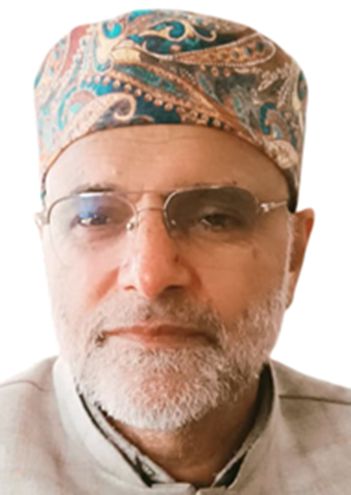
(The author a veteran academician is a former Professor and Head Department of Islamic Studies, Kashmir University. The views, opinions and conclusions expressed in this article are those of the author and aren’t necessarily in accord with the views of “Kashmir Horizon”)