“In total, 329 nomination papers were submitted, with Srinagar district leading with 112 candidates, followed by Budgam district with 68. Other districts including Rajouri, Poonch, Reasi, and Ganderbal also saw substantial participation from candidates. The Election Commission of India issued the notification for the second phase on August 29, 2024. The scrutiny of nomination papers took place on September 6, and candidates have until September 9 to withdraw their nominations. Voting across these 26 constituencies is scheduled for September 25, 2024”
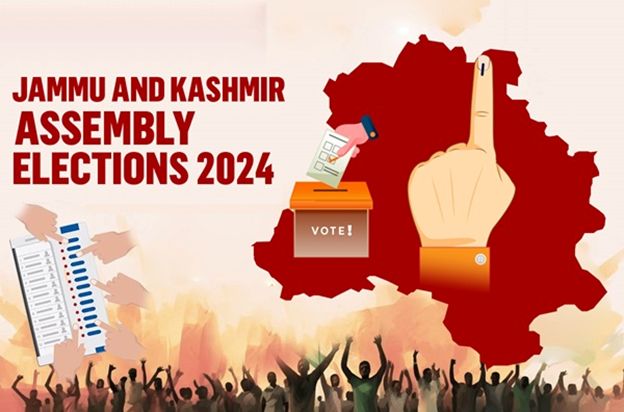
As the second phase of the Jammu and Kashmir Assembly elections nears, the Election Commission of India (ECI) has concluded its review of nominations. On September 6, the ECI finalized the scrutiny of 329 nominations submitted across 26 constituencies. Out of these, 267 nominations were accepted, while 62 were rejected.
Nomination Process Overview: The nomination process, which began on August 29, has been a focal point of attention. The 26 constituencies involved cover six districts: Srinagar, Budgam, Ganderbal, Rajouri, Poonch, and Reasi. Among the 310 candidates who filed nominations, Ganderbal saw the highest number of rejections, with nine out of 24 nominations being turned down. Khansahib followed with six rejections, while Hazratbal and Beerwah each experienced five rejections.
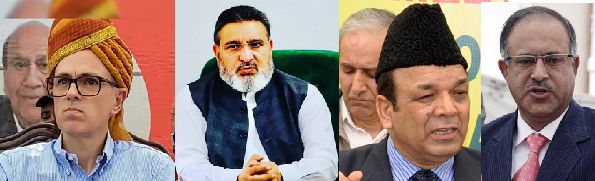
Notable Candidates, Developments: This phase features several prominent candidates, including former Chief Minister Omar Abdullah, Apni Party President Altaf Bukhari, former J&K Finance Minister Abdul Rahim Rather, and former MoS Asiea Naqash. Separatist leader Sarjan Barkati, who faced rejection in the first phase from Shopian, had his nominations accepted in both Beerwah and Ganderbal.
Important Dates ,Procedures: Candidates have until September 9 at 3:00 pm to withdraw their nominations at the offices of the respective Returning Officers. Polling for these 26 constituencies is scheduled for September 25, 2024, with voting to occur from 07:00 am to 06:00 pm.
Earlier 310 candidates have filed nomination papers for the second phase of the Jammu and Kashmir Assembly Elections 2024. This phase will cover six districts and 26 Assembly constituencies (ACs), with the elections scheduled for September 25. The Chief Electoral Officer (CEO) PK Pole announced that the final day for filing nominations was Thursday, September 5. In total, 329 nomination papers were submitted, with Srinagar district leading with 112 candidates, followed by Budgam district with 68. Other districts including Rajouri, Poonch, Reasi, and Ganderbal also saw substantial participation from candidates. The Election Commission of India issued the notification for the second phase on August 29, 2024. The scrutiny of nomination papers took place on September 6, and candidates have until September 9 to withdraw their nominations. Voting across these 26 constituencies is scheduled for September 25, 2024, with polling hours set from 7:00 am to 6:00 pm. This phase marks a crucial step in the electoral process for Jammu and Kashmir.
District-Wise Breakdown: Srinagar: Srinagar district saw a significant number of nominations across its eight constituencies, Hazratbal AC: 18 candidates, Khanyar AC: 10 candidates, Habbakadal AC: 20 candidates, Lal Chowk AC: 12 candidates, Chanapora AC: 9 candidates, Zadibal AC: 15 candidates, Eidgah AC: 15 candidates and Central Shalteng AC: 13 candidates.
Budgam: In Budgam, five constituencies attracted a notable number of candidates, Budgam AC: 12 candidates, Beerwah AC: 18 candidates, Khansahib AC: 17 candidates, Charar-i-Sharief AC: 12 candidates, Chadoora AC: 9 candidates
Rajouri: Rajouri district also saw significant interest with five constituencies, Kalakote-Sunderbani AC: 11 candidates, Nowshera AC: 7 candidates, Rajouri (ST) AC: 14 candidates, Budhal (ST) AC: 7 candidates, Thannamandi (ST) AC: 8 candidates
Poonch: In Poonch, three constituencies had a mix of nominations, Surankote (ST) AC: 11 candidates, Poonch Haveli AC: 13 candidates and Mendhar (ST) AC: 11 candidates.
Reasi: Reasi district’s three constituencies received the following number of nominations, Gulabgarh (ST) AC: 7 candidates, Reasi AC: 10 candidates, Shri Mata Vaishno Devi AC: 7 candidates
Ganderbal: Ganderbal district saw nominations in its two constituencies, Kangan (ST) AC: 6 candidates, Ganderbal AC: 18 candidates.
“Post-election, a thorough review of the process will be beneficial in identifying areas for improvement, allowing for the implementation of necessary changes for future elections. By diversifying voter education activities, promoting candidate transparency, improving accessibility, and enhancing security measures, the electoral process can be made more inclusive and trustworthy, ensuring a successful and effective election.”
Phase II Contenders Unveiled; Karra Tops Net Worth Charts, Ansari Sees Income Surge: Tariq Hameed Karra, president of the Jammu and Kashmir Pradesh Congress Committee (JKPCC), is a notable contender in Phase II of the Assembly elections. At 69, Karra is running from Central Shalteng and has declared a net worth exceeding Rs 190 crore. His affidavit shows Rs 3.4 lakh in movable assets and his wife’s assets totaling Rs 40 lakh. His substantial immovable assets are valued at Rs 148 crore, including Rs 113.47 crore in agricultural land, over Rs 9 crore in commercial buildings, and more than Rs 25 crore in residential properties. In contrast to his 2014 Lok Sabha declaration of Rs 98 crore, Karra’s annual income increased from Rs 2.62 lakh in 2020-21 to Rs 7.77 lakh, while his wife’s income has consistently been Rs 13 lakh since 2019. Abid Ansari from the J&K Peoples Conference has seen his income rise from Rs 10 lakh in 2019 to Rs 28 lakh, with a notable increase in his second wife’s income from Rs 8.79 lakh to Rs 17.30 lakh. At 77, Ansari, running from Zadibal, reports movable assets of Rs 1.47 crore, and his immovable property is valued at Rs 38 crore. PDP’s Arif Irshad Laigroo, contesting from Habba Kadal, reported a decrease in annual income from Rs 3.80 lakh in 2021-22 to Rs 2.21 lakh. His movable assets are Rs 50,000, and his wife has Rs 24.19 lakh in assets. Gazanfar Ali, running from Lal Chowk as an Awami Ittehad Party (AIP) candidate, has declared an income of Rs 13 lakh. His movable assets total Rs 21 lakh, with his wife holding Rs 28 lakh in assets. His immovable property is valued at Rs 4.80 crore, with liabilities of Rs 10 lakh. Muzaffar Shah of the Awami National Conference, contesting from Habba Kadal, reported an annual income of Rs 15 lakh and owns Rs 21 lakh in movable assets, while his wife’s assets are valued at Rs 50 lakh. He has Rs 10 crore in immovable property, including a Rs 2 crore liability from a J&K Bank loan. PDP senior leader Ghulam Nabi Lone, running from Chrar-e-Sharief, declared Rs 2.22 crore in movable assets and Rs 1.76 crore in immovable property. His annual income increased to Rs 6.55 lakh, up from Rs 4.75 lakh in 2020-21, with total liabilities of Rs 33 lakh. His primary income source is his pension. Sarjan Ahmad Wagay, jailed and contesting from Ganderbal and Beerwah after his Pulwama nomination was rejected, reported no annual income. He owns Rs 60 lakh in immovable assets, mainly land. Sheikh Ashiq, a former KCCI president and AIP candidate challenging Omar Abdullah in Ganderbal, saw his income nearly double from Rs 4.80 lakh in 2019-20 to Rs 8.13 lakh in 2023-24. Ashiq declared Rs 67 lakh in movable assets, with his wife holding Rs 34 lakh. He also owns Rs 95 lakh in immovable property, with no liabilities. Former MLA Ishfaq Ahmad Sheikh, running as an Independent from Ganderbal, has reported Rs 75,000 in movable assets and his wife has Rs 28.91 lakh. Sheikh owns Rs 5 crore in immovable property, with liabilities of Rs 5.27 lakh. His pension is his declared income source. Ishtiyaq Qadri, an AIP candidate from Habba Kadal, has not reported income for the past five years. He declared Rs 10 lakh in movable assets, while his wife holds Rs 8 lakh. She owns Rs 2 crore in immovable property with an Rs 8 lakh liability from a housing loan. Muhammad Irfan Shah, an Independent from Central Shalteng, did not disclose his income but reported his wife’s income increased from Rs 26 lakh in 2020-21 to Rs 30 lakh. Shah’s movable assets total Rs 18.40 lakh, with his wife owning Rs 30 lakh. He holds Rs 4.5 crore in immovable property, while his wife has Rs 2.5 crore in inherited property.
CEO P.K. Pole Leads Vibrant Sveep Program To Boost Voter Participation In J&K: To boost public participation in the upcoming 2024 Jammu & Kashmir Legislative Assembly elections, Chief Electoral Officer (CEO) J&K P.K. Pole led a comprehensive Systematic Voters’ Education and Electoral Participation (SVEEP). The event included a range of activities aimed at increasing voter awareness, such as folk music performances and sports events. These efforts were intended to create a lively and engaging atmosphere to emphasize the importance of voting. Attendees included District Election Officer and Deputy Commissioner Kulgam Athar Aamir Khan, Senior Superintendent of Police (SSP) Kulgam, and other officials, along with members of the public. During his speech, Pole highlighted the primary goal of the event: to raise voter awareness and encourage greater public participation in the electoral process. He stressed the significance of active citizen involvement in democracy, noting that a well-informed electorate is crucial for a vibrant and representative democratic system. Talking to reporters on the sidelines, Pole assured that preparations for the legislative assembly elections are progressing smoothly to maximize voter turnout. “Elections are for everyone, regardless of background. Public participation in the electoral process is vital for everyone,” he emphasized.
Kashmir Horizon View: As the second phase of the Jammu and Kashmir Assembly elections approaches, it’s crucial to enhance voter engagement and streamline the electoral process. A comprehensive approach to voter awareness campaigns is essential, leveraging digital platforms and community outreach to ensure that every voter is well-informed about the voting process and its importance. Additionally, strengthening logistics and infrastructure is vital; polling stations must be well-equipped and accessible, with adequately trained staff to handle any issues that may arise on Election Day. Monitoring and transparency should also be prioritized, with independent election observers deployed to ensure fairness and real-time updates provided to keep voters informed. Furthermore, addressing voter concerns through dedicated helpline services and feedback mechanisms can help resolve issues promptly and improve the overall voting experience. Post-election, a thorough review of the process will be beneficial in identifying areas for improvement, allowing for the implementation of necessary changes for future elections. By diversifying voter education activities, promoting candidate transparency, improving accessibility, and enhancing security measures, the electoral process can be made more inclusive and trustworthy, ensuring a successful and effective election.
(In commitment to continuous improvement the “Team Kashmir Horizon” invites it’s valuable readers to share their valuable feedback and suggestions with the “Team Kashmir Horizon”. The insights of readers will surely play a vital role in improving the content quality of “Kashmir Horizon” and contribute more for the empowerment of people. Please feel free to reach out to us at editor@ thekashmirhorizon.com. Team “Kashmir Horizon” eagerly anticipates thoughts and ideas of it’s readers, which will help us serve people and even more effectively. The inputs of valuable readers are highly valued as “Kashmir Horizon” strives to provide it’s readers the best possible experience. Thank you for being a part of the reader community!)