

The history of India’s freedom struggle is a vast and complex narrative in which people belonging to different religions, regions, political traditions and social backgrounds participated. Any comprehensive account of this history must recognize the contribution of Indian Muslims and, in particular, the role played by the ulama associated with Darul Uloom Deoband and the wider Deobandi movement. Established in 1866, in the immediate aftermath of the upheavals of 1857, Darul Uloom Deoband became one of the most influential centres of Islamic learning in South Asia. Its importance, however, was not confined to religious education. A significant section of its scholars became involved in the intellectual, political and organizational struggle against British colonial rule. Their contribution included resistance, imprisonment, exile, political mobilization, educational institution-building and advocacy of Hindu-Muslim unity and composite Indian nationalism. The story of Darul Uloom Deoband must therefore be understood within the larger and diverse history of Indian anti-colonial resistance rather than through a single political or sectarian lens. The events preceding the establishment of Darul Uloom are important for understanding its later orientation.
The uprising of 1857 represented a major challenge to British authority and involved soldiers, rulers, peasants, religious figures and sections of both Hindu and Muslim society. The suppression of the uprising was followed by severe repression, particularly in northern India. Delhi and other centres of resistance suffered enormous destruction, executions, confiscations and displacement. A considerable number of Muslim scholars were imprisoned, persecuted or forced into hiding or exile. The resistance associated with Haji Imdadullah Muhajir Makki, Maulana Muhammad Qasim Nanautawi, Maulana Rashid Ahmad Gangohi and others in the Shamli region forms an important part of this history. Although the uprising ultimately failed militarily, it left a deep impression upon the religious and intellectual leadership of northern India. The experience demonstrated that resistance to colonial domination could not depend exclusively upon armed confrontation. The preservation of intellectual independence, religious identity, education and moral consciousness was equally important. It was in this environment that Darul Uloom Deoband was founded in 1866. Its establishment represented a remarkable response to the political and cultural crisis created by colonial rule. The institution developed an educational model based substantially upon community support and sought to maintain independence from direct government control. Its principal objective was the preservation and transmission of Islamic learning, including the Qur’an, Hadith, jurisprudence, theology, Arabic and related disciplines. Yet the wider consequences of this educational project were considerable.
Darul Uloom produced generations of scholars who established educational institutions throughout India and beyond. In this sense, education itself became an instrument of cultural resilience. The institution preserved intellectual traditions at a time when colonial power was transforming India’s political, economic and educational structures. The Deobandi contribution to the freedom struggle should therefore not be reduced to the political activities of a few celebrated personalities. Its deeper significance also lies in the creation of an extensive network of scholars and educational institutions that preserved a sense of intellectual autonomy and historical consciousness. The memory of earlier resistance remained influential among the scholars of Deoband. The resistance associated with Sayyid Ahmad Shahid and Shah Ismail Shahid in 1831 had preceded the uprising of 1857 by more than two decades. Both had been influenced by the intellectual tradition associated with Shah Abdul Aziz of Delhi. They were killed at Balakot in 1831.
Historians may differ in their assessment of the objectives, methods and ideological character of this movement, but its place in the history of nineteenth-century Muslim resistance cannot simply be ignored. The memory of sacrifice and opposition to expanding colonial power continued to influence subsequent generations of scholars. The uprising of 1857 was therefore part of a longer history of resistance rather than an isolated event. One of the most important figures to emerge from the Deobandi tradition was Maulana Mahmud Hasan, popularly known as Sheikh al-Hind. A distinguished scholar and teacher of Darul Uloom, he combined religious scholarship with a determined commitment to ending British rule. His activities marked a significant development in the political engagement of the Deobandi ulama. During the First World War, when Britain was involved in a major international conflict, Sheikh al-Hind sought to develop an organized anti-colonial movement and establish contacts beyond India. His activities became associated with what came to be known as the Silk Letter Movement or Reshmi Rumal Tehreek. The effort sought external assistance for an uprising against British rule. It reflected the determination of some Indian Muslim scholars to use international circumstances in the pursuit of national liberation.
British intelligence eventually uncovered the movement, and Sheikh al-Hind was arrested. He was subsequently imprisoned in Malta, far from India, where he endured years of detention. The Malta imprisonment became one of the most powerful symbols of the sacrifices made by the ulama during the freedom struggle. Among those associated with the Malta imprisonment was Maulana Husain Ahmad Madani, who later emerged as one of the leading scholars and political figures of the Jamiat Ulama-i-Hind. The personal sacrifices involved in such imprisonment should not be underestimated. These scholars were separated from their families and homeland, endured harsh conditions and faced uncertainty concerning their future. Their families frequently experienced economic hardship as a result of their imprisonment. Their sacrifice was therefore both personal and collective. The story of the ulama is not simply a story of political speeches and resolutions; it is a story of individuals who were prepared to sacrifice their freedom, health, property, careers and family security for the larger cause of ending colonial rule.
Maulana Husain Ahmad Madani occupies a particularly important position in this history because of his contribution to the concept of composite Indian nationalism. Madani argued that Muslims and Hindus could constitute a common political nation while retaining their distinct religious identities. His position challenged the idea that religious identity necessarily required separate political nationalism. In his view, Muslims could remain committed to Islam while sharing a common homeland and political destiny with people belonging to other religious communities. This became an important intellectual foundation of the political activities of the Jamiat Ulama-i-Hind. The Jamiat, established in 1919, became one of the principal organizational platforms through which many Deobandi ulama participated in the Indian nationalist movement. It supported cooperation with the Indian National Congress and participated in various phases of the struggle against British rule, including the Non-Cooperation Movement and other campaigns of civil resistance. The participation of the ulama in these movements demonstrates that the Muslim political response to colonialism was far from uniform.
Indian Muslims developed different political strategies and disagreed sharply over questions of nationalism, constitutional arrangements and the future of the subcontinent. The Deobandi nationalist tradition represented one important strand within this broader spectrum. Its proponents believed that independence could be achieved through cooperation among India’s diverse communities. Their commitment to composite nationalism did not require the abandonment of religious identity. Instead, they distinguished between religious belonging and political citizenship. A Muslim could remain fully committed to Islam while simultaneously being committed to India’s freedom and common national life. The anti-colonial activities associated with Sheikh al-Hind and his circle also had an international dimension. The Provisional Government of India established in Kabul in 1915 brought together individuals from different backgrounds, including Raja Mahendra Pratap as President and Maulana Barkatullah as Prime Minister, with Maulana Ubaidullah Sindhi among the important figures associated with the initiative. Its composition is significant because it reflected an attempt to organize resistance to British rule through cooperation across religious and political boundaries. Although the project did not succeed in its immediate objectives, it illustrates the fact that some Muslim anti-colonial activists imagined an independent India in broader national rather than narrowly communal terms.
“Darul Uloom Deoband played a vital role in India’s freedom struggle through anti-colonial resistance, sacrifices, and support for Hindu-Muslim unity and pluralism. Honoring its legacy requires preserving historical truth and upholding the democratic ideals its scholars fought for as part of the broader national memory.”
Another significant contribution of the nationalist ulama concerned the future constitutional rights of India’s religious and cultural communities. The Jamiat Ulama-i-Hind and other Muslim leaders repeatedly emphasized that independence should be accompanied by guarantees of religious freedom, cultural rights and equal citizenship. They sought assurances that Muslims would be able to maintain their religious practices, educational institutions, places of worship, languages and cultural traditions in an independent India. These concerns became particularly important as the constitutional future of India was debated in the decades preceding independence. The eventual Constitution of India established principles of equality, religious freedom and cultural and educational rights that became central to the country’s constitutional order. The historical role of Muslim nationalists in advocating such principles forms an important part of the background to India’s plural constitutional framework. Hindu-Muslim cooperation was another important element of the Deobandi nationalist tradition.
Many ulama regarded communal unity as essential to defeating colonial rule. They participated in joint political movements and advocated cooperation between communities despite their theological differences. Their approach did not imply that Hinduism and Islam were identical religions. Rather, it recognized that religious diversity could coexist with shared political objectives and common citizenship. This historical experience offers an important lesson for contemporary India: pluralism does not require the disappearance of religious differences. It requires the development of institutions and civic principles through which people of different faiths can live together with equality and mutual respect. The contribution of Darul Uloom Deoband also extended through its graduates and affiliated educational institutions.
Thousands of scholars educated in the Deobandi tradition established madrasas throughout India and other parts of South Asia. These institutions became centres of religious education and preserved Arabic, Urdu, Persian and Islamic intellectual traditions. Although not every institution or graduate participated directly in political activity, the educational network helped sustain a sense of cultural and intellectual independence during and after colonial rule. This educational legacy is an important component of the institution’s historical significance. It also demonstrates that the freedom struggle involved more than demonstrations, prisons and political campaigns. It involved the preservation of intellectual traditions and the formation of future generations. The sacrifices of the ulama must also be evaluated in the context of their personal lifestyles. Many of the leading scholars associated with the freedom movement did not become wealthy as a consequence of their political activism. They did not generally treat the struggle for independence as a route to personal privilege. Many continued to live simply and remained devoted to teaching, scholarship and public service. Their contribution therefore presents an important model of political commitment rooted in personal sacrifice rather than material gain. This does not mean that every individual associated with Deoband held identical political views or that the institution as a whole represented one uniform political ideology.
Like all major intellectual traditions, Deoband contained debates, differences and changing political positions. Some scholars supported composite nationalism, while others adopted different political approaches. The history of the institution should therefore be studied critically and historically rather than presented as a completely homogeneous movement. Nevertheless, the participation of a significant number of its leading scholars in the anti-colonial struggle is firmly established as an important part of India’s modern history. It is also important to recognize that India’s independence was not achieved by any one community, institution or political organization. It was the result of a prolonged and multifaceted struggle involving the Indian National Congress, revolutionary movements, peasants, workers, students, women, tribal communities, regional organizations, religious leaders and countless ordinary citizens. The Muslim contribution itself was diverse and included constitutionalists, revolutionaries, journalists, scholars, political leaders and ordinary activists. Darul Uloom Deoband and its associated ulama represent one particularly significant dimension of this wider Muslim contribution. Their importance lies in the combination of religious scholarship, educational institution-building, political resistance and advocacy of intercommunal cooperation.
The sacrifices of figures such as Sheikh al-Hind, Husain Ahmad Madani, Ubaidullah Sindhi, Hafizur Rahman and numerous lesser-known scholars and activists deserve to be incorporated into the mainstream narrative of India’s independence. Their contribution demonstrates that the struggle for freedom was also a struggle over ideas: ideas concerning sovereignty, justice, citizenship, religious freedom, national identity and the relationship between communities. The Deobandi nationalist tradition offered one answer to these questions by emphasizing that Muslims could retain their religious identity while participating fully in a common Indian political nation. The establishment of Darul Uloom Deoband in 1866, only a few years after the suppression of 1857, was itself an act of extraordinary institutional resilience. A community facing political defeat, economic uncertainty and educational transformation chose to invest in learning. Over time, that decision created an intellectual network whose influence extended far beyond the original institution. Its graduates became teachers, scholars, writers, political activists and community leaders. Some participated directly in the freedom struggle, while others contributed indirectly by preserving educational and cultural traditions. The institution’s history therefore illustrates the relationship between education and political consciousness. It demonstrates how a society can respond to political defeat by rebuilding its intellectual foundations.
The story of Darul Uloom Deoband should consequently be situated within India’s broader history of resistance, reform and nation-building. Its contribution does not diminish the sacrifices made by others; rather, it enriches the national narrative by acknowledging another important stream of the freedom movement. Remembering the sacrifices of the ulama is particularly important because many of them paid a price that extended far beyond the formal loss of political freedom. They endured imprisonment, exile, surveillance, financial hardship, separation from their families and, in some cases, death. Their contribution should not be forgotten simply because their struggle was expressed through religious institutions and organizations. Nor should it be romanticized without historical examination. A mature understanding of history requires both recognition and critical scholarship. The legacy of Darul Uloom Deoband ultimately belongs to the larger history of India’s struggle for freedom. Its most enduring lessons are the value of education, intellectual independence, courage in the face of oppression, sacrifice for public causes and the possibility of combining religious commitment with a broader commitment to shared citizenship.
The Deobandi ulama who participated in the freedom movement demonstrated that religious scholarship could coexist with anti-colonial political activism and that devotion to one’s faith did not necessarily prevent commitment to a plural national community. Their history reminds present and future generations that India’s independence was built through the contributions of many communities and traditions. To remember these contributions is not to rewrite history in favour of one institution or community; it is to make the historical record more complete. Darul Uloom Deoband occupies an important place in that record. Its scholars participated in resistance to colonial rule, endured imprisonment and persecution, built educational institutions, advocated Hindu-Muslim unity and contributed to debates over the constitutional future of India. Their sacrifices form an enduring part of the country’s national heritage. The most meaningful way to honour that legacy is to preserve historical truth, promote serious scholarship, uphold religious freedom, strengthen fraternity among India’s diverse communities and remain committed to the democratic and plural ideals for which generations of Indians struggled. The story of Deoband is therefore not merely a story of a madrasa. It is a significant chapter in the larger story of India’s journey from colonial subjugation to independence, and the sacrifices of its ulama deserve a secure and respected place in the national memory.
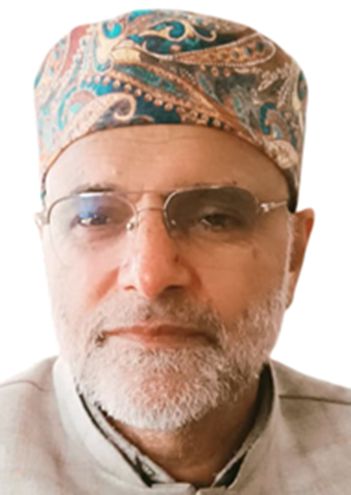
(The author a veteran academician is a former Professor and Head Department of Islamic Studies, Kashmir University. The views, opinions and conclusions expressed in this article are those of the author and aren’t necessarily in accord with the views of “Kashmir Horizon”)







