

Urdu is not merely the language of a particular religious or social group; it is an important part of India’s rich linguistic, cultural, and intellectual heritage. This language developed on the soil of the Indian subcontinent through centuries of social interaction, linguistic exchange, literary creativity, and intellectual engagement. Its vocabulary, idioms, styles, and literary genres reflect the extraordinary diversity of Indian civilization. To understand Urdu is, in essence, to understand India’s shared cultural history, its multilingual character, and the connections among its diverse social traditions. At the outset, an important constitutional clarification is necessary. The Constitution of India does not designate any language as the national language.
Under Article 343, Hindi in the Devanagari script is the official language of the Union, while English continues to be used for specified official purposes. It is therefore constitutionally incorrect to call Urdu the national language. However, Urdu is one of the twenty-two languages included in the Eighth Schedule of the Constitution. In addition, the Constitution contains provisions concerning the rights of linguistic minorities and facilities for primary education in the mother tongue. Thus, describing Urdu as an important language of India’s shared cultural and intellectual heritage is historically and culturally appropriate.
The formation of Urdu is a vivid example of India’s cultural synthesis. It acquired a substantial vocabulary from Arabic and Persian while continuously interacting with Sanskritic and Indo-Aryan languages, Punjabi, Kashmiri, and other regional languages.
Turkic languages also contributed to its historical development. Urdu’s fundamental strength, therefore, lies not in isolation but in interaction, acceptance, and creative transformation. Its evolution demonstrates that when civilizations meet, new intellectual and linguistic forms emerge. Urdu’s literary tradition, too, is not confined to any single community. Poets, writers, journalists, and intellectuals from diverse religious and social backgrounds enriched the language. The ghazal, nazm, marsiya, qasida, dastan, short story, novel, and prose gave expression to themes such as love, spirituality, morality, justice, human suffering, freedom, and truth. Urdu also exerted a profound influence on Indian music, theatre, journalism, cinema, and everyday speech. Countless Urdu words and expressions have become part of the broader Hindi-Urdu linguistic continuum. Its cultural influence is therefore far wider than the population that regards it as its primary language.
Urdu has also played a significant role in the political and intellectual history of modern India. During the colonial period, Urdu newspapers, journals, pamphlets, poetry, and prose promoted political awareness, reform, education, and public debate. Urdu poetry popularized ideas of freedom, dignity, justice, and resistance in powerful and memorable forms. Urdu journalism and literary activity should be regarded as part of India’s shared national history, rather than as the property of any particular religious or linguistic group. Urdu’s constitutional identity is important within this broader context. Article 350A directs states and local authorities to endeavor to provide adequate facilities for instruction in the mother tongue at the primary stage for children belonging to linguistic minority groups.
“Contrary to the belief that studying Urdu limits career prospects, the language offers diverse opportunities across fields like media, tourism, publishing, and academia. The primary obstacle is the current educational structure, which can be overcome by integrating practical skills, research training, and modern technology to expand career paths and boost confidence in the language.”
Article 350B provides for a Special Officer for linguistic minorities. These provisions establish the principle that India’s unity does not depend on linguistic uniformity. Respect for different languages does not weaken national integration; rather, it provides a stronger foundation for it. However, constitutional recognition alone cannot keep a language alive. The vitality of a language depends on education, research, teaching, publishing, institutions, books, technology, and employment opportunities. For Urdu’s future, schools, universities, libraries, research centers, publishing houses, and digital resources must be strengthened. Urdu-medium schools need qualified teachers, adequate infrastructure, high-quality textbooks, and effective administrative support. Vacant teaching positions are not merely an administrative issue; they concern students’ educational rights and future prospects.
Urdu education must also be aligned with the needs of the twenty-first century. Promoting Urdu does not mean distancing oneself from modern knowledge. High-quality resources should be developed in Urdu for science, mathematics, technology, economics, sociology, law, medicine, computer studies, and vocational subjects. At the same time, students should have opportunities to acquire practical proficiency in English, Hindi, Arabic, Persian, and other relevant languages. Multilingual education can expand students’ academic and professional possibilities. The objective should not merely be to preserve the language but to empower it. Universities can play a fundamental role in preserving and renewing Urdu’s intellectual heritage.
Urdu possesses a vast body of work in philosophy, history, religious thought, sociology, linguistics, comparative literature, media, and culture. This intellectual wealth needs to be reread through modern research methods and connected with global academic debates. Translation is an important instrument in this process. Significant Urdu works should be translated into English and other Indian and international languages, while important scholarly works in Arabic, Persian, Sanskrit, Hindi, English, and other languages should be translated into Urdu. In this way, Urdu can serve as a bridge among different intellectual traditions. Urdu research must move beyond conventional literary studies. There is considerable scope for research in Urdu in fields such as philosophy, religious studies, history, peace and conflict studies, environmental studies, digital humanities, artificial intelligence, machine translation, and communication studies.
The intellectual strength of a language grows when it becomes a medium for producing, preserving, and transmitting modern knowledge. It is also incorrect to assume that studying Urdu necessarily leads to limited professional opportunities. The problem lies not in the language but in the educational structure. Urdu can be connected with teaching, translation, journalism, publishing, media, tourism, cultural administration, public relations, research, universities, and digital content creation. Practical skills, research training, and familiarity with modern technology can broaden students’ prospects and strengthen social confidence in the language.
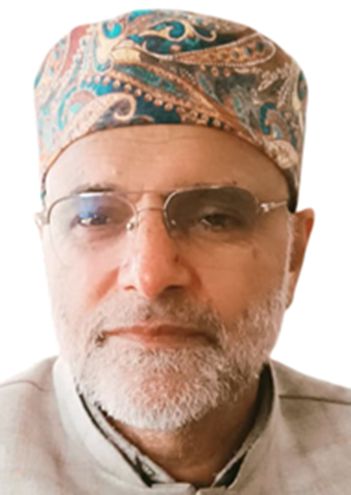
(The author a veteran academician is a former Professor and Head Department of Islamic Studies, Kashmir University. The views, opinions and conclusions expressed in this article are those of the author and aren’t necessarily in accord with the views of “Kashmir Horizon”)
[email protected]







