“PM Modi’s remarks, the India-Australia energy agreements and the comprehensive defence declaration suggest that New Delhi is steadily moving from being a balancing power to becoming one of the principal architects of regional security.”
Mohammad Irfan
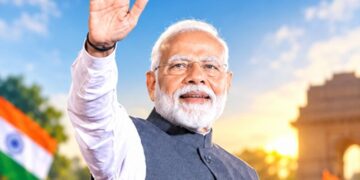
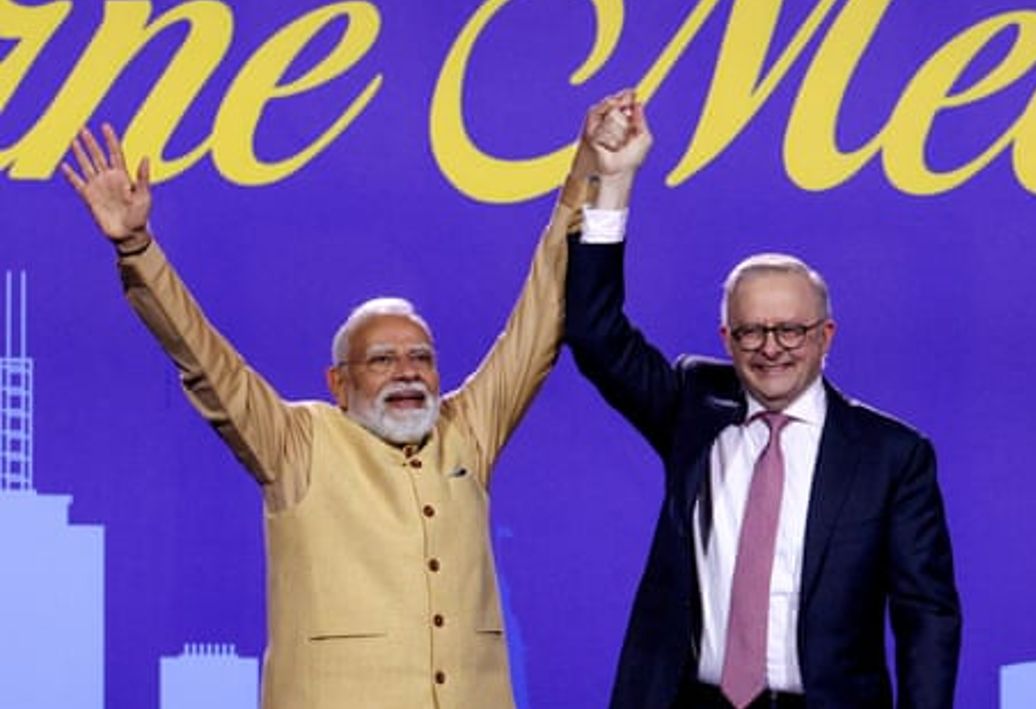
 This week Prime Minister Narendra Modi’s address to the Indian diaspora in Melbourne this week was far more than a community outreach event. While the enthusiastic audience responded loudly when he referred to Operation Sindoor and India’s strikes on terrorist infrastructure, the broader significance of the visit lay in the strategic messaging that accompanied it. The visit marked the convergence of three major themes that increasingly define India’s global outlook: the projection of military capability against terrorism, the expansion of economic partnerships with trusted democracies, and the strengthening of security cooperation in an increasingly contested Indo-Pacific region. Together, PM Modi’s remarks, the India-Australia energy agreements and the comprehensive defence declaration suggest that New Delhi is steadily moving from being a balancing power to becoming one of the principal architects of regional security.
Op Sindoor As Strategic Messaging: Perhaps the most politically resonant moment came when Prime Minister Modi referred to Operation Sindoor before the Indian community. “The world is witnessing the capability and credibility of India’s defence platforms,” he said, adding that the explosions at terrorist bases “were heard across the world.” The statement served multiple purposes. Domestically, it reinforced the government’s narrative that India possesses both the political resolve and military capability to respond decisively against terrorism. Internationally, the remarks sought to communicate that India’s indigenous military capabilities are no longer experimental but operationally proven. Unlike previous military responses, Operation Sindoor has increasingly been projected not merely as retaliation against terrorism but as evidence of India’s technological maturity in precision warfare, surveillance, missile systems and integrated military planning. The emphasis on the “credibility of defence platforms” is especially significant. Rather than highlighting only the armed forces, Modi focused attention on India’s defence manufacturing ecosystem—a sector that has witnessed unprecedented government investment under the Atmanirbhar Bharat and Make in India initiatives. This messaging aligns with New Delhi’s broader ambition of transforming India from one of the world’s largest arms importers into a major defence producer and exporter.
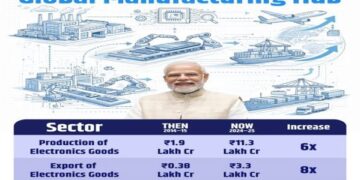
Defence Manufacturing Enters A New Phase: For decades India remained heavily dependent on imported military hardware. However, recent years have witnessed a gradual but significant transformation. India now manufactures advanced artillery systems, missiles, drones, naval platforms, electronic warfare systems and increasingly sophisticated surveillance equipment. Operation Sindoor appears to have become a showcase for this evolving ecosystem. By describing the operation as a “demo,” Modi effectively suggested that India’s indigenous technologies have now crossed the threshold from development to battlefield validation. For potential defence partners, operational credibility often matters more than technical specifications. Countries seeking reliable and affordable defence equipment increasingly evaluate platforms based on combat performance. India hopes this credibility will strengthen its position in global defence exports, particularly across Asia, Africa and the Middle East.
India-Australia Relations Have Matured Beyond Trade: While diaspora events often dominate headlines, the substantive outcomes of Modi’s Australia visit reveal how dramatically bilateral relations have evolved. Only a decade ago, India-Australia ties were largely centred around education, cricket and mineral trade. Today the relationship spans defence, maritime security, cyber cooperation, energy security, critical minerals, emerging technologies and supply-chain resilience. The Comprehensive Strategic Partnership, launched in 2020, has transformed the relationship into one of Australia’s fastest-growing strategic partnerships. The latest agreements indicate that both countries increasingly view each other not merely as economic partners but as indispensable security partners in the Indo-Pacific.
Energy Security Takes Centre Stage: One of the most important dimensions of the visit concerns energy cooperation. Global conflicts—from the Russia-Ukraine war to tensions in the Middle East—have exposed vulnerabilities in international energy supply chains. Australia and India have therefore agreed to deepen cooperation across the entire energy value chain. Australia already serves as a significant supplier of liquefied natural gas and critical minerals. India, meanwhile, exports refined petroleum products and downstream fuels. The agreement seeks to ensure stable and uninterrupted energy flows despite global geopolitical disruptions. Equally important is the emphasis on diversification. Both countries recognise that future energy security will depend not only on fossil fuels but also on renewable energy, hydrogen, biofuels, battery technologies and critical minerals such as lithium and rare earth elements. Australia possesses vast reserves of these resources, while India represents one of the world’s fastest-growing clean-energy markets. This creates natural economic complementarity.
Nuclear Cooperation Reflects Growing Trust: Another notable development is the operationalisation of Australia’s uranium exports to India under International Atomic Energy Agency safeguards. The Australia-India Nuclear Cooperation Agreement was signed years ago, but administrative arrangements have now been finalised. The significance extends beyond uranium itself. Australia traditionally maintained strict nuclear export policies. Its willingness to deepen civilian nuclear cooperation with India reflects growing confidence in India’s non-proliferation record despite its status outside the Nuclear Non-Proliferation Treaty. For India, expanding access to nuclear fuel strengthens long-term energy diversification.
The Indo-Pacific Is The Real Strategic Theatre: The most consequential outcome of the visit may ultimately prove to be the Joint Declaration on Defence and Security Cooperation. The declaration reflects the rapidly changing geopolitical environment. Increasing strategic competition, maritime disputes, cyber threats, supply-chain disruptions and concerns regarding regional coercion have prompted middle powers to enhance security cooperation. India and Australia now appear determined to elevate defence cooperation to an unprecedented level. The declaration outlines cooperation across multiple domains:
- Greater interoperability between armed forces.
- Expanded military exercises.
- Increased maritime cooperation.
- Enhanced information sharing.
- Joint defence research.
- Defence industry collaboration.
- Cyber security.
- Counter-terrorism.
- Humanitarian assistance And disaster relief.
- Critical technologies.
Collectively, these initiatives point towards a more integrated strategic partnership.
Maritime Security Is Emerging As The Core: The Indian Ocean has become one of the world’s most strategically contested maritime regions. Nearly two-thirds of global oil shipments and a substantial proportion of international trade pass through the Indo-Pacific. Any disruption could have enormous economic consequences. Recognising this, India and Australia have committed themselves to developing an India-Australia Maritime Security Collaboration Roadmap. This includes enhanced naval cooperation, information sharing and greater maritime domain awareness. Both countries support freedom of navigation under international law and adherence to the United Nations Convention on the Law of the Sea (UNCLOS). Although neither country explicitly identifies China in the declaration, many analysts interpret the emphasis on maritime rules and regional stability within the broader context of growing Chinese naval activity across the Indo-Pacific.
Quad Gains Further Momentum: The visit also reinforces the growing importance of the Quad, comprising India, Australia, Japan and the United States. Originally viewed as a consultative grouping, the Quad has steadily evolved into a practical platform addressing maritime security, infrastructure, cyber resilience, disaster response, critical technologies and supply-chain security. The India-Australia declaration specifically commits both countries to expanding cooperation with Japan and the United States. Rather than functioning as a military alliance, the Quad increasingly represents a coalition of democracies seeking to uphold an open regional order without formal treaty obligations.
Counter-Terrorism Cooperation Deepens: One of the most notable aspects of the declaration concerns counter-terrorism. India and Australia agreed to expand intelligence sharing regarding terrorist organisations, financing networks, online radicalisation and emerging technologies. The emphasis reflects changing patterns of terrorism. Threats increasingly involve encrypted communication platforms, digital financing, drones and cyber capabilities. Traditional intelligence mechanisms alone are no longer sufficient. Enhanced information sharing between trusted partners has therefore become essential. For India, international recognition of terrorism-related concerns also strengthens its diplomatic efforts to build broader global consensus against cross-border terrorism.
“For India, partnerships with technologically advanced democracies complement domestic initiatives aimed at building indigenous technological capabilities.Beyonddefence and economics, Modi emphasised India’s humanitarian role..”
Supply Chains Replace Globalisation: Another recurring theme is supply-chain resilience. The COVID-19 pandemic and subsequent geopolitical crises demonstrated the risks associated with excessive dependence on single-country manufacturing. India and Australia now seek to diversify production networks across trusted partners. Critical minerals represent a particularly important area. Australia possesses abundant reserves of lithium, cobalt and rare earth elements essential for batteries, electric vehicles and advanced electronics. India offers manufacturing capacity, engineering talent and a large consumer market. Together, they could reduce dependence on concentrated global supply chains.
Technology Partnership Expands: Emerging technologies occupy an increasingly central place in bilateral relations. The declaration covers cyber security, artificial intelligence, quantum technologies, telecommunications and critical digital infrastructure. These sectors are becoming central to both economic competitiveness and national security. The Australia-India Partnership on Cyber, Critical Technologies and Supply Chains (PACTS) provides a framework for collaboration. For India, partnerships with technologically advanced democracies complement domestic initiatives aimed at building indigenous technological capabilities.
Humanitarian Diplomacy Strengthens India’s Image: Beyond defence and economics, Modi emphasised India’s humanitarian role. He highlighted relief efforts in Venezuela, Türkiye, Syria, Myanmar and Sri Lanka, arguing that India extends assistance irrespective of nationality. This reflects India’s growing use of humanitarian assistance and disaster relief as an instrument of foreign policy. Rapid deployment of relief teams, naval assets and medical assistance enhances India’s image as a responsible regional power. Such missions also strengthen defence diplomacy by allowing military forces to operate alongside civilian agencies in non-combat environments.
The Diaspora As Strategic Capital: The Melbourne event also underscored the growing importance of the Indian diaspora in Australia’s domestic and bilateral landscape. People-to-people ties increasingly underpin the broader strategic relationship. Indian students, professionals, entrepreneurs and researchers contribute significantly to Australia’s economy while serving as natural bridges between the two countries. Political leaders in both countries increasingly recognise this community as an important pillar of bilateral engagement.
Kashmir Horizon View: Taken together, PM Modi’s remarks on Operation Sindoor, the expanding defence relationship with Australia, enhanced energy cooperation and deeper Indo-Pacific coordination point towards a broader transformation in India’s foreign policy. India is no longer content with being viewed merely as a large developing economy or an emerging market. Instead, it seeks recognition as a security provider, technology partner, defence manufacturer, humanitarian responder and stabilising power in the Indo-Pacific. Operation Sindoor, in this context, becomes more than a military operation. It becomes a symbol of India’s evolving strategic doctrine—one that combines military preparedness with indigenous technological capability, economic resilience with trusted partnerships, and national security with regional stability. For Australia, closer ties with India provide greater strategic balance in an increasingly uncertain Indo-Pacific. For India, Australia offers access to energy resources, critical minerals, advanced technologies and a like-minded democratic partner committed to preserving a rules-based regional order. The Melbourne visit therefore represents far more than a successful diaspora engagement. It reflects the consolidation of a strategic partnership that is likely to play an increasingly influential role in shaping the geopolitical and economic architecture of the Indo-Pacific in the coming decades.
(“Team Kashmir Horizon” is committed to continuous improvement and invites feedback and suggestions from readers and its followers on social media sites. Reader insights are considered vital for enhancing content quality and empowering the community. The team encourages open communication and values the thoughts and ideas of its audience, believing that such input will enable them to serve the public more effectively. The initiative aims to ensure that readers have the best possible experience with “Kashmir Horizon”. Interested individuals can reach out to us via email at [email protected].)