“A moment of transformation is here. Those once uprooted from their homeland return and this homecoming is the truest victory,” LG Sinha
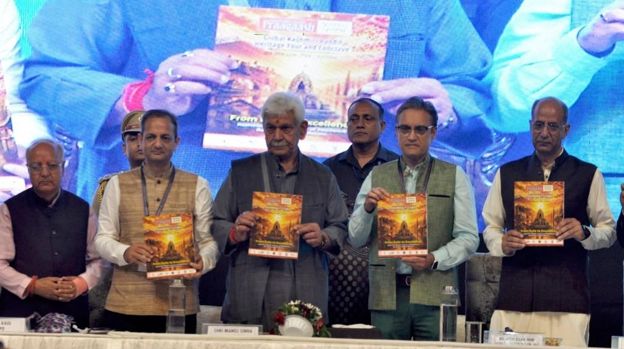
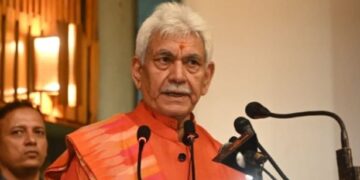
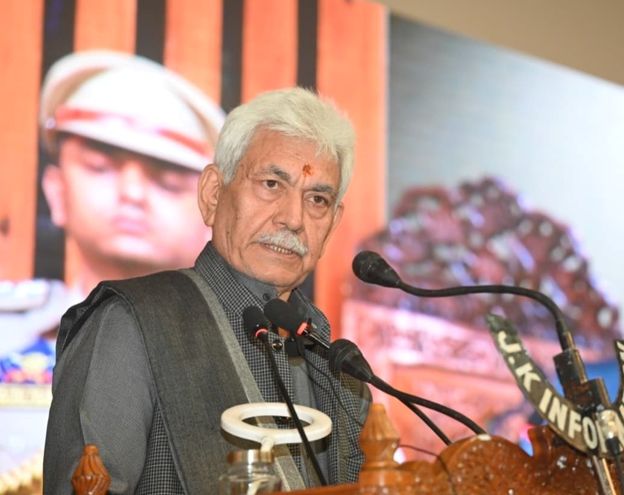
This week Lieutenant Governor Manoj Sinha described the return of Kashmiri Pandits to the Valley as the “truest victory,” calling upon members of the global Kashmiri Pandit diaspora to invest in industries, academic institutions and cultural infrastructure in Jammu and Kashmir, in what appeared to be a renewed administrative push to link rehabilitation with economic revival. Addressing the Global Kashmiri Pandit Conclave in Srinagar, attended by prominent community members from India and abroad, Sinha said the event marked a significant moment in Jammu and Kashmir’s post-2019 transition, with the administration projecting the community’s return as a key indicator of changing ground realities in the Union Territory. “A moment of transformation is here. Those once uprooted from their homeland return and this homecoming is the truest victory,” Sinha said, while emphasizing that the presence of business leaders, entrepreneurs and cultural figures from the community reflected growing confidence in the security and administrative environment in Jammu and Kashmir.
Rehabilitation Back In Focus: The conclave comes amid continuing debate over the rehabilitation of Kashmiri Pandits, nearly three decades after the mass migration of the community from the Valley following militancy-related violence, targeted killings and widespread fear in the late 1980s and early 1990s. While successive governments have announced relief, employment and rehabilitation packages, the issue of large-scale dignified return remains unresolved due to persistent concerns over security, housing, employment sustainability and social reintegration. Against this backdrop, Friday’s conclave was significant not only for its symbolic value but also for the economic and political messaging that accompanied it.
From Relief To Reconstruction: Sinha urged distinguished members of the community to become active participants in Kashmir’s reconstruction by establishing institutions that could preserve heritage while generating long-term economic opportunities. He said Kashmiri Pandit community’s contribution was needed across sectors including industry, education, arts and spirituality. “The true measure of life lies in what we give back, in the hope we inspire, and in the change we leave behind for society and the nation,” the Lieutenant Governor said, urging diaspora leaders to channel their expertise and resources toward rebuilding institutions in the Valley. The Government’s messaging indicates a noticeable shift in rehabilitation discourse—from relief-based assistance to long-term economic participation.Traditionally, the rehabilitation debate has focused on transit accommodation, government jobs and financial relief for displaced families. The conclave, however, expanded that conversation to include private investment, institution-building and economic integration.
Economic Capital Of Diaspora: With a large section of the Kashmiri Pandit diaspora now professionally established across India and globally, policymakers increasingly view the community as a source of investment, entrepreneurship and intellectual capital that could contribute to Jammu and Kashmir’s economic transformation. The Lieutenant Governor’s appeal for industries and educational institutions appears aligned with the administration’s broader strategy to attract private investment into the Union Territory following the constitutional changes of August 2019.
Recognition Of Historical Trauma: In one of the strongest official acknowledgments of the community’s suffering, LG Sinha referred to the 1990 exodus as a period marked by brutality, massacres and forced displacement. “The world remembers the 1990s, when the Kashmiri Pandit community faced unimaginable brutality and endured massacres. Overnight, families were forced to leave everything behind and live in exile in their own country,” he said. The remarks carry political significance, as recognition of historical trauma has remained central to the community’s long-standing demand for justice and dignified rehabilitation. The displacement of Kashmiri Pandits remains one of the most sensitive and contested chapters in Kashmir’s modern history. Thousands of families were uprooted from ancestral homes, leading to a demographic and cultural rupture whose effects continue to shape political discourse in the region. For many displaced families, return remains linked not only to physical rehabilitation but also to questions of justice, accountability and long-term security guarantees.
From Displacement To Global Success: A key theme of Sinha’s address was the transformation of the Kashmiri Pandit community from victims of displacement into a globally successful and influential diaspora. He said despite exile and hardship, the community chose rebuilding over despair. “Lives marked by pain and struggle gave the Kashmiri Pandit community only two choices—despair or rebuilding. They chose creation, rebuilding and selfless service,” he said. Sinha highlighted the community’s achievements in technology, finance, medicine, civil services, academia and entrepreneurship, arguing that adversity strengthened rather than weakened collective ambition. “Hardship never broke the spirit of the Kashmiri Pandit community. Suffering did not silence their ambition. Instead, they shaped their own destiny by building industries, founding institutions, driving innovation, and earning respect across the world,” he said.
Post-2019 Political Messaging: The conclave also reinforced the administration’s broader political narrative that Jammu and Kashmir has entered a new phase after 2019. Sinha explicitly linked the prospect of Kashmiri Pandit return with the post-Article 370 political order. “The return of the Kashmiri Pandit community reflects that after 2019 a new Jammu Kashmir has been born,” he said. This statement positions rehabilitation as both a humanitarian objective and a political marker of stability. However, despite improved infrastructure and expanded administrative outreach, the return of Kashmiri Pandits remains limited in practical terms. Though several thousand migrant employees have returned under government employment packages and are residing in transit accommodations, many families continue to remain outside the Valley due to security concerns. Recent targeted attacks on minority employees in previous years further reinforced fears among sections of the community.
Economic Revival, Cultural Restoration: The Lieutenant Governor said the Global Kashmiri Pandit Conclave also marked the beginning of efforts toward restoring the community’s ancient civilisational legacy in Kashmir. He described discussions at the conclave on global industries, institutions and shared economic futures as pathways for cultural revival and community restoration. This dual emphasis on economy and heritage reflects the administration’s attempt to combine development with identity restoration. The Kashmiri Pandit community has historically played a central role in Kashmir’s intellectual, spiritual and cultural traditions, particularly in Sanskrit scholarship, Shaivism, literature and public administration. Their displacement created not only a humanitarian crisis but also a deep cultural void. Experts note that meaningful rehabilitation therefore extends beyond housing and jobs. It also involves restoration of cultural spaces, religious heritage and civilisational continuity.
“The world remembers the 1990s, when the Kashmiri Pandit community faced unimaginable brutality and endured massacres. Overnight, families were forced to leave everything behind and live in exile in their own country,” LG Sinha said.,”
Challenges Ahead: Despite optimistic messaging, significant challenges remain in achieving large-scale return. Security remains the foremost concern. In addition, unresolved property disputes, economic reintegration and social trust deficits continue to complicate rehabilitation efforts. Many community members also stress that return must be dignified, voluntary and sustainable—not merely symbolic. The conclave, therefore, is likely to be assessed not by speeches alone but by policy outcomes in the coming months. Whether the administration can convert this outreach into concrete investment, institutional projects and durable rehabilitation mechanisms remains to be seen. The event was attended by several prominent members of the Kashmiri Pandit community and civil society, including Nasir Aslam Wani, Advisor to the Chief Minister; UphaarKotru, President of Kashmiri Overseas Association; Utpal Kaul, International Coordinator of Global Kashmiri Pandit Diaspora; Ashwani Bhat, President of Kashmiri Pandit Association Mumbai; Sanjay Koul, President of All Minority Employees Association Kashmir; social activist Autar Krishan Trakroo; Dileep Mattoo, President of Jammu Kashmir Vichar Manch; and R.K. Bhat, President of Youth All India Kashmiri Samaj. Senior police and civil administration officials, prominent citizens, youth and a large number of community members also attended. For the administration, the conclave represents more than symbolic outreach. It signals a renewed effort to frame Kashmiri Pandit rehabilitation around return, investment and restoration. Whether this evolves into tangible change may determine how history ultimately judges one of Kashmir’s most enduring unresolved questions.
Kashmir Horizon View: The Global Kashmiri Pandit Conclave has opened a new chapter in the discourse around the rehabilitation of the displaced community in Jammu and Kashmir. More than a symbolic gathering, it has shifted the conversation from memory and loss toward return, reintegration and reconstruction. The key challenge now lies in translating intent into action. The way forward requires a multi-dimensional strategy built on security, economic opportunity, institutional support and social reconciliation. While the administration has repeatedly emphasized improved security conditions and infrastructure development, long-term rehabilitation of Kashmiri Pandits will require sustained confidence-building measures. Safe housing, employment security, restoration of properties and continued institutional safeguards will remain central to any meaningful return process. However, the future of rehabilitation may not lie solely in traditional relief models. The conclave highlighted a significant new possibility—the active participation of the Kashmiri Pandit diaspora in rebuilding Jammu and Kashmir’s economic and cultural landscape. This approach moves beyond compensation and focuses on empowerment. The Kashmiri Pandit community today possesses immense intellectual, professional and entrepreneurial capital. Across India and the world, members of the community have excelled in technology, healthcare, finance, education, public administration and business leadership. This strength can become a transformative force for Jammu and Kashmir if channelled into productive investment. The establishment of industries, start-ups, educational institutions, research centres and cultural academies can generate employment not only for returning community members but for local youth across all communities. Such institution-building would create shared economic interests, foster inter-community engagement and strengthen social stability. Equally important is cultural restoration. Rehabilitation cannot be measured only by physical return; it must also involve the revival of heritage, identity and belonging. Preservation of temples, cultural sites, language and traditions will be crucial to ensuring that return is emotionally meaningful and historically rooted. At the same time, social healing remains indispensable. Reconciliation requires acknowledgement of historical pain, mutual trust and collective commitment to a peaceful future. The return of Kashmiri Pandits should not be viewed as the story of one community alone, but as part of Kashmir’s larger journey toward coexistence, pluralism and shared prosperity. The administration’s emphasis on a “new Jammu and Kashmir” reflects growing optimism that conditions are becoming conducive for this transformation. Increased investment, improved connectivity, expanding tourism and greater administrative outreach have contributed to a changing environment. If these gains are consolidated, they could create stronger foundations for sustainable rehabilitation. The Global Kashmiri Pandit Conclave has sent a powerful message: the story of Kashmiri Pandits is no longer defined solely by exile, pain and displacement. It is increasingly becoming a story of resilience, revival and return. The path ahead will not be without challenges, but the possibilities are stronger than they have been in decades. With political will, community participation and sustained confidence-building, Jammu and Kashmir can move toward a future where return becomes reality and reconciliation becomes lasting. The homecoming of Kashmiri Pandits would represent more than rehabilitation—it would symbolize the restoration of Kashmir’s composite identity, cultural richness and civilizational continuity. If achieved, it may well become one of the most significant milestones in the region’s modern history.
(“Team Kashmir Horizon” is committed to continuous improvement and invites feedback and suggestions from readers and its followers on social media sites. Reader insights are considered vital for enhancing content quality and empowering the community. The team encourages open communication and values the thoughts and ideas of its audience, believing that such input will enable them to serve the public more effectively. The initiative aims to ensure that readers have the best possible experience with “Kashmir Horizon”. Interested individuals can reach out to us via email at [email protected].)