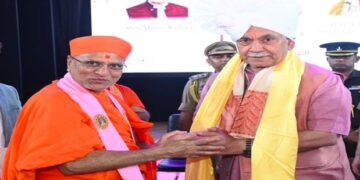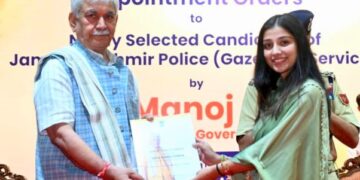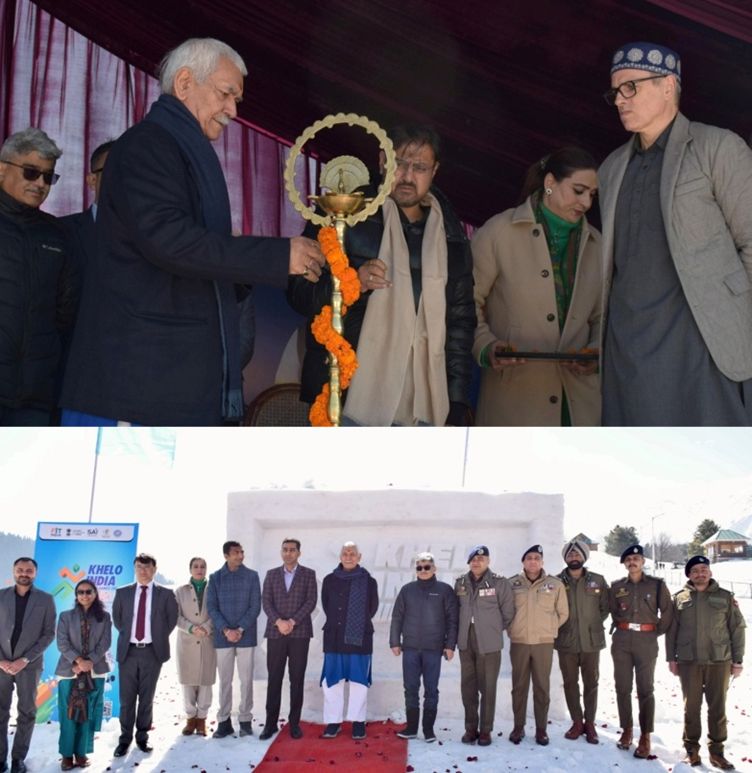
“Lieutenant Governor said the Khelo India Winter Games at Gulmarg have grown into a national festival that reflects the ideals of peace, equality and camaraderie. In a diverse nation, he noted, the Games act as a unifying force where athletes from different states compete fiercely yet uphold mutual respect, strengthening national unity and celebrating the transformative power of sports.”
Mohammad Irfan
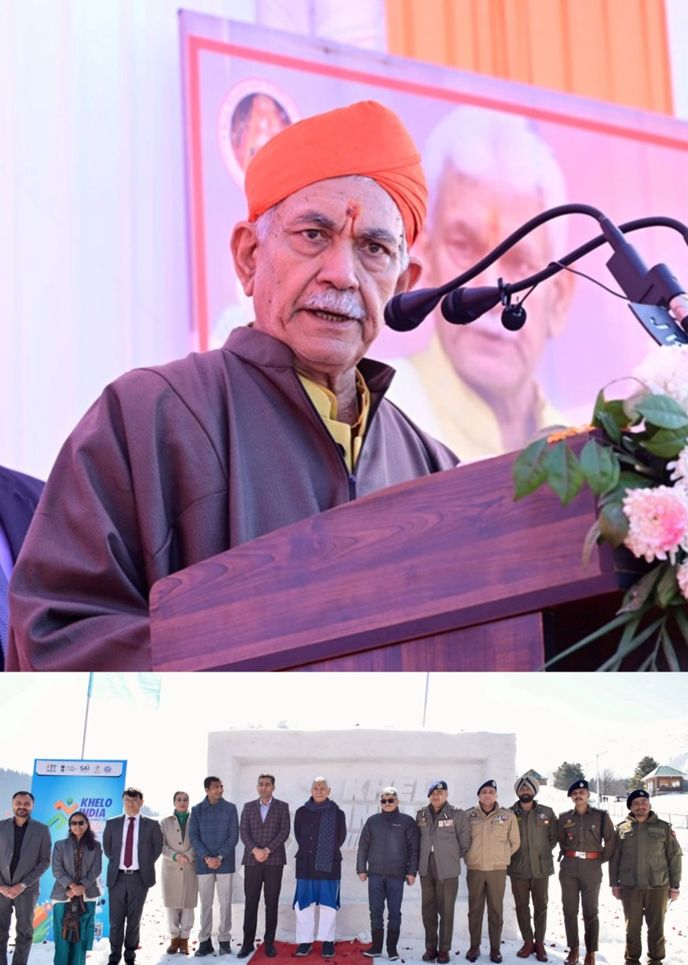
The sixth edition of the Khelo India Winter Games (KIWG) opened in Gulmarg with a powerful blend of symbolism and strategy an event that is no longer confined to medals and podium finishes, but one that has steadily evolved into a national festival of unity, resilience and sporting ambition. The Lieutenant Governor, while welcoming nearly 1,000 athletes and officials from across states and Union Territories, framed the Games as a celebration of India’s diversity and a reaffirmation of shared values at a time when cohesion and collective purpose are paramount.
From Sporting Event To National Festival: In his address, the Lieutenant Governor described the Winter Games as a revival of sport’s enduring ideals—peace, equality and camaraderie. In a country defined by myriad languages, cultures and traditions, he said, Gulmarg’s snow-clad slopes were emerging as a universal language. Competition here transcends geography and identity; athletes arrive as representatives of different states but depart as members of a shared sporting fraternity. This transformation—from event to festival—is not rhetorical flourish. Over six editions, KIWG has carved out a distinctive space in India’s sporting calendar. Unlike its summer counterpart, winter sports require specialised terrain, weather conditions and infrastructure. By hosting the Games repeatedly, Gulmarg has positioned itself not merely as a scenic backdrop but as India’s winter sports capital. The Lieutenant Governor’s assertion that the Games strengthen national unity aligns with a broader vision: sport as a social adhesive capable of dissolving boundaries of region, language and culture.
Sport As A School of Resilience: Winter sports, perhaps more than most disciplines, pit athletes directly against nature. Alpine skiing and ski mountaineering demand courage on unpredictable slopes; Nordic skiing tests endurance across unforgiving terrain; snowboarding blends technical precision with balance and daring. In this context, the Lieutenant Governor’s metaphor of “falling, analysing errors, and rising improved” resonates deeply. On icy gradients, mistakes are immediate and unforgiving. The lesson, however, is universal—resilience is forged in adversity. The Games, he observed, mirror life’s raw challenges. This is not mere motivational language. Psychological resilience, discipline and analytical self-correction are traits common to elite athletes. By foregrounding these attributes, the administration situates winter sports within a larger developmental narrative—one that seeks to shape character as much as champions.
Unity Through Healthy Rivalry: “Intense rivalry yields shared conversations and lasting friendships,” the Lieutenant Governor remarked, underscoring the coexistence of competition and mutual respect. At a time when public discourse often veers toward polarisation, the sporting field offers an alternative ethos. Athletes may race fiercely down parallel ski tracks, but they gather afterward in common spaces—sharing training tips, cheering for rivals, forging networks that transcend state boundaries. The message was pointed: diversity is strength, not division. When competitors from distant corners of India train together and applaud each other’s performances, the Games embody the constitutional promise of unity in diversity. This is particularly significant in Jammu and Kashmir, where the narrative of integration and national belonging carries layered political meaning.
The Test of Nature, Skill: Winter Games are unique in that they are not staged in controlled arenas alone. They unfold in open, mountainous environments where weather can alter conditions overnight. The Lieutenant Governor emphasised that excelling in such circumstances demands extraordinary prowess—technical mastery honed over years, poise under pressure, unyielding resolve and superhuman endurance. The disciplines featured—alpine skiing, Nordic skiing, snowboarding and ski mountaineering—require rigorous preparation. Athletes’ identities, he noted, hinge solely on performance. On Gulmarg’s slopes, pedigree and background recede; skill, discipline and grit determine outcomes. It is an egalitarian arena in the truest sense.
Infrastructure, The Sporting Renaissance: A recurring theme in the Lieutenant Governor’s address was transformation. Under the leadership of Prime Minister Narendra Modi, he said, Jammu and Kashmir has witnessed a significant expansion in sporting infrastructure. The Prime Minister’s Development Package (PMDP) and the establishment of 100 Khelo India Centres have redefined the landscape. Modern facilities, combined with youthful talent and proactive administrative support, have provided momentum to the sector. Synthetic turfs, upgraded stadiums, indoor arenas and coaching programmes are reshaping aspirations. For a region long associated in headlines with conflict, the image of competitive winter sport signals a deliberate narrative shift—from turbulence to talent.
“Highlighting the tough nature of winter disciplines, he said athletes here compete not only against rivals but also against nature, demanding skill, endurance and resilience. Urging participants to maintain high standards of sportsmanship, he added that the true success of the Games will be measured not just by medals, but by unity, character and the pursuit of excellence.”
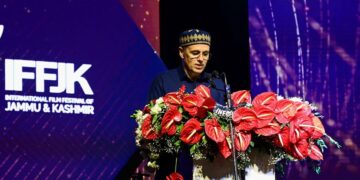
Chief Minister’s Climate Reality Check: If the Lieutenant Governor’s speech focused on unity and character, Chief Minister Omar Abdullah introduced a note of strategic realism. Hosting the Games for the sixth time, he said, was a testament to Gulmarg’s unmatched status. Yet climate change and erratic snowfall pose serious threats to winter sports and tourism. February warmth in Gulmarg—once unthinkable—has become a reality. The Chief Minister acknowledged that winter sports globally are no longer dependent solely on natural snowfall. Artificial snow generation has become indispensable for major international events. If Gulmarg is to remain competitive, similar investments are unavoidable. His warning was stark: without artificial snow infrastructure, skiing in Gulmarg could face existential challenges. While acknowledging concerns about water and electricity consumption, he argued that such investments are essential—not only for elite athletes but also for the thousands whose livelihoods depend on winter tourism. Ski instructors, guides, hospitality workers and transport operators form an ecosystem intertwined with snowfall patterns.
Adaptive Planning, Flexible Scheduling: The Chief Minister also suggested rethinking the rigidity of scheduling. Rather than fixing dates months in advance, the Winter Games could be held 10 to 15 days after a substantial snowfall, ensuring optimal conditions. This pragmatic approach reflects the uncertainties of a changing climate. Such adaptive planning is not merely logistical; it is strategic. Winter tourism is a cornerstone of Gulmarg’s economy. Reliable sporting events enhance investor confidence, attract visitors and sustain local employment. Artificial snow systems, flexible calendars and upgraded slope management could collectively safeguard the region’s status as India’s premier winter sports destination.
Aspiration Beyond Participation: India’s record in Asian and Olympic Winter Games has been modest. The Chief Minister attributed this to limited infrastructure and training facilities, emphasising the duty to provide world-class coaching and support. His reference to skier Arif Khan—who represented India internationally in Italy—was both congratulatory and aspirational. The hope is that Khelo India will nurture “a new Arif Khan,” expanding the country’s winter sports footprint. This ambition aligns with the broader Khelo India vision: grassroots identification of talent, structured training pathways and exposure to competitive platforms. Winter disciplines, though niche in India, offer medal opportunities if systematically developed. Infrastructure, however, is the foundation.
Gender Parity On The Slopes: An encouraging trend highlighted by the Chief Minister was the increasing participation of women. Winter sports, he observed, present near-equal competitive platforms for men and women in many disciplines. Strengthening coaching and support systems for female athletes could help bridge gender gaps and elevate performance standards. This dimension adds another layer to the Games’ significance. Sport becomes not only a vehicle of national unity but also of social inclusion. As more young women take to skis and snowboards, the slopes of Gulmarg reflect gradual cultural shifts in access and aspiration.
Beyond Medals | Measuring Success: The Lieutenant Governor concluded with a philosophical note: success on February 26, at the closing ceremony, would not be measured by medals alone. Unity, mutual respect and relentless pursuit of excellence would define the Games’ true achievement. Victory tests skill; defeat tests character. A real athlete remains humble in triumph and dignified in adversity. This framing broadens the evaluative lens. In a region seeking stability and opportunity, the symbolic power of collective celebration may matter as much as podium statistics. When nearly 1,000 participants gather in Gulmarg, they enact a microcosm of India’s diversity, negotiating rivalry with respect.
The Larger National Canvas: At a national level, Khelo India embodies an attempt to democratise sport—moving beyond metropolitan centres to harness talent from diverse geographies. Winter Games in Gulmarg amplify this effort by spotlighting disciplines often overshadowed by cricket and athletics. They diversify India’s sporting imagination. Moreover, staging such events in Jammu and Kashmir carries layered significance. It communicates confidence, stability and integration. The presence of senior political leaders, administrators and security officials at the inauguration underscores institutional commitment.
Kashmir Horizon View: As athletes carve arcs into Gulmarg’s slopes, they leave more than fleeting trails in snow. They inscribe a narrative of aspiration, adaptation and unity. The Lieutenant Governor’s invocation of resilience and camaraderie, combined with the Chief Minister’s call for climate-responsive infrastructure, frames the Winter Games as both celebration and challenge. If investments in artificial snow and training materialise, Gulmarg could secure its place not merely as a picturesque venue but as a high-performance winter sports hub. If grassroots programmes continue to nurture talent, India’s modest winter medal tally may gradually expand. Ultimately, the success of the sixth Khelo India Winter Games will be judged not only by podium finishes but by the durability of its vision: a festival where diversity becomes strength, rivalry fosters respect, and resilience learned on icy slopes translates into character beyond them. In that convergence of snow, strategy and spirit lies the enduring promise of Gulmarg’s winter spectacle.
(“Team Kashmir Horizon” is committed to continuous improvement and invites feedback and suggestions from readers and its followers on social media sites. Reader insights are considered vital for enhancing content quality and empowering the community. The team encourages open communication and values the thoughts and ideas of its audience, believing that such input will enable them to serve the public more effectively. The initiative aims to ensure that readers have the best possible experience with “Kashmir Horizon”. Interested individuals can reach out to us via email at [email protected].)