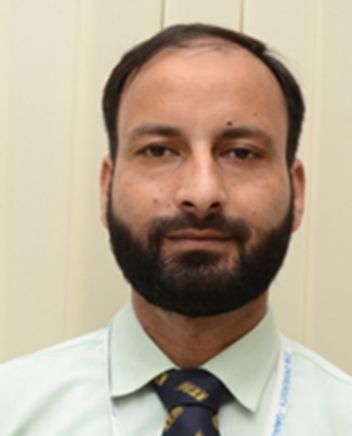
There are moments in life that gently bring us back to where everything began — moments that remind us not only of our past, but also of the values that continue to guide our present. Recently, I had the privilege of attending the National Conference on Sustainable Business Practices at my alma mater, the School of Studies in Management, under the esteemed umbrella of Jiwaji University, in the historic city of Gwalior.
What began as a professional engagement soon transformed into a profoundly heartfelt reunion. Walking through the campus once again felt like stepping into a cherished chapter of my life — one that shaped my academic foundation, strengthened my character, and nurtured my aspirations. Returning to one’s alma mater is not merely about revisiting a physical space; it is about reconnecting with the dreams we once carried with both uncertainty and hope. It is about remembering the early mornings reporting to the department, the late nights devoted to research, the nervousness before presentations, and the silent determination to prove ourselves. It is about standing in the same corridors where we first began to believe that our efforts could truly make a difference.
As a Research Scholar during 2009–2011, the School of Studies in Management was my laboratory of ideas and discipline. It was here that I learned to think critically, question constructively, and pursue excellence with humility. Walking into the conference hall this time — not as a student, but as an academic professional — filled me with immense gratitude. Some institutions give you degrees; a few give you direction. This institution gave me both.
One of the most emotional highlights of the conference was listening once again to my respected Supervisor, Prof. Yogesh Upadhyay, who now serves as Vice Chancellor at ITM University Gwalior, and my Co-Supervisor, Prof. S. K. Singh, who is Proctor at Jiwaji University. Their presence and guidance remain pillars of my academic journey. Hearing them speak with the same passion and clarity reminded me that true educators continue to inspire long after formal supervision ends.
There is a beautiful truth in the saying, “We rise because someone once believed we could.” For the past fourteen years, as I have proudly served in the ITM Gwalior family, I have often reflected on how deeply my journey has been shaped by their mentorship. Their guidance extended far beyond research methodology; it shaped my values, ethics, and professional outlook.
I vividly recall a small yet powerful lesson shared years ago. While driving in Kashmir during a visit by Prof. Yogesh Upadhyay, he advised, “If the traffic signal shows more than 30 seconds, it is better to switch the car off.” At that moment, it seemed like a simple practical suggestion. Today, I understand its deeper meaning. Sustainability begins with awareness. Leadership begins with responsibility. Small, mindful actions, practiced consistently, create meaningful long-term impact.
The conference discussions further reinforced this idea. Distinguished dignitaries emphasized that sustainability is not merely an operational choice; it is a strategic commitment. Organizations aspiring to lead must integrate innovation with responsibility. Vision without sustainability is temporary, and growth without accountability is incomplete.
The concept of life-cycle thinking particularly resonated with me. Every action — whether in business or personal life — carries long-term implications. Sustainability is not confined to environmental concerns; it encompasses ethical decision-making, efficient resource utilization, and gratitude for the resources we are blessed with. When we value our resources, we naturally strive to protect and enhance them.
This message extends beyond corporations and policymakers. It applies equally to educators, researchers, students, and professionals. Sustainability is ultimately a mindset — a conscious effort to leave the world better than we found it.
“Sustainability begins with awareness. Leadership begins with responsibility. Small, mindful actions, practiced consistently, create meaningful long-term impact.”
Some conferences are attended; some are experienced; and a few are deeply felt. This conference belonged to the third category. On the final day, emotions overwhelmed me to such an extent that I ended up sharing my reflections twice on social media — a reflection of the deep attachment I feel toward my academic roots. I was also grateful for the opportunity provided by the organizing team to share my sincere feedback during the valedictory ceremony. Speaking on a platform where I once presented as a research scholar was both humbling and empowering. It reminded me that learning never truly ends; it simply evolves into sharing.While sharing my reflections, I also presented a simple example of sustainability drawn from my own life.I spoke about my respected teacher, Prof. S. K. Singh, who was an integral part of the conference.For decades now, whenever I send him a message, he responds almost immediately — beginning with the warm words, “Dear Shahid.” He always guides me, encourages me, and wishes me the very best.I shared with the audience that sustainability is not limited to environmental practices or corporate strategies. It is also about sustaining relationships, sustaining encouragement, and sustaining positivity. To consistently make someone feel valued, supported, and inspired over decades is, in itself, a powerful example of sustainability.
Through the conference, I realized once again that conferences are not just about presenting research papers. They are about building intellectual communities. They are about listening as much as speaking, reflecting as much as analyzing, and engaging as much as presenting.
My heartfelt congratulations go to all research scholars, participants, and especially to my dear friends and respected professors who served on the organizing team. Successfully conducting such a conference requires coordination, dedication, and a collective vision. Moreover, earlier conferences gifted me lifelong friendships. This conference has strengthened old bonds and created new ones. That is the beauty of academic ecosystems — they evolve over time yet remain rooted in shared purpose and values.
While sharing my reflections, I took slightly more time than expected and offered an apology — but it was an emotional moment. Sometimes gratitude speaks longer than planned.
With humility, I would like to suggest that presenters, especially research scholars, avoid leaving immediately after delivering their papers. Staying back to attend other sessions multiplies learning and fosters deeper academic connections. Knowledge grows through participation, not isolation.
I carried with me not just conference materials, but renewed inspiration. No matter how far we advance in our careers, it is our roots that anchor our resilience. Institutions build careers. Teachers build character. Experiences build perspective. And gratitude builds legacy.I feel blessed to have returned, grateful for the journey, and inspired to continue contributing toward innovation, sustainability, and responsible leadership.
(The author is Associate Professor, Department of Management, President Institution’s Innovation Council, ITM Gwalior and an IIMA (FDP) Alumnus. He is certified Business Consultant of AIMA. The views, opinions and conclusions expressed in this article are those of the author and aren’t necessarily in accord with the views of “Kashmir Horizon”)