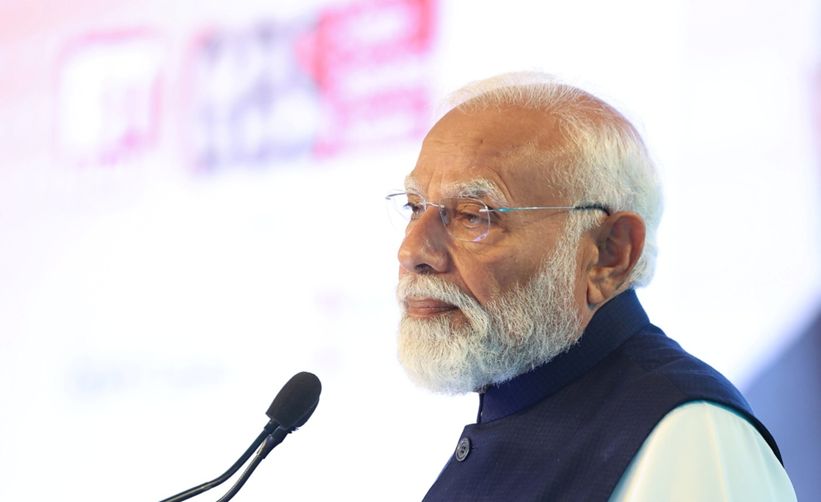
“Amid numerous disruptions, this decade has been one of unprecedented development for India,” asserting that the country has turned global crises into opportunities for structural reform. Declaring that “India is riding the Reform Express,” he emphasized that reforms today are driven by “conviction and commitment, not compulsion,” positioning India as a rising force in a changing world order.”
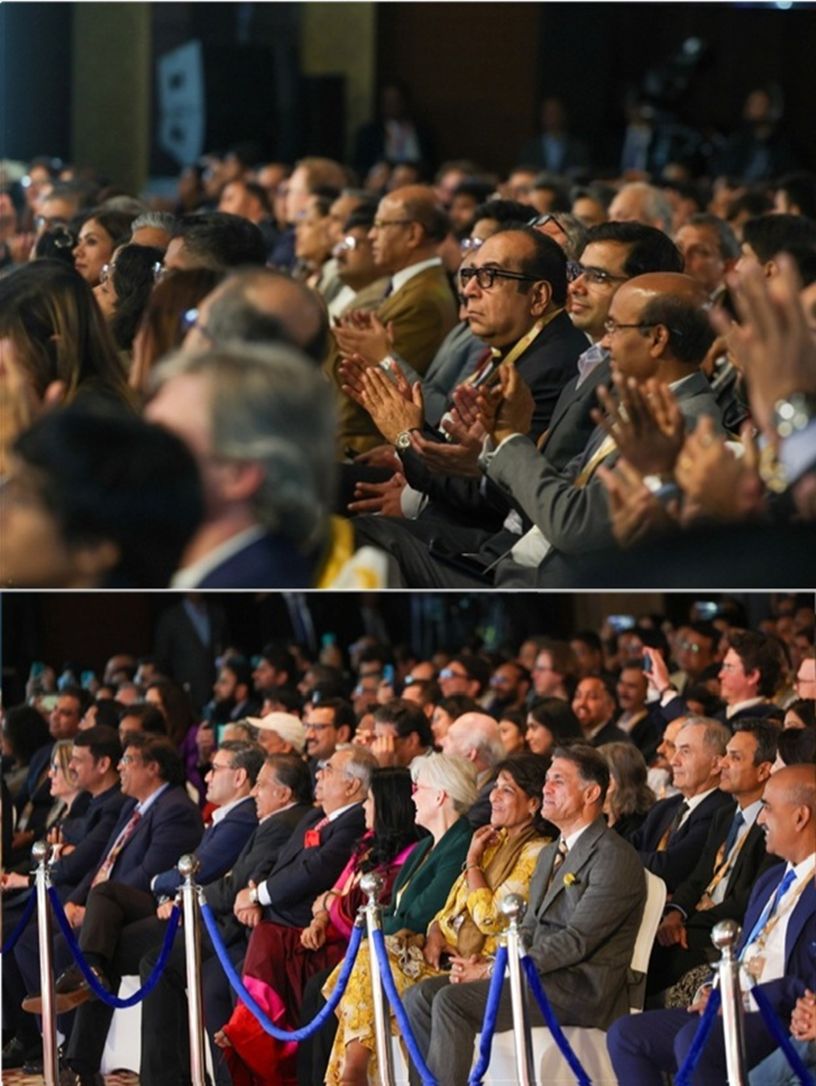
This week, ET Now Global Business Summit 2026 in the national capital, Prime Minister Narendra Modi delivered a wide-ranging articulation of India’s economic and geopolitical positioning in what he described as “a decade of unprecedented disruptions” and “a century of transformative change.” Framing his speech around the summit’s theme “A Decade of Disruption, A Century of Change” the Prime Minister argued that while the world grappled with pandemics, wars, fractured supply chains and breakdowns in multilateral arrangements, India used the turbulence to undertake structural reforms that have strengthened both its economy and democratic institutions. The address was not merely retrospective. It was an attempt to place India at the center of an emerging global economic architecture — not as a peripheral participant, but as a primary growth engine.
Disruptions As Opportunity: The Prime Minister contextualized the past decade against a backdrop of global uncertainty: the COVID-19 pandemic, regional conflicts, energy crises, and supply chain realignments that destabilized traditional global trade flows. He argued that such disruptions exposed weaknesses in the “One Size Fits All” global economic model that emerged after the Second World War — a system premised on centralized supply chains, assumed economic stability, and homogenized development frameworks. According to him, that model is now fragmenting. Nations are prioritizing resilience, self-reliance and diversified economic strategies. India, he suggested, anticipated this shift early. The establishment of NITI Aayog in 2015 was cited as a foundational moment in redefining India’s development philosophy. Rather than importing external policy templates, the country chose to pursue its own development model — calibrated to domestic realities while remaining globally integrated. This shift, he argued, insulated India from the worst shocks of global volatility and allowed the country to maintain macroeconomic stability while accelerating structural reforms.
From Eleventh Largest To Emerging Third: A central claim of the address was India’s transformation from the world’s eleventh largest economy at the beginning of the decade to a nation now advancing rapidly toward third position globally. While specific timelines were not mentioned, the Prime Minister emphasized India’s growing share in global growth currently contributing over 16 percent, according to his remarks and projected further expansion in that share. The narrative framed India not just as a large domestic market but as a systemic contributor to global economic momentum. In a subtle but significant positioning statement, he suggested that the “Century of Change” would rest substantially on India’s economic trajectory.
Reform By Conviction, Not Crisis: Perhaps the most analytically significant component of the speech was the framing of reforms. The Prime Minister contrasted the current reform cycle with earlier eras where structural changes were undertaken only under duress. He referred to the 1991 liberalization reforms, which followed a balance-of-payments crisis and near-bankruptcy conditions. He also cited institutional reforms in areas such as national security and power sector governance that followed crises. His argument: reforms born out of compulsion tend to be reactive and limited in scope. Reforms born out of conviction are systemic and enduring. He described the last decade as one in which reforms were pursued proactively across policy frameworks, administrative processes, technological integration and governance mindset. This distinction signals a strategic shift from episodic reform to continuous institutional recalibration.
Process Reforms, Administrative Velocity: Beyond macroeconomic policy, the Prime Minister highlighted procedural bottlenecks that historically slowed infrastructure and governance delivery. He pointed to delays in cabinet note preparation and project approvals in earlier periods. The claim is that digitization, time-bound clearances and technology-driven governance mechanisms have significantly improved administrative velocity. Infrastructure examples included railway over-bridge approvals and border road construction — sectors where decision-making authority has been decentralized and processes streamlined. This reflects a broader governance philosophy centered on reducing friction in execution — an element often overlooked in economic debates but critical for implementation efficiency.
Capex | The Growth Multiplier: A recurring theme was capital expenditure (capex) as a central pillar of economic strategy.The Prime Minister underscored that infrastructure spending has been increased to nearly ₹17 lakh crore in the latest Budget, a continuation of multi-year capex expansion. From an analytical perspective, sustained high capex signals confidence in long-term domestic demand and production capacity. The multiplier effect of infrastructure spending, stimulating steel, cement, logistics, employment and private investment has been a key driver of India’s growth narrative. Announcements such as five university townships, development of economic clusters in tier-2 and tier-3 cities, and seven high-speed rail corridors indicate a long-term urban and mobility vision.
Technology| The Core Driver: The Prime Minister described technology and innovation as “core drivers of growth” over the past decade. India now hosts more than two lakh registered startups, spanning sectors from fintech to deep tech. He cited UPI as a transformative innovation — not merely a digital payment tool but a systemic integration of policy design, technological infrastructure and financial inclusion. The Jan Dhan-Aadhaar-Mobile (JAM) architecture was presented as a foundational governance platform that enabled direct benefit transfers and digital inclusion at scale. The focus on artificial intelligence, semiconductors and biopharma in the latest Budget signals India’s ambition to move up the global value chain beyond services and traditional manufacturing. With the upcoming Global AI Impact Summit, India aims to position itself as both a consumer and contributor in the AI revolution.
“We have made the Budget not only outlay-focused but also outcome-centric,” while stressing that “technology and innovation are the core drivers of growth. Today’s India is confident and ready to compete globally,” underlining the country’s ambition to emerge as a key engine of global economic growth.”
Technology| The Core Driver: The Prime Minister described technology and innovation as “core drivers of growth” over the past decade. India now hosts more than two lakh registered startups, spanning sectors from fintech to deep tech. He cited UPI as a transformative innovation — not merely a digital payment tool but a systemic integration of policy design, technological infrastructure and financial inclusion. The Jan Dhan-Aadhaar-Mobile (JAM) architecture was presented as a foundational governance platform that enabled direct benefit transfers and digital inclusion at scale. The focus on artificial intelligence, semiconductors and biopharma in the latest Budget signals India’s ambition to move up the global value chain beyond services and traditional manufacturing. With the upcoming Global AI Impact Summit, India aims to position itself as both a consumer and contributor in the AI revolution.
Federal Empowerment , Fiscal Transfers: The Prime Minister emphasized enhanced fiscal devolution to states as evidence of cooperative federalism. Between 2004 and 2014, states reportedly received around ₹18 lakh crore in tax devolution. Between 2014 and 2025, this rose to ₹84 lakh crore, with nearly ₹14 lakh crore proposed for the current year. If accurate, cumulative devolution under the current government would approach ₹100 lakh crore. The fiscal implication is significant: states are increasingly central to infrastructure execution and social program implementation. Empowering states financially enhances decentralized growth and reduces regional disparities — a key element in sustaining national growth momentum.
Trade Policy Transformation: Another central argument was the transformation of India’s trade policy. The Prime Minister contrasted earlier hesitation around free trade agreements with the current confidence to conclude comprehensive deals. Before 2014, he noted, India signed four major trade agreements. In the past decade, deals have been concluded covering 38 countries. The analytical shift lies in the transition from defensive trade postures — driven by fears of dumping and weak domestic manufacturing — to proactive global integration. Strengthened domestic manufacturing under initiatives such as production-linked incentives has likely reduced vulnerability concerns. India’s current trade strategy reflects confidence in competitiveness rather than protectionism.
Social Inclusion| The Economic Strategy: The speech also framed welfare and inclusion as structural economic tools. The Prime Minister defended free ration distribution despite criticism, arguing it stabilizes households transitioning into the neo-middle class and prevents poverty relapse. He cited 25 crore individuals moving out of poverty — a claim that, if sustained, represents one of the largest poverty reductions globally. Other measures such as institutionalizing Indian Sign Language, legal protection for transgender citizens, and legislative reforms impacting women were presented as structural shifts in governance sensitivity. The broader argument: inclusive growth strengthens economic resilience and social stability.
Budget Philosophy: From Outlay To Outcome: The Prime Minister argued that earlier budgets focused primarily on outlay allocations and announcements. The current approach, he said, emphasizes outcomes and systemic reforms beyond the Budget document itself. He cited major structural changes — GST implementation, replacement of the Planning Commission with NITI Aayog, labor law consolidation, maritime reforms, and legal code overhaul — as examples of reform momentum outside conventional fiscal announcements. This signals a shift from episodic budgeting to continuous reform architecture.
2047 Vision| The Strategic Patience: The Prime Minister addressed criticism regarding the 2047 developed India vision. He argued that long-term national transformation requires generational commitment and strategic patience. The framing positions current reforms as foundational investments whose full impact will manifest over decades rather than electoral cycles.
Preparing for An Era Of Perpetual Disruption: Concluding on a forward-looking note, the Prime Minister suggested that disruptions will remain a constant feature of the global landscape — driven by technological revolutions, geopolitical realignments and climate challenges. Artificial intelligence was highlighted as the next major disruption.By hosting the upcoming Global AI Impact Summit, India aims to shape global conversations on ethical deployment, innovation and economic adaptation.
India at An Inflection Point: The address at the Global Business Summit framed India’s decade not merely as one of survival amid disruption, but as one of transformation. The shift from “reform by compulsion” to “reform by conviction,” the sustained focus on capital expenditure, the embrace of technology and the confidence in global trade partnerships together outline a coherent growth doctrine. However, ambition alone does not guarantee outcomes. The coming years will test whether reform momentum can be institutionalized beyond political cycles, whether manufacturing strength can match trade aspirations, and whether technology leadership can generate large-scale employment.
Kashmir Horizon View: The Prime Minister’s address outlines a confident and reform-driven India, but the coming decade will determine whether this momentum translates into durable structural leadership in the emerging global order. The next phase of India’s journey will hinge on execution depth, institutional resilience and the ability to navigate global volatility without slowing reform velocity. First, capital expenditure must continue to crowd in private investment. While sustained public capex has strengthened infrastructure and created multiplier effects, the long-term growth trajectory will depend on deeper private sector participation in manufacturing, logistics, green energy and advanced technology ecosystems. Policy stability, regulatory clarity and ease of compliance will be critical to maintaining investor confidence. Second, India’s technology push must evolve from adoption to global innovation leadership. Digital public infrastructure such as UPI and the JAM framework has demonstrated scale and inclusion. The next step lies in strengthening semiconductor fabrication, artificial intelligence research, cybersecurity architecture and deep-tech manufacturing. Talent development through university townships, skill clusters and research-linked incubation will determine whether India becomes merely a user of advanced technologies or a global supplier. Third, trade confidence must be matched with competitiveness. As India signs comprehensive trade agreements, domestic industries must continuously upgrade productivity, quality standards and export orientation. Integration into global value chains requires sustained focus on logistics efficiency, port modernization, customs digitization and stable taxation frameworks. Fourth, cooperative federalism must translate into balanced regional growth. Increased tax devolution empowers states, but outcomes will depend on how effectively state governments deploy capital toward industrial corridors, skilling ecosystems and social infrastructure. Strong centre-state coordination will be essential to avoid uneven growth patterns. Fifth, inclusive growth must remain central to economic expansion. Welfare interventions that stabilize vulnerable populations must increasingly be complemented by employment generation, urban mobility, rural enterprise development and support for MSMEs. Ensuring that poverty reduction translates into durable middle-class expansion will be key to sustaining domestic consumption demand. Finally, resilience planning must remain proactive. In an era defined by geopolitical tensions, climate risks and AI-driven disruptions, India’s institutional preparedness — from disaster management systems to financial sector safeguards — must remain robust and adaptive.
(“Team Kashmir Horizon” is committed to continuous improvement and invites feedback and suggestions from readers and its followers on social media sites. Reader insights are considered vital for enhancing content quality and empowering the community. The team encourages open communication and values the thoughts and ideas of its audience, believing that such input will enable them to serve the public more effectively. The initiative aims to ensure that readers have the best possible experience with “Kashmir Horizon”. Interested individuals can reach out to us via email at [email protected].)