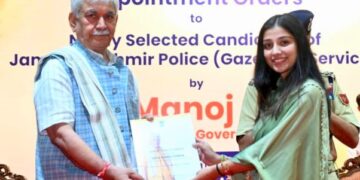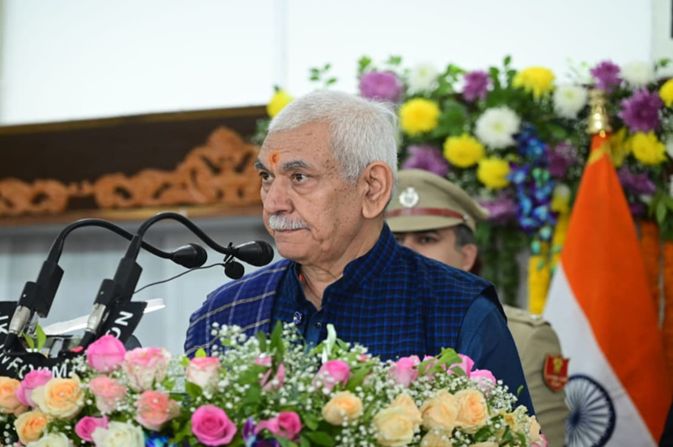
“Jammu and Kashmir has entered a decisive phase of democratic renewal and economic transformation, marked by the return of an elected government and renewed public faith in democratic institutions. Addressing the Budget Session of the Legislative Assembly, he outlined a development roadmap centred on economy, ecology and equity, stressing participatory governance, inclusive policymaking and balanced growth across all regions of the Union Territory.”
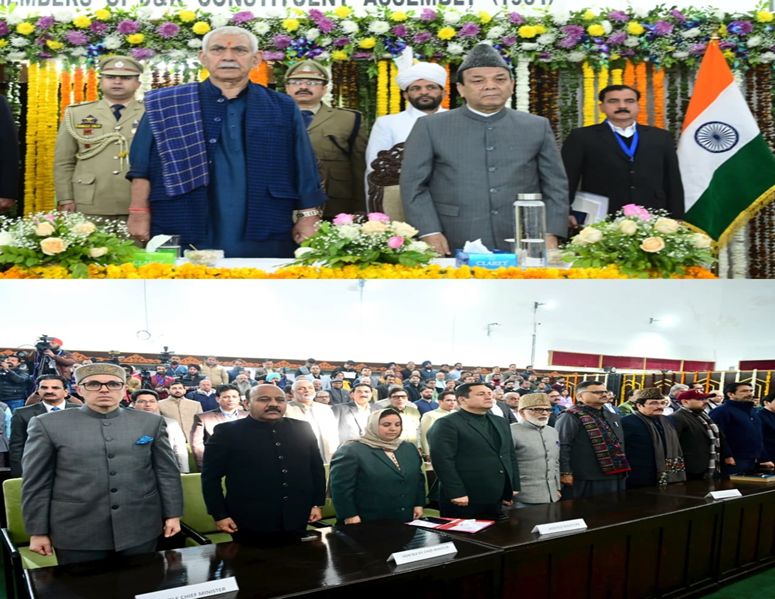
This week, Lieutenant Governor Manoj Sinha’s address to the Budget Session of the Jammu and Kashmir Legislative Assembly marked more than the customary opening of a legislative calendar. It served as a wide-ranging stocktaking of the Union Territory’s political reawakening, economic trajectory and institutional rebuilding, signalling what the administration describes as a decisive phase of democratic renewal and economic transformation. The 27-day-long Budget Session, spread over three months with double sittings, began at a moment of heightened expectations. After several years without an elected legislature, the return of a representative government has reshaped governance dynamics in Jammu and Kashmir. In this context, Sinha’s address carried the dual responsibility of reflecting on progress made during the transitional phase and outlining a roadmap for inclusive and sustainable growth under an elected dispensation. Calling the session a moment to reaffirm collective commitment towards fulfilling the aspirations of the people, the Lieutenant Governor underscored the significance of participatory governance after a prolonged gap. The formation of an elected government, he said, has helped restore public faith in democratic institutions and strengthened the legitimacy of policymaking. “The past year has been a milestone in restoring participatory governance,” Sinha observed, noting that the administration’s focus has been on rebuilding public confidence and ensuring that voices from all regions and communities find expression in decision-making. This emphasis on inclusion and regional balance framed much of the address and reflected an attempt to anchor development within democratic accountability.
Economy|Growth With Structural Reforms: A central pillar of the address was the economy, where the Lieutenant Governor painted a picture of steady recovery and accelerating momentum. Jammu and Kashmir, he said, recorded an annual nominal growth rate of around 11 per cent in 2024–25, placing it among the faster-growing States and Union Territories in the country. Key fiscal indicators were cited to underline this trajectory. GST collections rose from ₹8,064 crore in 2023–24 to ₹8,586 crore in 2024–25, signalling improved compliance and expanding economic activity. Revenue from power tariffs increased by 16 per cent over the same period, reflecting reforms in billing, metering and loss reduction. The inclusion of Jammu and Kashmir under the Special Assistance to States for Capital Infusion (SASCI) scheme was presented as a vote of confidence in the Union Territory’s reform efforts. Sanctions amounting to ₹1,431 crore for 222 projects, along with ₹210 crore as a matching share for centrally sponsored schemes, have injected fresh capital into infrastructure and service delivery. With 66 per cent of the sanctioned amount already released, the focus now shifts to timely execution. Institutional reforms, particularly in the Jammu and Kashmir Bank, were highlighted as an example of governance correction. Professionalised management, capital infusion and tighter oversight have improved capital adequacy and reduced non-performing assets, restoring confidence in a critical financial institution that underpins local commerce and entrepreneurship.
Infrastructure| An Engine Of Transformation: Infrastructure development emerged as a dominant theme, reflecting its role as both an economic multiplier and a tool for regional integration. Investments worth ₹61,528 crore in expressways, national highways, ring roads and tunnels are reshaping physical connectivity across the Union Territory. The completion of three major tunnels, including the Sonamarg Tunnel, and the advanced progress on eight others such as the strategic Zojila Tunnel, were cited as game-changers for all-weather connectivity. The declaration of the Narbal–Shopian–Surankote road as a National Highway aims to bridge regional divides and unlock economic potential in previously remote areas. Perhaps the most symbolic milestone is the railway connection of the Kashmir Valley with the rest of the country. Described as historic, the achievement is expected to transform trade logistics, tourism flows and mobility. The sanctioning of a full-fledged Railway Division and the ongoing modernisation of Jammu Tawi station further reinforce this shift. The operationalisation of the first-ever FCI food-grain freight train to Kashmir marks a logistical breakthrough, easing pressure on the Srinagar–Jammu highway and ensuring year-round supplies. Air connectivity has also expanded, with the extension of Jammu Airport and the introduction of evening flights. These measures are particularly significant for business travel, medical access and tourism resilience during periods of road disruption.
Digital Governance, Financial Inclusion: Another notable aspect of the address was the emphasis on digital transformation as a governance enabler. The Union Territory recorded 82 crore e-transactions in the last year, averaging 22 lakh transactions per day, reflecting the scale of digital adoption. The integration of 128 services with DigiLocker and complete Aadhaar seeding has enabled seamless Direct Benefit Transfers. As a result, ₹9,000 crore has been credited directly to 80 lakh beneficiaries under 77 DBT-based schemes in the current financial year, reducing leakages and improving service delivery. These figures underscore the administration’s focus on transparency and efficiency. Looking ahead, the formulation of a comprehensive Artificial Intelligence strategy was announced. By targeting sectors such as healthcare, agriculture, education, mobility and law enforcement, the government aims to leverage technology for predictive planning, better service outcomes and resource optimisation.
Power, Water , Basic Services: Power sector reforms were presented as critical to fiscal stability and citizen welfare. With 3,014 MW of hydropower capacity under execution through projects such as PakalDul, Kiru, Kwar and Ratle, Jammu and Kashmir is positioning itself as a power surplus region in the medium term. Over the past five years, 5,708 MVA has been added to distribution capacity and 4,239 MVA to transmission. The installation of over 10.44 lakh smart prepaid meters, with full coverage targeted by 2026–27, has already reduced losses by nine per cent and increased revenue by 16 per cent. Renewable energy initiatives have also gained traction. Under the PM Surya GharMuft Bijli Yojana, more than 6,700 government buildings and 16,800 households have been solarised. Approval to provide 200 free electricity units to 2.23 lakh Antyodaya Anna Yojana families reflects an effort to combine sustainability with social protection. In water security, the Jal Jeevan Mission has brought tap water connections to a majority of rural households, transforming daily life and public health outcomes. Large projects such as the Shahpur Kandi Dam and the New Pratap Canal aim to ensure long-term irrigation and drinking water security.
Tourism| Resilience, Reinvention: Tourism, a cornerstone of the local economy, received particular attention. With 1.78 crore tourist visits recorded in 2025, the sector demonstrated resilience despite security incidents, adverse weather and natural disasters. The Lieutenant Governor referred to challenges such as the Pahalgam attack, Operation Sindoor and last year’s floods, noting that these events tested the sector’s stability. Granting industry status to tourism is expected to improve access to credit and formalise operations. New attractions, including the Chrysanthemum Garden “Bagh-e-Gul-e-Dawood”, are part of a strategy to promote year-round tourism. Drawing a parallel with the Tulip Garden that defines spring tourism, Sinha described the new garden as a potential symbol of Kashmir’s autumn appeal.
Agriculture, Rural Transformation: Agriculture reforms under the Holistic Agriculture Development Programme have begun to show measurable outcomes. Cultivated area has expanded by 6.22 per cent, oilseed production has doubled under the Yellow Revolution, and cold storage capacity has reached 3.07 lakh metric tonnes. Integration with the electronic National Agriculture Market has facilitated trade worth ₹1,680.34 crore, improving price discovery and market access for farmers. These changes aim to shift agriculture from subsistence to value-added, market-oriented activity.
Health, Education, Human Capital: Human development indicators featured prominently in the address. The operationalisation of AIIMS Jammu and the nearing completion of AIIMS Kashmir represent a significant upgrade in tertiary healthcare capacity. Additional investments in cancer institutes, catheterisation labs and 950 critical care beds under PM-ABHIM are strengthening district-level care. Digital health initiatives such as the SEHAT App and Tele-ICUs are expanding access to specialist services, particularly in remote areas. These measures are designed to bridge geographical barriers that have historically constrained healthcare delivery. In education, innovation and quality enhancement were highlighted. With 172 Atal Tinkering Labs already functional and 500 more underway, the focus is on fostering creativity and scientific temper. The A++ NAAC accreditation of both the University of Jammu and the University of Kashmir was cited as recognition of academic standards. Smart classrooms, ICT labs and JK e-Pathshala are reshaping digital learning ecosystems.
“Jammu and Kashmir recorded around 11 per cent nominal growth in 2024–25, with rising GST collections, improved power revenues and major investments in roads, tunnels, railways, digital governance and social welfare. Advances in healthcare, education, agriculture, tourism, industry and youth entrepreneurship reflect the government’s focus on ensuring that growth translates into jobs, improved services and long-term prosperity for all sections of society.”
Urban Development, Housing, Social Security: Urban transformation under the Smart Cities Mission, AMRUT-II and Swachh Bharat Mission 2.0 has resulted in 277 completed projects, improving mobility, sanitation and waste management. These interventions aim to make cities more liveable and resilient. Housing initiatives have delivered tangible outcomes, with over 3.21 lakh houses constructed under PMAY-Gramin. A special policy to provide five marlas of land to families displaced by natural disasters addresses a long-standing vulnerability. Enhancements in social security pensions, reaching up to ₹2,000 per month for senior citizens above 80 years, reflect an ageing-sensitive welfare approach.
Industry, Youth, Employment: Industrial growth and employment generation were framed as essential to sustaining peace and prosperity. Since 2020, 2,227 industrial units have become operational, generating employment for 73,800 people, with another 1,028 units under implementation. Jammu and Kashmir’s ranking of fifth nationally in Ease of Doing Business reforms was presented as evidence of improved regulatory efficiency. Youth empowerment through Mission YUVA aims to establish 1.35 lakh entrepreneurial units and create employment for 4.5 lakh young people. With over ₹800 crore in loans already sanctioned, the initiative seeks to move beyond government jobs and foster a culture of enterprise.
Kashmir Horizon View: Concluding his address, Lieutenant Governor Manoj Sinha appealed to legislators to work in a spirit of cooperation and shared responsibility. The vision he outlined was of a Jammu and Kashmir that is peaceful, progressive, inclusive and prosperous, where development translates into dignity, opportunity and hope for every citizen. As the Budget Session unfolds, the challenge will lie in translating this expansive vision into tangible outcomes through legislative debate, fiscal discipline and administrative execution. Yet, the address underscored a broader narrative: that Jammu and Kashmir is navigating a complex but hopeful transition, where democratic renewal and development ambition are increasingly intertwined.
(“Team Kashmir Horizon” is committed to continuous improvement and invites feedback and suggestions from readers and its followers on social media sites. Reader insights are considered vital for enhancing content quality and empowering the community. The team encourages open communication and values the thoughts and ideas of its audience, believing that such input will enable them to serve the public more effectively. The initiative aims to ensure that readers have the best possible experience with “Kashmir Horizon”. Interested individuals can reach out to us via email at [email protected].)