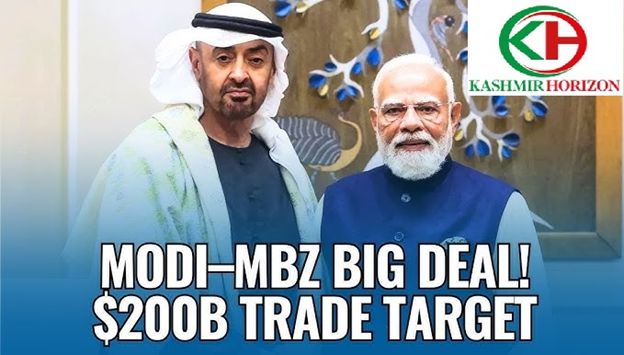
“Agreements signed in defence, space, energy, supercomputing and food security reflect the expanding scope of bilateral cooperation. The decision to double bilateral trade to $200 billion by 2032 and the UAE’s participation in the Dholera Special Investment Region underline growing economic interdependence and long-term investment confidence in India’s growth story.”
Mohammad Irfan
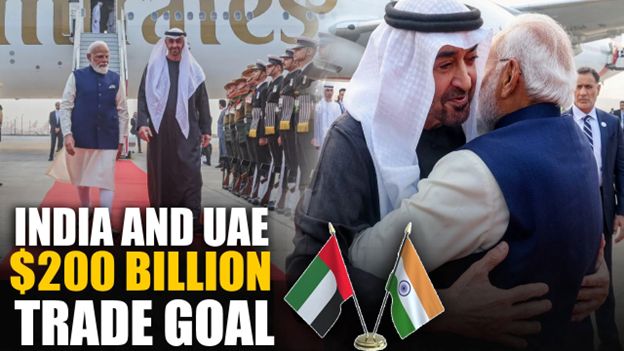 Prime Minister Narendra Modi’s delegation-level talks with President of the United Arab Emirates Sheikh Mohamed bin Zayed Al Nahyan in New Delhi mark more than a diplomatic milestone; they signal a structural transformation in India–UAE relations. The breadth of agreements signed across defence, space, energy, supercomputing, food security and infrastructure underscores a shift from transactional cooperation to a long-term strategic alignment. In an era defined by geopolitical uncertainty, technological competition and economic fragmentation, the India–UAE partnership is emerging as one of the most consequential bilateral relationships in the Indo-Pacific and West Asian regions. The agreements announced during Sheikh Mohamed’s January 2026 visit reflect not only shared economic ambitions but also converging political, security and technological priorities. This visit—his fifth to India in the last decade and third as President—also highlights the growing personal rapport between the leaderships of both countries. More importantly, it reflects institutional continuity, with successive generations of Emirati leadership investing in a deep and durable relationship with India.
From Economic Cooperation To Strategic Architecture: The India–UAE relationship has historically been anchored in trade, energy and diaspora ties. However, the Comprehensive Strategic Partnership that has evolved over the past decade has added layers of defence cooperation, technological collaboration and geopolitical coordination. The decision to double bilateral trade to $200 billion by 2032 is ambitious but not unrealistic. Bilateral trade reached nearly $100 billion in FY 2024–25, driven largely by the Comprehensive Economic Partnership Agreement (CEPA) signed in 2022. CEPA reduced tariffs, simplified regulations and created new opportunities for investment and services trade. Yet, the significance of the $200 billion target lies not merely in numbers but in composition. The emphasis on connecting MSMEs through initiatives such as Bharat Mart, the Virtual Trade Corridor and the Bharat–Africa Setu suggests a deliberate attempt to democratise trade beyond large conglomerates. This is a strategic move: integrating small businesses into global value chains enhances economic resilience and strengthens political support for globalisation at home. The UAE’s growing interest in India’s infrastructure and manufacturing sectors—evident in its participation in the Dholera Special Investment Region—reflects its broader economic diversification strategy. For the UAE, India represents a vast market, a technology hub and a stable investment destination. For India, the UAE offers capital, logistics expertise and access to global markets.
Dholera|A Symbol Of Strategic Investment: The proposed partnership in the Dholera Special Investment Region is one of the most significant outcomes of the talks. The vision includes an international airport, pilot training facilities, MRO hubs, smart urban infrastructure, railway connectivity and energy projects. Dholera is not just an industrial zone; it is envisioned as a model city under India’s smart infrastructure agenda. UAE participation signals confidence in India’s long-term economic trajectory. It also aligns with Abu Dhabi’s strategy of investing in future-ready infrastructure globally. Strategically, Dholera could become a node in global supply chains, particularly in aerospace, logistics and advanced manufacturing. The involvement of UAE sovereign wealth funds, encouraged by India’s invitation to participate in the second NIIF Infrastructure Fund, could significantly accelerate the pace of development. The establishment of DP World and First Abu Dhabi Bank offices in GIFT City further strengthens financial integration. GIFT City’s emergence as an international financial hub could position India as a bridge between South Asia, the Gulf and Africa, with the UAE acting as a crucial partner.
Defence, Security | Towards Strategic Autonomy: One of the most consequential aspects of the visit was the signing of a Letter of Intent towards a Strategic Defence Partnership. Defence cooperation between India and the UAE has steadily deepened over the past decade, with regular military exercises, high-level visits and intelligence exchanges. The move towards a formal strategic defence partnership reflects shared security concerns. Both countries face threats from terrorism, cyber warfare and regional instability. Their unequivocal condemnation of terrorism and commitment to FATF frameworks signal a coordinated approach to counterterror financing. Beyond counterterrorism, the defence partnership also reflects a broader geopolitical calculus. India seeks to expand its defence footprint in the Gulf, while the UAE is diversifying its security partnerships beyond traditional Western allies. This convergence reflects the emergence of a multipolar security architecture in West Asia, where regional powers increasingly collaborate with rising Asian economies. The emphasis on sovereignty, territorial integrity and strategic autonomy reflects a shared worldview. Both India and the UAE resist being drawn into rigid geopolitical blocs, preferring flexible partnerships that preserve their policy independence.
Energy, Nuclear Cooperation | Securing The Future: Energy cooperation remains the backbone of India–UAE relations. The 10-year LNG supply agreement between HPCL and ADNOC Gas, beginning in 2028, strengthens India’s energy security and provides the UAE with a stable long-term market. However, the partnership is evolving beyond hydrocarbons. The reference to the SHANTI law and exploration of cooperation in advanced nuclear technologies marks a significant shift. Collaboration on large nuclear reactors and Small Modular Reactors (SMRs) could transform India’s energy mix and open new avenues for technological cooperation. For the UAE, which has invested heavily in nuclear energy through projects like the Barakah Nuclear Power Plant, partnership with India offers access to a vast market and engineering expertise. For India, UAE participation could accelerate the deployment of next-generation nuclear technologies. This shift reflects a broader trend: both countries recognise that energy security in the 21st century will be defined by diversification, sustainability and technological innovation.
Space & Technology | Building A Joint Innovation Ecosystem: The decision to deepen cooperation in space and technology represents a forward-looking dimension of the partnership. The joint initiative to commercialise space infrastructure aims to create an integrated ecosystem encompassing research, industry and startups. This is not merely symbolic. The global space economy is projected to reach trillions of dollars in the coming decades. By collaborating on space missions, satellite services and commercial applications, India and the UAE are positioning themselves as key players in this emerging sector. The agreement to establish a supercomputing cluster in India and explore data centre collaboration reflects the growing importance of digital infrastructure. The proposal to explore “Digital Embassies” under mutually recognised sovereignty arrangements is particularly innovative. It reflects a recognition that digital sovereignty will be a defining issue in future international relations. The UAE’s support for India’s AI Impact Summit in February 2026 further underscores the technological dimension of the partnership. Together, India and the UAE are attempting to shape global norms in artificial intelligence and emerging technologies.
Food Security | A Strategic Imperative: Food security has emerged as a strategic priority for both countries. The UAE, with limited arable land, depends heavily on imports, while India is one of the world’s largest agricultural producers. The emphasis on public-private partnerships, innovation and knowledge exchange reflects a holistic approach. Cooperation in sustainable agriculture, logistics and supply chains could create a stable food corridor between the two countries. This partnership also has geopolitical implications. By ensuring reliable food supply chains, India and the UAE reduce vulnerability to global disruptions and strengthen their strategic autonomy.
Financial Integration, Digital Connectivity: The directive to interlink national payment platforms reflects a recognition that financial technology is a critical enabler of economic integration. Efficient cross-border payments could boost trade, remittances and investment flows. For India’s large diaspora in the UAE, such integration could significantly reduce transaction costs and enhance financial inclusion. For businesses, it could streamline operations and facilitate real-time trade settlements. The integration of India’s DigiLocker with UAE platforms for academic and professional credentials is another example of digital diplomacy. It could facilitate labour mobility, educational exchanges and economic opportunities.
Cultural Diplomacy, People-To-People Ties: Beyond economics and security, the India–UAE partnership is deeply rooted in cultural and people-to-people ties. The decision to establish a “House of India” in Abu Dhabi symbolises this dimension. As a cultural space showcasing Indian art, heritage and archaeology, it will serve as a lasting symbol of bilateral friendship. The UAE’s contribution of artefacts to India’s National Maritime Heritage Complex at Lothal reflects mutual respect for shared history. Youth exchanges, educational cooperation and university partnerships further strengthen the social foundations of the relationship. The expansion of Indian educational institutions in the UAE, including IIT Delhi and IIM Ahmedabad campuses, represents a new phase of intellectual diplomacy. These initiatives create a knowledge bridge that complements economic and strategic cooperation.
Geopolitical Context| IMEC And Beyond : The leaders’ reference to the India–Middle East–Europe Economic Corridor (IMEC) highlights the geopolitical dimension of the partnership. IMEC is not just an infrastructure project; it is a strategic alternative to existing trade routes and geopolitical alignments. By connecting India with Europe through the Middle East, IMEC could reshape global trade patterns. The UAE’s central role in this corridor underscores its importance as a logistics and connectivity hub. The discussions on regional and global issues reflect shared concerns about stability in West Asia, the Indo-Pacific and beyond. The UAE’s support for India’s BRICS chairmanship and India’s support for the UN Water Conference demonstrate mutual backing in multilateral forums.
“Initiatives in digital connectivity, nuclear energy, financial integration and cultural exchanges signal a shift from transactional ties to a comprehensive partnership. In a rapidly changing global order, the India–UAE relationship is emerging as a key pillar of regional stability and economic innovation.”
Polar Cooperation, Climate Diplomacy: An intriguing aspect of the talks was the emphasis on polar science cooperation. Joint expeditions and research initiatives reflect a growing recognition that climate change is a shared challenge requiring collaborative solutions. By cooperating in polar research, India and the UAE are contributing to global scientific efforts and strengthening their credentials as responsible stakeholders in climate governance.
Strategic Significance|A Partnership For 21st Century: The outcomes of the Modi–Sheikh Mohamed talks reveal a partnership that is multidimensional, future-oriented and strategically aligned. Unlike traditional bilateral relationships centred on trade or security alone, the India–UAE partnership spans technology, infrastructure, culture, climate and digital governance. This comprehensive approach reflects a broader shift in global politics. As the world moves towards multipolarity, middle powers like India and the UAE are forging flexible alliances that combine economic pragmatism with strategic autonomy. For India, the UAE is not merely an energy supplier or investment partner; it is a gateway to the Gulf, Africa and Europe. For the UAE, India is not just a market but a strategic ally in a rapidly changing global order.
Challenges, Opportunities Ahead: Despite the impressive breadth of agreements, the real challenge lies in implementation. Translating ambitious visions into tangible outcomes requires sustained political will, institutional coordination and private sector participation. Infrastructure projects like Dholera will require long-term investment and regulatory clarity. Defence and space cooperation will demand technological integration and trust. Digital initiatives will require harmonisation of legal frameworks and data governance standards. Yet, the opportunities are immense. If successfully implemented, the India–UAE partnership could become a model for South–South cooperation in the 21st century.
Kashmir Horizon View: Prime Minister Narendra Modi’s talks with President Sheikh Mohamed bin Zayed Al Nahyan represent a decisive moment in India–UAE relations. The agreements signed and the visions articulated reflect a partnership that is no longer limited to bilateral cooperation but is shaping regional and global dynamics. As both countries navigate a world marked by technological disruption, geopolitical competition and economic uncertainty, their strategic convergence offers a blueprint for collaborative leadership in the Global South. The India–UAE relationship is no longer just a partnership of convenience; it is evolving into a partnership of destiny—one that could redefine the contours of power, prosperity and innovation in the 21st century.
(“Team Kashmir Horizon” is committed to continuous improvement and invites feedback and suggestions from readers and its followers on social media sites. Reader insights are considered vital for enhancing content quality and empowering the community. The team encourages open communication and values the thoughts and ideas of its audience, believing that such input will enable them to serve the public more effectively. The initiative aims to ensure that readers have the best possible experience with “Kashmir Horizon”. Interested individuals can reach out to us via email at [email protected].)