“Our Armed Forces veterans are the embodiment of living history, whose sacrifices have not only safeguarded our freedom but have also shaped the destiny of our great nation. The selfless service of the armed forces is not merely a profession but a lifelong commitment—one that does not end when the uniform is folded away.”
Mohammad Irfan
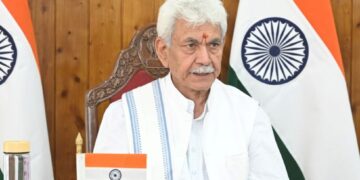
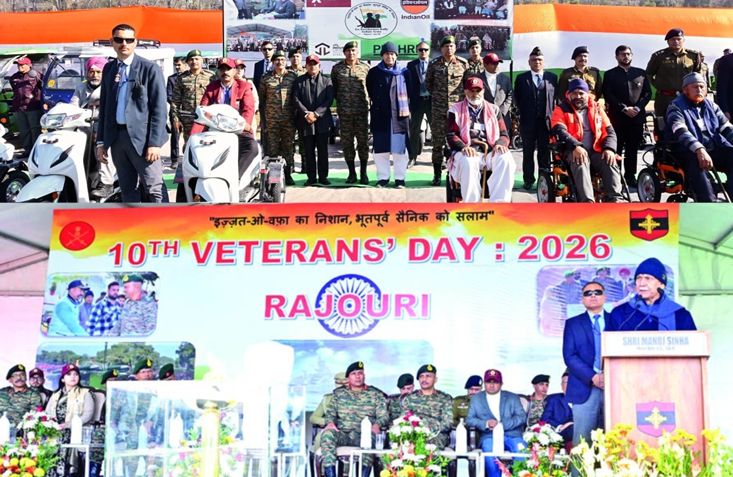
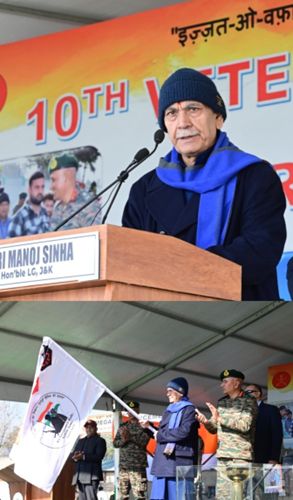 As the nation marked the 10th Armed Forces Veterans Day, the commemorative event held at Advanced Landing Ground (ALG) Rajouri went beyond ceremonial remembrance, emerging instead as a powerful reaffirmation of India’s moral and institutional commitment to those who have served in uniform. Lieutenant Governor of Jammu and Kashmir, Manoj Sinha, led the tributes, paying homage to ex-servicemen, Veer Naris and their families, while underscoring the enduring relevance of veterans in safeguarding not just the nation’s borders, but its values and social cohesion. Addressing a large gathering of veterans, senior military commanders, civil officials and citizens from across the Pir Panjal region, the Lieutenant Governor described Armed Forces veterans as “the embodiment of living history,” whose sacrifices have not only preserved India’s freedom but have shaped the country’s destiny across generations. His remarks echoed a growing recognition within the Indian state that military service is not a finite career, but a lifelong bond of responsibility, discipline and service to the nation.
Beyond Ceremonies|Veterans Day as a Statement of National Values: Armed Forces Veterans Day, observed annually on January 14 to commemorate the retirement of Field Marshal K.M. Cariappa, India’s first Commander-in-Chief, has over the years evolved from a symbolic observance into a substantive platform for dialogue on veteran welfare, civil-military relations and national security consciousness. The Rajouri event exemplified this transition, blending tribute with tangible initiatives aimed at improving the lives of ex-servicemen and their families. “The selfless service of our armed forces is not a job; it is a lifelong commitment,” the Lieutenant Governor said, noting that the sense of duty cultivated in uniform does not end when the uniform is folded away. This articulation resonates particularly in regions like Jammu and Kashmir, where the presence of the armed forces has been both enduring and transformative, and where veterans often continue to play a stabilising role in their communities long after retirement.
Rajouri’s Symbolism In India’s Security Landscape: The choice of Rajouri as the venue carried deep symbolic weight. Nestled close to the Line of Control (LoC) and historically scarred by conflict, Rajouri has been a theatre of both conventional and asymmetric warfare. It has also produced a remarkable number of soldiers who laid down their lives in defence of the nation, making it an apt setting to honour the legacy of India’s armed forces. In paying tribute to the bravehearts of Rajouri, the Lieutenant Governor highlighted the region’s contribution to national security, reinforcing the idea that border districts are not peripheral but central to India’s strategic consciousness. His homage to legendary figures such as Brigadier Mohammad Usman, Second Lieutenant Ram Raghoba Rane, and Naik Jadunath Singh situated contemporary sacrifices within a broader historical continuum.
“Invisible Sacrifices”, Ethics Of Military Service: One of the most striking elements of the Lieutenant Governor’s address was his emphasis on the “invisible sacrifices” of soldiers. “While the nation sleeps in peace, they stand alert. While the nation celebrates festivals together, our soldiers safeguard the border far away from home,” he said, capturing the quiet, uncelebrated nature of military service.
This framing is significant in an era where public discourse is increasingly dominated by instant visibility and recognition. By underscoring the unspoken and often unseen dimensions of sacrifice, the address sought to re-anchor national gratitude in lived realities rather than symbolic gestures alone. Such recognition also serves a critical function in sustaining morale within the armed forces, especially at a time when India faces complex security challenges along multiple fronts, including the Line of Actual Control (LAC) with China and persistent cross-border threats along the western frontier.
Veterans The Agents Of Peace, Progress: Moving beyond traditional narratives of valor confined to the battlefield, the Lieutenant Governor highlighted the role of veterans in peace-building and national development. “The courage of veterans is not limited to the battlefield but also in establishing peace and ensuring the nation’s progress,” he said. This perspective aligns with a broader policy shift that increasingly views veterans as valuable human capital capable of contributing to governance, disaster response, education, entrepreneurship and social cohesion. In Jammu and Kashmir, ex-servicemen have often acted as bridges between the security establishment and local communities, lending credibility to peace-building efforts through their lived experience and moral authority. By describing veterans as “living role models for youth,” the Lieutenant Governor underscored their potential to shape aspirations in regions where unemployment, alienation and misinformation remain challenges. The emphasis on character, discipline and timeless values positioned military service as a formative institution with relevance far beyond defence.
Institutional Commitments| Welfare, A Measure of Gratitude: The event also witnessed the inauguration of a “Wall of Fame,” a permanent memorial dedicated to honouring the sacrifices of soldiers from the region. Such memorials play a crucial role in institutionalising memory, ensuring that individual acts of bravery are woven into the collective consciousness of future generations. Equally significant was the launch of a dedicated police helpline service for veterans, an initiative aimed at addressing grievances, ensuring access to services and reinforcing a sense of security among ex-servicemen and their families. These measures reflect a growing understanding that symbolic respect must be complemented by functional support systems. Reiterating the government’s resolve under the leadership of Prime Minister Narendra Modi, the Lieutenant Governor emphasised that veteran welfare is not an act of charity but a matter of national obligation. “It is my commitment to honour veterans’ service through care,” he said, adding that the administration is focused on building a life of dignity for those who served and sacrificed.
Ex-Servicemen Rally| Welfare In Action: The mega Ex-Servicemen Rally organised on the occasion translated policy intent into practical assistance. The distribution of motorised wheelchairs, retrofitted scooties and other mobility aids addressed the everyday challenges faced by aging veterans and Veer Naris, many of whom cope with service-related disabilities. Such initiatives highlight the importance of accessibility and dignity in veteran welfare, moving beyond pension-centric models to a more holistic approach that recognises physical mobility, mental well-being and social inclusion as integral components of quality of life. The presence of senior military leadership, including Lieutenant General Pratik Sharma, GOC-in-C Northern Command; Lieutenant General P.K. Mishra, GOC White Knight Corps; and Major General Kaushik Mukherjee, GOC 25 Infantry Division, underscored the institutional unity between serving personnel and veterans. Their participation reinforced the message that the armed forces remain a continuum, bound by shared values and mutual respect.
Remembering The Foundational Legacy: In paying homage to Field Marshal K.M. Cariappa, the Lieutenant Governor invoked the foundational ethos of the Indian Army—professionalism, integrity and unwavering loyalty to the Constitution. Cariappa’s legacy as the first Indian Commander-in-Chief symbolises India’s transition from colonial subjugation to sovereign self-determination, a journey in which the armed forces played a pivotal role. By linking contemporary veterans to this legacy, the event situated current welfare initiatives within a historical arc that stretches back to the birth of the Republic. This historical grounding is essential in sustaining institutional memory and reinforcing the ethical foundations of military service.
“The sacrifices of our soldiers often remain invisible to the world. While the nation sleeps in peace, they remain alert; while families celebrate festivals together, our soldiers guard the borders far away from home. They do not speak about sacrifice—they live it every moment of their lives.”
Civil-Military Relations, Democratic Accountability: Analytically, the Armed Forces Veterans Day event in Rajouri also highlighted the evolving nature of civil-military relations in India. The active engagement of political leadership in veteran-centric initiatives reflects a healthy democratic balance, where civilian authority not only commands the armed forces but also assumes responsibility for their post-service welfare. In regions like Jammu and Kashmir, where security considerations have long shaped governance, such engagement also serves to humanise the security apparatus, fostering trust and mutual understanding between the state and its citizens.
A Broader Message Amid Contemporary Challenges: The timing of the event was also significant. As India navigates a complex geopolitical environment marked by regional instability, technological warfare and evolving threat perceptions, the role of experienced veterans as repositories of institutional knowledge becomes increasingly important. By celebrating veterans not merely as relics of past wars but as active contributors to the nation’s future, the Rajouri event sent a clear message: national security is not solely the domain of those currently in uniform, but a collective responsibility shaped by shared history and values.
From Tribute To Transformation: The 10th Armed Forces Veterans Day observance at ALG Rajouri was more than a commemorative gathering; it was a statement of intent. Through words that acknowledged sacrifice, initiatives that addressed real needs, and gestures that honoured legacy, the event reaffirmed the nation’s commitment to those who have borne the burden of its security. As Lieutenant Governor Manoj Sinha concluded, the sacrifices of soldiers are not always visible, but their impact is enduring. In recognising this truth, and in translating gratitude into action, the Rajouri commemoration offered a model for how a nation can honour its veterans—not only with words, but with sustained care, dignity and respect.
Kashmir Horizon View: The observance of the 10th Armed Forces Veterans Day at Rajouri reaffirmed a fundamental truth of India’s national ethos—that the strength of the Republic rests not only on its democratic institutions, but also on the sacrifices of those who stand guard at its frontiers. The tributes paid to ex-servicemen, Veer Naris and martyrs’ families were a reminder that the nation’s freedom, unity and stability are underwritten by courage that often goes unseen and unspoken. By honouring veterans as living symbols of service and resilience, the event reinforced the moral responsibility of the state and society to uphold their dignity long after their active service ends. However, remembrance must translate into sustained action. As India confronts evolving security challenges, the role of veterans must be integrated more systematically into national and regional development frameworks. Strengthening veteran welfare requires not only timely pensions and medical support, but also access to employment opportunities, skill utilisation, mental health care and social inclusion. Dedicated helplines, mobility aids and memorial initiatives, as launched in Rajouri, are important steps, but they must be expanded into comprehensive, long-term support systems. Looking ahead, greater collaboration between civil administration, security forces and local communities can help harness the experience of veterans in peace-building, disaster management, youth mentorship and counter-radicalisation efforts—particularly in sensitive regions like Jammu and Kashmir. Veterans, with their discipline and credibility, can serve as powerful ambassadors of national integration and social harmony. Equally important is nurturing a culture of remembrance among younger generations. Institutionalising military history through education, public memorials and community engagement will ensure that sacrifices are neither forgotten nor taken for granted. As the Rajouri commemoration demonstrated, honouring veterans is not a one-day obligation but a continuous national commitment. The way forward lies in transforming gratitude into policy, memory into responsibility, and tribute into lasting care for those who have devoted their lives to the service of the nation.
(“Team Kashmir Horizon” is committed to continuous improvement and invites feedback and suggestions from readers and its followers on social media sites. Reader insights are considered vital for enhancing content quality and empowering the community. The team encourages open communication and values the thoughts and ideas of its audience, believing that such input will enable them to serve the public more effectively. The initiative aims to ensure that readers have the best possible experience with “Kashmir Horizon”. Interested individuals can reach out to us via email at [email protected].)