“Beyond 2025, the emphasis will be on building upon the strong foundations laid under the leadership of Lieutenant Governor Manoj Sinha. His administration’s focus on compassionate governance, timely decision-making, and inclusive development has strengthened public trust and delivery at the grassroots level.”
The year 2025 marked a decisive and historic turning point for Jammu and Kashmir, as governance under Lieutenant Governor Manoj Sinha moved beyond the long-dominant paradigm of conflict management toward a framework rooted in dignity, justice, and aspirational development. After decades in which security considerations overshadowed civilian welfare, the administration’s approach in 2025 sought to heal old wounds, restore trust between the state and its citizens, and lay the foundations for sustainable economic growth. The emphasis was no longer merely on stabilizing the region, but on empowering its people—especially those who had borne the brunt of terrorism, displacement, and natural calamities. At the heart of this transformation was a governance philosophy that placed victims rather than perpetrators at the center of policy. For the first time in over three decades, families shattered by terrorism, border shelling, and floods were not treated as footnotes to history, but as stakeholders in the region’s future. Alongside this human-centric approach, 2025 also witnessed the completion of some of the most ambitious infrastructure projects ever undertaken in Jammu and Kashmir, symbolizing its irreversible integration into India’s economic and logistical mainstream.
Healing Deep Scars|Justice For Terror Victims: One of the most defining aspects of LG Manoj Sinha’s governance in 2025 was the systematic and institutionalized effort to deliver justice to families affected by terrorism. For years and decades, thousands of such families lived in silence traumatized, economically broken, and often ignored due to fear, political expediency, or bureaucratic inertia. Many had lost their sole breadwinners in targeted killings during the height of terrorism in the 1990s and early 2000s, yet received little or no state support. In 2025, this long-standing neglect was confronted head-on through what the administration described as a “campaign for justice.” Rather than symbolic gestures, the focus was on tangible, life-altering interventions aimed at restoring dignity and economic security.
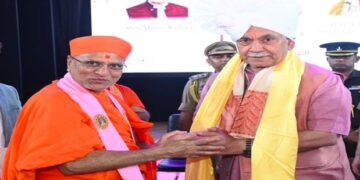
Employment As Restoration, Not Charity: Perhaps the most impactful step was the large-scale provision of government jobs to the Next of Kin (NoK) of terror victims. In a series of landmark events held throughout the year, LG Sinha personally handed over appointment letters to affected families an act that carried both administrative and moral weight. In December 2025 alone, 39 such families from the Kashmir division and 41 from the Jammu division received job orders. Over the course of the year, more than 300 individuals from terror-affected backgrounds were absorbed into government service. These appointments were framed not as welfare handouts, but as a restoration of rights long denied. For families that had survived for decades without stable income, the jobs represented security, social recognition, and closure. The administration emphasized that economic rehabilitation was central to breaking the intergenerational cycle of trauma and marginalization.
A Decisive Shift In Narrative: Alongside policy changes came a sharp and unambiguous shift in narrative. During multiple public addresses, LG Sinha asserted that the era of government patronage to the so-called “terror ecosystem” had ended. For years, allegations persisted that family members of active terrorists had benefitted from state largesse, while genuine victims were sidelined due to fear or political considerations. The 2025 policy made a clear distinction: only families victimized by terrorism not those associated with it—would receive government support. This message resonated deeply across Jammu and Kashmir, sending a strong signal that the state stood firmly with victims rather than perpetrators. It also marked an important moral recalibration in public policy.
Property Restoration, Legal Redressal: Another significant initiative was the restoration of properties illegally encroached upon or seized during the height of terrorism. Many terror-affected families had lost land and homes either due to forced displacement or unlawful occupation by vested interests during years of chaos. In July 2025, the administration launched a dedicated online portal to document data on terror victims and their grievances. By December, 17 such illegal encroachments had already been removed, and the process of restitution was ongoing. Importantly, the LG also directed that families who had never filed FIRs due to fear or social pressure should not be excluded from rehabilitation schemes. Cold cases from the 1990s were ordered to be investigated sensitively, acknowledging the climate of terror that once prevented victims from approaching authorities.
Resilience In The Face of Calamity| Shelling, Flood Relief : While addressing historical injustices, the administration in 2025 was also tested by fresh challenges. Border tensions, cross-border shelling, flash floods, and landslides once again disrupted civilian life, particularly in Jammu’s border districts and parts of Kashmir’s hilly terrain. The response, however, reflected a clear shift from temporary relief to permanent rehabilitation.
Op Sindoor, Smart Housing: In December 2025, LG Sinha laid the foundation stone for 350 “Smart Houses” in Jammu for families whose homes had been destroyed due to Pakistani shelling and natural disasters. Built using prefabricated technology, these three-bedroom houses were designed to be resilient, modern, and climate-appropriate. The project, implemented in partnership with NGOs such as HRDS-India, ensured that construction costs did not burden the victims. This initiative marked a departure from the earlier practice of providing limited compensation without long-term housing solutions. The emphasis was on safety, dignity, and permanence.
Jobs For Border Victims: In May 2025, following a period of intense cross-border shelling, the administration announced government jobs for the immediate kin of 23 civilians killed in the attacks. This mirrored the policy adopted for terror victims and reinforced the principle that civilians affected by conflict—regardless of geography—deserved equal recognition and support.
Massive Flood Rehabilitation : The flash floods and landslides of August and September 2025 caused widespread devastation, washing away entire villages and rendering thousands homeless. In response, the administration approved a 5 Marla land allotment scheme aimed at providing permanent residential plots at safer locations. Over 8,000 families were identified as beneficiaries. Additionally, the Centre sanctioned the construction of more than 5,000 houses specifically for flood victims, ensuring that rehabilitation was not delayed by funding constraints. The approach underscored a long-term vision of disaster resilience rather than cyclical relief.
A New Era Of Connectivity|The USBRL Milestone: If social justice defined the moral core of 2025 governance, infrastructure symbolized its ambition. The full operationalization of the Udhampur-Srinagar-Baramulla Rail Link (USBRL) in 2025 marked one of the most transformative moments in Jammu and Kashmir’s modern history. On June 6, 2025, the entire 272-kilometre rail corridor from Jammu to Baramulla became operational, integrating the Kashmir Valley into India’s national rail network for the first time. Long described as an “engineering marvel,” the project includes the iconic Chenab Rail Bridge—at 359 metres above the riverbed, the world’s highest railway bridge, taller than the Eiffel Tower. Beyond symbolism, the rail link fundamentally altered mobility, logistics, and economic possibilities in the region.
The Vande Bharat Revolution: The introduction of the Jammu–Srinagar Vande Bharat Express in early 2025 further transformed travel. Specially designed for Himalayan conditions, these trains can operate in temperatures as low as minus 20 degrees Celsius. The travel time between Jammu and Srinagar was reduced from nearly seven hours to around three, enabling same-day travel for business, tourism, and emergency services. For residents of the Valley, the train represented not just convenience, but reliability—especially during winter months when road connectivity is frequently disrupted.
Economic Impact, Freight Connectivity: In another milestone, the first foodgrain freight train reached the Kashmir Valley in 2025, carrying nearly 1,400 tonnes of rice. This fulfilled a long-cherished dream of seamless, all-weather supply chains and significantly reduced dependence on road transport through vulnerable mountain passes. Over time, this is expected to lower prices, stabilize supplies, and boost local trade.
Infrastructure, Urban Modernization: The momentum in connectivity was matched by approvals for strategic infrastructure projects. In September 2025, LG Sinha secured approval for 19 major road and tunnel projects worth ₹10,637 crore. These included the Peer-Ki-Gali and Sadhana tunnels, which will provide all-weather access to remote and strategically sensitive border areas, enhancing both civilian mobility and national security.
“The governance in Jammu and Kashmir, marked by stability, development, and a renewed sense of dignity for citizens. Under LG Manoj Sinha, the region witnessed a people-first approach that balanced infrastructure growth with social justice and resilience. The progress achieved during the year has positioned Jammu and Kashmir firmly on a forward-looking path of peace, participation, and shared prosperity.”
Power Self-Sufficiency, Digital Governance: The administration also accelerated four mega hydropower projects—Pakal Dul, Kiru, Kwar, and Ratle—with a combined capacity of 3,014 MW. These projects aim to make Jammu and Kashmir a power-surplus region, reducing dependence on external sources and supporting industrial growth. On the governance front, J&K emerged as a national leader in e-governance, offering more than 1,100 online services by 2025. Digitization of land records and administrative processes enhanced transparency and reduced opportunities for corruption.
Youth, Education, Economic Growth: The impact of stability and governance reforms was reflected in education and employment indicators. In the NIRF 2025 rankings, the University of Kashmir achieved its highest-ever rank at 34, while Jammu University secured the 51st position—signaling a renewed focus on academic excellence. Private sector investment surged dramatically, rising from about ₹1,400 crore a few years ago to nearly ₹30,000 crore in 2025. Industrial units under the new industrial policy began operations, creating jobs and diversifying the region’s economy. Tourism also touched record highs, with over 2.38 crore arrivals. Events like the first-ever Kashmir Marathon and the inauguration of Asia’s longest ski drag lift in Gulmarg highlighted the sector’s revival and global potential.
Kashmir Horizon View: As Jammu and Kashmir steps beyond 2025, the path ahead is defined by consolidation, continuity, and confidence. The achievements of the past year have laid a strong foundation, but their true value will be realized through sustained implementation and inclusive participation. The way forward lies in deepening people-centric governance, ensuring that development reaches the last mile, and strengthening institutions that nurture trust between citizens and the administration. Continued focus on transparent delivery systems, timely grievance redressal, and responsive local governance will be critical in translating policy intent into everyday public benefit. Infrastructure development must now shift from completion to optimization. Landmark projects such as rail connectivity, tunnels, hydropower stations, and strategic roads should be leveraged to unlock economic growth in tourism, trade, horticulture, and small-scale industries. Improved logistics and energy availability provide an opportunity to attract further private investment, promote local entrepreneurship, and generate sustainable employment, particularly for youth and women. Skill development, innovation hubs, and start-up ecosystems can serve as the next drivers of growth, aligning local talent with emerging national and global markets. Human development will remain central to long-term stability. Strengthening education, healthcare, and social welfare systems will ensure that progress is inclusive and enduring. Universities and technical institutions can be encouraged to focus on research, innovation, and industry collaboration, while healthcare infrastructure should continue expanding toward preventive care, digital health, and rural accessibility. Empowering women through self-help groups, agriculture-linked initiatives, and enterprise support will further strengthen household incomes and social resilience. Equally important is the continued nurturing of peace and social harmony. Sustained engagement with youth, cultural initiatives, sports, and tourism can reinforce a sense of shared identity and opportunity. Democratic participation, community dialogue, and grassroots leadership will play a vital role in anchoring stability and ensuring that development remains responsive to local aspirations. As public confidence grows, governance must continue to be marked by fairness, empathy, and accountability.
(“Team Kashmir Horizon” is committed to continuous improvement and invites feedback and suggestions from readers and its followers on social media sites. Reader insights are considered vital for enhancing content quality and empowering the community. The team encourages open communication and values the thoughts and ideas of its audience, believing that such input will enable them to serve the public more effectively. The initiative aims to ensure that readers have the best possible experience with “Kashmir Horizon”. Interested individuals can reach out to us via email at [email protected].)