- HM Amit Shah Intertwines SIR With Democratic Audit
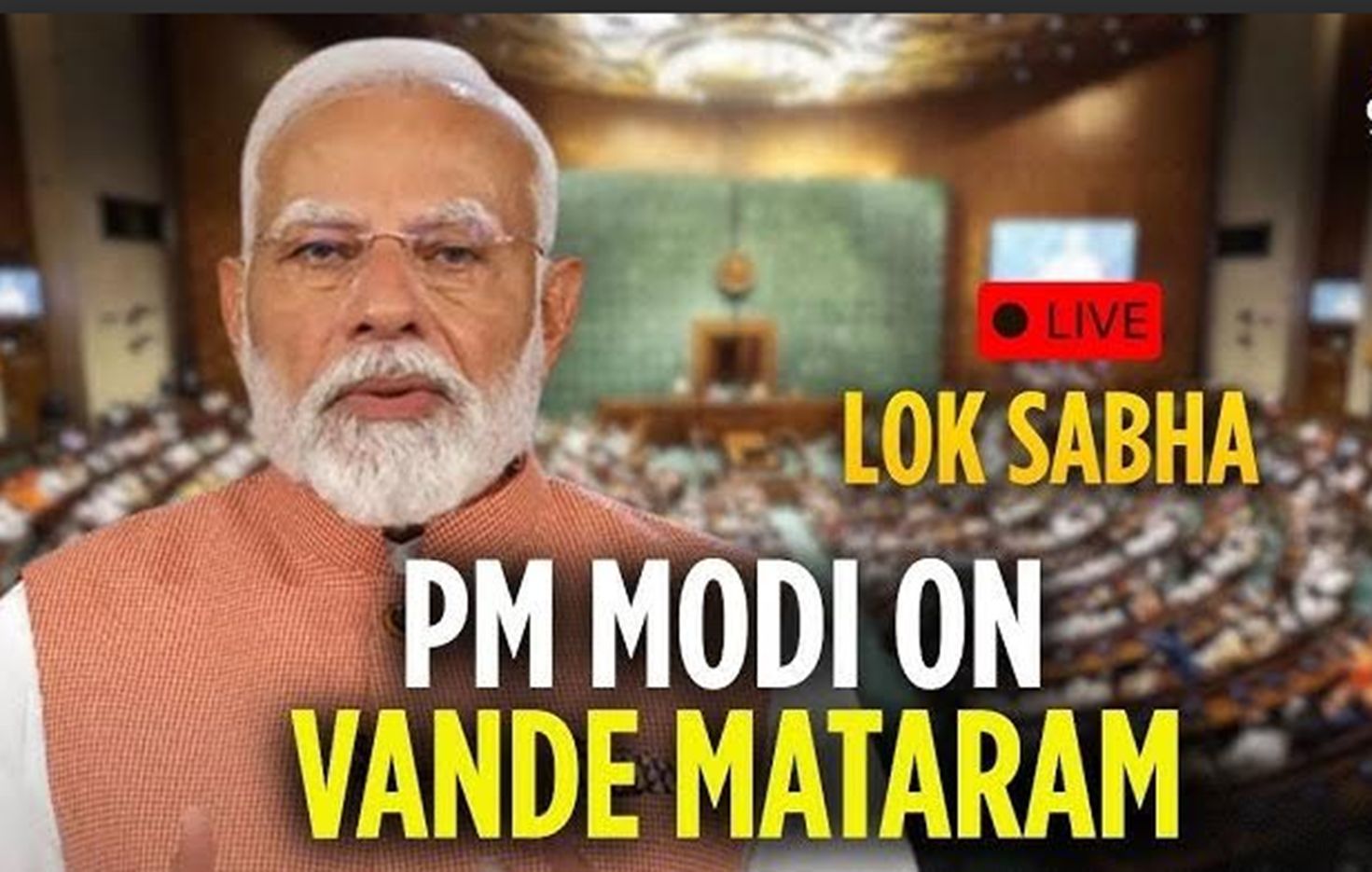
“As Prime Minister Narendra Modi led the Lok Sabha in marking 150 years of Vande Mataram, the discussion rose above routine debate to become a collective reflection on India’s civilisational journey, freedom struggle and democratic values. Recalling how the song withstood colonial repression and united Indians across regions and languages, PM described it as a living force that inspired sacrifice, self-respect and national unity during the freedom movement.”
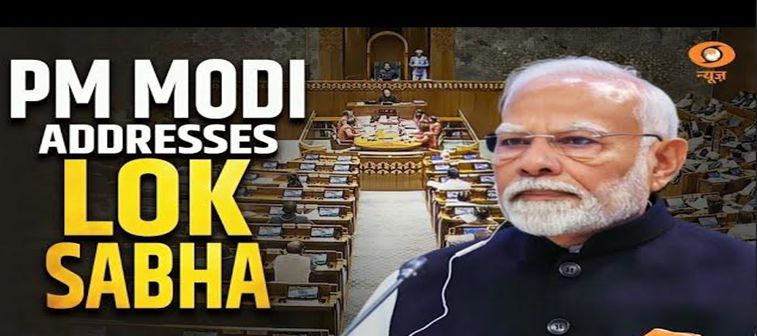
When Prime Minister Narendra Modi stood in the Lok Sabha to initiate a discussion marking 150 years of Vande Mataram, the moment transcended routine parliamentary debate. It became an act of collective remembrance—of history, sacrifice, and shared national consciousness. More than a tribute to a song, the discussion served as a reflection on India’s civilisational continuity, its long struggle for freedom, and its enduring democratic spirit. Calling Vande Mataram a force that “stood like a rock despite British oppression,” the Prime Minister placed the song within the larger sweep of Indian history—one marked by resilience in the face of adversity and unity amid diversity. His reflections reminded the House that Vande Mataram was not merely composed; it was lived, sung, defended, and carried forward by generations of Indians who believed in the dignity and destiny of the motherland. As India commemorates the 150th year of this iconic composition, the occasion invites not only celebration but introspection—about how a single hymn became the emotional backbone of a national movement and continues to inspire the country’s journey in the present day.
The Birth Of A National Awakening : Vande Mataram was composed by Bankim Chandra Chattopadhyay in 1875, at a time when India was passing through one of the most difficult phases of its history. The aftermath of the 1857 uprising had led to heightened repression, censorship, and cultural domination by colonial authorities. Political expression was curtailed, and Indian society was being systematically distanced from its own heritage and self-belief. In this environment, Bankim Chandra’s creation was revolutionary—not because it called for rebellion in explicit terms, but because it restored emotional sovereignty. By envisioning the nation as a mother—nurturing, sacred, and worthy of devotion—Vande Mataram rekindled a civilisational idea deeply embedded in India’s consciousness. It revived an ancient sentiment reflected in the Vedic thought: “Mata bhoomih putro aham prithivyah”—the earth is my mother, and I am her son. This was not merely poetry. It was philosophy expressed through verse, transforming the idea of freedom from a political objective into a moral responsibility.
From Literature To Living Anthem: The inclusion of Vande Mataram in Bankim Chandra’s novel Anandamath in 1882 further expanded its reach. The song began to move beyond literary circles and entered public life. It was sung in gatherings, schools, and meetings, gradually becoming a shared expression of hope and courage. As the freedom movement gathered momentum, Vande Mataram emerged as a unifying voice across regions, languages, and communities. Whether in Bengal, Maharashtra, Punjab, Tamil Nadu, or the North-East, the song resonated because its essence was universal: love for the land and commitment to its freedom. Prime Minister Modi, in his address, noted that the mantra of Vande Mataram infused the freedom struggle with energy and resolve. It reminded people that the quest for independence was not merely about ending foreign rule, but about reclaiming self-respect, culture, and collective purpose.
A Song That Withstood Suppression : Few cultural expressions in history have faced the kind of resistance that Vande Mataram did—and fewer still have emerged stronger because of it. The British colonial administration, recognising its growing influence, attempted to curb its spread through bans and punitive measures. Singing or printing the song could invite punishment, and yet it continued to echo across the country. This endurance reflected the deep bond between the song and the people. It was sung quietly in homes and loudly in streets, whispered in prisons and proclaimed at public meetings. Students, women, workers, and revolutionaries alike embraced it as an expression of collective will. The Prime Minister recalled how Vande Mataram became inseparable from the Swadeshi movement, especially during moments of national challenge. It symbolised unity at times when the nation needed it most, reminding Indians that cultural solidarity could be as powerful as political organisation.
The Voice Of Sacrifice, Courage: One of the most remarkable aspects of Vande Mataram is its association with sacrifice. From students facing punishment for chanting it to revolutionaries embracing martyrdom with its words on their lips, the song became a source of inner strength. Across different regions and languages, freedom fighters carried the same chant. This shared invocation reflected the idea of Ek Bharat long before it became a formal expression. The song connected people who had never met, spoke different tongues, and followed different customs—but were united by a common dream. The Prime Minister highlighted that this phenomenon is rare in world history: a poem that inspires millions over generations, motivating them to dedicate their lives to a single cause. In this sense, Vande Mataram stands as a cultural achievement of global significance.
Recognition By National Thinkers: India’s greatest thinkers and leaders recognised the unique power of Vande Mataram. Rabindranath Tagore described it as a force that bound thousands of lives into a single mission. Mahatma Gandhi, writing in 1905, observed that the song had become akin to a national anthem, awakening patriotism and reminding Indians of their duty towards the motherland. In South India, Subramania Bharati translated and celebrated Vande Mataram, integrating it into Tamil literature and nationalist thought. Its influence extended beyond borders as well, inspiring Indian revolutionaries in Europe and shaping global awareness of India’s freedom struggle. These diverse endorsements underline an important truth: Vande Mataram was never confined to one region, language, or ideology. It belonged to the nation as a whole.
Democracy, Reflection, Renewal: In his Lok Sabha address, Prime Minister Modi drew attention to the fact that the song’s milestones coincided with defining moments in India’s history. At 50 years, India was still under colonial rule. At 100 years, the country was undergoing a period of intense constitutional and democratic challenge. These coincidences, he suggested, offer lessons about vigilance and renewal. Rather than diminishing the song’s relevance, such moments highlight its enduring role as a moral compass. Vande Mataram reminds the nation that freedom must be constantly protected and strengthened, not taken for granted. The Prime Minister’s emphasis was not on blame, but on learning from history—on recognising the importance of democratic values, constitutional spirit, and national unity.
From Freedom To Nation-Building: As India looks ahead, the meaning of Vande Mataram continues to evolve. While it once symbolised resistance to colonial rule, today it represents commitment to nation-building. The Prime Minister linked the spirit of the song to contemporary goals such as self-reliance, innovation, and inclusive development. The Swadeshi movement of the past, he observed, finds a modern parallel in efforts to strengthen domestic manufacturing, empower farmers and workers, and build resilient institutions. Just as Vande Mataram once encouraged Indians to trust their own strength, it now inspires confidence in the country’s capacity to shape its future. The vision of a Viksit Bharat by 2047—when India completes 100 years of independence—draws upon the same emotional energy that sustained the freedom movement. It is a call to translate pride into progress.
“The debate also placed Vande Mataram in a contemporary context, linking its spirit of self-reliance and unity to present-day nation-building and democratic responsibility. As India moves towards the centenary of independence in 2047, the Lok Sabha reflection underscored that honouring the iconic hymn lies not only in remembrance, but in strengthening institutions, upholding constitutional values and translating national pride into inclusive progress.”
HM Amit Shah’s Lok Sabha Address | Defending Electoral Integrity, Democratic Processes: Union Home Minister Amit Shah’s address in the Lok Sabha during the debate on election reforms was a forceful articulation of the government’s perspective on electoral integrity, institutional credibility, and democratic accountability. Speaking at length, Shah sought to place the ongoing discussion on electoral rolls and reform mechanisms within a broader constitutional and historical framework, arguing that a healthy democracy depends on transparent voter lists, credible institutions, and public trust in the electoral process. At the heart of Shah’s intervention was a clear assertion: democracy can function meaningfully only when elections are conducted on the basis of accurate, verified, and lawful voter rolls. He emphasised that the government’s approach to electoral reforms is guided not by political convenience, but by the principle that every legitimate citizen must have a vote—and that no illegitimate entry should distort the democratic mandate.
Electoral Integrity As The Foundation Of Democracy: Shah underscored that electoral rolls are not merely administrative documents but the very foundation of representative democracy. According to him, the purpose of exercises such as the Special Intensive Revision (SIR) of electoral rolls is straightforward and constitutional—to remove names of deceased voters, include newly eligible citizens, and ensure that non-citizens do not influence electoral outcomes. He argued that such revisions are neither novel nor extraordinary. On the contrary, Shah pointed out that intensive revisions of electoral rolls have been conducted periodically since the first general elections in 1952. Over the decades, successive governments and Election Commissions have relied on this mechanism to keep voter lists accurate and credible. The continuity of this process, he suggested, reflects its institutional legitimacy. By placing SIR within this historical context, Shah attempted to shift the debate away from political suspicion towards administrative necessity. Electoral roll revisions, he said, are routine democratic exercises essential for safeguarding the sanctity of the vote.
Trust In Institutions: A central theme of the Home Minister’s address was the importance of institutional trust. Shah expressed concern that repeated questioning of electoral processes risks undermining public confidence in democracy itself. He maintained that while scrutiny and debate are integral to democratic culture, casting doubt on constitutional institutions without substantiated evidence can weaken the system that sustains free and fair elections. He reminded the House that the Election Commission of India is an autonomous constitutional authority entrusted with conducting elections independently. Administrative exercises under its jurisdiction, Shah argued, must be allowed to function without politicisation, as institutional credibility is critical to democratic stability.
Evolving Electoral Reforms: Addressing broader election reforms, Shah noted that India’s electoral system has undergone continuous evolution since independence. From the introduction of voter identity cards to the adoption of Electronic Voting Machines (EVMs), reforms have been undertaken to curb malpractices, improve efficiency, and enhance transparency. He highlighted that technological interventions, particularly EVMs, have played a significant role in reducing electoral irregularities and ensuring quicker, more reliable outcomes. The shift from paper ballots, he suggested, marked a decisive step towards cleaner elections, reducing opportunities for manipulation and violence that once plagued the system. Shah argued that electoral reform should be viewed as a dynamic process—one that adapts to emerging challenges while remaining anchored in constitutional values.
Kashmir Horizon View: At 150, Vande Mataram stands as a rare cultural force that has travelled across centuries without losing its resonance. Few compositions in the world have shaped a nation’s consciousness so profoundly or accompanied it through such defining moments of history. From colonial suppression to democratic renewal, the song has remained a symbol of endurance and collective resolve. The Lok Sabha discussion marking this milestone reaffirmed that Vande Mataram is not confined to the past. It is a living call—one that reminds India of its civilisational roots while guiding its modern aspirations. It speaks of duty alongside pride, of service alongside freedom, and of unity alongside diversity. As India moves towards 2047, the centenary of independence, the message of Vande Mataram acquires renewed significance. It urges the nation to dream boldly while remaining grounded in values. It reminds citizens that progress is most meaningful when it is inclusive, ethical, and anchored in national purpose. Ultimately, Vande Mataram endures because it belongs to the people. It lives in collective memory, in shared struggles and achievements, and in the quiet resolve to build a stronger, more compassionate nation. Honouring it today means not only singing its words, but living its ideals—every day, in every sphere of national life.
(“Team Kashmir Horizon” is committed to continuous improvement and invites feedback and suggestions from readers and its followers on social media sites. Reader insights are considered vital for enhancing content quality and empowering the community. The team encourages open communication and values the thoughts and ideas of its audience, believing that such input will enable them to serve the public more effectively. The initiative aims to ensure that readers have the best possible experience with “Kashmir Horizon”. Interested individuals can reach out to us via email at [email protected].)