“Constitution Day 2025 went beyond ceremonies, as Prime Minister Modi emphasised that freedom is inseparable from duties and unity. The Unity March in Karamsad, celebrating Sardar Patel’s 150th birth anniversary, and the release of the Constitution in regional languages highlighted that rights alone cannot sustain democracy—citizens must actively uphold responsibilities, participate in civic life, and strengthen national cohesion”
Constitution Day in India has often been an occasion for ceremonial readings, institutional events and reaffirmations of democratic values. But this year, Prime Minister Narendra Modi sought to broaden that meaning by emphasising a deeper principle: freedom is inseparable from duties, and national progress is impossible without unity. His message, read out during the flag-off of the Unity March in Karamsad — the hometown of Sardar Vallabhbhai Patel — set the tone for a day that merged constitutional introspection with a historic celebration of national integration. Thousands assembled to honour Patel’s 150th birth anniversary as the Gujarat government began a padyatra from Karamsad to the Statue of Unity, retracing the legacy of the Iron Man who welded together 562 princely states into a united nation.
Unity March| A Symbol, A Message: The padyatra, a traditional form of public mobilisation used extensively during the independence movement, became the symbolic centre of Modi’s constitutional message. He praised the initiative, highlighting how padyatras historically “united society, boosted self-confidence, and instilled a sense of unity in millions of hearts.” By choosing Constitution Day to begin a march dedicated to the memory of Sardar Patel, the event intertwined the values of the constitutional framework with Patel’s lifelong mission of unifying India. Modi described this timing as a “pleasant coincidence”, one that provides the opportunity to reflect on the Constitution’s demands, not just its guarantees. Karamsad transformed into a canvas of historical reflection, where Patel’s legacy was invoked repeatedly as a reminder of national consolidation and collective resolve. Gujarat Chief Minister Bhupendra Patel, joined by Tripura CM Manik Saha and a large gathering of public representatives, flagged off the yatra that will traverse districts before culminating at Ekta Nagar on December 5. The state expects nearly 15,000 participants each day, making it one of the largest commemorative marches in recent years.
Constitution Day|A Mirror Of Rights, Responsibilities : Earlier in the day, in a separate and detailed letter addressed to the nation, PM Modi elaborated on the philosophical foundations of Constitutional duties. He reminded citizens that democracy thrives only when rights and duties coexist with equal force. “Freedom,” he wrote, “is not only about rights but also about duties and a call for unity.” The message aligns with the framers’ ethos, especially Mahatma Gandhi’s belief that rights naturally emerge from dutiful conduct. Modi emphasised that this moral axiom is not just philosophical—it becomes essential as India moves toward its vision of Viksit Bharat 2047, a developed nation completing a century of independence. The prime minister invoked Article 51A, the chapter of Fundamental Duties, highlighting how it reflects both the aspirations and expectations embedded in India’s constitutional order. From respecting the Constitution to promoting harmony, from upholding scientific temper to safeguarding public property, duties are framed as instruments that shape national behaviour and strengthen societal foundations.
Patel, Ambedkar, Prasad|The Architects Of A Constitutional Culture: In his message, PM Modi wove together the contributions of several foundational figures—Dr. B. R. Ambedkar, Dr. Rajendra Prasad, Mahatma Gandhi, Sardar Patel and Birsa Munda—creating a lineage of leadership that has shaped both the Constitution and the idea of India. Sardar Patel’s role as the architect of India’s political unification featured prominently. Modi credited Patel’s “visionary leadership” for the principled courage that guided decisions decades later, including the abrogation of Articles 370 and 35(A). For the prime minister, this decisive act represented a continuation of Patel’s legacy of ensuring that the Constitution applied equally and fully across India. By invoking Birsa Munda, Modi expanded the conversation to marginalised communities whose struggles for dignity and justice still animate national priorities. The prime minister’s appeal underscored that tribal empowerment, social equality, and regional justice are not political milestones alone—but constitutional responsibilities.
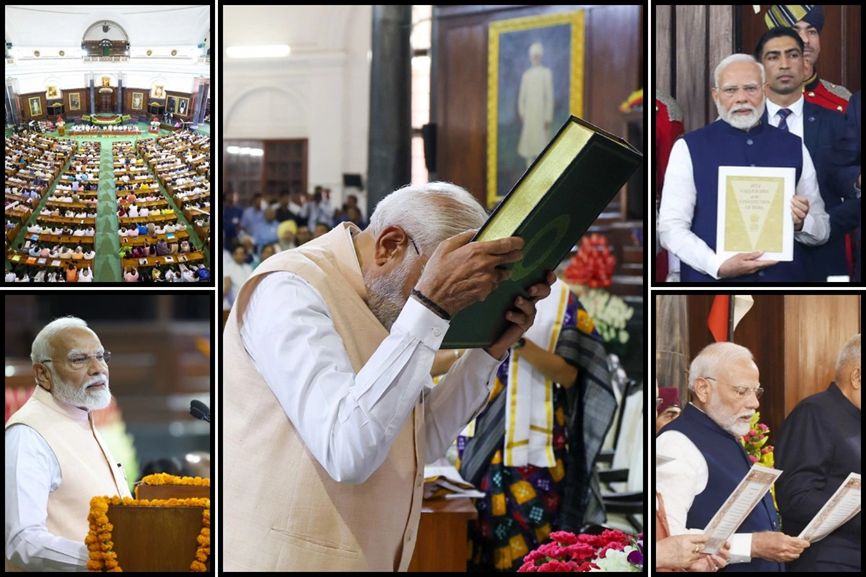
Duties As Engines Of Social, Economic Progress: Modi’s Constitution Day letter repeatedly returned to one central point: duties are the bedrock of national development. He argued that every decision taken today will shape the opportunities available to future generations. Therefore, citizens must approach duties with integrity, dedication and a sense of national purpose. In this framing, duties become catalysts for both social cohesion and economic growth. From voting in elections to upholding constitutional principles in daily life, Modi’s message positioned duty as a civic force that multiplies national progress. The prime minister’s appeal also carried a personal dimension. Referring to his own journey from an economically modest background to the highest political office, he credited the Constitution for creating a system where opportunity does not remain restricted by birth. Recalling his gesture of bowing before Parliament in 2014 and placing the Constitution on his forehead in 2019, Modi described these acts as tributes to a document that empowered millions to dream and succeed.
Citizenship, Voting|A Constitutional Mandate: A major thrust of Modi’s letter was the call to institutionalise Constitutional values within younger generations. He proposed that schools and colleges should annually celebrate Constitution Day by honouring first-time voters. This, he argued, would help new adults transition from being students to becoming active democratic participants. The Prime Minister stressed repeatedly that voting is not just a right—it is a responsibility. In an era of declining turnouts in certain regions and rising apathy among first-time urban voters, this message gains additional significance. Modi framed voting as an essential civic act that breathes life into democracy and fulfils the framers’ aspirations.
Digital India To “Ek Ped Maa Ke Naam”|Voluntary Participation As National Unity: In his Karamsad message, Modi pointed to several nationwide initiatives that embody unity through voluntary citizen action: Digital India, Fit India, Swachh Bharat Abhiyan, and the recent Ek Ped Maa Ke Naam campaign. For the prime minister, these programmes demonstrate that when citizens take collective ownership of national goals, unity ceases to be a slogan and becomes a lived experience. These references also highlight a central theme of Modi’s governance approach: mass mobilisation as a tool of nation-building. By encouraging citizens to participate voluntarily, such initiatives blur the divide between state-driven development and community-driven progress. The Unity March, in this context, is both a commemorative event and a demonstration of civic participation as a national force. Its scale—thousands walking across districts for days—symbolises the possibility of forging unity through shared journeys.
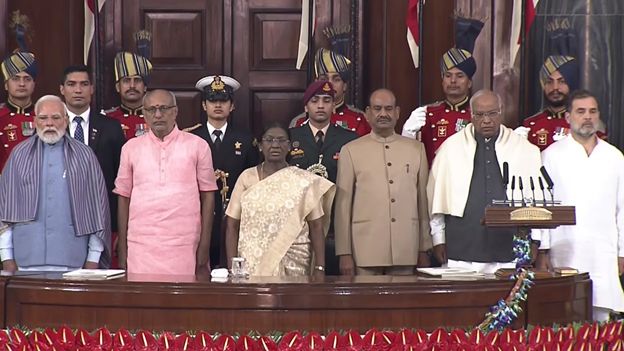
The Constitution In Regional Languages | A New Milestone In Accessibility: While Karamsad celebrated unity and constitutional duties, New Delhi marked Constitution Day with a different historic milestone. Union Home Minister Amit Shah hailed the release of the Constitution in Kashmiri and Bodo languages, describing it as a landmark moment that brings the highest law of the land closer to the people of Jammu & Kashmir and the Bodoland Territorial Region. Shah called the translations an “auspicious milestone” that ensures citizens “imbibe the values of the Constitution and make them the soul of national life.” For regions with complex political histories and cultural identities, linguistic accessibility is expected to deepen civic engagement and strengthen the constitutional fabric. The president also unveiled digital versions of the Constitution in nine languages, advancing the government’s push for inclusivity, digital access and linguistic recognition. This move situates Constitution Day not just as a day of remembrance but as an evolving process of democratisation, where the Constitution travels deeper into society.
The Constitution | A Living Document Of Unity : Across speeches, letters and ceremonial gestures, one message resonated clearly: the Constitution remains the anchor of national unity. Whether through Patel’s historical efforts, today’s padyatras, linguistic translations or civic duties, the Constitution’s role is to bind a diverse nation into a single democratic community. Modi’s emphasis on unity is not accidental. In a country marked by linguistic, regional, religious and cultural diversity, unity cannot be assumed—it must be nurtured. The prime minister’s call for ordinary citizens to embrace duties, practice gratitude, and participate actively in national goals is an attempt to create a civic culture that is cohesive, disciplined and forward-looking.
Looking forward, embedding constitutional principles into daily life is essential. Schools can celebrate first-time voters to foster civic awareness, while wider access to the Constitution ensures all citizens understand their duties. Voluntary participation, respect for the law, and commitment to social and economic progress will help realise Modi’s vision.
Unity March | A Contemporary Echo Of The Freedom Struggle: Historically, padyatras were tools of mobilisation during India’s independence movement. From Gandhi’s Dandi March to neighbourhood processions across towns and villages, they allowed people to connect physically, emotionally and politically. Modi’s remarks that “the sound of footsteps united society” evoke that legacy and frame the Unity March as a modern echo of the freedom struggle. In today’s India, where digital interactions often overshadow physical collective experiences, the padyatra becomes a bridge to a different era of public mobilisation. It revives the idea that walking together dissolves differences and reaffirms shared purpose. This, too, ties back to the Constitution, which emerged from a movement rooted in mass participation, sacrifice and unity.
Duties, Development, The Road to 2047: At the heart of Modi’s Constitution Day message lies a development roadmap. The prime minister linked constitutional duties directly to India’s ambition of becoming a fully developed nation by 2047. He argued that youth energy, citizen solidarity and innovation will be the drivers of this transformation. In this vision, duties are not restrictive obligations—they are enabling forces. By fulfilling duties, citizens strengthen democratic institutions, support inclusive growth, and uphold laws that create a stable foundation for economic expansion. As India navigates complex global economic challenges, demographic transitions, technological revolutions and geopolitical tensions, Modi’s message positions constitutional duties as the moral and civic compass guiding the country through these changes.
Karamsad to the Nation|A Day of Reflection, Renewal: Constitution Day 2025 therefore became more than a ceremonial observation. It turned into a multi-layered moment of introspection, nation-building, and historical remembrance. Karamsad’s Unity March honoured Patel’s legacy and re-animated the spirit of national unification. The Prime Minister’s national letter re-centred duties within the constitutional discourse. The release of regional-language Constitutions expanded accessibility and inclusion. Together, these developments presented a comprehensive narrative: India’s future depends on unity, constitutional fidelity, civic responsibility and shared purpose.
Unity March proceeds Towards The Statue of Unity: As the Unity March proceeds toward the Statue of Unity—where 15,000 people will join each day—the prime minister’s message continues to resonate: freedom and rights cannot stand alone without duties and unity. Constitution Day, Modi argued, is not only a reminder of the power of democratic rights but also a call to embrace the responsibilities that safeguard those rights. It is an appeal to transform constitutional values into everyday actions, from voting to public participation, from environmental responsibility to national solidarity. As India charts its path toward 2047, the day’s events underline a central truth: nations do not grow by rights alone—they flourish when citizens walk together in unity, guided by the duties enshrined in the Constitution.
Kashmir Horizon View: Constitution Day 2025 carried significance far beyond ritual commemoration. Through the Unity March in Karamsad, the nationwide events, the linguistic expansion of the Constitution, and the prime minister’s detailed message to citizens, the day became a moment to reflect not only on India’s democratic heritage but also on the responsibilities that will shape its future. As the country moves toward the milestone of 2047, the evolving constitutional culture demands a renewed understanding of unity, civic duty and national ambition. The way forward begins with internalising the central message that Prime Minister Narendra Modi emphasised: rights and duties must travel together. For decades, public discourse has tilted heavily toward rights-based claims, often sidelining the equal and necessary force of duties. Rebalancing this equation is not about diminishing freedoms but about strengthening the social and institutional frameworks that safeguard them. The next generation of citizens must appreciate that democracy is sustained not only by constitutional guarantees but by the behaviour and discipline of the people who inhabit it. Strengthening constitutional awareness at the grassroots level must therefore be a national priority. The prime minister’s proposal to institutionalise Constitution Day celebrations in schools and colleges—particularly by honouring first-time voters—offers a practical starting point. Young people must transition from passive observers of politics to active custodians of democratic processes. Voting cannot be reduced to a procedural act; it must become a civic ethic woven into the identity of every citizen. To achieve this, educational institutions, civil society organisations and government bodies need to collaborate in shaping programmes that make constitutional literacy engaging, relevant and emotionally resonant.
(“Team Kashmir Horizon” is committed to continuous improvement and invites feedback and suggestions from readers and its followers on social media sites. Reader insights are considered vital for enhancing content quality and empowering the community. The team encourages open communication and values the thoughts and ideas of its audience, believing that such input will enable them to serve the public more effectively. The initiative aims to ensure that readers have the best possible experience with “Kashmir Horizon”. Interested individuals can reach out to us via email at [email protected].)