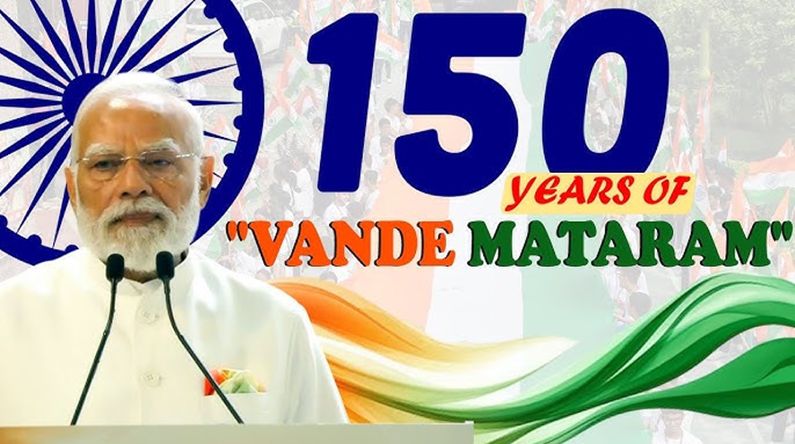
“Vande Mataram was not merely a song but a rallying cry for freedom fighters, symbolising courage, self-belief, and patriotism. We have to make this century India’s century. This capability exists in India, among 140 crore Indians. And for this, we will have to believe in ourselves,” PM said.
 By Mohammad Irfan
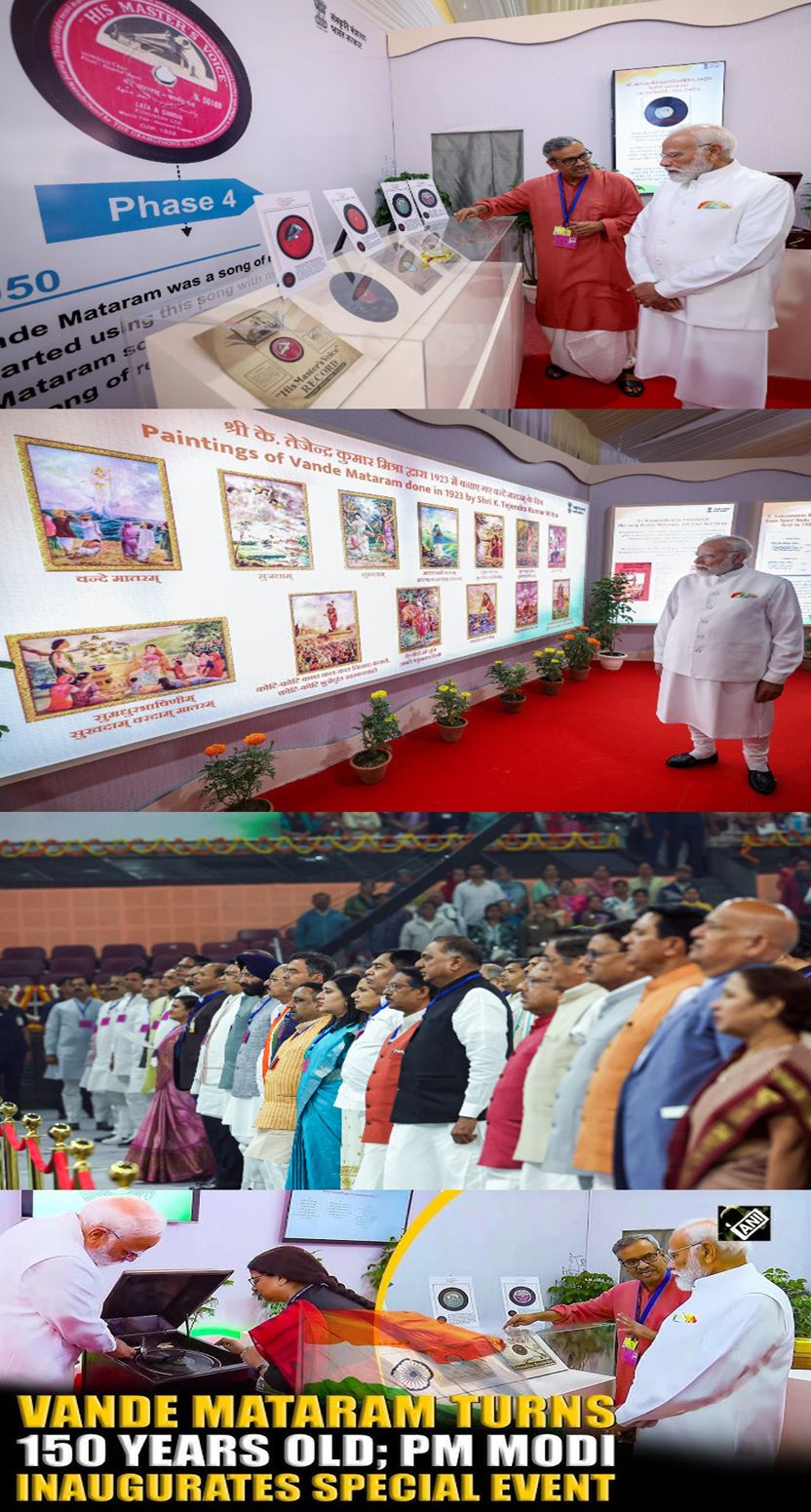
As India celebrated 150 years of the national song Vande Mataram, the atmosphere was filled with nostalgia, pride, and renewed patriotism. On this historic occasion, Prime Minister Narendra Modi delivered a stirring address that resonated deeply with the audience — a speech that went beyond history and invoked the timeless essence of national unity, self-belief, and cultural pride. Speaking at the commemorative event, Prime Minister Modi reflected on the song’s journey, its contribution to India’s freedom struggle, and its enduring relevance in modern times. He also drew attention to the historical episode of 1937, when certain verses of Vande Mataram were omitted, calling it a moment that symbolized the onset of divisive thinking. His message, however, was not one of blame but of learning — urging the nation to overcome old divisions and embrace the unifying spirit that Vande Mataram represents. “In 1937, significant verses of ‘Vande Mataram’, the very essence of its spirit, were removed. This sowed the seeds for the eventual partition of the country. Today’s generation needs to understand why such injustice was committed against this great mantra of nation-building,” the Prime Minister said. “Because that same divisive mindset continues to pose a challenge even today.” At the heart of Modi’s address was a call to rediscover the inner strength that Vande Mataram embodies — the strength to believe in oneself, to unite beyond differences, and to envision a century led by India. “We have to make this century India’s century. This capability exists in India, and it exists in 140 crore Indians. And for this, we must believe in ourselves,” he affirmed.
The Eternal Anthem Of National Pride: Vande Mataram, composed by Bankim Chandra Chatterjee in 1875 and later included in his novel Anandamath (1882), was born during India’s struggle against colonial rule. It was not just a literary creation but a spiritual and emotional expression of devotion to the motherland. The song’s first two stanzas glorify the natural beauty and abundance of India — its rivers, fields, and forests — while the later verses invoke the divine strength of Goddess Durga, symbolizing courage and protection. This powerful imagery captured the imagination of the people, turning Vande Mataram into a chant of resistance and freedom. During the independence movement, it became a rallying cry for revolutionaries and patriots alike. From the Indian National Congress sessions to the underground freedom networks, Vande Mataram inspired millions. Freedom fighters such as Aurobindo Ghosh, Bhagat Singh, and Veer Savarkar found in it a call to sacrifice for the nation. As Modi reminded the gathering, “Many revolutionaries, even while standing on the gallows, said Vande Mataram.” Gurudev Rabindranath Tagore once said that Anandamath was not merely a novel but “a dream of an independent India.” Modi echoed that sentiment, recalling how every word written by Bankim Chandra carried deep meaning. “This song was created during the time of slavery, but it is not limited to that time. The ‘Vande Bharat’ song has achieved immortality. It is relevant in every era,” he said.
Revisiting 1937|A Lesson in Unity: The Prime Minister’s reference to the 1937 decision by the Congress to omit certain verses of Vande Mataram invited reflection rather than controversy. He framed it as a historical lesson — a reminder of how internal divisions can weaken a nation’s collective spirit. According to Modi, the decision to remove verses that praised Goddess Durga symbolized a growing tendency to view national symbols through a divisive lens, rather than as unifying expressions of devotion to the motherland. “We must understand how such injustice was committed against a great mantra of nation-building,” he said. His message was clear: India must rise above such divisions. The Prime Minister’s tone was not accusatory but aspirational — calling upon the people to restore unity and pride in shared cultural heritage. Vande Mataram was never intended to divide, but to inspire. He said the removal of its verses in 1937 under Jawaharlal Nehru’s leadership was done to appease certain groups, but the spirit of Vande Mataram has always been one of inclusiveness, reverence, and strength. By revisiting this historical moment, Modi encouraged the nation to look forward — to draw strength from its heritage rather than allow the past to define its divisions.
Vande Mataram The Indian Civilizational Ethos: At the core of Modi’s message was a profound philosophical insight — that India views the nation not merely as a geographic entity but as a living mother figure. This idea, deeply rooted in India’s Vedic and cultural traditions, has always shaped its national consciousness. “For those who consider the nation as a geopolitical entity, the idea of viewing the nation as a mother might seem surprising,” Modi observed. “But India is different. In India, the mother is both the creator and the nurturer. And if a crisis befalls the child, the mother becomes the destroyer as well.” He further explained that this vision of the nation as Bharat Mata (Mother India) encapsulates the spiritual unity of the people. It is this sense of sacredness and emotional belonging that makes India’s patriotism unique. It’s not born merely from political boundaries, but from cultural continuity and shared emotion. This perspective, Modi said, also explains why women — the embodiment of Shakti — have always been central to India’s journey. “Because of this emotion of considering the nation as mother and a form of Shakti, mahila shakti was at the forefront of nation-building,” he declared. In highlighting this, Modi seamlessly connected India’s ancient wisdom with its modern aspirations — underscoring that women’s empowerment and nation-building are not separate agendas, but intertwined missions.
A Vision For India’s Century: Throughout his address, Modi balanced reverence for history with an unflinching optimism for the future. The Prime Minister’s call to make the 21st century “India’s century” was not a slogan, but an articulation of belief in the country’s potential. “This capability exists in India, and it exists in 140 crore Indians. And for this, we will have to believe in ourselves,” he said, invoking the same self-confidence that once fueled India’s freedom struggle. By aligning Vande Mataram’s spirit of self-reliance and devotion with his vision of Atmanirbhar Bharat (Self-Reliant India), Modi drew a symbolic parallel between the freedom movement of the past and the developmental movement of today. He reminded the audience that India once held a quarter of the world’s GDP, and that reclaiming this stature requires both hard work and faith in the nation’s intrinsic strength. The message was simple yet powerful: to make the world recognize India’s greatness, Indians must first recognize it themselves.
The Immortal Song|Then, Now, Forever: Modi’s speech celebrated Vande Mataram not as a relic of the past, but as a living anthem of courage, unity, and faith. The Prime Minister recalled how Vande Mataram inspired revolutionaries under British rule, but emphasized that its spirit continues to inspire every Indian who strives to make the country stronger. “Vande Mataram became the voice of India’s freedom struggle. It was the voice that was on the tongue of every revolutionary, the voice that expressed the emotions of every Indian,” he said passionately. Indeed, the song’s emotional power transcends time. In today’s context, it stands not only for political freedom but also for economic progress, cultural renewal, and social harmony. By reaffirming the immortality of Vande Mataram, Modi gave the nation a rallying point for unity — a reminder that India’s strength lies in its capacity to stay rooted in its heritage while marching confidently into the future.
The Modern Meaning Of Vande Mataram: What does Vande Mataram mean to the young generation of India today? For Modi, the answer lies in awakening the same sense of pride and purpose that once inspired the freedom fighters. The song, he suggested, is not merely a historical artifact but a continuing source of energy for nation-building. In an era defined by rapid globalization and technological advancement, Modi’s interpretation of Vande Mataram calls upon Indians to find balance between progress and tradition. It invites citizens to draw from the cultural and moral foundations of the past to shape a future marked by innovation, compassion, and self-belief. By celebrating Vande Mataram, the Prime Minister sought to rekindle a collective consciousness — one that transcends religion, region, and language, binding 140 crore people through the shared sentiment of devotion to the motherland.
“For those who consider the nation as a geopolitical entity, the idea of viewing the nation as a mother might seem surprising. But India is different; here, the mother is both the creator and the nurturer. And if a crisis befalls the child, the mother becomes the destroyer as well,” he remarked.
Bridging The Past And the Future: The commemoration of Vande Mataram’s 150th anniversary was not merely an exercise in nostalgia; it was a national moment of reflection. Modi’s message was a reminder that while India has transformed immensely since 1875, the emotional chord that connects citizens to their land remains unbroken. The Prime Minister’s emphasis on cultural pride aligns with his government’s broader vision of Viksit Bharat — a developed, confident, and self-reliant India that stands tall on the global stage. By drawing from the ideals of Bankim Chandra Chatterjee and Tagore, Modi positioned Vande Mataram as a symbol of continuity — proof that India’s civilizational values remain timeless, capable of guiding the nation through every era of transformation.
Women And The Spirit Of Shakti : One of the most striking aspects of Modi’s address was his emphasis on the feminine dimension of nationhood. The Prime Minister described India as a “living mother” — compassionate yet powerful, nurturing yet protective. This imagery, he explained, is not just symbolic but foundational to India’s cultural identity. “Our Vedas have taught us that the nation is our mother and we are her children,” he said, emphasizing that the concept of Bharat Mata binds Indians through emotion rather than geography. PM Modi’s linkage of Vande Mataram with mahila shakti (women’s power) also carried a social message. It reflected his government’s ongoing focus on women-led development — from entrepreneurship and education to political participation and innovation. By situating the mother figure at the heart of Vande Mataram, Modi reinforced the idea that empowering women is synonymous with strengthening the nation itself.
Vande Mataram|The Spirit Of Unity: Beyond its poetic beauty, Vande Mataram continues to serve as a reminder of what unites India. Its words transcend caste, creed, and region, invoking a shared emotional identity that has guided the country for generations.
For Modi, this unity is not uniformity — it is harmony amid diversity. His address was a call to transcend old divisions and celebrate the oneness that Vande Mataram embodies. “This great mantra of nation-building belongs to every Indian,” he said, reminding the audience that the spirit of the song lies in collective strength and mutual respect.
Kashmir Horizon View: Ultimately, the 150th-anniversary celebration of Vande Mataram was about more than commemorating a song — it was about rekindling faith in India’s destiny. Modi’s speech combined cultural reflection with a forward-looking vision, urging citizens to make the 21st century truly “India’s century.” His words reminded the nation that self-belief is the foundation of progress. Just as Vande Mataram once inspired millions to fight for freedom, its message today can inspire Indians to build a self-reliant, innovative, and inclusive nation. The Prime Minister’s address struck a balance between reverence for tradition and confidence in modernity — a reminder that India’s strength lies in blending its ancient wisdom with contemporary ambition. As the Prime Minister said, the essence of Vande Mataram is not confined to a particular era. It is a living expression of India’s timeless values — courage, unity, devotion, and faith. It binds the nation across centuries, reminding every citizen that the motherland is not just a place on a map, but a sacred bond of emotion, duty, and pride.
(“Team Kashmir Horizon” is committed to continuous improvement and invites feedback and suggestions from readers and its followers on social media sites. Reader insights are considered vital for enhancing content quality and empowering the community. The team encourages open communication and values the thoughts and ideas of its audience, believing that such input will enable them to serve the public more effectively. The initiative aims to ensure that readers have the best possible experience with “Kashmir Horizon”. Interested individuals can reach out to us via email at [email protected].)