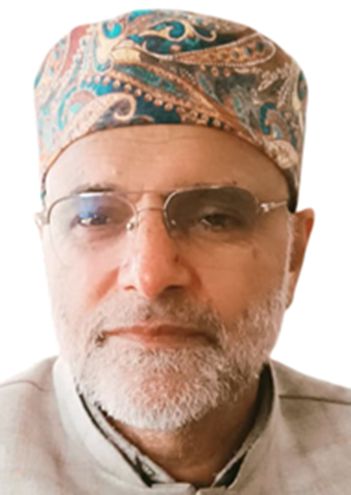
By Prof. Hamid Naseem Rafiabadi
From October 5 to 8, 2025, the vibrant city of Colombo in Sri Lanka became the epicenter of a global conversation on Islamic education. The 4th Annual Conference of the Global Association of Islamic Schools (GAIS), held at the Hilton Colombo, brought together over 350 delegates from 29 countries, representing a collective commitment to renewing and transforming Islamic schooling worldwide. Under the theme “Tajdīd: Inspiration to Impact,” the conference emphasized the urgent need for holistic renewal in Islamic education—a renewal that harmonizes traditional Islamic principles with contemporary pedagogical approaches. With a potential impact on over 1.4 million students and 116,000 teachers globally, GAIS 2025 was not merely an academic gathering; it was a call to action for educators and institutions seeking to revitalize the purpose, ethics, and relevance of Islamic schooling. The event commenced with an inspiring keynote by Professor Mohamad Abdalla, titled “From Inspiration to Transformation: Reviving Tajdīd in Islamic Schooling in the West,” moderated by Zaffar Ahmed. Professor Abdalla underscored that Tajdīd—often translated as renewal—is not simply reform but a profound re-engagement with the moral, intellectual, and spiritual foundations of Islamic education. He urged schools, particularly in Western contexts, to adopt principled approaches that are both rooted in tradition and responsive to contemporary challenges. Building on this vision, Dr. Abdullah Şahin’s session, “How to Actualize Tajdīd in Contemporary Islamic Schools,” moderated by Fahad Haroon, offered practical strategies for nurturing transformative learning environments.
Dr. Şahin stressed that renewal must address the moral and intellectual complexities of our era while fostering resilience, critical thinking, and ethical awareness among students. A central theme of the conference was the integration of faith into all aspects of learning. In the session titled “Faith-Centered Integration Breakaway,” Dr. Ismail ibn Ali and Afeefa Syeed, moderated by Sufia Azmat, explored innovative approaches to infuse Islamic values into curriculum and pedagogy. They emphasized creating spiritually enriching environments that cultivate character alongside cognitive growth. This conversation was further extended in “Reclaiming Tarbiyah: Meaning, Scope and Implications for Islamic Schools,” led by Professor Abdalla and moderated by Zeynep Alp, where participants examined tarbiyah—the holistic nurturing of students through taʿlīm (learning), tadrīs (teaching), and taʿdīb (discipline). The discussion highlighted the centrality of moral, spiritual, and intellectual development as inseparable components of educational practice. Transformative pedagogical models were presented to illustrate practical applications of these principles. Rukshana Hassen, in “How the Integrated Literacy Model Transforms Reading into Ibadah,” proposed an early childhood literacy program that integrates phonics with character-building narratives and the Asma’ul Husna, thereby nurturing literacy within an Islamic worldview. Similarly, Hashir Zuberi’s session on the “Unity’s Integrated Learning Model,” moderated by Sufia Azmat, outlined a framework combining taʿlīm and tarbiyah to enhance students’ spiritual, moral, intellectual, physical, interpersonal, and cultural capacities. Such models were lauded as vital to fostering resilience, ethical discernment, and holistic character formation in students facing the complexities of a rapidly changing world.
Youth education was another pivotal focus of GAIS 2025. In the “Renewing Our Approach to Youth Education Breakaway,” led by Moulana Muhammad Cyclewala and moderated by Dr. Abdul Rauf, participants explored the challenges confronting young Muslims today, including identity crises, digital distractions, and moral dilemmas. The session offered actionable strategies for integrating spiritual and ethical development without compromising academic rigor, emphasizing mentorship, engagement, and real-world applicability.
Behavioral management in Islamic schools received attention in “The FIKR Model: A Prophetically Rooted Approach to Challenging Behaviours in Islamic Schools,” presented by Khalid Mahamad and Asad Choudhary, moderated by Kathryn Jones. The FIKR model—Firmness, Intentionality, Kindness, and Respect—blends prophetic guidance with contemporary evidence-based practices, providing educators with a framework for fostering discipline while maintaining compassion and moral integrity.
Research-driven sessions further enriched the conference. Dr. Rayes Musthafa and Uzma Ahmed introduced the Abrar FECAN Model, a framework combining prenatal neurodevelopment, Qur’anic pedagogy, and Montessori principles, with the mother positioned as the first teacher. The model included a stage-wise mapping of human development through an Islamic lens, helping educators align pedagogy with both spiritual and cognitive growth. Dr. Nadeem Memon, in his session “Mapping the Journey of Tajdīd: Toward Becoming Islamic Schools of Distinction,” delineated four key characteristics that define schools committed to meaningful renewal. Other research contributions included Dr. Ayda Succarie’s examination of tensions between Islamic identity and professional norms in Australian Islamic schools, Mas’udin Syarifuddin’s discussion of triangulated leadership in adult Islamic education, Dr. Dina El Odessy’s rhizomatic model of Tawhidi education challenging colonial paradigms, and Dylan Chown’s call to reorient assessment practices in alignment with Islamic educational objectives.
A Maqāṣid-based framework for curriculum evaluation and development was presented to guide schools in aligning Islamic objectives with contemporary pedagogical best practices. Governance was also a key concern. Dr. Misbahuddin Syed and Sabahat Fatima, moderated by Fahad Haroon, introduced “From Niyyah to Istikhlaf: A Faith-Aligned Governance Framework,” outlining a four-stage process—Tafakkur, Ijtihad, Tatweer, and Istikhlaf—accompanied by rubrics for assessing institutional alignment with Islamic values. Abdur Rahman Syed’s session, “Navigating Change: Adaptive School Governance,” addressed challenges such as shifting demographics, ideological conflicts, and AI disruptions while maintaining mission alignment. Leadership from an Islamic perspective was highlighted in William White’s “Leading with Shura,” and through Habeeb Quadri and Salatu Sule’s insights drawn from the Prophet Muhammad’s (PBUH) leadership, reinforcing the importance of consultation, team dynamics, and ethical stewardship. Dr. Farah Ahmed introduced international educator learning communities as a means to sustain and scale tajdīd across diverse regions.
Innovation and technology also featured prominently. Samir Feroze’s “Digital Dystopia or Divine Direction?” examined the potential of digital platforms for personalized Qur’anic education, while Bilal Kathrada’s session, “AI and the Muslim Child,” explored the ethical and pedagogical implications of artificial intelligence in Islamic education. Dr. Abdullah Şahin proposed integrated methodologies for research in Islamic education to ensure that pedagogical innovation remains grounded in faith and scholarship.
“The GAIS 2025 conference in Colombo served as a significant global movement dedicated to transforming Islamic education. It aimed to create an educational system that enlightens minds, nurtures souls, and builds strong communities founded on faith, intellect, and compassion. As emphasized by Professor Mohamad Abdalla, was that tajdīd (renewal) is not just inspirational but a mandate for tangible impact. The conference successfully established a solid foundation for a new era of Islamic schooling focused on producing not just learned individuals, but also ethical leaders and socially responsible change agents capable of fostering a just and compassionate world.”
Financial sustainability was addressed by Adam Hijazi in “Sustainable Fundraising for Islamic Schools,” highlighting community campaigns, zakat, and endowments as viable strategies. Arabic language acquisition was discussed by Abdullah Bawazir, who proposed targeted solutions to enhance proficiency, while Safi Khan and Haroon Baqai’s “Education of the Heart” introduced a high school curriculum centered on ethical and spiritual development. Yahya Van Rooy and Peter Gould’s “The Heart of Design” showcased a tajdīd-inspired framework for Islamic design thinking, linking creativity and ethical education. Addressing broader societal issues, Zeynep Alp and Leila Shatara led a powerful session titled “Dismantling the Systems of Silence: Our Response to Gaza,” urging educators to challenge external narratives and promote education as a tool for community resilience and ethical action. The conference concluded with a keynote by Abdirashid Warsame, representing the Islamic Development Bank, highlighting funding opportunities and initiatives under the bank’s $10 billion education portfolio. Beyond the main sessions, the GAIS 2025 conference provided platforms for networking, collaboration, and knowledge exchange. I had the honor of representing Jammu and Kashmir as the sole delegate from the region, contributing perspectives on institutional development and emerging educational models from Kashmir. On the sidelines, I conducted a special lecture and interactive session for staff trainers and officials of Mimbar Academy, Hyderabad, titled “Reclaiming Educational Purpose: Integrating Knowledge, Faith, and Action.” The session emphasized four key dimensions: Integration of Naqli (revealed) and Aqli (rational) knowledge to restore the unity of knowledge in Islamic education. Reflective, inquiry-based learning grounded in tazkiyah (purification) and tafakkur (contemplation), moving beyond rote instruction. Empowering teachers as moral mentors and transformative agents within schools. Connecting spiritual goals with skill-oriented education for community development and social impact. This session fostered rich dialogue on curriculum contextualization, Islamic educational psychology, and teacher motivation, resulting in actionable commitments for collaboration between Indian educational councils and GAIS partners.
During the main conference proceedings, I also presented a structured lecture titled “Transforming Education: From Degree-Producing to Job-Generating Institutions.” The lecture underscored the necessity of tajdīd in educational philosophy, proposing a holistic model that equips students to thrive ethically, intellectually, and socially. I highlighted prevailing challenges: the detachment of education from spirituality and ethics, overreliance on rote memorization, fragmentation between sciences and humanities, and insufficient emphasis on creativity and purpose. The vision advanced the transformation of education into a community-relevant enterprise, fostering intellectual, moral, and spiritual growth, while positioning institutions as centers of innovation. Key recommendations included curriculum reforms emphasizing continuous evaluation, integration of revealed and rational knowledge, skill development, entrepreneurship, global academic partnerships, research and publication culture, and integration of culture and spirituality into learning frameworks. Short-term initiatives included launching teacher orientation programs, formalizing international MoUs, and instituting annual awards recognizing excellence in science, moral education, and innovation.
On October 9, I delivered a concluding lecture following Fajr prayer, emphasizing the urgent need to establish an Educational Think Tank dedicated to Islamic education. Drawing from the Qur’anic injunction, “Why should not a group from every community remain behind to gain deep understanding of the religion (liyatafaqqahū fī al-dīn)” (Qur’an 9:122), I urged educators to dedicate themselves to advancing intellectual, moral, and spiritual leadership in Islamic education. Such an initiative, I stressed, is essential for translating inspiration into sustained impact, enabling the ummah to harmonize faith, knowledge, and societal progress.
The 4th GAIS Annual Conference in Colombo emerged as a milestone in the global movement for tajdīd in Islamic education. The convergence of scholars, educators, and institutional leaders reaffirmed a collective commitment to bridging faith and knowledge, reviving educational purpose, and equipping future generations with wisdom, creativity, and ethical discernment grounded in divine guidance. The parallel engagement with Mimbar Academy, Hyderabad, and post-conference discussions on establishing an Educational Think Tank exemplified the practical dimensions of this vision, ensuring that the conference’s inspiration translated into enduring change. In conclusion, GAIS 2025 symbolized more than a gathering of educators—it represented a unified, global movement to transform Islamic education into a force that enlightens minds, nurtures souls, and builds communities of faith, intellect, and compassion. As Professor Mohamad Abdalla reminded participants, tajdīd is not merely a source of inspiration; it is a mandate for impact. The Colombo conference thus laid a solid foundation for a renewed era of Islamic schooling, one in which education produces not only learned individuals but ethical leaders and socially responsible change agents capable of shaping a just and compassionate world.
(The author a veteran academician is a former Professor and Head Department of Islamic Studies, Kashmir University. The views, opinions and conclusions expressed in this article are those of the author and aren’t necessarily in accord with the views of “Kashmir Horizon”)
[email protected]