- CM’s 2 Point Post Flood Agenda: Land For Housing, Infra For Revival
“The announcement of five marlas of land for flood-hit families is a strong beginning, but rebuilding lives in Jammu and Kashmir demands more than land allotment. Immediate relief in the form of food, healthcare, and temporary shelters must be complemented with long-term rehabilitation—disaster-resilient housing, restoration of damaged infrastructure, and sustainable livelihood support. With over 350 bridges and thousands of kilometers of roads destroyed, reconstruction must adopt climate-resilient designs, while agriculture and small businesses require targeted financial assistance to prevent economic displacement. Above all, district-level disaster preparedness, afforestation, and stricter land-use planning must become permanent features of governance to minimize future risks.”
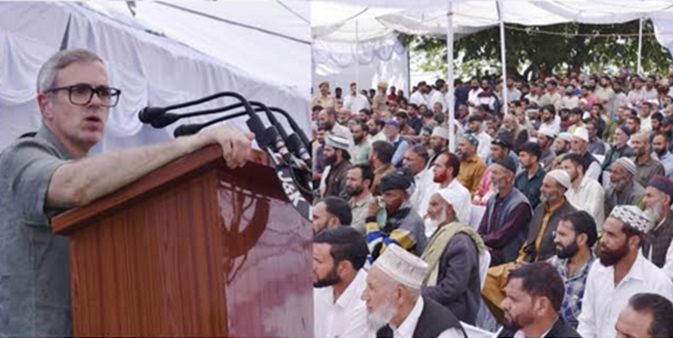
This week Chief Minister Omar Abdullah announced a landmark rehabilitation measure for flood-affected families in Jammu and Kashmir, declaring that the government would allot five marlas of land each to those who had lost their homes and land due to flash floods and landslides. The announcement came during his visit to Billawar in Kathua district, one of the worst-hit areas in the recent floods that have devastated large parts of the Union Territory. The decision reflects a two-pronged government strategy: immediate relief to affected families and long-term rehabilitation through secure housing. Abdullah, while conducting an aerial survey and chairing meetings with district officials, emphasized that the administration must respond with speed, sensitivity, and seriousness to the unprecedented crisis.
Flood Havoc From Kathua To Kupwara: This year has been particularly harsh for Jammu and Kashmir. Beginning with a dry spell and drought scare in early 2025, the region was later battered by torrential rains in August and September. Rivers overflowed, mountainsides crumbled, and sudden landslides swept away entire settlements. The Chief Minister said the devastation stretched “from Kathua in the south to Kupwara in the north.” Official assessments estimate that more than 350 bridges and around 2,000 km of roads have been damaged. Agricultural fields across thousands of hectares have been ruined, while crops, livestock, and private as well as government infrastructure have been destroyed. “This has been a year of extreme trials for our people,” Omar Abdullah remarked. “We are determined to stand with every affected family and restore hope through tangible support.”
Five Marlas Of Land|A Lifeline For The Homeless : The central announcement of the day was the decision to allot five marlas of land to every flood-affected family rendered homeless. The move aims to provide victims with a secure base to rebuild their homes after flash floods and landslides destroyed their houses and agricultural holdings. Speaking in Billawar, Abdullah said: “The government has decided that each family that has lost everything—both home and land—will be provided five marlas of land. This will ensure that no family is left without a roof over their heads.” Residents of Duggain village, where dozens of families lost their houses, welcomed the decision, calling it a step toward restoring dignity and stability.
Kathua|Ground Zero Of The Crisis: Kathua district has borne a heavy share of the floods’ fury. In Duggain and surrounding villages, landslides swallowed homes, fields, and livestock. The Chief Minister, accompanied by MLA Bani Dr. Rameshwar Singh, surveyed the destruction first-hand and heard grievances from residents. Dr. Singh pointed out that villages in the Bani region, such as Moar, Najote, and Kanthal-Majra, had lost nearly 100 homes and large tracts of cultivable land. He pressed for quick implementation of the land allotment scheme and additional relief measures such as amnesty from Kisan Credit Card loans and electricity bills. The MLA also flagged critical infrastructure concerns, including damages to the Jalana Bridge and delays in upgrading schools in the region.
CM Chairs Review Meeting In Kathua: After the aerial survey, Omar Abdullah chaired a meeting with Deputy Commissioner Rajesh Sharma, Additional Deputy Commissioner, and senior police and civil officials in Kathua. He directed the district administration to conduct extensive tours of flood-hit areas and compile detailed ground reports for immediate submission. “Relief and rehabilitation cannot wait for weeks of paperwork,” Abdullah said, instructing officers to prioritize visits to remote villages that often get excluded from the first rounds of aid distribution. The Chief Minister underlined that comprehensive ground reports would form the basis for seeking a substantial relief package from the Central Government.
Appeal To Centre For Comprehensive Relief Package: Given the scale of losses, Omar Abdullah stressed that state resources alone were insufficient to meet the challenge. He said Jammu and Kashmir would seek a comprehensive relief and rehabilitation package from the Centre. “Torrential rains and landslides have destroyed bridges, roads, crops, and government infrastructure on a scale never witnessed before. We are hopeful that the Union Government will recognize this crisis as a national disaster and support our people with an adequate package,” he said.
Visit To Mahore| Sharing Pain, Offering Support: Later in the day, Abdullah flew to Mahore in Reasi district after conducting an aerial survey of flood-hit areas there. Accompanied by MLA Gulabgarh Er. Khurshied Ahmed and senior officials, he met displaced families and offered assurances of government support. “The purpose of my visit is not just to see the damage but to share your pain,” Abdullah told villagers. “This is not charity; it is our responsibility. The government will ensure you are not left alone in this tragedy.” He candidly admitted that while his wish was for Er. Khurshied Ahmed’s first public program as MLA to be one of joy and development, “destiny had something else in store.”
Floods Following a Drought|A Year Of Extremes: Reflecting on the year’s climate challenges, the Chief Minister said the state had experienced severe drought threats earlier in March–April, only to be followed by devastating floods months later. “In February we were preparing for water scarcity, by September we were struggling against water in excess,” he noted. He acknowledged that poor planning and unscientific road construction practices, including indiscriminate mountain cutting, may have worsened the landslides. “Thousands of kilometers of roads built under PWD and PMGSY networks simply vanished. We must learn lessons for the future,” he stressed.
Voices From The Ground: In Reasi, villagers narrated tales of loss—houses swept away overnight, cattle buried in landslides, and fields turned into swamps. Many families were living in makeshift tents without access to clean water or electricity. The Chief Minister listened to individual grievances and reiterated that the five-marla land allotment policy would extend to Reasi as well. He promised that rehabilitation would not be a token gesture but a sustained, structured process.
Administration’s Next Steps: District administrations across Kathua and Reasi have been directed to Prepare detailed lists of homeless and landless families, Identify suitable government or community land for allotment, Fast-track relief distribution including tents, rations, and cash assistance and submit proposals for infrastructure restoration, especially damaged roads and bridges. The Chief Minister also asked officials to work closely with local MLAs to ensure transparency and accountability in relief operations.
“Chief Minister Omar Abdullah’s assurance to the people of Kathua and Reasi reflects a leadership that stands with citizens in their darkest hours. Yet the true test lies in translating promises into action through transparent, inclusive, and sustained rehabilitation. If the government can combine immediate relief with long-term resilience, this tragedy could mark a turning point in how Jammu and Kashmir confronts climate-induced disasters. The five-marla land decision, backed by central support and local participation, has the potential not only to rebuild homes but also to restore dignity and hope for thousands of affected families.”
Challenges In Implementation: While the announcement of land allotment has been widely welcomed, experts caution that execution may face hurdles. Identifying safe, habitable land parcels in mountainous areas is difficult, and disputes over ownership could delay distribution. Moreover, rebuilding homes requires not only land but also financial assistance, construction materials, and technical support. Officials acknowledge that sustained monitoring will be required to prevent delays or misuse of resources. The government’s immediate priority will be to stabilize flood-hit families by providing temporary shelters, rations, and health facilities. The medium-term focus will shift to land allotment and housing construction, while long-term planning will involve rebuilding roads, bridges, and irrigation systems with more resilient designs. Civil society groups have urged that rehabilitation efforts incorporate disaster risk reduction principles, such as avoiding construction in vulnerable zones and introducing early warning systems. Experts also recommend strengthening drainage systems, afforestation drives, and stricter regulation of road construction to minimize landslide risks in the future. Chief Minister Omar Abdullah’s announcement of five marlas of land for every homeless flood victim marks a decisive step toward restoring dignity and stability in disaster-hit Jammu and Kashmir. His visits to Kathua and Reasi symbolized not just political duty but a personal outreach to communities in grief. The challenges ahead are immense—from finding habitable land to securing central aid and rebuilding infrastructure. Yet the government’s commitment to relief and rehabilitation, if backed by sustained follow-up and transparency, could turn this crisis into an opportunity for safer, stronger, and more resilient communities across the state.
Kashmir Horizon View: The devastating floods of 2025 have once again underlined the vulnerability of Jammu and Kashmir to extreme weather events. From flash floods and landslides in mountainous districts like Kathua and Reasi to inundation of low-lying areas, the crisis has highlighted gaps in planning, preparedness, and infrastructure. The announcement of five marlas of land for homeless families is a crucial first step, but rehabilitation must extend beyond immediate relief to ensure long-term resilience. First, immediate stabilization of families must remain the top priority. Distribution of rations, temporary shelters, safe drinking water, healthcare, and cash assistance are urgent needs. Relief camps should be equipped with sanitation facilities to prevent outbreaks of waterborne diseases. Clear communication between the administration and affected communities is essential to minimize confusion and ensure equitable access to resources. Second, housing reconstruction requires a structured policy. Merely providing land will not be sufficient. A housing assistance package—covering building materials, financial support, and technical guidance—should be rolled out in parallel. Construction must follow disaster-resilient designs, avoiding floodplains or unstable slopes. Partnerships with NGOs and local builders can accelerate rebuilding efforts. Third, infrastructure restoration must go beyond patchwork repairs. Thousands of kilometers of roads and over 350 bridges have been damaged. Instead of rushing into temporary fixes, the government should prioritize climate-resilient designs that can withstand heavy rainfall and shifting soil conditions. Road construction practices that involve indiscriminate mountain cutting must be replaced with safer, scientifically backed methods. Fourth, sustainable livelihoods must be ensured. Agriculture has been among the worst-hit sectors, with crops washed away and fertile soil eroded. Farmers will need financial relief, seed distribution, and soil restoration programs. Similarly, small traders and artisans require credit support and waivers on pending dues. Ensuring livelihood security will prevent forced migration from affected areas. Fifth, long-term disaster preparedness is non-negotiable. Jammu and Kashmir must institutionalize early warning systems for floods and landslides. Training local communities in disaster response, expanding afforestation drives, and enforcing stricter land-use regulations will reduce risks. District administrations should prepare village-level vulnerability maps to avoid future construction in high-risk zones. Finally, coordination with the Central Government is vital. The scale of destruction far exceeds local resources. A comprehensive relief package, similar to those granted in the aftermath of national calamities, will be crucial. Transparent utilization of such funds, with public audits, will help maintain public trust. Chief Minister Omar Abdullah’s announcement of five marlas of land for every homeless family represents a decisive step toward restoring hope in disaster-hit regions. His visits to Kathua and Reasi sent a powerful message—that the government is not a distant authority but a partner in rebuilding lives.
(“Team Kashmir Horizon” is committed to continuous improvement and invites feedback and suggestions from readers and its followers on social media sites. Reader insights are considered vital for enhancing content quality and empowering the community. The team encourages open communication and values the thoughts and ideas of its audience, believing that such input will enable them to serve the public more effectively. The initiative aims to ensure that readers have the best possible experience with “Kashmir Horizon”. Interested individuals can reach out to us via email at [email protected].)