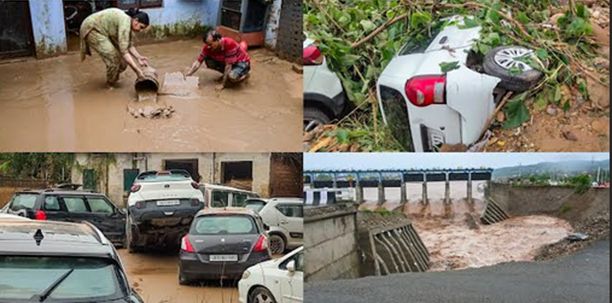
“Due to incessant monsoon downpours, floods, cloudbursts, and landslides have caused widespread destruction in the Reasi, Ramban, Doda, and Udhampur areas of the Jammu Division. Lieutenant Governor Manoj Sinha and Chief Minister Omar Abdullah are leading the government’s response, focusing on immediate rescue, relief efforts, and long-term restoration of infrastructure and essential services. This collaborative effort highlights the urgency with which both the Union Territory administration and the elected government are addressing the crisis to protect lives and livelihoods.”
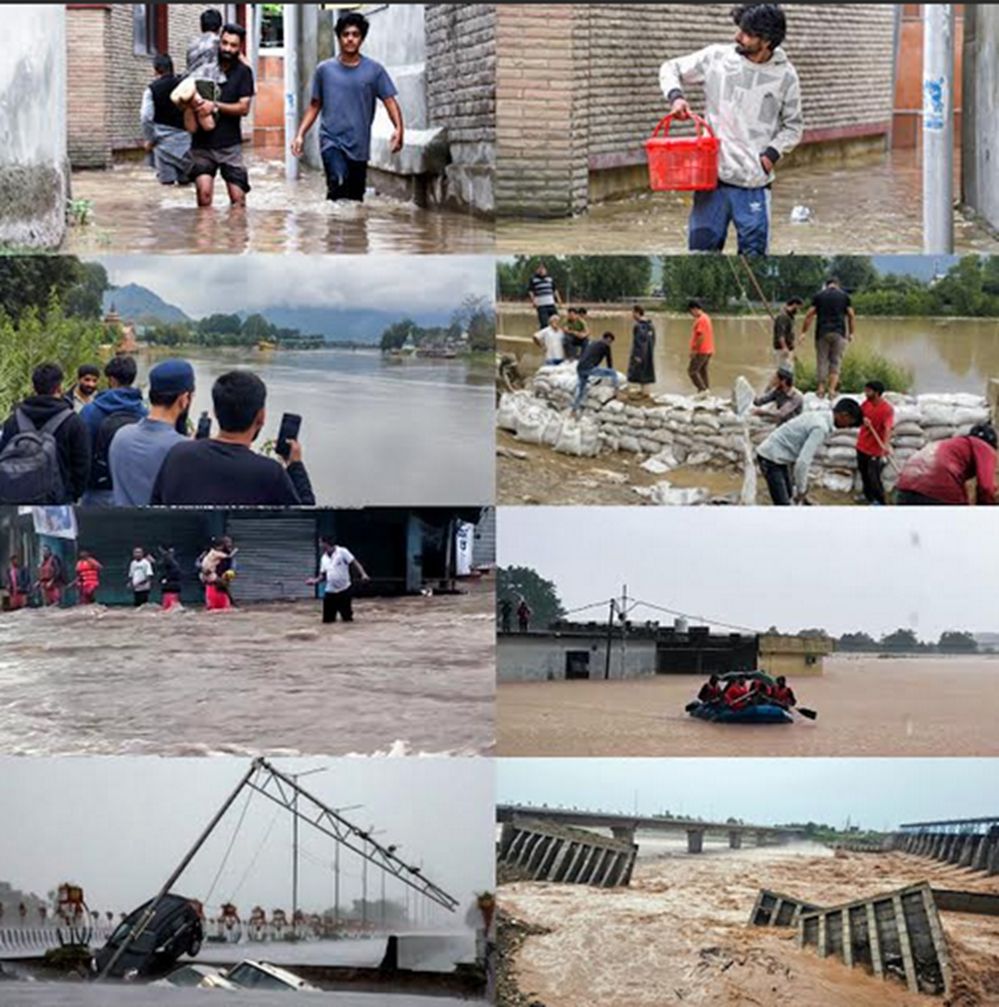
The holy town of Katra, home to the revered Shri Mata Vaishno Devi Shrine, witnessed a tragedy that has shaken the entire Union Territory of Jammu and Kashmir. A rain-triggered landslide struck the Ardhkuwari stretch of the pilgrimage route, claiming multiple lives and injuring several devotees. Simultaneously, incessant monsoon downpours across Jammu Division unleashed floods, cloudbursts, and landslides, leaving a trail of destruction in Reasi, Ramban, Doda, and Udhampur. At the forefront of the crisis stand Lieutenant Governor Manoj Sinha and Chief Minister Omar Abdullah, both of whom have been spearheading the government’s multi-layered response — from immediate rescue and relief operations to long-term restoration of essential services and infrastructure. Their combined efforts reflect the gravity of the calamity and the urgency with which both the UT administration and the elected government are working to safeguard lives and livelihoods.
LG Sinha: “Every Life Precious, Relief Our Duty”: Lieutenant Governor Manoj Sinha, visibly distressed by the incident, was quick to reach out to the injured pilgrims and bereaved families. Hours after the tragedy, he visited the Shri Mata Vaishno Devi Narayana Superspeciality Hospital in Katra, where 13 injured devotees were undergoing treatment. “It was a heart-wrenching natural calamity in which we lost precious lives. My condolences to the bereaved families and prayers for the speedy recovery of the injured. We are providing all possible assistance to those affected,” the Lieutenant Governor told media persons at Katra. Doctors at the hospital briefed him about the medical procedures being followed. Sinha directed hospital authorities to ensure the “best possible treatment” and emphasized that no effort should be spared for the speedy recovery of the injured. On social media platform X, he wrote: “Deeply distressed to know that an unfortunate landslide triggered by incessant rain claimed lives of devotees at Shri Mata Vaishno Devi Shrine. My condolences to the bereaved families and I pray that the injured recover quickly. Directed officials to provide immediate assistance. Continuously monitoring the situation arising in various parts of Jammu Division due to heavy rain.”
Relief Announcements, Ex-Gratia Compensation: LG Sinha also announced immediate ex-gratia relief to the kin of the deceased pilgrims. Under the Shrine Board’s policy, Rs 5 lakh will be provided to the next of kin, along with an additional Rs 4 lakh under the State Disaster Response Fund (SDRF). He directed the Shri Mata Vaishno Devi Shrine Board and the district administration to extend every form of logistical and financial support. “The Shrine Board and the administration are extending all necessary assistance. Relief is not just monetary — it is also about standing with the families in their darkest hour,” he said.
5,000 Evacuated|Army, NDRF On War Footing : As rains lashed the region, several low-lying areas of Jammu, Samba, Kathua, and Udhampur faced flash floods. More than 5,000 residents were evacuated to safer shelters. LG Sinha held late-night reviews with Divisional Commissioner Jammu, Shri Ramesh Kumar, and senior officials, directing them to prioritize the restoration of power, communication, and water supply in areas where flood waters had begun to recede. “Army, NDRF, and SDRF are working in close coordination with the Divisional Commissioner’s office. Relief materials are being supplied adequately, and emergency responders have been mobilized on war footing in all districts,” he said, assuring the public that “no one will be left behind.”
Continuous Monitoring | Briefings To PM, HM: Throughout the crisis, LG Sinha has kept Prime Minister Narendra Modi and Union Home Minister Amit Shah updated. Both leaders assured him of the Centre’s full support. “I have spoken to Hon’ble Prime Minister and Hon’ble Home Minister. They have extended all cooperation. Our joint focus is on immediate rescue, relief, and the long-term resilience of flood-prone districts,” he said. He also directed district commissioners to remain stationed in their headquarters and respond immediately to SOS calls, reinforcing his emphasis on “maximum readiness and presence of staff at their posts.”
CM Omar| “Admin Must Act with Urgency, Compassion”: While LG Sinha managed the UT administration’s immediate disaster response, Chief Minister Omar Abdullah simultaneously chaired a series of emergency meetings and on-ground reviews to tackle the flood crisis that engulfed large parts of Jammu Division. On August 26, he convened an emergency review meeting in Srinagar, attended by Deputy Commissioners of all 10 districts of Jammu, senior bureaucrats, and top police officials. “The relief and restoration works will proceed strictly as per SDRF norms. However, wherever additional requirements arise beyond these norms, I will personally ensure further provisions are made available,” Omar Abdullah assured the officials. He stressed that food, clean drinking water, medicines, and essentials must reach affected families without delay, particularly the elderly, children, and the sick.
Field Visits In Jammu City: The following day, the Chief Minister conducted an extensive tour of flood-hit areas in Jammu city, including Gujjar Nagar, Hari Singh Park, Bhagwati Nagar’s 4th Tawi Bridge, and Old Campus University Science College, which had been inundated. “The Fourth Tawi Bridge has suffered repeated damages since 2014 floods. Preventive engineering interventions must be put in place to safeguard infrastructure from recurring disasters,” Omar said, directing officials to prepare a technical report. He interacted with residents, heard grievances, and assured them that rehabilitation packages would soon be formulated.
Telecom, Roads, Power Restoration: Acknowledging that communication breakdowns worsened the crisis, Omar Abdullah instructed BSNL, Airtel, and Jio to immediately restore mobile and internet services. “Functioning of telecom is most critical during emergencies. Restoration must happen at war footing,” he said. He also ordered priority restoration of the Jammu–Srinagar National Highway (NH-44) and Jammu–Pathankot Highway, vital lifelines for supplies. Districts such as Kishtwar, Bani, and Reasi, which faced road blockages, were directed to be connected through alternate routes until highways were fully operational.
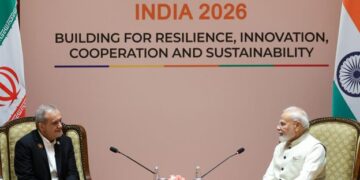
Meeting With PM Modi : The Chief Minister also briefed Prime Minister Narendra Modi about the ground situation, especially in flood-hit districts along the Tawi River. PM Modi assured full support, with Omar later telling media persons: “The Hon’ble Prime Minister has promised continued assistance to the people of J&K. We are grateful for the Centre’s cooperation in this hour of crisis.”
Addressing The Tragedy At Vaishno Devi: Chief Omar Abdullah also expressed grief over the landslide at the Vaishno Devi Shrine, noting that advance warnings should have led to precautionary halts in the yatra.“Preventive measures should have been implemented beforehand to stop pilgrims from proceeding. Precious lives could have been saved,” he said, while conveying his condolences.
“LG Sinha and CM Omar Abdullah are working together on long-term strategies for flood preparedness and rehabilitation in Jammu and Kashmir. The recent floods and a landslide at the Vaishno Devi Shrine have highlighted the vulnerability of the region. Both leaders have received praise for their swift response. Sinha’s administration has focused on support and preparedness, while Abdullah has emphasized holistic rehabilitation and preventive infrastructure. The people of Jammu and Kashmir seek lasting protection, not just immediate relief.”
Highway Restoration| Long-Term Measures: On August 30, Omar Abdullah chaired another high-level meeting, this time focusing on restoration of NH-44 and key rural roads. The meeting included officials from BRO, NHIDCL, NHAI, and police. Chief Secretary Atal Dulloo briefed the CM on the precarious situation: many areas, including Udhampur and Kishtwar, were still cut off, facing shortages of fuel, medicines, and ration. Omar directed that alternate routes be used and status reports submitted twice daily to his office. “Connectivity is the backbone of relief. The lifeline highway must be restored at the earliest to ensure uninterrupted supplies,” Omar emphasized.
Two Leaders, Complementary Roles: Observers note that LG Sinha and CM Omar Abdullah, though operating in different institutional capacities, have complemented each other during the crisis. While Sinha has ensured the administrative machinery and central coordination, Omar has provided political leadership, public reassurance, and field oversight. Both have adopted a hands-on approach: Sinha through hospital visits, constant communication with New Delhi, and directives to responders; Omar through on-ground tours, public addresses, and emphasis on rehabilitation and infrastructure resilience.
Voices From The Ground:Locals in flood-affected Jammu expressed relief at the high-level attention. A shopkeeper from Gujjar Nagar said: “We saw the CM walking through our flooded streets. It gave us confidence that help will come. The administration is working hard, but we need speed.” Meanwhile, a rescued pilgrim at Katra praised LG Sinha’s visit: “When the Lieutenant Governor came to our hospital ward and held our hands, it gave us strength. His presence meant the government was with us.”
Kashmir Horizon View: Experts argue that such recurring disasters underscore the need for climate resilience planning in J&K. Hydrologists warn that intense cloudbursts and landslides are becoming more frequent due to erratic monsoon patterns and unregulated construction on fragile slopes. Both LG Sinha and CM Omar Abdullah have hinted at long-term strategies. Omar emphasized “holistic rehabilitation” and preventive infrastructure, while Sinha pledged “all possible support to strengthen flood preparedness mechanisms.” The twin tragedies — the Vaishno Devi Shrine landslide and the widespread floods across Jammu Division — have tested the administrative and political leadership of Jammu and Kashmir. Lieutenant Governor Manoj Sinha’s swift administrative actions and Omar Abdullah’s proactive political leadership have together shaped the state’s response. Even as rescue and relief continue, the calamity is a stark reminder of the challenges posed by nature in the fragile Himalayan region. As both leaders push for restoration and resilience, the people of Jammu and Kashmir look for not just immediate relief but also long-term protection from such recurring disasters.
(“Team Kashmir Horizon” is committed to continuous improvement and invites feedback and suggestions from readers and its followers on social media sites. Reader insights are considered vital for enhancing content quality and empowering the community. The team encourages open communication and values the thoughts and ideas of its audience, believing that such input will enable them to serve the public more effectively. The initiative aims to ensure that readers have the best possible experience with “Kashmir Horizon”. Interested individuals can reach out to us via email at [email protected].)