- Tryst With Destiny: Amritkal, National Security High On Agenda
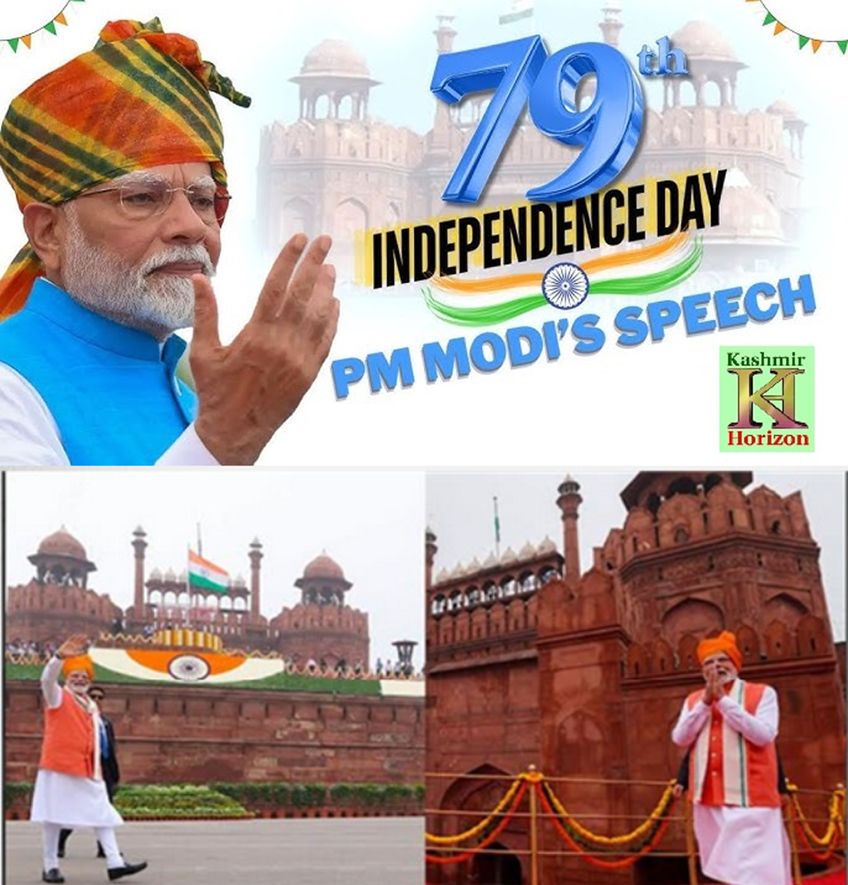
“On the 79th Independence Day, Prime Minister Narendra Modi stood atop the Red Fort for what became his longest and most comprehensive address to the nation. Speaking for 103 minutes, Modi did not merely recount achievements or offer ceremonial greetings; he laid out a sweeping roadmap to transform India into a Viksit Bharat by 2047. Blending history with vision, and emotion with strategy, the Prime Minister’s speech was both a celebration of the nation’s resilience and a call to action for 140 crore citizens to unite behind a shared national destiny.”
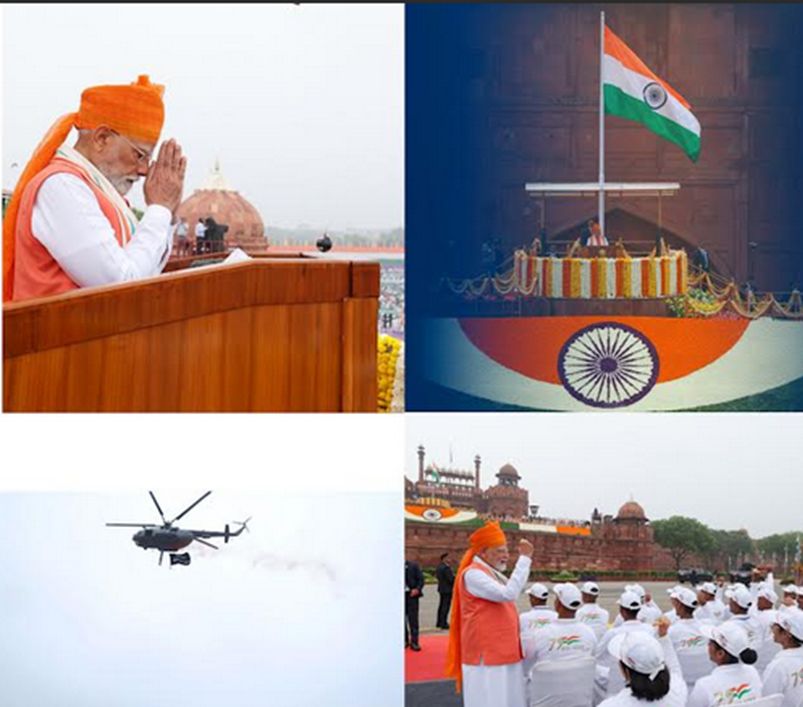 On the 79th Independence Day, Prime Minister Narendra Modi delivered his longest and arguably most decisive address from the ramparts of Delhi’s Red Fort. Stretching over 103 minutes, the speech was not merely ceremonial but a detailed blueprint for India’s transformation into a Viksit Bharat (Developed India) by 2047—the centenary of independence. It was a speech that combined emotion with strategy, history with vision, and rhetoric with policy detail. Modi spoke as a leader reflecting on India’s journey, but also as a strategist charting the course for a nation determined to stand tall as a global power.
A Celebration Of 140 Cr Resolutions: Setting the tone, Modi called the Independence Day celebrations not just a remembrance of the past but a reaffirmation of “140 crore resolutions”—the collective aspirations of India’s citizens. “For 75 years, the Constitution of Bharat has been guiding us like a lighthouse,” he reminded, paying homage to those who sacrificed for freedom and constitutional integrity, from Syama Prasad Mookerjee to the countless unsung heroes. But the Prime Minister also struck a note of warning, highlighting natural calamities like cloudbursts and landslides in recent weeks. He framed these challenges as tests of India’s resilience, insisting that the spirit of unity must prevail in the face of adversity.
A Firm Line On Security, The Indus Waters Treaty: One of the most striking portions of the speech came when Modi addressed issues of security and national sovereignty. Referring to Operation Sindoor, conducted in retaliation after the Pahalgam attack, he hailed it as a demonstration of India’s defence self-reliance and strategic autonomy. Conducted with Made-in-India weapons, the operation dismantled terror networks and Pakistan-based infrastructure, signalling a turning point: India would no longer tolerate nuclear blackmail or foreign-imposed terms. His sharpest words were reserved for the Indus Waters Treaty, which he described as unjust. “India has now decided, blood and water will not flow together,” Modi declared. The message was clear—Bharat will reclaim its rightful share of water for its farmers, ending what he called decades of unfairness where enemy lands flourished while Indian farmers suffered.
Self-Reliance|The Bedrock of Viksit Bharat: A recurring theme throughout the address was Atmanirbhar Bharat (self-reliant India). Modi argued that dependence on others was akin to slavery: “It is a great misfortune when dependency becomes a habit. Self-reliance is linked to our capability, and when self-reliance diminishes, our capability too declines.” From semiconductors to clean energy, and from pharmaceuticals to digital sovereignty, Modi outlined a multi-sectoral roadmap where India must innovate, manufacture, and secure its own needs rather than rely on imports. To underline the seriousness, he announced that India’s first home-grown semiconductor chips would be rolled out by the end of 2025, while nuclear energy would see tenfold capacity growth by 2047. “Every rupee spent on imports could have been spent on farmers’ welfare,” he reminded.
Mission Sudarshan Chakra|Mythology Meets Military: Linking heritage to modern defence strategy, PM Modi unveiled Mission Sudarshan Chakra—an initiative to develop advanced offensive and deterrent weapon systems. Evoking the imagery of Shri Krishna’s Sudarshan Chakra, the PM said India’s new defence capabilities would ensure rapid, precise, and powerful responses to any threat. He further announced that by 2035, all public spaces in India will be covered by an expanded nationwide security shield, a move aimed at fortifying internal security through indigenous technology.
Farmers, The Backbone of Bharat’s Prosperity: Perhaps the most emotional section of the address was reserved for India’s farmers. Modi called them the “backbone of Bharat”, crediting their tireless labour for turning a once-impoverished, colonially drained land into a food-secure nation. “India will not compromise on their interests,” he said firmly, adding: “For farmers, fishermen, and livestock rearers, Modi will always stand as a wall of protection.” The PM noted record-breaking grain production and agricultural exports crossing ₹4 lakh crore, with India ranked No. 1 globally in milk, pulses, and jute, and No. 2 in rice, wheat, cotton, fruits, and vegetables. He announced the PM Dhan-Dhanya Krishi Yojana, targeting 100 backward farming districts, while reiterating support through PM-Kisan, irrigation schemes, and livestock protection programs. PM Modi also highlighted a pressing need: self-reliance in fertilisers and agricultural inputs. “Food security cannot be left vulnerable to imports,” he insisted, urging new methods of domestic production.
Economic Roadmap|From Compliance Burden To Innovation: The Prime Minister underscored the importance of reforms for a citizen-friendly economic ecosystem. He announced a Task Force for Next-Generation Economic Reforms to overhaul laws and processes, reduce compliance costs, and protect startups and MSMEs from arbitrary actions. He noted that in the past decade, the government had abolished over 40,000 unnecessary compliances and repealed more than 1,500 outdated laws. By Diwali, he promised, Next-Generation GST reforms would lower taxes on essentials, benefiting small businesses and consumers alike.
Youth At The Heart of Viksit Bharat: Modi placed the youth at the centre of his vision, calling them the drivers of innovation and entrepreneurship. He urged them to build indigenous jet engines, social media platforms, operating systems, and digital ecosystems. To back this, he announced the PM Viksit Bharat Rozgar Yojana, a ₹1 lakh crore employment scheme under which newly employed youth would receive ₹15,000, benefiting 3 crore young Indians. This, he said, would transform India’s demographic dividend into real prosperity.
Technology, Space, Innovation: The PM dedicated significant time to India’s rise as a technological power. He recalled how attempts to establish semiconductor factories 60 years ago were “killed at birth,” but affirmed that India is now on mission mode. He celebrated the achievements of Group Captain Shubhanshu Shukla and outlined plans for an indigenous Gaganyaan mission and an Indian space station. With over 300 startups innovating in space technology, Modi positioned India as a global leader in space exploration, not just a participant.
Energy Independence, A Non-Negotiable: On the energy front, Modi highlighted India’s rapid strides in clean energy. The nation had already achieved its 50% clean energy goal five years ahead of schedule, in 2025 instead of 2030. Solar capacity had grown thirtyfold in 11 years, and Mission Green Hydrogen was investing thousands of crores. To further secure energy, he launched the National Deepwater Exploration Mission and the National Critical Minerals Mission, exploring 1,200 sites for resources essential to energy, defence, and industry.
Social Empowerment, Women’s Participation: The PM also celebrated India’s women, noting their growing role in startups, space, sports, and the armed forces. He praised the success of Self-Help Groups (SHGs) and the rise of “Drone Didis”, pledging to make three crore women “Lakhpati Didis.” On health, Modi cautioned against obesity, urging families to cut cooking oil use by 10%. He also emphasized preventive healthcare and India’s role as the “pharmacy of the world”, calling for more R&D in medicines and vaccines.
“As the tricolour fluttered high above the Red Fort, Modi’s words reverberated beyond the ceremonial significance of Independence Day. His call for self-reliance, unity, and innovation was not just a political roadmap but a moral compact with the people of India. By placing farmers, youth, women, and entrepreneurs at the heart of his vision, he framed development as a collective mission rather than a government programme. The speech, ambitious in scope and rooted in resolve, left one central message: India’s journey to 2047 will be defined not by circumstance, but by the strength of its people’s commitment to becoming a developed, self-reliant, and united nation.”
Preserving Heritage, Strengthening Unity: Culture and heritage too found a place in the speech. Modi recalled the 350th martyrdom anniversary of Guru Tegh Bahadur Ji and the 150th birth anniversary of Birsa Munda, linking them to the nation’s resolve for cultural pride and tribal empowerment. He announced the Gyan Bharatam Mission to preserve ancient manuscripts and texts using modern technology. Languages like Marathi, Assamese, Bangla, Pali, and Prakrit had been accorded classical status, enriching India’s diverse knowledge systems. “Unity,” Modi stressed, “is the most powerful mantra. No one should be able to break the thread of our unity.”
Reforming Governance,A Citizen-Centric State: Modi underlined that reforms were not just economic but about transforming daily life. The replacement of the colonial-era Penal Code with the Bharatiya Nyay Sanhita, he said, embodied trust and sensitivity towards citizens. This citizen-first approach extended to governance—abolishing unnecessary laws, ensuring transparency in taxation through faceless assessment, and creating a climate of fairness and empowerment.
Kashmir Horizon View: In his concluding remarks, Modi struck a deeply emotional note:“We will not allow even a single particle of slavery to remain in our lives, our rules, laws, and traditions. We will not rest until we are free from all forms of slavery.” He urged every Indian to take pride in their heritage, innovate for the future, and contribute to nation-building—whether by buying India-made products or by leading breakthroughs in science and technology. “By 2047,” he promised, “India will be a developed nation, prosperous, powerful, and united. This is not just my resolve, it is the resolve of 140 crore Indians.” What made this Independence Day address stand out was its sweep of vision and policy detail. Unlike the more rhetorical addresses of the past, Modi’s 103-minute speech resembled a roadmap cum manifesto, laying out specific missions across defence, agriculture, energy, and technology. Self-reliance as non-negotiable—from semiconductors to fertilisers. Citizens as stakeholders—youth, women, farmers, and entrepreneurs at the centre of the project, and Unity as the binding force—cultural pride, social empowerment, and national integrity. In essence, Modi reframed Independence Day as not just a remembrance of the past, but as a call to action for the future, with 2047 as the decisive milestone.
(“Team Kashmir Horizon” is committed to continuous improvement and invites feedback and suggestions from readers and its followers on social media sites. Reader insights are considered vital for enhancing content quality and empowering the community. The team encourages open communication and values the thoughts and ideas of its audience, believing that such input will enable them to serve the public more effectively. The initiative aims to ensure that readers have the best possible experience with “Kashmir Horizon”. Interested individuals can reach out to us via email at [email protected].)