- Omar Envisions A Plan For Crafting Identity From Dogra Palaces to Alpine Trails
“Chief Minister Omar Abdullah has reiterated the need to reimagine Jammu and Kashmir’s tourism beyond its traditional image of snow-capped peaks and Mughal gardens. He called for a shift toward meaningful, identity-based tourism that revives historic trekking routes and showcases the region’s cultural legacy. Omar emphasized that the book should not merely decorate coffee tables but serve as a living document to guide future tourism policy and infrastructure development.”
As Jammu and Kashmir charts its path into a new political and developmental era, Chief Minister Omar Abdullah is placing tourism particularly adventure and heritage tourism at the heart of the region’s revival strategy. With the return of democratic governance and improving security conditions, Abdullah’s recent statements reflect a broader vision: turning the UT into a year-round, experience-driven destination that not only attracts first-time visitors but inspires repeat exploration. The message was clear at two separate but thematically linked events this week first, at the launch of the book “Valleys of Jammu and Kashmir – A Tribute to the Soul of Jammu and Kashmir”, and later during his on-ground review of the Mubarak Mandi Heritage Complex restoration in Jammu. Both occasions underscored a single coherent narrative: Jammu and Kashmir’s future lies in blending natural grandeur with cultural authenticity.
“Not Just A One-Time Visit”: The Call For Adventure Tourism: Speaking at the launch of book in Srinagar, Omar Abdullah made a compelling pitch for repositioning Kashmir’s tourism narrative—from seasonal and scenic to experiential and sustainable. “If we aspire to promote repeat tourism, we must recognize that tourists won’t return solely for our Mughal gardens or the tulip bloom, nor just for gondola rides,” he said. “They return when offered something new—something refreshing each time. Adventure tourism provides exactly that.” The Chief Minister pointed out that each trekking experience, trail, and season brings unique encounters. “The trail looks different in the morning than it does at sunset. Each trek tells a new story,” he remarked, reinforcing the emotional and immersive potential of Kashmir’s largely untapped adventure corridors.
Cultural Corridors, Not Just Trails: Abdullah emphasized that trekking routes aren’t just scenic paths—they are “cultural corridors of heritage and sustainable tourism.” He called for joint efforts with Ladakh to preserve and promote inter-regional trekking circuits, especially those that historically connected the valleys of Jammu, Kashmir, and Ladakh. “We must market our trekking routes not only as tourism products, but as part of our ecological and cultural legacy,” he said, highlighting the need to move beyond markets constrained by foreign travel advisories and explore outreach to countries with untapped interest in high-altitude, culture-rich experiences. The CM’s remarks held both vision and realism. He acknowledged that while the current security dynamics have rendered many trails temporarily inaccessible, the larger goal is to reopen them—not just for foreign tourists, but for Kashmiri youth and domestic adventurers.
Digitizing The Wild: From Coffee Table To Trail Companion: Chief Minister Omar Abdullah assrted that the value of books like Shah’s should extend beyond curated coffee tables. “Let this become a living document. Digitize it. Turn it into an app,” he proposed. “Make it available with GPS coordinates, trail tips, waypoints, and stories. Let it guide adventure seekers, trek leaders, and students who want to rediscover their homeland.” The suggestion aligns with Abdullah’s broader push toward technology-driven governance and tourism, echoing similar efforts to digitize land records and services across the UT. Making heritage and adventure data easily accessible to the public is key to cultivating a more aware, active, and sustainable form of tourism.
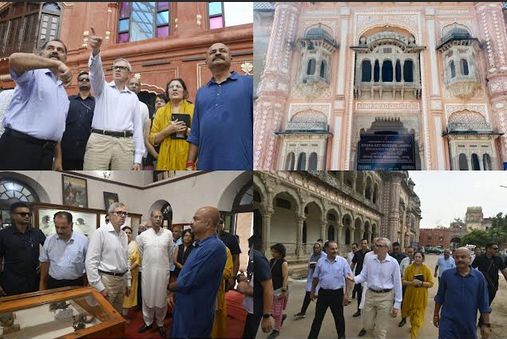
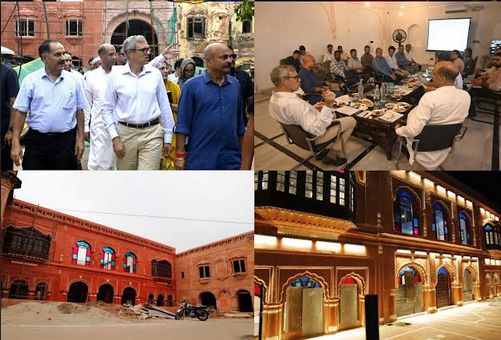
Preserving Heritage, Restoring Identity: Mubarak Mandi’s Transformation: Just days after the book launch, the Chief Minister shifted his focus from the highlands of Kashmir to the historic courtyards of Jammu, where he reviewed the ambitious restoration project at the Mubarak Mandi Heritage Complex—a site that once served as the royal palace of the Dogra dynasty. Standing amid scaffolds and sandstone arches, Omar Abdullah reiterated the government’s commitment to reviving Mubarak Mandi into a comprehensive cultural and tourist hub. He was accompanied by Advisor Nasir Aslam Wani, MLA Yudhvir Sethi, and senior officers from the culture and smart city departments. The multi-phase restoration is part of a long-term vision to position Jammu as a complementary cultural tourism destination to Kashmir’s natural attractions. “The central courtyard must be made a welcoming public attraction,” Omar directed. “It should reflect authentic Dogra architecture while offering an experience that is relevant, vibrant, and interactive for today’s visitors.”
A Smart Future For A Historic Site: The restoration of Mubarak Mandi is not merely cosmetic. Under the Jammu Smart City Mission, the complex is being repurposed with zones dedicated to public spaces, knowledge centres, craft bazaars, and experiential areas. Innovative additions like a library-cum-café within a historic setting are aimed at merging functionality with preservation. Key infrastructural upgrades—including the construction of a span bridge and lifts—will improve accessibility to the elevated site. Principal Secretary Culture Brij Mohan Sharma and Executive Director of the Heritage Society Deepika Sharma provided a detailed briefing to the CM, outlining both technical progress and community engagement plans. “The idea is to create a living heritage site—not just a monument frozen in time,” said Advisor Nasir Aslam Wani. “It must appeal to modern expectations while safeguarding authenticity.”
Crafts, Culture, Continuity: A crucial aspect of the Mubarak Mandi revival is reintegrating Dogra crafts and performing arts into the site’s future programming. Omar Abdullah was clear: “We must promote traditional crafts through curated events, exhibitions, and artisan residencies here. This is not just about tourism—it’s about cultural dignity and economic sustainability.” He directed departments to expedite pending components of the restoration, citing that delays diminish both the impact and public confidence in such projects. With timely execution, the site could emerge as a flagship for urban heritage revitalization in northern India.
“Parallel to the focus on trekking trails and alpine adventures, the administration has accelerated efforts to transform Jammu’s Mubarak Mandi complex into a vibrant cultural and tourism hub. With its Dogra heritage, historical architecture, and strategic location, CM Omar said that the palace complex is being positioned as a magnet for both domestic and international visitors. Tourism officials highlighted plans to digitize the region’s trekking heritage and develop eco-friendly tourism circuits that allow exploration without exploitation.”
Tourism As An Instrument of Identity, Economy: Whether talking about mountain trails or royal palaces, the Chief Minister’s messaging has been consistent: tourism in Jammu and Kashmir must go beyond aesthetics and economy. It must become a tool of integration, healing, and identity. “We are in a moment where Jammu and Kashmir is not just rebuilding physically but redefining how it wants to be seen by the world,” a senior tourism official noted at the book launch. “CM Omar Abdullah’s focus on adventure tourism, digital access, and cultural revival speaks to a comprehensive approach.” Indeed, tourism contributes nearly 7–8% to the UT’s GDP and is a critical sector for employment. The new Adventure and Eco-Tourism Policy currently in development is expected to include clear frameworks for route classification, guide training, safety regulation, and environmental safeguards.
Security, Sustainability, Storytelling;The Trifecta Ahead: What makes this approach stand out is its interweaving of multiple goals—security, culture, economy, and ecology. Adventure tourism promotes employment in rural areas and encourages environmental stewardship. Heritage restoration not only revives forgotten histories but creates immersive platforms for learning and local enterprise. However, officials and analysts also caution that these ambitions require steady political will, inter-departmental coordination, and transparency. “Tourism cannot flourish in silos,” said one senior bureaucrat. “It needs roads, policies, police, culture, and even IT to work together.”
Valley Trails, Palace Halls: As Jammu and Kashmir moves deeper into its democratic phase under CM Omar Abdullah’s leadership, the emphasis is clearly on consolidating peace into prosperity. The adventure tourism push, alongside urban cultural revitalization efforts like Mubarak Mandi, show a government attempting to balance the spiritual with the structural. In a region where narratives have long been shaped by conflict, this shift in tone—from survival to rediscovery and pride—marks a significant transition.
Kashmir Horizon View: Tourism has long been the cultural and economic lifeline of Jammu and Kashmir. From the snow-covered peaks of Gulmarg to the tranquil waters of Dal Lake, the region has captivated the imagination of travellers, poets, and filmmakers for generations. Now, as a democratically elected government under Chief Minister Omar Abdullah takes charge, tourism must be placed at the forefront of development planning and economic revival. The way forward involves recognizing tourism not just as a seasonal activity, but as a strategic industry that can generate employment, drive entrepreneurship, and reshape global narratives around Kashmir. To achieve this, the government must adopt a multi-pronged approach that blends policy innovation, infrastructure expansion, local participation, and environmental responsibility. First and foremost, infrastructure upgradation must be prioritized. While some destinations like Pahalgam and Gulmarg have seen improvements in connectivity, other potential-rich areas such as Gurez, Doodhpathri, Lolab, and Bangus Valley remain underdeveloped and under-promoted. Better roads, reliable power, clean water, and modern accommodation are essential to convert these locations into tourist-friendly hubs. Equally important is improving last-mile connectivity to rural and offbeat destinations, enabling equitable distribution of tourism income beyond major towns. Secondly, the Omar Abdullah government must launch a comprehensive destination branding campaign. This should not only market Kashmir as a “Paradise on Earth,” but also highlight unique offerings — be it winter sports in Gulmarg, Sufi heritage in Awantipora, or border tourism in Uri and Karnah. A digital-first promotion strategy using social media influencers, short films, virtual tours, and targeted international campaigns can attract both domestic and global audiences. Partnering with travel platforms, airline companies, and Bollywood could bring renewed visibility to unexplored gems of the region. The third pillar involves capacity building. Local youth, women, and artisans must be trained in hospitality, language skills, adventure guiding, eco-tourism, and handicraft marketing. This ensures that economic benefits stay within communities and fosters a sense of pride and stewardship. The government can collaborate with universities, skill development institutes, and NGOs to offer short-term courses and tourism entrepreneurship grants. Sustainability is another critical component. As tourism increases, the environmental and cultural heritage of the region must be preserved. Regulations for waste management, responsible trekking, and preservation of fragile ecosystems like wetlands and alpine meadows need strict enforcement. Involving local panchayats and civil society in managing tourist flows can help prevent overcrowding and degradation. Adventure tourism, film tourism, heritage walks, and homestays can be promoted as part of a year-round tourism model, reducing the valley’s over-reliance on the Amarnath Yatra or winter sports alone. Similarly, Jammu’s religious tourism circuits — including Shiv Khori, Vaishno Devi, and Raghunath Temple — must be integrated with broader cultural experiences to extend tourist stays. Tourism in Jammu and Kashmir is not just an economic activity; it is a bridge between communities, a narrative shaper, and a livelihood generator. The new government under Chief Minister Omar Abdullah has a historic opportunity to transform this sector from episodic to enduring. With focused investment, digital promotion, sustainability, and community involvement, J&K can become South Asia’s premier all-season tourism destination a place where beauty, culture, and opportunity coexist in harmony.
(“Team Kashmir Horizon” is committed to continuous improvement and invites feedback and suggestions from readers and its followers on social media sites. Reader insights are considered vital for enhancing content quality and empowering the community. The team encourages open communication and values the thoughts and ideas of its audience, believing that such input will enable them to serve the public more effectively. The initiative aims to ensure that readers have the best possible experience with “Kashmir Horizon”. Interested individuals can reach out to us via email at [email protected].)