- JK Govt Reopening Tourist Spots For Reducing Confidence Gaps
“Chief Minister Omar Abdullah this week addressed the Indian Association of Tour Operators in New Delhi, urging a stronger partnership to rebuild trust in Kashmir’s tourism sector. He outlined a comprehensive plan to revive the region’s economy, emphasizing the importance of transforming the narrative of Jammu and Kashmir from fear to faith and promoting engagement and innovation.”
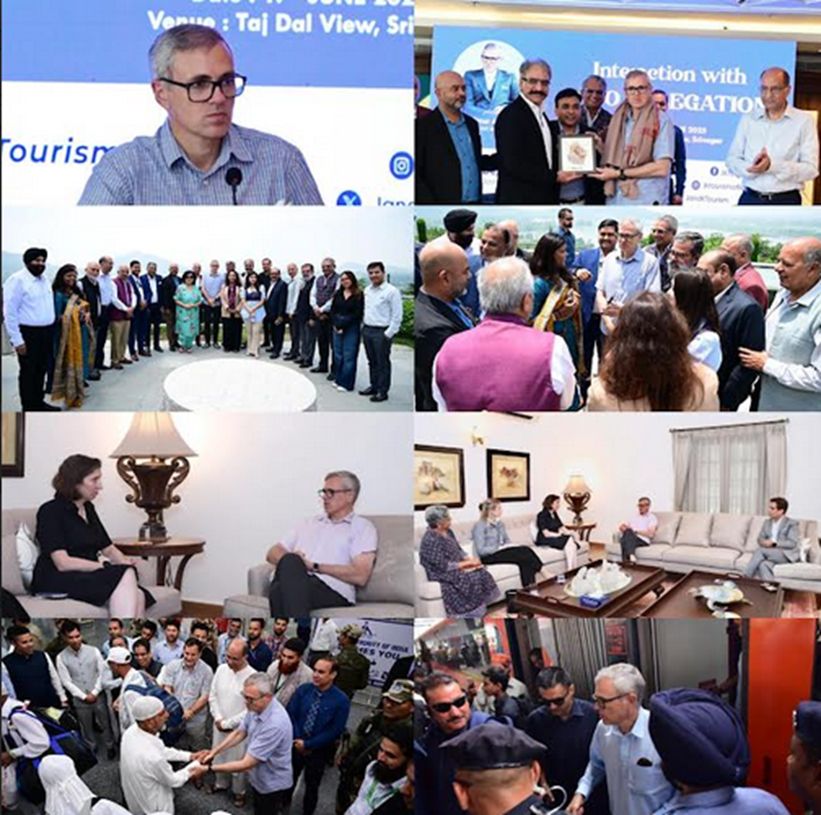 Chief Minister Omar Abdullah this week delivered a strong and strategic message to the Indian Association of Tour Operators (IATO) in New Delhi, calling for a renewed partnership to restore faith in Kashmir’s travel sector. With tourism in the Valley still reeling from the tragic April 22 terror attack in Pahalgam that claimed 26 civilian lives, Abdullah presented a forward-looking and multi-layered roadmap to revive what he called the “soul of the region’s economy.” This was not just a policy pitch—it was a political statement, an economic blueprint, and a cultural assertion. For Abdullah, reviving tourism is no longer about optics or seasonal earnings. It is about rewriting the story of Jammu and Kashmir—one that replaces fear with faith, isolation with engagement, and stagnation with innovation.
Bridging The Confidence Gap Post-Pahalgam: The Pahalgam attack, occurring just as the Valley’s tourism season was gaining momentum, created a confidence vacuum. Abdullah was candid in acknowledging the contradictory messaging that followed: while encouraging visitors, the administration had simultaneously shut down key sites like Betab Valley and Aru. “So what were we offering?” he asked rhetorically, highlighting the disconnect. The effort to reopen these popular destinations is now underway, signaling an administrative shift from risk aversion to managed optimism. More than the physical reopening of sites, however, Abdullah is working to reopen Kashmir’s image on the global tourism map.
Adventure Tourism, A Strategic Lever: Adventure tourism has emerged as a cornerstone of Abdullah’s tourism revival strategy. Rather than restricting Kashmir’s tourism offerings to scenic beauty, the government is now looking to tap into experiential travel—particularly trekking, ziplining, mountain biking, and other adventure sports. Abdullah cited Betab Valley’s geographical potential for extended ziplining routes and revealed discussions with private infrastructure providers to develop immersive adventure experiences. Similarly, plans are underway to reposition Gulmarg as an all-season destination by converting ski slopes into mountain biking trails and repurposing ski lifts for summer trekking. This evolution from passive sightseeing to active adventure reflects a nuanced understanding of global tourism trends and the growing demand for eco-conscious, high-adrenaline travel options.
Omar’s Plans For Changing Jammu Into a Religious Tourism Capital: In parallel, Abdullah has identified religious tourism as a strategic growth sector—particularly for Jammu. During the inauguration of the Government Degree College in Purmandal, also known as ‘Chhoti Kashi,’ Abdullah proposed transforming the region into a pilgrimage tourism hub. This is not merely a cultural project but an economic one. With thousands of pilgrims visiting temples annually, infrastructural development around faith-based corridors can unlock significant livelihood opportunities for local communities. Purmandal, with its religious legacy and geographic accessibility, offers an ideal pilot model for such initiatives.
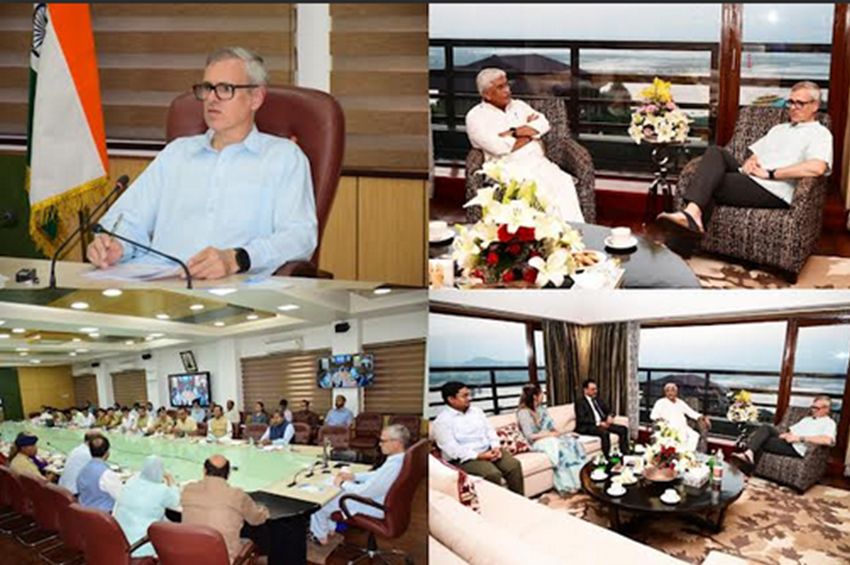
Institutional Partnerships, Federal Synergy: Central to Abdullah’s tourism revival plan is meaningful collaboration with the Union Government. His recent meeting with Union Tourism Minister Gajendra Singh Shekhawat yielded consensus on key priorities—eco-tourism development, heritage site promotion, rural homestays, and international marketing of J&K tourism. “This is a collective commitment to transform Jammu and Kashmir into a global tourism destination,” Shekhawat later posted. Abdullah, for his part, emphasized the importance of aligning state-level policy with national tourism strategies and global travel circuits. Importantly, the discussions went beyond tourism products to include enabling policies—tax incentives for tour operators, infrastructure investment for last-mile connectivity, and safety assurance protocols to restore traveler confidence.
Amarnath Yatra;Beyond Spiritual Symbolism: In Abdullah’s framework, the Amarnath Yatra is not just a spiritual journey—it is a barometer of the region’s stability and a major seasonal economic engine. His concern over the suspension of helicopter services this year wasn’t just about logistics—it was a critique of the messaging such decisions send to the outside world. Thousands of local residents—hoteliers, transporters, pony operators, and traders—depend on the Yatra for income. Its smooth conduct sends a powerful signal of normalcy, while any disruption invites renewed doubts. For Abdullah, the Yatra is as much about public faith as it is about public revenue.
Diplomacy From The Ground Up; The Hajj Pilgrim Connect: In a move that underscored the importance of public engagement in tourism diplomacy, Abdullah personally received the first batch of 178 Hajj pilgrims returning to Srinagar. The gesture was deeply symbolic, reinforcing the administration’s commitment to facilitating safe and dignified religious journeys. “I’m grateful to the pilgrims for praying for Jammu and Kashmir, and I pray that their prayers are accepted,” he said. Such grassroots-level interactions, when amplified through community narratives, serve as organic public relations campaigns for the region.
Tourism; A Catalyst For MSME Growth: Chief Minister Omar Abdullah’s meeting with the PHD Chamber of Commerce and Industry (PHDCCI) further highlighted the multi-sectoral impact of tourism. The Chamber presented a detailed memorandum urging policy reforms to support micro, small, and medium enterprises (MSMEs) in hospitality, transport, and allied services. Abdullah responded with assurances of a business-friendly environment, underpinned by streamlined approvals, investment facilitation, and infrastructure upgrades. The message was clear: tourism is not an isolated sector but a demand driver across industries.
Education-Tourism Link; Building the Human Backbone: What makes Abdullah’s vision holistic is the integration of education as a foundational pillar. During his speech at GDC Purmandal, he reiterated the importance of reversing the student exodus by improving local institutions and attracting out-of-state students. “The day students from outside J&K come here to pursue their education, I will consider my mission fulfilled,” he said. He acknowledged the hardships faced by students studying abroad—especially during global crises—and emphasized the need to strengthen academic infrastructure at home. Educational reform, in this context, is not merely social policy—it’s economic strategy. A skilled, educated workforce is essential to sustaining a modern, tech-enabled, and service-oriented tourism ecosystem.
A Tourism-Centric Renaissance In Motion: From adventure travel to pilgrimage circuits, from educational reform to MSME rejuvenation, and from rural homestays to international partnerships, Omar Abdullah’s tourism vision positions the sector as a multidimensional engine of change. What makes his roadmap compelling is its emphasis on integration—linking security with perception management, infrastructure with investment, and tradition with innovation. It seeks not just to revive tourism but to recalibrate how the world views Jammu and Kashmir. If executed with sustained policy focus, collaborative governance, and deep community involvement, this strategy could become the keystone of a new development narrative—one where Jammu and Kashmir is known not for its conflict, but for its hospitality, resilience, and regenerative potential. Tourism, in Abdullah’s hands, is no longer just a revenue stream. It is a movement to reclaim dignity, restore belief, and rebuild the future.
“Chief Minister Omar Abdullah sees tourism as a way to revive the economy and promote social unity and political healing. It connects people and cultures, changing how Jammu and Kashmir is perceived. As the region welcomes back visitors, Abdullah’s vision offers hope for a future focused on coexistence and celebration. If achieved, this tourism revival could transform lives and communities, leaving a lasting legacy.”
The Way Forward; Converting Vision Into Action: Translating vision into tangible outcomes now requires a meticulously designed and executed implementation framework. For Jammu and Kashmir to truly emerge as a premier global tourism destination, the following areas demand immediate attention: While physical safety has improved in many pockets, perception remains a challenge. The government must work with national media, international travel advisories, and influencers to reset the security narrative using data, testimonials, and successful travel experiences. From last-mile roads to mobile network coverage in remote treks, adventure tourism cannot flourish without the right infrastructure. A tourism infrastructure development board, backed by public-private partnerships, should be instituted. The Valley’s young entrepreneurs are eager to innovate in eco-tourism, homestays, digital guides, and cultural circuits. Streamlining tourism business registration, easing credit access, and offering digital support can fuel local enterprise. : Aligning vocational training with tourism industry needs—from multilingual guides to hospitality experts and outdoor safety professionals—will ensure quality and competitiveness. Beyond national platforms, Kashmir’s evolving tourism profile must be showcased in international travel fairs, spiritual tourism expos, and digital campaigns aimed at millennial travelers. Sustainable tourism cannot be imposed from the top. Local governance bodies, NGOs, and tourism cooperatives must be empowered to design and manage local tourism products.
Kashmir Horizon View: Omar Abdullah’s tourism agenda may be ambitious, but it is grounded in a powerful understanding of Jammu and Kashmir’s unique blend of heritage, geography, and resilience—his plan bridges tradition with innovation, economy with culture, and aspiration with action. It is in tourism that Abdullah finds not just a path to economic revival, but a foundation for social cohesion and political healing. Tourism, by its very nature, connects people, cultures with commerce, visitors with villagers, stories with landscapes. It humanizes a place too often caricatured in headlines. As the Valley reopens and the hills echo once again with the laughter of trekkers, pilgrims, and storytellers, Abdullah’s vision offers more than a tourism policy—it provides a promise. A promise that Jammu and Kashmir’s story will no longer be written only in the language of conflict but also in the language of coexistence, courage, and celebration. If realized with determination and collective ownership, this renaissance in tourism could become the legacy of a generation. A legacy not forged in treaties or slogans, but in the silent transformation of livelihoods, perceptions, and aspirations—one visitor at a time.
(In commitment to continuous improvement the “Team Kashmir Horizon” invites it’s valuable readers to share their valuable feedback and suggestions with the “Team Kashmir Horizon”. The insights of readers will surely play a vital role in improving the content quality of “Kashmir Horizon” and contribute more for the empowerment of people. Please feel free to reach out to us at editor@ thekashmirhorizon.com. Team “Kashmir Horizon” eagerly anticipates thoughts and ideas of it’s readers, which will help us serve people and even more effectively. The inputs of valuable readers are highly valued as “Kashmir Horizon” strives to provide it’s readers the best possible experience.)