“From the very first day, Chief Minister Omar Abdullah emphasized that his administration would prioritize the people, ensure transparency, and be attuned to the distinct needs of the region. Over the last three months, his government’s policies have concentrated on restoring public trust, revitalizing the economy, improving governance, and emphasizing peace-building efforts. In light of previous unrest and a difficult geopolitical landscape, these initial 100 days are perceived by many as a new start—one that reignites hope and underscores the significance of local perspectives in determining the region’s future.”
On January 24, 2025, the Omar Abdullah-led National Conference government marked a significant milestone—completing its first 100 days in office in the Union Territory of Jammu and Kashmir. These 100 days have not only witnessed the gradual restoration of democratic processes in the region but have also showcased a determined effort to bring in reforms, ensure security, empower the marginalized, and address long-standing socio-economic challenges. In a region often caught between complex political and security dynamics, this period has emerged as a chapter of cautious optimism. From day one, Chief Minister Omar Abdullah made it clear that his administration would be people-centric, transparent, and grounded in the unique needs of the region. His government’s policies over the past three months have focused on rebuilding public confidence, reviving the economy, enhancing governance, and prioritizing peace building. Against the backdrop of past turmoil and a challenging geopolitical environment, these initial 100 days are being seen by many as a fresh beginning—one that rekindles hope and asserts the importance of local voices in shaping the region’s destiny.
A Historic Return To Democratic Governance: The return of Omar Abdullah to the chief minister’s office on October 16, 2024, was emblematic of a larger democratic resurgence in Jammu and Kashmir. The elections, held across three phases in September and October 2024, recorded an unprecedented 64% voter turnout—the highest in the region’s electoral history. This massive participation defied past patterns of electoral disengagement and reflected the collective yearning of the people for accountable governance. Omar Abdullah now leads a broad-based coalition comprising his party—the Jammu and Kashmir National Conference (JKNC)—the Indian National Congress, and several independent legislators. While political observers had initially speculated about ideological frictions within the coalition, the government has thus far managed to maintain cohesion, underscoring a shared commitment to stability, development, and restoration of full democratic functioning in the Union Territory.
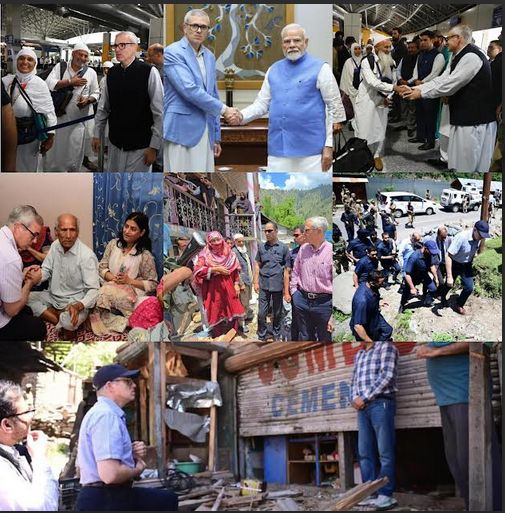
Financial Revival Through Pragmatic Diplomacy: One of the most daunting tasks confronting the new administration was the fragile fiscal situation of the Union Territory. Years of political uncertainty, administrative reorganization, and dwindling private investment had strained the local economy. Acknowledging this, Chief Minister Abdullah made financial stabilization a top priority. Early in his tenure, he led a delegation to New Delhi and held critical discussions with Prime Minister Narendra Modi, Union Home Minister Amit Shah, and Finance Minister Nirmala Sitharaman. These interactions were notably cordial and pragmatic, reflecting a spirit of cooperative federalism. The Centre responded positively to Jammu and Kashmir’s financial needs by agreeing to enhance fiscal devolution and offering special grants to manage liabilities and fund welfare schemes. While critics questioned whether the National Conference was compromising its autonomy by aligning too closely with the BJP-led central government, Abdullah clarified that cooperation does not mean capitulation. “We must work with New Delhi without losing our voice,” he said in a press briefing on November 10, 2024. The infusion of central funds has enabled the UT administration to revive several stalled projects, clear pending liabilities, and invest in social welfare programs. Importantly, it has allowed the government to fulfill key election promises without adding to public debt.
A Step Towards Women Empowerment: Perhaps one of the most widely appreciated initiatives of this government has been the launch of free bus services for women across the Union Territory. Announced on April 2, 2025, under the INDIA Alliance’s broader vision for gender equity, the scheme has benefited thousands of women, especially students, daily wage earners, and working professionals. The response from the public has been overwhelmingly positive. Many have hailed it as not just a welfare initiative but a symbolic assertion of women’s rightful place in public spaces. The move has also enhanced access to education and healthcare for women in remote areas by reducing transport-related constraints. This initiative, along with the expansion of Anganwadi centers, increased maternity care services in government hospitals, and new vocational training schemes for women, signals a shift toward inclusive and gender-sensitive governance.
Compassionate Governance Amid Crisis: The Pahalgam terror attack on April 22, 2025, which resulted in the loss of 26 innocent lives including tourists, tested the leadership of Omar Abdullah. The Chief Minister’s response was swift and humane. Within hours of the incident, he visited the site, convened an emergency cabinet meeting, and personally monitored the rescue and relief operations. The government announced an ex-gratia relief package, including ₹10 lakh for the families of the deceased, ₹2 lakh for those grievously injured, and ₹1 lakh for those with minor injuries. More significantly, Abdullah ensured that the state machinery arranged dignified transport of the mortal remains and extended counseling and rehabilitation services to the affected families. He later proposed the creation of a memorial in the Baisaran meadows of Pahalgam, both as a tribute to the victims and as a reminder of the need for peace. His empathetic tone, combined with resolute administrative action, earned widespread appreciation and marked a stark departure from the aloof responses often seen in the past.
Peacebuilding , Public Safety: Security remains a complex challenge in Jammu and Kashmir, and the Abdullah government has approached it with pragmatism and restraint. One of the most significant diplomatic developments during this period was the ceasefire agreement between India and Pakistan on May 10, 2025. Abdullah welcomed the development and urged both sides to honor the ceasefire in letter and spirit. At home, his administration has sought to balance counter-insurgency operations with community outreach. During incidents like the May drone intrusions near the border, Abdullah’s call for restraint, communal harmony, and avoidance of rumors helped defuse tensions. Public safety advisories were issued promptly, and coordinated efforts with the central security apparatus were carried out to secure vulnerable regions. Notably, his emphasis on safeguarding the rights of civilians, even in high-risk areas, has reassured the public that peace and security do not have to come at the cost of human dignity.
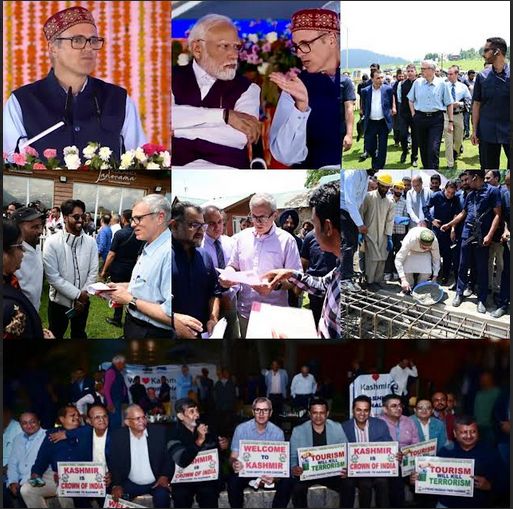
Development As A Driving Agenda: The CM Abdullah government has demonstrated a clear developmental vision, particularly in revitalizing the tourism sector, which remains a cornerstone of Jammu and Kashmir’s economy. Following the Pahalgam attack and subsequent travel advisories by several Western nations, CM Abdullah reached out to the Ministry of External Affairs to initiate dialogue with foreign embassies and ensure the timely withdrawal of these advisories. At the same time, domestic tourism campaigns have been launched to highlight the region’s safety and serenity. Events such as the Gurez Festival, the revival of Gulmarg’s winter sports activities, and new eco-tourism projects in the Pir Panjal and Chenab valleys are part of this broader vision. The government has also taken proactive steps to tackle water scarcity, especially in south Kashmir and frontier districts. In one of his public addresses, Abdullah called for a ‘Water Solidarity Campaign,’ urging residents to adopt conservation methods. Initiatives like micro-irrigation, rainwater harvesting, and community water management are being rolled out in coordination with local bodies.
Strengthening The People-Government Connect: In a refreshing change from bureaucratic detachment, the Omar Abdullah government has attempted to rebuild trust between the administration and the public. Town hall meetings, grievance redressal camps, and the revival of Panchayat-level engagements have become a regular feature in the Valley and the Jammu region alike. Chief Minister Abdullah has also acknowledged areas where the government has fallen short—be it delay in the appointment of teachers, backlog in development projects, or pending recruitment drives. His honest admission that “100 days is not enough to fix 10 years of damage, but it is a start,” has struck a chord with the common people. Furthermore, his insistence on resolving contentious issues such as the equitable sharing of assets with Ladakh and advocating for the restoration of statehood has reinforced the idea that the Abdullah government is not shying away from tough conversations.
“The initial 100 days of Omar Abdullah’s administration have signified the onset of a new phase in the democratic evolution of Jammu and Kashmir. Against a backdrop of intricate political history and delicate trust, the government has undertaken courageous and empathetic measures to restore governance, elevate communities, and foster a sense of belonging among its citizens. Although challenges remain, the future appears more promising than it has in many years. With a definitive vision, responsive leadership, and the support of an active citizenry, Jammu and Kashmir is well-positioned for transformation. The journey has only just commenced—but with ongoing effort and collective determination, the Union Territory can develop into a beacon of peace, progress, and democratic revitalization in the heart of the Himalayas.”
The Road Ahead: Challenges, Commitments: As Jammu and Kashmir steps into the next phase of governance under Omar Abdullah, challenges abound. The restoration of statehood remains the most emotive political demand across parties and regions. While New Delhi has hinted at its willingness to consider this at an appropriate time, it will require sustained political negotiation and legislative maneuvering. Furthermore, tackling unemployment, enhancing healthcare access in rural areas, addressing climate-related vulnerabilities, and ensuring equitable development between Jammu and Kashmir regions are goals that will require policy innovation and administrative grit. Yet, the past 100 days have shown that with political will, a cooperative federal approach, and empathetic governance, progress is not just possible—it is already unfolding.
Kashmir Horizon View: The next phase of governance under Omar Abdullah will be crucial in consolidating the gains made during the first 100 days. With foundations laid in financial restructuring, social empowerment, and public outreach, the government now has an opportunity to deepen its reform agenda and push forward long-term development goals. High on the agenda is the restoration of statehood, a commitment repeatedly voiced by Chief Minister Abdullah as central to restoring the dignity of Jammu and Kashmir’s people. Navigating this constitutional challenge with maturity and dialogue will be a litmus test of the government’s diplomatic and political acumen. Equally pressing is the need to tackle unemployment through youth-centric programs, skill development missions, and renewed industrial engagement. Strengthening healthcare and education infrastructure, particularly in remote and underserved regions, will be vital in ensuring equitable growth. The administration’s continued focus on peacebuilding—through cross-border confidence-building measures, rehabilitation of affected communities, and prevention of radicalization—will remain a cornerstone of its security strategy. Climate resilience, environmental sustainability, and digital connectivity are also emerging priorities that can no longer be delayed. What stands out, however, is the inclusive and participatory model of governance that the Abdullah-led government is striving to implement. Regular engagement with panchayats, civil society, and youth forums has shown that public trust can be rebuilt when citizens are made stakeholders in decision-making. As the administration moves ahead, maintaining transparency, strengthening institutional accountability, and ensuring the timely delivery of services will be critical in sustaining public confidence. The path may not be easy, but the direction is promising. The first 100 days of Omar Abdullah’s government have marked the beginning of a new chapter in the democratic journey of Jammu and Kashmir. Against a backdrop of complex political history and fragile trust, the administration has taken bold and compassionate steps to restore governance, uplift communities, and instill a sense of belonging among its people. While challenges persist, the road ahead appears more hopeful than it has in years. With a clear vision, responsive leadership, and the backing of an engaged citizenry, Jammu and Kashmir stands poised for transformation.
The journey has just begun—but with sustained effort and collective resolve, the Union Territory can emerge as a model of peace, development, and democratic renewal in the heart of the Himalayas. As Omar Abdullah himself stated recently, “We may have miles to go, but together—with unity, honesty, and determination—we will reach.”
(In commitment to continuous improvement the “Team Kashmir Horizon” invites it’s valuable readers to share their valuable feedback and suggestions with the “Team Kashmir Horizon”. The insights of readers will surely play a vital role in improving the content quality of “Kashmir Horizon” and contribute more for the empowerment of people. Please feel free to reach out to us at editor@ thekashmirhorizon.com. Team “Kashmir Horizon” eagerly anticipates thoughts and ideas of it’s readers, which will help us serve people and even more effectively. The inputs of valuable readers are highly valued as “Kashmir Horizon” strives to provide it’s readers the best possible experience.)