“Lt Governor Manoj Sinha announced government jobs for the kin of the deceased, provision of ex-gratia relief, and reiterated the Centre’s full support for further assistance. Beyond the immediate relief measures, he promised strategic fortification of border communities through increased construction of individual and community bunkers, to be implemented under the Security Related Expenditure (SRE) scheme. “We are significantly expanding our efforts to construct bunkers across Jammu Kashmir. Every family must have a protective shield against Pakistan’s inhuman shelling,” he asserted.”
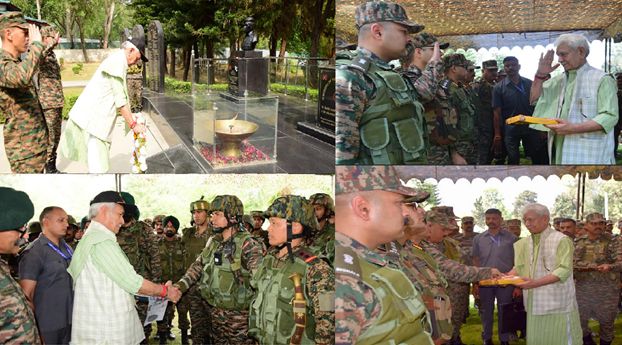
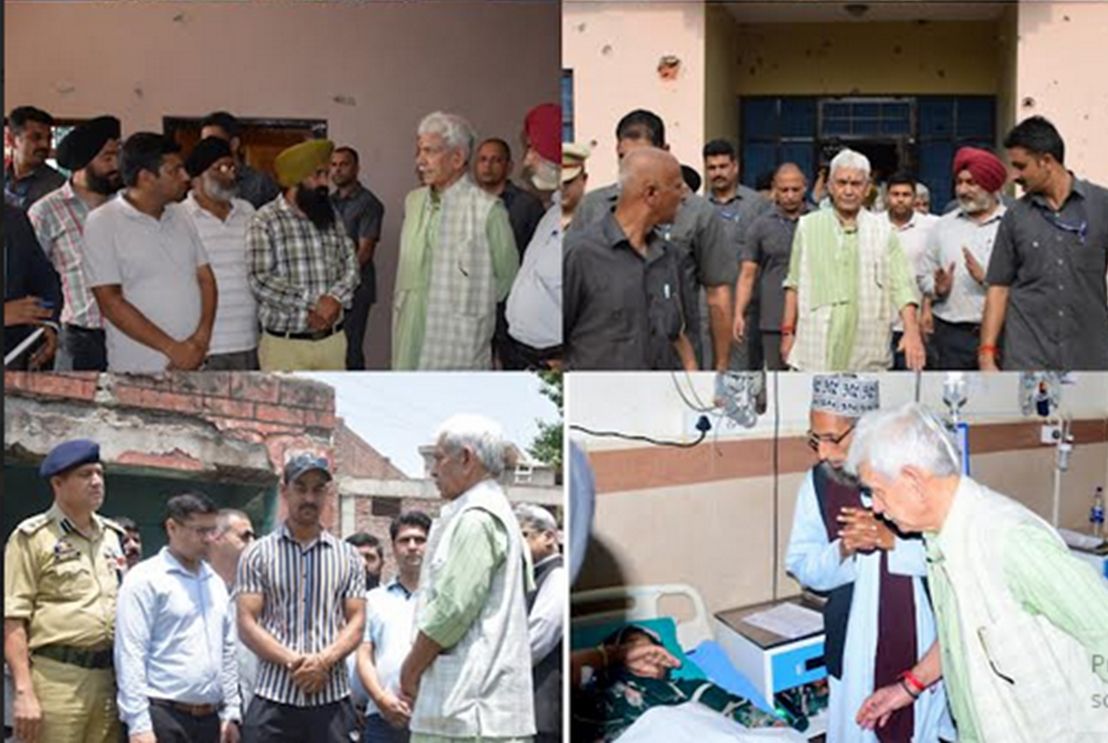
In a solemn yet defiant moment charged with grief, resolve, and national pride, this week Lieutenant Governor Manoj Sinha visited the border districts of Poonch and Rajouri, where Pakistani shelling recently left several civilians dead and injured. Amid tears and trauma, the LG not only offered ex-gratia relief and medical aid but also announced government jobs for the next of kin of those killed. The visit, though humanitarian in nature, underlined India’s unwavering resolve to defend its citizens, respond forcefully to cross-border aggression, and preserve the communal harmony that hostile neighbors seek to disrupt.
The Human Toll; Grief, Destruction, Courage On The Border: The recent unprovoked shelling by Pakistan across the Line of Control (LoC) has once again shattered lives and livelihoods in border villages of Jammu and Kashmir. The shelling not only claimed innocent lives but also damaged homes, livestock, and religious sites — including a Gurudwara, a temple, and a mosque — revealing a deliberate and sinister strategy aimed at fraying the social fabric of the region. Among those martyred was Dr. Raj Kumar Thapa, the Additional District Development Commissioner of Rajouri — a dedicated public servant who died in the line of duty. His loss, along with that of several civilians, has reignited questions about long-term civilian safety in conflict-prone border belts.
LG Sinha’s Response: Assurance, Action, Assertiveness: Addressing these concerns, LG Manoj Sinha stated unequivocally “The proper rehabilitation of affected families is my top priority. Under the leadership of Prime Minister Narendra Modi and Home Minister Shri Amit Shah, we are committed to strengthening border security and infrastructure.” Lt Governor Manoj Sinha announced government jobs for the kin of the deceased, provision of ex-gratia relief, and reiterated the Centre’s full support for further assistance. Beyond the immediate relief measures, he promised strategic fortification of border communities through increased construction of individual and community bunkers, to be implemented under the Security Related Expenditure (SRE) scheme. “We are significantly expanding our efforts to construct bunkers across Jammu Kashmir. Every family must have a protective shield against Pakistan’s inhuman shelling,” he asserted.
Targeting Religious Harmony;A Strategic Misfire by Pakistan: During his visit to Gurudwara Dera Santpura Nangali Sahib, which was partially damaged during the shelling, LG Sinha minced no words in calling out Pakistan’s intent: “Pakistan has once again shown its cowardice by targeting sacred places — a Gurudwara, a temple, and a mosque. This was an attempt to disturb our communal harmony, but the people of Poonch have responded with unity and courage.” In a powerful statement, he saluted the Sikh community and all residents of Poonch for resisting the adversary’s conspiracy to divide society on religious lines. “Their courage has given moral strength to our brave soldiers.”
Operation Sindoor; Drawing The Red Line: Even as the border villages mourn, a sense of national pride is swelling across the country following Operation Sindoor — a swift, precise, and unprecedented Indian military response to Pakistan’s recent provocations. “In just 23 minutes, our brave soldiers brought the terror masters to their knees,” LG Sinha declared, in one of the strongest-ever statements issued by a constitutional head in J&K. “This operation is a living example of India’s military and strategic might. Every inch of Pakistani land is now a target if they attempt another misadventure.” Sinha also emphasized that the operation has set a new red line — a threshold that, if crossed again, would result in immediate and uncompromising retaliation. He called it a spiritual and moral victory as well: “Dharma has won. Adharma has surrendered. This is not just a military victory; it’s a reaffirmation of our moral compass.”
Assessment , Coordination On The Ground: The LG’s visit was not limited to condolence meetings or symbolic gestures. He chaired high-level coordination meetings in both Poonch and Rajouri, directing the district administration to:
Conduct Comprehensive Assessments Of Damage To Life, Property, Livestock: Ensure restoration of essential services, including electricity, water, healthcare, and rations. Upgrade medical infrastructure, especially in District Hospitals close to the LoC. Strengthen the Civil Defence network in vulnerable pockets. Submit Action Taken Reports to Divisional Commissioner and Chief Secretary offices within days. He also visited the Government Medical College in Rajouri, personally inquiring about the injured, many of whom were recovering from shell-fragment injuries and trauma.
The Broader Strategic Context: While LG Sinha’s visit was deeply personal for the victims and communities, its political and strategic subtext is equally significant. Symbol of Assertive Governance: This is a continuation of New Delhi’s iron-fist policy post-August 5, 2019, when Article 370 was abrogated. The state now responds to provocations not with dossiers or diplomatic demarches alone, but with calibrated military responses and civilian welfare packages. Civic-Military Unity: By praising local communities for their courage and communal harmony, Sinha has reinforced the moral high ground that India enjoys globally. It showcases unity amid adversity, something that sharply contrasts with Pakistan’s terror-exporting image. Boosting Morale of Armed Forces: His address to soldiers in the Poonch and Nowshera sectors was emotionally resonant, evoking praise from veterans and strategic analysts alike. Redefining Border Policy: With the announcement of expanded bunkers and rehabilitation schemes, Sinha is helping reshape India’s civilian border policy, one that integrates security, development, and social resilience.
The Way Forward; Beyond Relief To Resilience: In light of the repeated shelling and recent loss of civilian lives, merely offering relief is not enough. There is a clear and urgent need for long-term structural, institutional, and psychological interventions in border regions.
- Comprehensive Border Infrastructure Upgrade: From all-weather roads to underground bunkers and drone-based surveillance systems, a multi-layered approach is necessary. Border villages need permanent emergency shelters, telemedicine access, and quick-response forces stationed nearby.
- Civil Defence Training: Border communities must be trained in first aid, fire management, and evacuation drills. Schools and community centers must act as crisis coordination hubs during emergencies.
- Trauma, Mental Health Support: Shelling survivors — especially children — suffer from deep psychological scars. Mobile trauma units, counselors, and helplines should be deployed in Poonch, Rajouri, and similar districts.
- Border Area Development Prog (BADP) Expansion: This centrally sponsored scheme needs more funds and faster implementation, especially in areas where frequent shelling disrupts agriculture and trade.
- Legal, Diplomatic Documentation: The government must build and maintain legally admissible records of damages, for future claims and as proof against Pakistan’s continued ceasefire violations.
- International Engagement: Though India has always preferred bilateral handling of Pakistan issues, exposing Pakistan’s attack on religious sites (Gurudwara, temple, mosque) can provide powerful diplomatic leverage in global forums like the UN and OIC. Lieutenant Governor Manoj Sinha’s visit to the conflict-ridden border belts of Poonch and Rajouri was far more than a ceremonial gesture. It was a symbol of the State’s duty, the Centre’s resolve, and the nation’s unity in the face of continuous provocation from across the border. His bold statements and decisive policy directions offer a glimpse into a new era of governance in Jammu and Kashmir—one where citizens are protected, soldiers are celebrated, and enemies are confronted—not appeased. Operation Sindoor, the job assurances, and the expanded border defence measures mark a policy triad of retribution, rehabilitation, and resilience.In the final analysis, the line between grief and glory has been redrawn. From the ashes of cowardly shelling has emerged a stronger, more prepared, and deeply united Jammu and Kashmir—backed by a leadership that is neither hesitant nor forgetful, but firm in action and just in spirit.
“The government’s responsibility extends beyond providing shelter and compensation; it must ensure equitable access to education, healthcare, employment, and mental health services in these border districts. Only then can the cycle of violence and deprivation be broken, transforming border areas from conflict zones into models of security and prosperity. Moreover, the decisive response by the Indian Armed Forces, exemplified by Operation Sindoor, reinforces the message that any aggression will be met with overwhelming force. This strategic clarity is vital to maintaining peace and stability, deterring future attacks, and safeguarding national interests.”
Kashmir Horizon View: The recent visit of Lieutenant Governor Manoj Sinha to the border districts of Poonch and Rajouri is more than a symbolic gesture; it marks a critical juncture in addressing the deep-rooted challenges faced by communities living under the constant threat of cross-border shelling. The immediate priority must be the expansion and acceleration of civilian safety infrastructure, particularly the construction of individual and community bunkers. While funds under the Security Related Expenditure (SRE) are being allocated for this purpose, it is imperative that this process is expedited, ensuring that every household in vulnerable border villages has access to safe shelters. Equally important is the integration of modern early warning systems, such as digital alerts and automated sirens, coupled with medical emergency supplies within these bunkers, to reduce the human cost during shelling incidents. Technological advancements can also play a vital role in enhancing border security. Deploying drones, AI-powered surveillance, and ground sensors for real-time monitoring can help preempt potential attacks and provide timely intelligence to security forces. Upgrading physical border infrastructure, including fences and outposts manned by the Border Security Force (BSF), must continue alongside these efforts to deter infiltration and hostile activities. A robust combination of physical, technological, and human resources will be key to managing border threats effectively while safeguarding civilian lives. While the Lieutenant Governor’s announcement of government jobs for the next of kin of shelling victims is a significant step, it needs to be codified into a permanent policy framework. Furthermore, the deliberate targeting of religious sites by Pakistan was an attempt to fracture the social fabric of these regions. The united stand by the Sikh, Hindu, and Muslim communities in Poonch against this provocation highlights the strength of interfaith harmony in Jammu and Kashmir. The situation in Poonch and Rajouri goes far beyond isolated border skirmishes; it represents a profound test of India’s commitment to the safety, dignity, and prosperity of its border populations. Lieutenant Governor Manoj Sinha’s visit and his announcements of government jobs, enhanced relief measures, and expanded security infrastructure firms governmental resolve to address the immediate and long-term needs of these communities. India’s approach must now be holistic, combining robust military preparedness with inclusive socio-economic development. The government’s responsibility extends beyond providing shelter and compensation; it must ensure equitable access to education, healthcare, employment, and mental health services in these border districts. Only then can the cycle of violence and deprivation be broken, transforming border areas from conflict zones into models of security and prosperity. Moreover, the decisive response by the Indian Armed Forces, exemplified by Operation Sindoor, reinforces the message that any aggression will be met with overwhelming force. This strategic clarity is vital to maintaining peace and stability, deterring future attacks, and safeguarding national interests. In sum, history will remember this phase not only for the adversity faced but for the leadership, unity, and resilience it inspired. The responsibility now lies with the Jammu and Kashmir administration and the Central Government to build on this momentum—turning Poonch, Rajouri, and all border areas into beacons of security, social harmony, and development. The lives lost to unprovoked shelling demand nothing less than a comprehensive, sustained, and compassionate response that honors their sacrifice and ensures a safer, brighter future for generations to come.
(In commitment to continuous improvement the “Team Kashmir Horizon” invites it’s valuable readers to share their valuable feedback and suggestions with the “Team Kashmir Horizon”. The insights of readers will surely play a vital role in improving the content quality of “Kashmir Horizon” and contribute more for the empowerment of people. Please feel free to reach out to us at editor@ thekashmirhorizon.com. Team “Kashmir Horizon” eagerly anticipates thoughts and ideas of it’s readers, which will help us serve people and even more effectively. The inputs of valuable readers are highly valued as “Kashmir Horizon” strives to provide it’s readers the best possible experience.)