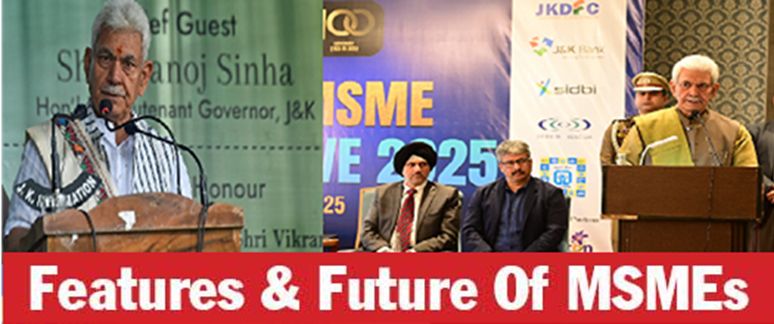
“The focus on MSMEs comes at a critical juncture when the region is witnessing transformative economic growth. Significantly LG Sinha reiterated his commitment to empowering small and micro-entrepreneurs, emphasizing that a fear-free and confident industrial environment is the cornerstone of sustainable development.”
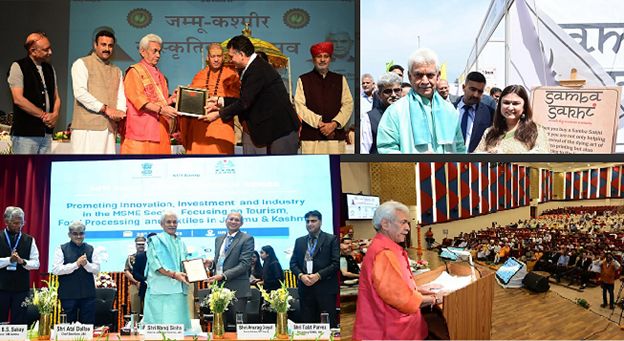 In a significant stride towards strengthening the economic landscape of Jammu and Kashmir, Lieutenant Governor Manoj Sinha participated in the NITI Aayog’s workshop aimed at promoting innovation, investment, and industrial growth in the Micro, Small, and Medium Enterprises (MSME) sector. Held at the prestigious Indian Institute of Management (IIM) Jammu, the event brought together an illustrious gathering of policymakers, industry experts, entrepreneurs, and thought leaders to deliberate on pivotal challenges and opportunities within three key economic sectors: textiles, food processing, and tourism.
Empowering MSMEs For Economic Resilience: In his inaugural address, LG Manoj Sinha underscored the importance of collaborative efforts among stakeholders to foster a conducive growth environment for MSMEs in Jammu and Kashmir (J&K). He extended his felicitations to NITI Aayog, IIM Jammu, and other stakeholders for organizing a platform that bridges policymakers and industry participants. “Deliberations on reforms and growth strategies will have a far-reaching impact on MSMEs in our Union Territory. Communication must be deepened, reforms must be seamless, and policymakers should work hand-in-hand with entrepreneurs,” the Lieutenant Governor asserted. The focus on MSMEs comes at a critical juncture when the region is witnessing transformative economic growth. Significantly LG Sinha reiterated his commitment to empowering small and micro-entrepreneurs, emphasizing that a fear-free and confident industrial environment is the cornerstone of sustainable development.
Reforms, Policy Interventions Driving Change: Highlighting the strides made under the guidance of Prime Minister Narendra Modi, LG Sinha reflected on the transformative impact of the New Industrial Scheme. The scheme has been instrumental in attracting significant investments, thereby reshaping J&K’s industrial landscape. “The incentives under the New Industrial Scheme have been a game changer for Jammu and Kashmir. It has not only bolstered industrial development but has also instilled confidence among investors. The peace and favorable conditions in the region have further encouraged direct investments, particularly in tourism and hospitality sectors,” the Lieutenant Governor noted.
Revival of Handloom Sector, Global Market Linkages: One of the standout successes highlighted during the workshop was the revival of the handloom sector. Once struggling with market reach and profitability, the sector has witnessed a remarkable turnaround through better market linkages. “It is a matter of great pride for J&K that our handloom products are now recognized globally. I am confident that our MSMEs in this sector will rise to new challenges and leverage emerging opportunities,” LG Sinha expressed.
TourismThe Heartbeat Of J&K Economy: Tourism remains a vital pillar of J&K’s economy, and LG Sinha emphasized the need for infrastructural enhancement and diversification. He called for accelerating the development of new tourist destinations and highlighted the significant role of private players in shaping a tourist-friendly ecosystem. “Peace is a prerequisite for a flourishing tourism sector. We are witnessing a positive transformation where more individuals are emerging as Peace Stakeholders. This reflects the changed picture of Jammu and Kashmir,” he said. The focus on tourism is not merely about increasing footfall but also about enhancing the quality of tourist experiences. With better facilities and innovative offerings, Jammu and Kashmir are positioning themselves as a top-tier destination for global tourists.
Food Processing The Road To Agri-Economic Sustainability: Food processing is another critical sector discussed during the workshop. LG Sinha pointed out the need for improved performance and robust infrastructure to tap into the full potential of J&K’s rich agricultural produce. “Food processing is an area where we need to enhance our infrastructure and performance. By leveraging technology and fostering entrepreneurship, we can significantly boost this sector,” he said. The food processing industry in J&K has immense potential given the region’s diverse agro-climatic conditions. With the right policy support and investment in technology, the sector could not only cater to domestic markets but also find a niche in international markets.
Partnerships, Institutional Support The Way Forward: The workshop emphasized the importance of institutional support and collaborative partnerships between the Government, private players, and academia. LG Sinha acknowledged the efforts of NITI Aayog and IIM Jammu in facilitating these partnerships. “The role of institutions like IIM Jammu is crucial in providing research-based insights and innovative solutions. Collaboration with such institutions can help address the dynamic needs of the MSME sector,” he added. Senior officials, including Chief Secretary Atal Dulloo, NITI Aayog’s Senior Advisor Anurag Goyal, and Secretary of the Planning Development & Monitoring Department Talat Parvez Rohella, echoed the sentiments of the Lieutenant Governor. They emphasized the importance of policy reforms, innovation, and entrepreneurship as pillars of sustainable development.
Harnessing The Power Of Peace For Development: A recurring theme throughout the workshop was the intrinsic link between peace and development. LG Sinha passionately reiterated that Jammu and Kashmir’s future is irrevocably tied to India and emphasized the significance of peaceful coexistence for economic prosperity. “The UT of Jammu and Kashmir is an integral part of India. No power in the world can separate Jammu and Kashmir from India. A peaceful environment is essential for a thriving business and a flourishing tourism sector,” he affirmed. The concept of ‘Peace Stakeholders’ has emerged as a powerful narrative in J&K, where community members actively participate in maintaining peace, thus contributing to the region’s stability and economic growth.
The State Support Mission; Strengthening Local Economies: The workshop was part of NITI Aayog’s State Workshop Series under the State Support Mission. This initiative aims to support states and Union Territories in addressing localized economic challenges and leveraging opportunities for sustainable development. By focusing on three key sectors—textiles, food processing, and tourism—the workshop aimed to chart a strategic roadmap for holistic economic growth. The presence of policymakers, industry experts, and entrepreneurs fostered a collaborative dialogue that is expected to translate into actionable outcomes.
Charting A New Course for MSMEs: The NITI Aayog workshop at IIM Jammu marked a pivotal moment in Jammu and Kashmir’s journey towards economic resilience. Under the visionary leadership of Lieutenant Governor Manoj Sinha, the focus on empowering MSMEs, fostering innovation, and leveraging partnerships is setting a transformative precedent. With policy support, institutional backing, and the active participation of stakeholders, J&K is poised to emerge as a hub for entrepreneurship and industrial growth. The emphasis on peace as a foundation for economic prosperity further underscores the region’s commitment to holistic development.
As the workshop concluded, the message was clear—Jammu and Kashmir is not just witnessing a change; it is embracing a transformative economic renaissance.
The Need For MSMEs In Economic Development: Micro, Small, and Medium Enterprises (MSMEs) form the backbone of any thriving economy. In regions like Jammu and Kashmir, where economic diversification and employment generation are crucial, MSMEs play an indispensable role in fostering resilience and sustainability. These enterprises contribute significantly to GDP, employment, and exports, making them essential drivers of economic growth.
Employment Generation: MSMEs are labor-intensive, offering substantial employment opportunities to skilled and unskilled workers alike. In a region where unemployment remains a challenge, the growth of MSMEs can bridge the gap by providing jobs at the grassroots level. By empowering small and micro-entrepreneurs, Governments can create a ripple effect that boosts household incomes and improves the standard of living.
Encouraging Innovation, Entrepreneurship: Small enterprises are often the breeding ground for innovation. With limited resources, MSMEs tend to develop cost-effective and innovative solutions to cater to local and global markets. Encouraging entrepreneurship through policy support and financial incentives ensures that innovation continues to thrive, contributing to economic diversification.
Boosting Exports, Market Expansion: MSMEs contribute significantly to exports by producing unique and region-specific products. In Jammu and Kashmir, the revival of the handloom and handicraft sectors stands as a testament to this potential. Providing market linkages and leveraging digital platforms can further expand the global reach of these products, boosting foreign exchange earnings.
Resilience In Economic Downturns: One of the defining traits of MSMEs is their resilience during economic downturns. Unlike large corporations that may face greater financial setbacks, smaller enterprises can adapt more quickly to market changes. This flexibility makes MSMEs a stabilizing force in volatile economic conditions.
“The NITI Aayog workshop at IIM Jammu served as an ideal platform for stakeholders to exchange ideas and propose solutions to these pressing issues. By fostering dialogue between policymakers, industry leaders, and entrepreneurs, such initiatives pave the way for actionable outcomes. Lieutenant Governor Manoj Sinha’s unwavering commitment to strengthening the MSME sector reflects a broader vision of inclusive economic growth. As Jammu and Kashmir continue to progress on the path of industrial development, the MSME sector is set to emerge as a pillar of economic resilience and sustainability.”
Balanced Regional Development: MSMEs are crucial for balanced regional development. They help reduce the urban-rural divide by promoting industrial growth in less developed areas. In Jammu and Kashmir, fostering MSME growth can lead to equitable economic development, ensuring that prosperity is not limited to urban centers. Despite their importance, MSMEs face challenges such as limited access to finance, lack of infrastructure, and regulatory hurdles. Addressing these challenges through targeted policies, financial inclusion, and capacity building is essential. Workshops like the one organized by NITI Aayog provide a platform for stakeholders to address these issues collectively. By focusing on innovation, investment, and industry, Jammu and Kashmir are setting an example for other regions. With robust policy support, institutional backing, and active participation from all stakeholders, the MSME sector is poised to become the cornerstone of sustainable economic development in the Union Territory.
Kashmir Horizon View: Lieutenant Governor Manoj Sinha has consistently emphasized the transformative potential of the MSME sector in Jammu and Kashmir. His vision encompasses creating a supportive ecosystem where small and micro-entrepreneurs can thrive without fear or apprehension. He has reiterated the Government’s commitment to fostering an environment that nurtures confidence among industry stakeholders. Under his leadership, several key policy interventions have been introduced to boost industrial development. The New Industrial Scheme has been a landmark initiative, offering incentives that have attracted substantial investments to the region. By leveraging these incentives, many small businesses have scaled operations and expanded market reach. The Lieutenant Governor also stresses the importance of infrastructural development in sectors like food processing and tourism. “Food processing remains an area where we need to improve our performance. Boosting infrastructure in the tourism sector and accelerating the development of new tourist destinations are equally essential,” he stated during the workshop. Moreover, LG Sinha has acknowledged the crucial role of private players in enriching the tourism experience in Jammu and Kashmir. By collaborating with private stakeholders, the Government aims to diversify tourism offerings and improve tourist-centric facilities. Despite the encouraging growth trajectory, MSMEs in Jammu and Kashmir face several hurdles, including limited access to finance, inadequate infrastructure, and regulatory complexities. Addressing these challenges requires a multi-faceted approach involving Government support, institutional collaboration, and active participation from the private sector. The NITI Aayog workshop at IIM Jammu served as an ideal platform for stakeholders to exchange ideas and propose solutions to these pressing issues. By fostering dialogue between policymakers, industry leaders, and entrepreneurs, such initiatives pave the way for actionable outcomes. Lieutenant Governor Manoj Sinha’s unwavering commitment to strengthening the MSME sector reflects a broader vision of inclusive economic growth. As Jammu and Kashmir continue to progress on the path of industrial development, the MSME sector is set to emerge as a pillar of economic resilience and sustainability.
(In commitment to continuous improvement the “Team Kashmir Horizon” invites it’s valuable readers to share their valuable feedback and suggestions with the “Team Kashmir Horizon”. The insights of readers will surely play a vital role in improving the content quality of “Kashmir Horizon” and contribute more for the empowerment of people. Please feel free to reach out to us at editor@ thekashmirhorizon.com. Team “Kashmir Horizon” eagerly anticipates thoughts and ideas of it’s readers, which will help us serve people and even more effectively. The inputs of valuable readers are highly valued as “Kashmir Horizon” strives to provide it’s readers the best possible experience.)