“The Lt Governor Sinha reassured the legislators and the public that his government is steadfast in its commitment to addressing this legitimate demand. The J&K cabinet had already passed a resolution in October last year, urging an early restoration of statehood. Chief Minister Omar Abdullah has since taken an active role in pushing for this agenda, personally meeting Prime Minister Narendra Modi, Home Minister Amit Shah, and other key ministers to hand over copies of the resolution and make a case for expedited action”.
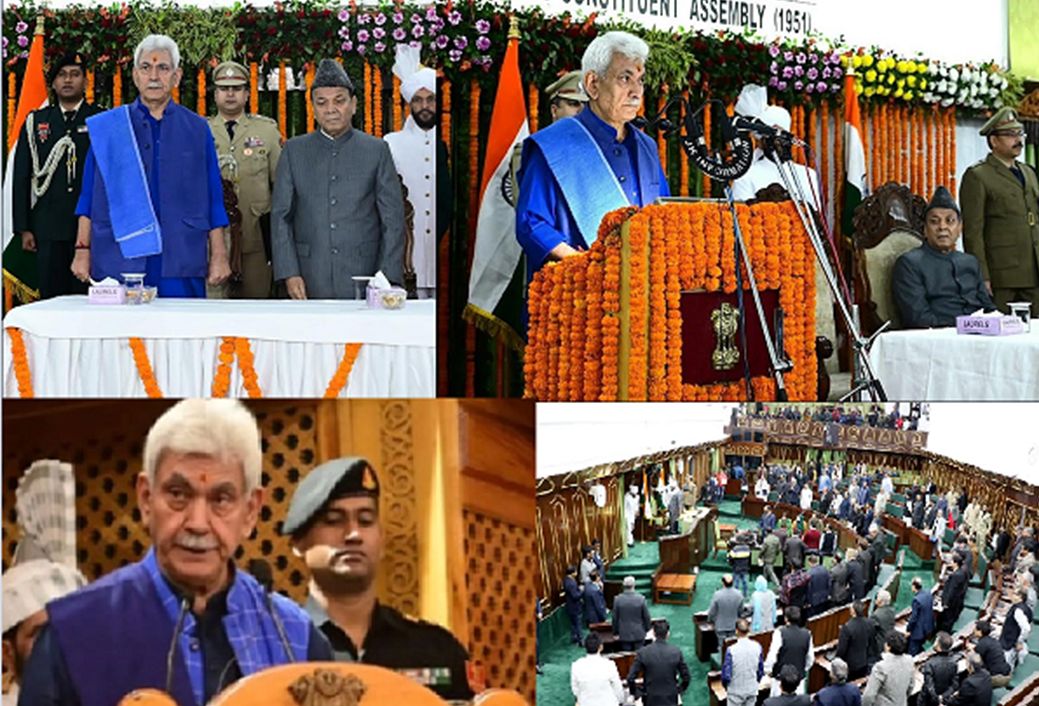
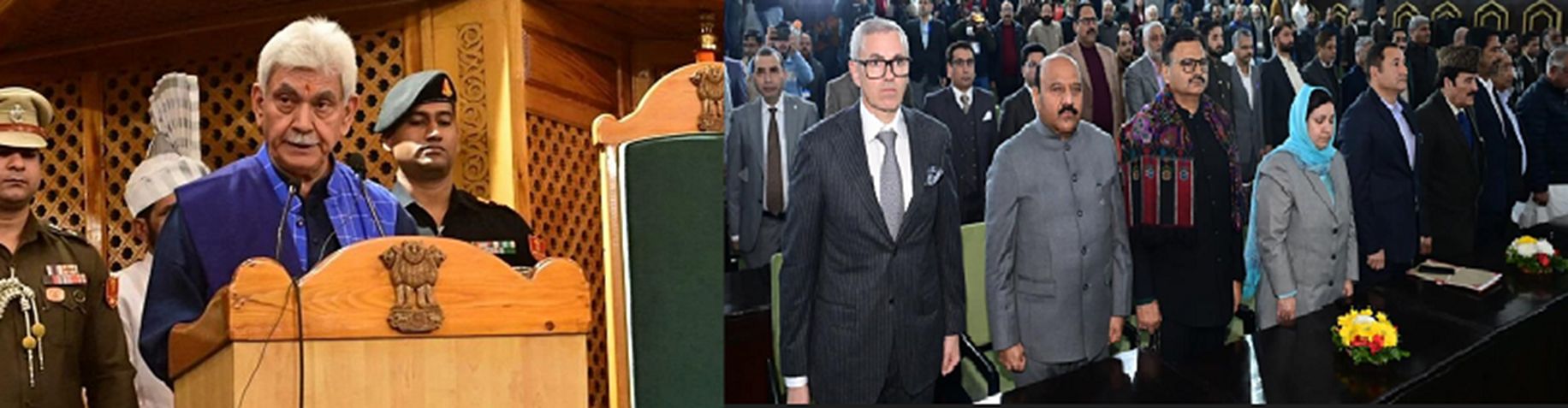 This week commencement of the budget session of the Jammu and Kashmir Assembly in Jammu was marked by a significant address from Lieutenant Governor Manoj Sinha. In his address to the maiden budget session of the UT assembly Lt Governor Sinha underscored the aspirations of the people of Jammu and Kashmir, with a particular emphasis on the restoration of statehood, governance, economic growth, and infrastructural development. This momentous session also carried historical significance, being the first in over seven years where an elected government presented the budget.
Demand For Statehood; A Political, Emotional Aspiration: Lt. Governor Sinha, in his address, acknowledged that one of the foremost aspirations of the people of Jammu and Kashmir is the restoration of full statehood. The Lt Governor Sinha reassured the legislators and the public that his government is steadfast in its commitment to addressing this legitimate demand. Recognizing both the emotional and political significance of statehood, the administration has been engaging with stakeholders to ensure a peaceful and stable transition toward this goal. The call for statehood is not merely a political demand but a deeply rooted sentiment among the people. The J&K cabinet had already passed a resolution in October last year, urging an early restoration of statehood. Chief Minister Omar Abdullah has since taken an active role in pushing for this agenda, personally meeting Prime Minister Narendra Modi, Home Minister Amit Shah, and other key ministers to hand over copies of the resolution and make a case for expedited action. The restoration of statehood is seen as a crucial step toward political stability and governance autonomy. It is not just about constitutional status but about rekindling the trust between the people and the administration. The emotional attachment to statehood is linked with regional identity, aspirations for self-governance, and a sense of historical continuity. The question remains: how soon will the Centre respond to this demand?
Governance, Budgetary Significance: Sinha emphasized that this budget session is not just a legislative formality but a testament to the government’s commitment to transparency, inclusive development, and good governance. The budget carries historic significance as it is the first in over seven years to be presented by an elected government. For the first time, Chief Minister Omar Abdullah chaired meetings in all twenty districts, directly engaging with elected representatives to understand their regional priorities. This shift towards participatory governance marks a departure from bureaucratic decision-making to a more inclusive and representative governance model. The government’s agenda revolves around economic progress, welfare-driven policies, and a governance model that prioritizes the needs of youth, women, and farmers. The role of good governance in ensuring peace and stability cannot be overstated. The administration’s focus on transparency and inclusivity is a significant factor in winning public trust.
Economic Growth, Infra Development: The economic trajectory of Jammu and Kashmir has seen notable growth in recent years, fueled by increased government intervention and investments. Infrastructure development remains a key driver of progress. The recent inauguration of the Z-Morh (Sonamarg) Tunnel by Prime Minister Modi and the completion of critical segments of the Jammu-Srinagar National Highway, such as the Banihal and Ramban bypasses, have substantially reduced travel time and enhanced connectivity. Additionally, the government has identified water resource management as an area with untapped potential. A commitment to 100% smart metering aims to reduce Aggregate Technical & Commercial (AT&C) losses and boost revenue generation. This reflects a strategic approach toward self-sufficiency and efficient resource utilization. The handicraft sector, employing over 4.22 lakh people, remains a vital pillar of the economy. To promote ‘Brand J&K,’ the government is actively facilitating Geographical Indication (GI) tagging for traditional products. This initiative will provide greater market access and international recognition for the region’s artisans.
Healthcare, Education; A Vision For The Future: Healthcare remains a priority in the administration’s development roadmap. The declaration of three districts as TB-free and the expansion of tele-radiology services across 71 health centers indicate a significant push toward healthcare accessibility. The operationalization of dialysis services in all district hospitals is a commendable step in addressing critical healthcare needs. One of the most significant upcoming developments is the near completion of AIIMS Kashmir, which is expected to revolutionize healthcare infrastructure in the region. Additionally, the government is taking steps to increase MBBS and postgraduate seats in medical colleges in the 2025-26 academic session, expanding opportunities for aspiring doctors. The administration is also focusing on transforming Jammu and Kashmir into an educational hub. The operationalization of IIT Jammu and IIM Jammu, along with Jammu University attaining A++ status, underscores the commitment to academic excellence. The Islamic University of Science and Technology (IUST) has emerged as a leader in skill development and innovation. Faculty members from the University of Kashmir being recognized among the top 2% of global scientists by Stanford University further highlights the region’s potential in higher education. Institutions like Cluster University of Jammu and IUST are making strides in high-impact research and securing patents, showcasing a promising future for scientific advancements in Jammu and Kashmir.
Women Empowerment, Social Upliftment: Women’s empowerment remains central to the government’s welfare initiatives. The Ladli Beti scheme has benefited 1.30 lakh girls, and the Marriage Assistance Program has supported over 97,000 families. The establishment of One-Stop Centres (OSCs) and Hubs for Empowerment of Women ensures safety, financial security, and social upliftment for women across the region. These initiatives align with a broader vision of creating a gender-inclusive society where women have equal opportunities for financial independence and social participation. The emphasis on women’s empowerment is not only a welfare measure but also an economic strategy, recognizing that empowered women contribute significantly to overall socio-economic progress.
Jammu & Kashmir; A Sporting Hub In The Making : The Government is also working toward making Jammu and Kashmir a center of sporting excellence. The successful hosting of Khelo India Winter Games and the revival of international cricket through the Legends League indicate a shift towards positioning the region as a sporting destination. Investments in sports infrastructure, training programs, and events are creating new opportunities for youth engagement, employment, and international recognition. A strong sporting culture can also play a role in fostering social cohesion and national integration.
“The assurance of statehood restoration is tied to the larger goal of ensuring peace, stability, and democratic governance in the region. Beyond statehood, the government’s focus on economic growth, infrastructure development, and social welfare presents a promising path forward.”
A Historic Budget With A Promising Future: As Lt. Governor Sinha concluded his address, he highlighted that this budget carries both the weight of history and the promise of a brighter future. The return of elected representatives to the Assembly after seven years ensures that the voices and aspirations of the people are genuinely reflected in the budget formulation process. The comprehensive approach of the government—balancing political aspirations, economic growth, infrastructure expansion, healthcare improvements, educational advancements, and social welfare—reflects a roadmap for a stable and prosperous Jammu and Kashmir. However, while these developments are promising, the ultimate test lies in their implementation. The restoration of statehood remains a pressing issue, and its timely resolution will define the political landscape of the region. The people of Jammu and Kashmir will be closely watching how these commitments translate into tangible change, as they continue their journey toward stability, development, and self-governance. The restoration of statehood remains a crucial and deeply emotional aspiration for the people of Jammu and Kashmir. While the government has acknowledged this demand and is engaging with stakeholders, the real test lies in how soon and effectively these commitments translate into action. The assurance of statehood restoration is tied to the larger goal of ensuring peace, stability, and democratic governance in the region. Beyond statehood, the government’s focus on economic growth, infrastructure development, and social welfare presents a promising path forward. Investments in education, healthcare, and women’s empowerment are commendable steps toward a more inclusive society. However, consistent policy implementation and monitoring will be essential to realize these goals.
Kashmir Horizon View: The restoration of statehood must remain a top priority for the government to address the political aspirations of the people of Jammu and Kashmir. Establishing a clear roadmap with defined timelines will help instill confidence among the public and political stakeholders. Transparent communication regarding the steps being taken toward statehood restoration will be crucial in ensuring trust and stability in the region. Strengthening democratic institutions is another key aspect of progress. Conducting regular elections at all levels, from local bodies to the legislative assembly, will ensure participatory governance. Empowering local representatives and strengthening panchayati raj institutions can enhance democratic engagement and provide people with a stronger voice in decision-making. Economic diversification is essential to creating sustainable livelihoods. While tourism and handicrafts are integral to the region’s economy, expanding into industries such as information technology, renewable energy, and manufacturing can generate long-term employment opportunities. Special economic zones, start-up incubators, and policies that encourage private investment will contribute to economic resilience and growth. Infrastructure development must continue at an accelerated pace. Improved road networks, rail connectivity, and digital infrastructure will facilitate economic activities and regional integration. Ongoing projects like the expansion of the Jammu-Srinagar National Highway and the operationalization of the Sonamarg Tunnel (Z-Morh) should be complemented with further investment in rural infrastructure to bridge the urban-rural divide. Healthcare improvements are necessary to enhance the quality of life in Jammu and Kashmir. Ensuring that AIIMS Kashmir and other healthcare facilities are fully operational, while expanding telemedicine and rural healthcare outreach programs, will improve medical accessibility. Increasing MBBS and postgraduate medical seats can help address the shortage of healthcare professionals in the region. Tourism revival strategies must be sustainable and diversified. While pilgrimage tourism remains a major attraction, adventure tourism, eco-tourism, and heritage tourism should be promoted. Improved international marketing campaigns and enhanced tourist safety measures can further elevate Jammu and Kashmir’s global appeal. Environmental sustainability must be prioritized to preserve Jammu and Kashmir’s natural beauty and ecological balance. Implementing policies to regulate urban expansion, promote afforestation, and harness renewable energy will help mitigate environmental challenges. Sustainable urban planning and waste management strategies should be integrated into development initiatives. The restoration of statehood remains a crucial and deeply emotional aspiration for the people of Jammu and Kashmir. While the government has acknowledged this demand and is engaging with stakeholders, the real test lies in how soon and effectively these commitments translate into action. The assurance of statehood restoration is tied to the larger goal of ensuring peace, stability, and democratic governance in the region. Beyond statehood, the government’s focus on economic growth, infrastructure development, and social welfare presents a promising path forward. Investments in education, healthcare, and women’s empowerment are commendable steps toward a more inclusive society. However, consistent policy implementation and monitoring will be essential to realize these goals. By addressing political concerns, strengthening institutions, and fostering economic resilience, J&K can emerge as a model of sustainable development and harmonious coexistence.
(In commitment to continuous improvement the “Team Kashmir Horizon” invites it’s valuable readers to share their valuable feedback and suggestions with the “Team Kashmir Horizon”. The insights of readers will surely play a vital role in improving the content quality of “Kashmir Horizon” and contribute more for the empowerment of people. Please feel free to reach out to us at editor@ thekashmirhorizon.com. Team “Kashmir Horizon” eagerly anticipates thoughts and ideas of it’s readers, which will help us serve people and even more effectively. The inputs of valuable readers are highly valued as “Kashmir Horizon” strives to provide it’s readers the best possible experience.)