“As Jammu and Kashmir navigates its developmental journey, sustained coordination between the UT government and the central administration is crucial. Initiatives discussed during Omar Abdullah’s New Delhi visit must translate into actionable outcomes. Continued advocacy for policy adjustments, increased funding, and enhanced infrastructure will pave the way for holistic growth. Furthermore, promoting innovation and harnessing the potential of the region’s youth will play a key role in driving long-term progress.”
Chief Minister Omar Abdullah of Jammu and Kashmir concluded a significant visit to New Delhi this week, marked by a series of high-level meetings with Union Ministers, senior officials, and industry leaders. His engagements were focused on addressing pressing issues concerning the financial, infrastructural, and developmental needs of the Union Territory. One of the highlights of his visit was a meeting with Union Minister of Finance and Corporate Affairs, Nirmala Sitharaman. The discussions between the two leaders centered around Jammu and Kashmir’s financial challenges and its roadmap for sustainable development.
Engaging With Union Finance Minister: Taking to microblogging site X, the Office of Nirmala Sitharaman shared, “Shri Omar Abdullah (@OmarAbdullah), Hon’ble Chief Minister of Jammu & Kashmir, calls on Smt @nsitharaman.” On Instagram, Chief Minister Abdullah echoed his sentiments, stating, “Called on Union Minister of Finance and Corporate Affairs, Smt. @nsitharaman ji. Our discussion centred around crucial economic matters concerning Jammu and Kashmir. I passionately advocated for much-needed support from the Union Finance Ministry for the region.” The Chief Minister expressed optimism that collaborative efforts with the central government would enhance financial stability and promote inclusive growth in Jammu and Kashmir. Among the key proposals presented by Omar Abdullah were:
- Development Of New Tourism Destinations: The Chief Minister emphasized the need for multilateral funding to develop new tourism destinations in Jammu and Kashmir. This initiative aims to decongest existing tourist hotspots and create world-class infrastructure at newly identified locations.
- Support For The Agriculture Sector: He thanked the Ministry of Finance for approving the Competitiveness Improvement of Agriculture & Allied Sectors Project (JKCIP), which will rejuvenate the agriculture sector with a $100 million financing plan from the International Fund for Agriculture Development (IFAD) over the next seven years.
- Parity With North Eastern States: CM Abdullah requested the Union Finance Ministry to treat Jammu and Kashmir at par with the North Eastern States for availing incentives related to Externally Aided Project (EAP) loans and to make J&K eligible for special lending arrangements under EAP loans.
- Special Assistance For Capital Investment: He proposed including Jammu and Kashmir under the “Special Assistance to States for Capital Investment” scheme, which provides 50-year interest-free loans for capital expenditure.
- Bridging Fiscal Deficit: Highlighting the fiscal challenges faced by Jammu and Kashmir, Omar Abdullah sought additional central assistance of ₹6,000 crore to bridge the resource gap in the UT budget for the financial year 2024-25.
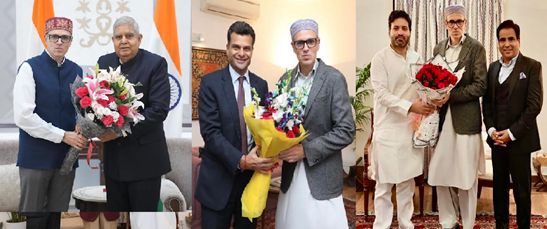
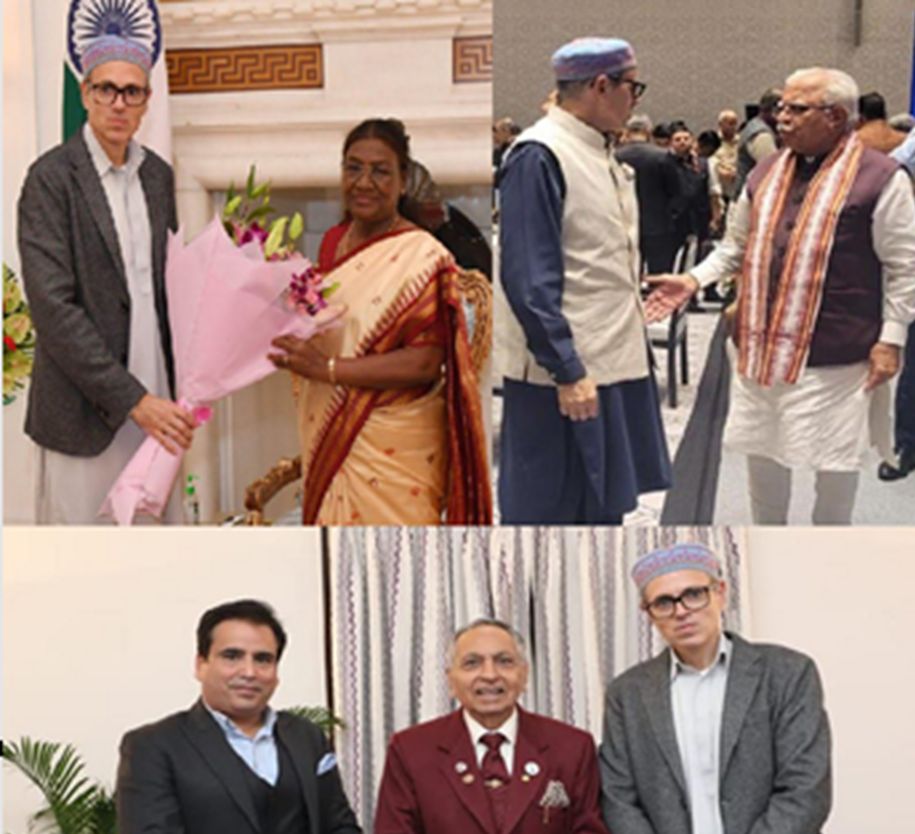
Meeting The President And Vice President: In another significant engagement, Chief Minister Omar Abdullah met President Droupadi Murmu at Rashtrapati Bhavan. The official X account of the President of India shared, “Chief Minister of Jammu and Kashmir Union Territory, Omar Abdullah called on President Droupadi Murmu at Rashtrapati Bhavan.” The Chief Minister also called on Vice President Jagdeep Dhankhar at the Vice-President’s Enclave. Acknowledging the meeting, the Vice President’s office posted on X, “Shri Omar Abdullah ji, Hon’ble Chief Minister of Jammu and Kashmir, called on Hon’ble Vice-President, Shri Jagdeep Dhankhar, at Vice-President’s Enclave today.” These meetings reinforced Jammu and Kashmir’s commitment to enhancing coordination with the central government and addressing critical governance and developmental issues.
Addressing Power Sector Challenges: Omar Abdullah actively participated in the Power Ministers’ Conference on November 12, chaired by Union Minister for Power, Manohar Lal Khattar. During the conference, the Chief Minister highlighted the challenges faced by Jammu and Kashmir.
Engagements With Industry Leaders, Officials: During his New Delhi visit, the Chief Minister also held a series of meetings at his official residence with key industry leaders and officials to explore opportunities for collaboration.
- Arjun Dhawan, Executive Vice Chairman Of Hindustan Construction Company Limited:
Discussions revolved around infrastructure development projects in Jammu and Kashmir. - Abhijit Basu, Founder& CEO of Smartex Cognitive Pvt Ltd: The two leaders explored innovative solutions in technology and smart governance for the Union Territory.
- Avinash Pawar, Deputy Manager Of Small Scale Industries Corporation Limited (NSIC): Discussions centered on supporting micro, small, and medium enterprises (MSMEs) in Jammu and Kashmir.
- Aaley Mohammad Iqbal, Deputy Mayor Of Delhi Municipal Corporation: The Chief Minister and the Deputy Mayor discussed urban development challenges and identified potential areas for collaboration.
Tourism, Agriculture, Sustainable Development: Throughout his engagements, Omar Abdullah emphasized the importance of sustainable development initiatives. He reiterated his administration’s commitment to expanding tourism infrastructure, revitalizing the agriculture sector, and addressing urban development challenges. The Chief Minister’s advocacy for inclusion under schemes like “Special Assistance to States for Capital Investment” and parity with North Eastern States for EAP loans underscores his focus on ensuring Jammu and Kashmir receives equitable support for its unique challenges and opportunities.
Significance Of The Visit: This visit marks a significant milestone in Chief Minister Omar Abdullah’s official engagements since taking office last month. It showcased his proactive approach to addressing Jammu and Kashmir’s pressing issues by engaging directly with central government leaders and industry experts. These dialogues reflect a collaborative spirit aimed at advancing the welfare and development of Jammu and Kashmir. The Chief Minister’s emphasis on leveraging multilateral funding, boosting tourism, and addressing fiscal challenges signals a clear vision for the region’s progress. As Jammu and Kashmir navigates its developmental journey, sustained coordination between the UT government and the central administration is crucial. Initiatives discussed during Omar Abdullah’s New Delhi visit must translate into actionable outcomes. Continued advocacy for policy adjustments, increased funding, and enhanced infrastructure will pave the way for holistic growth. Furthermore, promoting innovation and harnessing the potential of the region’s youth will play a key role in driving long-term progress. By focusing on strategic partnerships, sustainable practices, and inclusive growth, Jammu and Kashmir can unlock its immense potential and secure a brighter future for its people.
“Omar Abdullah’s visit to New Delhi underscores the importance of fostering strong ties between Jammu and Kashmir and the central government to address the region’s unique challenges and unlock its developmental potential. As Jammu and Kashmir transitions into a new phase of governance and growth, such visits are pivotal for reinforcing coordination, gaining essential support, and ensuring that the region’s voice is heard at the national level.”
CM Advocates Tourist-Centric Portal For Better Services: Chief Minister Omar Abdullah has proposed the creation of a dedicated feedback portal for tourists, directly linked to his office, to gather valuable insights and suggestions for enhancing tourism services in Jammu and Kashmir. The Chief Minister highlighted the need for such an initiative during a meeting with tourism officials at the Civil Secretariat in Jammu. The proposed portal aims to provide tourists with a platform to share their experiences, offering constructive feedback to refine and elevate the region’s tourism offerings. The Chief Minister underscored the importance of adopting a more sustainable and visitor-friendly approach to tourism, recognizing its immense potential to create significant employment opportunities for local youth. He emphasized that tourism, as a critical economic driver, should be developed in a manner that balances growth with environmental sustainability. In line with this vision, the Chief Minister directed officials to prioritize enhancing the overall tourist experience. He stressed the need to ensure that visitors leave with positive impressions and become ambassadors for Jammu and Kashmir as a premier travel destination. Additionally, the Chief Minister instructed the tourism department to conduct routine inspections of homestay facilities to uphold high standards of cleanliness and infrastructure. This measure is intended to maintain a welcoming and comfortable environment for tourists, reinforcing the region’s reputation for hospitality. The proposed feedback portal reflects a significant step towards improving service delivery and fostering a responsive tourism ecosystem in Jammu and Kashmir. It also aligns with the broader objective of making the region a globally competitive and sustainable tourism hub.
Kashmir Horizon View: Chief Minister Omar Abdullah’s visit to New Delhi underscores the importance of fostering strong ties between Jammu and Kashmir and the central government to address the region’s unique challenges and unlock its developmental potential. As Jammu and Kashmir transitions into a new phase of governance and growth, such visits are pivotal for reinforcing coordination, gaining essential support, and ensuring that the region’s voice is heard at the national level.
Need For Such Visits
Advocating Regional Interests: Given its distinctive geography, socio-political context, and developmental challenges, Jammu and Kashmir requires tailored policies and financial aid. High-level engagements with central leadership allow the state to advocate for its needs effectively, ensuring that its priorities are integrated into national schemes and policies.
Securing Financial Support: Addressing the fiscal gap and securing central funding is essential for the Union Territory’s budget stability. Initiatives like the “Special Assistance to States for Capital Investment” scheme and parity with North Eastern States for EAP loans could provide much-needed resources for large-scale development.
Boosting Sectoral Growth: The discussions on developing new tourism destinations, revitalizing the agriculture sector, and improving hydroelectric potential highlight the need for targeted interventions in critical sectors. These efforts aim to boost employment, improve infrastructure, and ensure sustainable growth.
Strengthening Infrastructure: Engaging with industry leaders during the visit emphasizes the need to attract investments and expertise for infrastructure development, which is crucial for improving connectivity, urban planning, and industrial growth in the region.
Follow-Up Mechanisms: The outcomes of these meetings must be translated into actionable plans. Forming dedicated task forces to monitor progress on agreements, funding proposals, and collaborative projects will ensure that discussions yield tangible results.
Institutional Reforms: The administration should focus on improving governance structures and delivery mechanisms to maximize the impact of financial aid and developmental projects. Strengthening institutions like the Jammu and Kashmir Infrastructure Development Finance Corporation can aid in efficient fund utilization.
Leverage Local Resources: Expanding tourism, hydroelectric energy, and agriculture sectors requires leveraging the region’s natural and cultural resources. Sustainable practices and innovations, supported by multilateral funding, can drive inclusive growth.
Continued Engagement: Such visits should be institutionalized as regular engagements to maintain dialogue with central ministries and key stakeholders. Regular coordination will help address emerging challenges and ensure that Jammu and Kashmir remains a priority on the national agenda. These proactive measures will foster economic resilience, unlock development opportunities, and strengthen Jammu and Kashmir’s integration into the national growth narrative.
(In commitment to continuous improvement the “Team Kashmir Horizon” invites it’s valuable readers to share their valuable feedback and suggestions with the “Team Kashmir Horizon”. The insights of readers will surely play a vital role in improving the content quality of “Kashmir Horizon” and contribute more for the empowerment of people. Please feel free to reach out to us at editor@ thekashmirhorizon.com. Team “Kashmir Horizon” eagerly anticipates thoughts and ideas of it’s readers, which will help us serve people and even more effectively. The inputs of valuable readers are highly valued as “Kashmir Horizon” strives to provide it’s readers the best possible experience. Thank you for being a part of the reader community!)