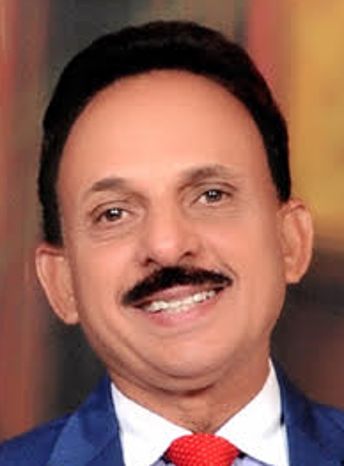
Prof R.K. Uppal
The rapid expansion of private universities in India has created new opportunities for higher education, but it has also raised serious questions about faculty welfare, academic freedom and the working conditions of professors. While private institutions frequently advertise modern infrastructure, quality education, professional courses and ambitious academic visions, the situation of many faculty members working within these institutions deserves greater attention. Professors, who are expected to develop knowledge, conduct research, publish scholarly work and prepare students for professional careers, are increasingly burdened with responsibilities that extend far beyond their academic duties. In many institutions, teaching has become only one component of a professor’s job, while administrative assignments, compliance documentation, admission campaigns and management targets consume a substantial part of their working hours.
One of the most significant concerns is the growing administrative burden imposed on teaching faculty. Professors are frequently required to prepare regulatory compliance reports, maintain accreditation records, collect institutional data, update documentation, prepare departmental files, organise events and complete numerous management-related assignments. Compliance with regulatory requirements is essential for every university, but the responsibility should be distributed among qualified administrative personnel rather than transferred almost entirely to teaching faculty. When professors spend hours preparing reports and completing paperwork, their opportunities for research, innovative teaching, curriculum development and student mentoring become severely restricted. A university cannot claim academic excellence while systematically reducing the time available for academic activities.
Another disturbing development is the increasing pressure to achieve admission targets. In several private institutions, professors are assigned specific admission responsibilities and expected to contribute to student recruitment. They may be instructed to contact prospective students, communicate with parents, visit schools, participate in promotional campaigns and generate admissions through personal networks. Admission growth is undoubtedly important for institutional sustainability, but making professors responsible for achieving unrealistic admission targets creates an unhealthy professional environment. Teaching professionals should not be evaluated primarily through the number of students they recruit. Their performance should be accessed through teaching quality, research contributions, student development, innovation and academic leadership.
The situation becomes more challenging when high admission targets are combined with low salaries. Faculty members with postgraduate qualifications, Ph.D. degrees, research experience and years of teaching service are sometimes offered compensation that does not adequately reflect their qualifications and responsibilities. They are expected to perform multiple jobs, remain available beyond regular working hours and accept additional assignments without corresponding financial benefits. This imbalance between workload and remuneration raises serious concerns about fairness and professional dignity. Institutions that demand exceptional performance must also demonstrate a commitment to fair compensation and reasonable working conditions.
“The article examines the growing exploitation of professors in private universities through low salaries, excessive administrative responsibilities, demanding compliance work, unrealistic admission targets and management pressure. It highlights the erosion of academic freedom, declining faculty morale and the urgent need for fair remuneration, professional dignity and better working conditions in higher education.”
The consequences of this working culture extend beyond individual professors. Excessive administrative duties and admission-related pressure reduce the time available for research and innovation. Faculty members who could contribute to scholarly publications, funded research projects, patents, consultancy assignments and interdisciplinary collaborations are compelled to devote their energy to routine institutional work. Young researchers may lose motivation, while experienced academics may become dissatisfied with the profession. Ultimately, students also suffer because teachers who are continuously occupied with non-academic responsibilities cannot devote sufficient attention to classroom interaction, individual mentoring and practical learning.
There is an urgent need for a more balanced and transparent system of university administration. Private universities should establish clear job descriptions, fair salary structures, reasonable workload norms and appropriate administrative support systems. Compliance documentation should primarily be managed by specialized administrative departments, while faculty members should provide academic information relevant to their disciplines. Admission targets, wherever necessary, should be realistic, transparent and consistent with the professional responsibilities of teachers. Faculty evaluation must give appropriate importance to teaching quality, research, publications, innovation, student mentoring and institutional development rather than treating admission generation as the principal measure of performance.
Regulatory authorities, including the University Grants Commission and other relevant bodies, should pay greater attention to the actual working conditions of faculty members. Monitoring should extend beyond infrastructure, enrolment and regulatory documentation to include salary practices, contractual arrangements, faculty workload and opportunities for academic development. Universities must understand that faculty welfare is not an optional management benefit; it is an essential condition for maintaining educational quality.
Private universities have an important role in expanding access to higher education, promoting innovation and developing skilled human resources. However, commercial sustainability must not become an excuse for exploiting qualified academic professionals. A professor is not merely an employee responsible for completing management assignments or achieving admission figures. A professor is an intellectual leader whose contribution shapes the future of students, institutions and society. The real strength of a university lies not in the number of admissions it generates or the volume of compliance reports it prepares, but in the quality of education, research and human development it delivers. If private universities genuinely aspire to academic excellence, they must replace excessive managerial pressure with professional trust, replace exploitation with fair compensation and replace unrealistic targets with a supportive academic environment. Professors deserve dignity, security, recognition and the freedom to perform their fundamental responsibility: educating and inspiring the next generation.
(The author is Principal, Guru Gobind Singh College of Management and Technology, Gidderbaha, Punjab. The views, opinions and conclusions expressed in this article are those of the author and aren’t necessarily in accord with the views of “Kashmir Horizon”)