Introduction: Artificial Intelligence (AI) represents one of the most significant developments in contemporary human civilisation. Its extraordinary capacity to collect, process, analyse and retrieve enormous quantities of information has created unprecedented opportunities in education, scientific research, medicine, economics, governance, law and almost every sphere of human activity. It can examine complex subjects, compare intellectual positions, identify patterns and perform tasks that would otherwise require considerable human effort and time. There is every reason to welcome its beneficial applications and employ them constructively. However, its advancement also raises fundamental philosophical and ethical questions: Can the ability to process information be equated with wisdom? Can a machine genuinely understand the realities behind the information it produces? And can it assume moral responsibility for the consequences of its actions? The essential distinction is that AI can process information, whereas the attainment of wisdom in the human soul involves reflection, consciousness, experience, moral discernment and ethical responsibility. Computational intelligence and human wisdom are not necessarily identical.
Human Wisdom And The Responsibility Of Khilafah: The Qur’anic concept of Khilafah provides an important framework for understanding the relationship between human beings, knowledge, technology and responsibility. Allah declares: “Indeed, I am placing upon the earth a Khalifah.” (Al-Baqarah 2:30). Human beings are entrusted with the responsibility of establishing justice, protecting life, preserving dignity, promoting goodness and using the resources of creation responsibly. Khilafah signifies trusteeship and accountability under the guidance of Allah. It does not confer unrestricted authority; rather, it makes human beings answerable for the manner in which they exercise their knowledge and power. Consequently, technological advancement must remain subject to the moral responsibilities associated with Khilafah. AI should assist humanity in fulfilling its responsibilities, not become an independent authority over human judgment. It may process knowledge, analyse information and facilitate action, but ethical discernment and moral accountability must remain with human beings. In the Islamic intellectual tradition, Hikmah signifies more than the possession of information. It involves the appropriate and morally informed application of knowledge. A machine may generate sophisticated arguments or describe compassion, justice and spirituality, but such outputs do not establish that it possesses human consciousness, spiritual experience or moral responsibility. Whether machines can experience consciousness or imagination in the human sense remains an important philosophical and scientific question.
Islam, Knowledge And Technological Advancement: Islam encourages knowledge, scientific discovery and intellectual inquiry. The first Qur’anic revelation begins with the command: “Read in the name of your Lord who created.” (Al-Alaq 96:1). The significance of this command extends beyond reading written material. It establishes an orientation towards inquiry, observation, reflection and understanding creation. Islamic civilisation historically engaged with Greek philosophy, Indian mathematics, Persian knowledge and other intellectual traditions, critically examining and incorporating beneficial contributions. This intellectual openness should guide our engagement with AI. We should neither reject something merely because it is new nor accept everything simply because it is technologically advanced. Whatever is beneficial in contemporary developments should be welcomed, while their limitations and ethical consequences must be critically examined. We should preserve the valuable achievements of the past while remaining receptive to the possibilities of the future. The development of medicine illustrates how knowledge advances through observation, experimentation and experience. Similarly, the implications of AI must be understood through informed engagement, practical application and critical assessment. Its capabilities should be appreciated without overlooking the dangers associated with its misuse.
AI As An Instrument Of Research And Education: AI offers remarkable opportunities for academic research. It can assist scholars in examining classical manuscripts, searching Qur’anic commentaries, comparing philosophical arguments, retrieving jurisprudential opinions, analysing historical records and organising extensive research material. It can also facilitate scientific discovery and interdisciplinary investigations. However, researchers must verify AI-generated information, examine references, question assumptions and independently evaluate conclusions. Students should not become passive recipients of machine-generated arguments. Research involves intellectual curiosity, critical examination, original thinking and responsibility for one’s conclusions. Universities must therefore integrate AI literacy with critical thinking, ethical awareness, academic integrity and independent scholarship. The objective should be to make technology an instrument for strengthening human intellectual capabilities rather than weakening them.
“While Artificial Intelligence offers transformative benefits across fields like education, governance, and Islamic jurisprudence, its use must remain anchored in human wisdom and ethical consciousness. Humans must retain independent judgment and moral accountability rather than surrendering their intellectual independence to machines. Ultimately, as stewards (Khalifah) answerable to Allah, humanity’s primary challenge is not just building smarter technology, but cultivating the wisdom and responsibility required to govern it ethically.”
AI And The Future Of Islamic Jurisprudence: The implications of AI for Islamic jurisprudence are particularly significant. It can assist scholars in examining classical Fiqh literature, comparing different schools of thought, tracing legal arguments and investigating contemporary questions relating to biotechnology, digital currencies, privacy, surveillance, intellectual property and autonomous technologies. It can also facilitate collective Ijtihad by bringing together relevant information from different disciplines. Nevertheless, Islamic jurisprudence cannot be reduced to retrieving a textual opinion and mechanically applying it to a contemporary situation. It requires knowledge of the Qur’an and Sunnah, Usul al-Fiqh, an understanding of changing circumstances and consideration of the objectives of Shariah. Maqasid al-Shariah, particularly the preservation of religion, life, intellect, lineage and property, provides an essential framework for assessing technological developments. Questions of justice, human dignity, privacy, public welfare and the prevention of harm must also inform such assessments. AI may retrieve and compare different juristic opinions, but determining their appropriate application requires qualified human scholarly judgment. It can assist Ijtihad and facilitate research for Fatwa, but religious authority and responsibility must remain with qualified scholars and recognised institutions. Islamic jurisprudence must therefore engage proactively with AI rather than remain detached from technological developments.
Human Accountability and The Limits of Artificial Intelligence: One of the most important questions concerns accountability. If an AI system produces incorrect information, makes a faulty recommendation, causes financial loss or contributes to an accident, who is responsible? The Qur’an states: “No bearer of burdens shall bear the burden of another.” (Al-An’am 6:164). Islamic moral accountability is associated with human agency, intention, capacity and responsibility. An AI system may execute an operation or generate a recommendation, but it cannot simply be treated as an independently accountable human moral agent. Consider an autonomous vehicle that causes an accident. Responsibility cannot automatically be attributed either to the machine or its passenger. It requires examining the design, testing, maintenance, software limitations, negligence, supervision and circumstances of the incident. Manufacturers, developers, operators and institutions must be held accountable according to their respective responsibilities and applicable legal principles. The same applies to AI in medicine, finance, education and governance. Technological complexity must never become an excuse for escaping responsibility. Human oversight and clearly defined accountability are therefore indispensable.
Ethical Challenges And Independent Judgment: AI also presents dangers relating to privacy, surveillance, misinformation, discrimination, manipulation and economic inequality. Algorithms may reproduce existing prejudices or generate unjust outcomes. Their apparent neutrality should not be mistaken for genuine impartiality. The Islamic principles of Adl (justice), Amanah (trustworthiness), Maslahah (public welfare) and the prevention of harm provide an important ethical framework for evaluating these developments. Another serious concern is intellectual dependency. If students, researchers and institutions accept AI-generated conclusions without questioning or verification, independent thinking may gradually weaken. The Qur’anic concepts of reflection, contemplation and reasoning remind us that knowledge must involve active intellectual engagement. AI should strengthen human judgment, not replace it. We must use it to explore possibilities while retaining the responsibility to distinguish truth from error, benefit from harm and technical efficiency from moral appropriateness.
Conclusion: Artificial Intelligence is transforming almost every dimension of human existence, and its implications for education, research, governance, economics and Islamic jurisprudence will continue to expand. We should welcome its beneficial contributions and employ it to advance knowledge and human welfare. However, technological progress must remain guided by human wisdom, ethical consciousness and the responsibilities of Khilafah. The fundamental principle is that AI may process information, analyse knowledge, generate possibilities and assist action, but human beings must retain independent judgment, ethical discernment and moral accountability. We should make machines more capable without making human beings less thoughtful, embrace technological advancement without compromising intellectual independence, and benefit from computational intelligence without surrendering our moral responsibilities. As Khalifah, human beings remain answerable to Allah for the knowledge and power entrusted to them. The real challenge of the AI age is therefore not merely to develop increasingly intelligent machines, but to ensure that humanity remains sufficiently wise and ethically responsible to govern their use. Technology must advance, but human wisdom must guide it. AI may assist human action, but judgment and moral responsibility must remain with human beings.
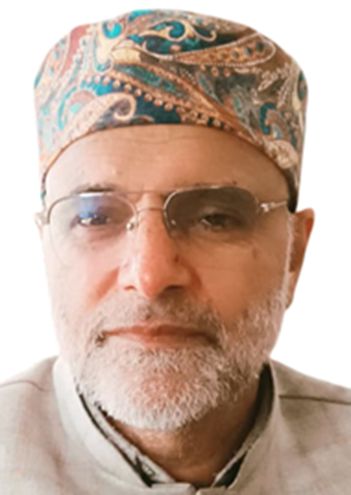
(The author a veteran academician is a former Professor and Head Department of Islamic Studies, Kashmir University. The views, opinions and conclusions expressed in this article are those of the author and aren’t necessarily in accord with the views of “Kashmir Horizon”)