The history of human civilisation cannot be understood adequately without recognising the remarkable contributions of Muslim scholars, scientists, physicians, mathematicians, engineers, philosophers, and artists. Between the eighth and fifteenth centuries, the Islamic world emerged as a major centre of intellectual activity. Baghdad, Damascus, Cairo, Córdoba, Bukhara, and Samarkand became important centres of learning where scholars preserved, critically examined, and extended the intellectual legacies of earlier civilisations. Their engagement with Greek, Persian, Indian, and Syriac traditions helped create an interconnected intellectual heritage that influenced Europe, Asia, and beyond. Mathematics provides one of the clearest examples of these achievements. Muhammad ibn Musa al-Khwarizmi made foundational contributions to algebra and computational methods. The word algebra derives from the Arabic term al-jabr, while algorithm ultimately derives from a Latinised form of his name. Muslim mathematicians advanced arithmetic, geometry, and trigonometry, applying mathematical knowledge to astronomy, commerce, architecture, inheritance, and navigation. Their work helped transmit Indian numerical methods into wider intellectual networks and contributed to the development of mathematics across different civilisations. In optics, Ibn al-Haytham transformed the understanding of vision through his influential Kitab al-Manazir, or Book of Optics.
Challenging earlier theories that sight resulted from rays emitted by the eyes, he explained vision through light entering the eye. His investigations into reflection, refraction, and visual perception combined mathematical reasoning with observation and experimentation. His work influenced later European scholarship and remains an important milestone in the history of scientific inquiry. His intellectual legacy demonstrates the importance of questioning established assumptions through systematic investigation. Medicine and surgery also flourished in Islamic societies. Abu Bakr al-Razi contributed significantly to clinical medicine, while Ibn Sina’s Canon of Medicine became an influential medical reference in Islamic lands and European universities. Al-Zahrawi’s encyclopaedia, Al-Tasrif, documented surgical procedures and instruments, influencing later medical practice.
Ibn al-Nafis made an important contribution to anatomical knowledge through his explanation of pulmonary circulation. These achievements formed part of a wider medical tradition involving hospitals, pharmacies, clinical observation, pharmacology, and the systematic organisation of knowledge. Engineering represented another important field of innovation. Al-Jazari’s thirteenth-century Book of Knowledge of Ingenious Mechanical Devices described water-raising machines, mechanical clocks, automata, and mechanisms employing gears, valves, and pistons. His work demonstrated sophisticated practical engineering and imaginative design. Although it would be misleading to identify him as the sole inventor of modern robotics, his achievements occupy an important place in the history of automation and mechanical technology.
Astronomy developed considerably through sustained observation and mathematical investigation. Muslim astronomers constructed instruments, prepared astronomical tables, refined calculations, and examined inherited planetary models. Their work supported navigation, calendrical calculations, timekeeping, and determining the direction of the qiblah. Al-Battani improved astronomical calculations, while Nasir al-Din al-Tusi contributed to mathematical astronomy.
The observatory established under Ulugh Beg at Samarkand became a major centre of astronomical research. These achievements demonstrate the continuity of scientific inquiry across generations. Muslim philosophers likewise influenced metaphysics, logic, ethics, psychology, and the philosophy of religion. Al-Kindi, al-Farabi, Ibn Sina, and Ibn Rushd critically engaged with Greek philosophy, interpreting inherited ideas within new intellectual contexts. Their writings explored existence, causation, the soul, morality, and the relationship between reason and revelation. Ibn Rushd’s Aristotelian commentaries influenced European scholasticism through Latin translations. Their intellectual achievements reveal a tradition characterised by debate, critical interpretation, and original philosophical reflection.
“Muslim civilization’s intellectual legacy is best honored through rigorous scholarship that recognizes its original discoveries, critical synthesis of global knowledge, and cross-cultural institutions. Its history proves that scientific inquiry and religious faith can coexist, showing that knowledge thrives on open, critical curiosity and contributes to humanity’s shared progress.”
The translation movement associated with Abbasid Baghdad helped preserve and extend Greek scientific and philosophical literature. Scholars translated works into Arabic, compared competing theories, corrected calculations, and developed new approaches. Indian mathematical knowledge and Persian intellectual traditions also enriched this environment. Arabic consequently became an important language of scientific communication, enabling scholars from diverse backgrounds to participate in a shared intellectual culture. This process demonstrates that scientific progress frequently emerges through intercultural cooperation rather than isolated invention.
Muslim societies also contributed to technological transmission, commerce, architecture, and the arts. Paper-making, originally developed in China, spread westward through Central Asia and the Islamic world, encouraging manuscript production, libraries, administration, and scholarship. Indian numerical methods circulated through Arabic mathematical works. Merchants operating across the Mediterranean, Indian Ocean, and Silk Road connected distant regions through trade, credit, contracts, and commercial practices. These networks facilitated the movement of scientific instruments, agricultural products, technical skills, and intellectual ideas. Coffee illustrates the complexity of historical attribution. Although popular legends describe an Arab goat herder discovering coffee, the story lacks secure historical documentation.
Ethiopia was the plant’s place of origin, while Yemen played an important role in coffee cultivation and consumption before coffee culture spread through the Ottoman world into Europe. Similarly, early windmills are associated with Sistan by approximately the tenth century, although claims of a first windmill constructed in 634 remain uncertain. Abbas ibn Firnas is remembered for an attempted flight, but precise accounts of its duration cannot be established confidently. Medical knowledge also travelled between cultures. Variolation, an early method of smallpox prevention involving exposure to material from smallpox lesions, was practised in several Asian and African societies. Ottoman practitioners helped transmit knowledge of the procedure to Britain, notably through Lady Mary Wortley Montagu in the eighteenth century. Variolation differed from cowpox vaccination, which Edward Jenner demonstrated in 1796. This history exemplifies the gradual development of medical knowledge through observation, transmission, and experimentation across societies.
Islamic architecture, gardens, textiles, ceramics, and decorative arts further enriched world culture.
Geometric ornamentation, calligraphy, courtyards, domes, and water features became distinctive elements of Islamic artistic traditions. Architectural influences circulated through trade, travel, and cultural contact, although individual features often emerged through interactions among several traditions. Literature, music, cuisine, and commercial practices likewise developed through exchanges among Arabic, Persian, Turkish, African, European, and other cultures. The contributions of Muslim civilisation should therefore be celebrated through rigorous scholarship rather than exaggerated claims of exclusive invention. Its significance lies in original discoveries, critical engagement with inherited knowledge, sophisticated institutions, and networks connecting diverse intellectual traditions. The history demonstrates that scientific inquiry and religious civilisation need not be incompatible. Knowledge flourishes through curiosity, observation, experimentation, and intellectual openness. By acknowledging both documented achievements and intercultural influences, we can appreciate Muslim civilisation as an essential part of humanity’s shared intellectual heritage and recognise that knowledge advances most meaningfully when pursued sincerely, examined critically, and directed towards the common good.
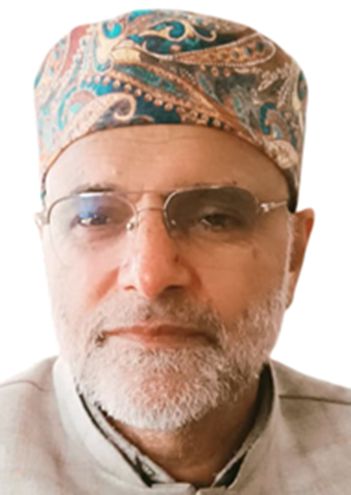
(The author a veteran academician is a former Professor and Head Department of Islamic Studies, Kashmir University. The views, opinions and conclusions expressed in this article are those of the author and aren’t necessarily in accord with the views of “Kashmir Horizon”)
[email protected]