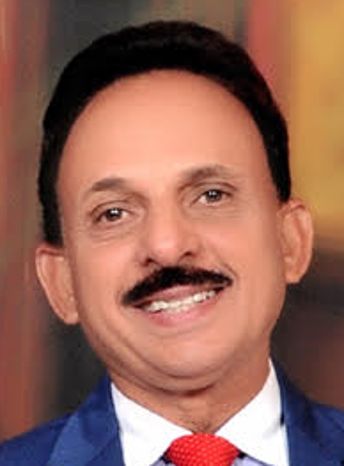
Prof R.K. Uppal
The rapid expansion of private higher education in India has brought significant changes in the way universities manage their campuses and employees. Technology has undoubtedly improved administration, security, attendance management and institutional efficiency. CCTV cameras, biometric attendance systems, access-control devices, computer monitoring and digital reporting systems can serve legitimate purposes. However, when these technologies are used excessively to monitor employees, a serious workplace problem emerges: the culture of surveillance begins to replace the culture of trust.
In many private universities, employees increasingly feel that they are being watched, tracked and evaluated at every moment. CCTV cameras cover classrooms, corridors, offices and common areas. Biometric systems record attendance and movement. Digital platforms monitor work-related activities, while frequent reporting requirements place additional pressure on faculty and administrative staff. When monitoring becomes excessive, employees may begin to feel that management does not trust their professionalism, commitment or integrity.
This constant surveillance can have a direct impact on employee morale. A teacher who feels continuously watched may become more cautious and less creative. Instead of concentrating fully on teaching, research, mentoring and student development, employees may become preoccupied with attendance records, reporting procedures and avoiding administrative scrutiny. The workplace gradually shifts from an environment of professional responsibility to one dominated by fear and compliance.
Excessive surveillance can also damage creativity. Innovation requires freedom to experiment, question established practices and develop new approaches. If employees believe that every movement or interaction could be judged negatively, they may avoid taking risks. The result can be a rigid organizational culture in which employees do only what is officially required rather than what is academically valuable.
Another major concern is psychological pressure. Continuous monitoring can create a feeling of being under suspicion. Employees may feel that management is searching for mistakes rather than recognizing achievements. Over time, such an atmosphere can contribute to frustration, disengagement and declining job satisfaction. A university may have sophisticated infrastructure, but if its employees are unhappy and demoralized, institutional performance will ultimately suffer.
Private universities should therefore distinguish between security monitoring and employee surveillance. CCTV for campus safety is understandable. Biometric attendance may be necessary for certain administrative purposes. Digital systems can improve efficiency. But technology should not become an instrument for unnecessary micromanagement or intimidation.
Management must establish clear policies governing surveillance. Employees should know what information is being collected, why it is being collected, who can access it and how long it will be retained. Monitoring should have a legitimate institutional purpose and should be proportionate to that purpose. Transparency is essential if universities want employees to accept technological monitoring without feeling threatened by it.
“The future of higher education should not be built around “watch more, control more.” It should be built around “trust more, motivate more and perform better.” Employees who feel respected are more likely to contribute ideas, take responsibility and remain committed to their institutions. Ultimately, the strongest university is not the one with the most cameras or the most sophisticated tracking system. It is the one where employees perform because they are motivated, respected and trusted. Private universities must move away from a culture of constant surveillance and toward a culture of professional accountability, dignity and mutual trust. Otherwise, excessive monitoring may achieve administrative control—but at the cost of employee morale, creativity and long-term institutional performance.”
There is also a need for stronger institutional leadership. University administrators should understand that employees are not merely resources to be controlled. Teachers, researchers, administrators and support staff are human beings whose dignity and professional identity matter. A healthy university culture is built through communication, participation, recognition and accountability—not through cameras and constant digital observation.
Performance evaluation should focus primarily on outcomes rather than surveillance. For faculty members, meaningful indicators can include teaching quality, student learning, research contributions, academic innovation, mentoring, institutional responsibilities and community engagement. Simply measuring whether an employee is physically present at a particular location cannot provide a complete picture of professional performance.
Universities must also recognize the difference between accountability and control. Accountability is necessary in every institution. Employees must meet responsibilities, follow rules and maintain professional standards. But accountability should be based on clearly defined expectations and fair evaluation. Control through excessive monitoring creates compliance, while trust creates commitment.
The private university sector is increasingly competing for talented teachers and administrators. Institutions that create stressful and distrustful workplaces may find it difficult to attract and retain high-quality professionals. Talented employees want opportunities to grow, conduct research, exercise professional judgment and contribute meaningfully to institutional development. They do not want to work in an environment where every movement is treated as something requiring surveillance.
The irony is that universities are expected to prepare young people for a future driven by creativity, critical thinking, innovation and entrepreneurship. Yet if their own employees are working in environments dominated by excessive monitoring, institutions are sending the opposite message. A university cannot effectively teach freedom of thought while creating a workplace culture based on constant suspicion.
The answer is not to eliminate technology from universities. Rather, the objective should be to use technology responsibly. Surveillance systems should support safety, administration and accountability without undermining employee dignity. There must be a balance between institutional requirements and individual privacy, between accountability and autonomy, and between monitoring and trust. Private universities should therefore ask themselves a fundamental question: Are we using technology to improve performance—or are we using technology because we do not trust our employees? If the answer is the latter, the problem cannot be solved by installing more cameras, biometric machines or tracking systems. It requires a change in management philosophy.
(The author is Principal, Guru Gobind Singh College of Management and Technology, Gidderbaha, Punjab. The views, opinions and conclusions expressed in this article are those of the author and aren’t necessarily in accord with the views of “Kashmir Horizon”)
[email protected]