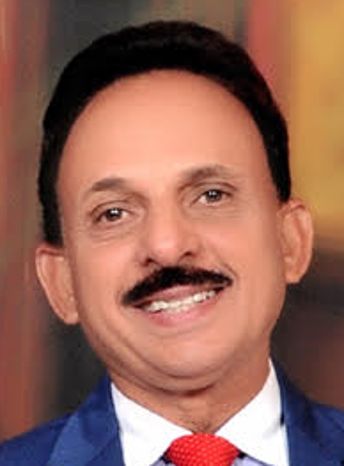
Prof R.K. Uppal
A PhD is supposed to represent the highest level of academic achievement. It should demonstrate originality, intellectual independence, rigorous research, and the ability to contribute new knowledge to society. Yet, in many private universities, concerns are increasingly being raised about the quality of doctoral education. When doctoral degrees become primarily a source of revenue rather than a rigorous process of research and discovery, the very meaning and value of a PhD is put at risk. The problem is not that private universities exist. Many private institutions have made valuable contributions to higher education, created modern infrastructure, introduced new programmes, and supported research. The concern is about those institutions where commercial considerations begin to dominate academic standards. A university cannot become a degree-producing factory while calling itself a centre of knowledge.
When Quantity Overtakes Quality: One of the biggest concerns is the emphasis on increasing the number of Ph D admissions rather than ensuring the quality of doctoral research. A strong PhD system should begin with a carefully designed admission process. Candidates should be selected on the basis of academic merit, research aptitude, subject knowledge, and the potential to undertake meaningful research. If admissions become primarily target-driven, doctoral education can gradually lose its academic character. More scholars may enter programmes, but the number of genuinely impactful research projects may not increase correspondingly. A PhD should never be treated as merely another qualification to be added to a résumé. It requires years of disciplined research, critical thinking, data analysis, experimentation where appropriate, scholarly writing, and engagement with existing literature.
The Supervisor Is Central To Quality: The quality of a PhD is closely connected to the quality of supervision. A doctoral supervisor should be a researcher, mentor, academic guide, and intellectual partner. Supervisors must have sufficient expertise and time to guide scholars properly. Unfortunately, where universities expand doctoral admissions rapidly without strengthening their research ecosystem, supervisors may become overloaded. Excessive numbers of scholars under one supervisor can weaken individual mentoring. Research scholars may receive limited guidance, infrequent academic interaction, and inadequate feedback on their work. Universities must therefore ensure that supervisors are appointed and allocated scholars strictly within appropriate academic and regulatory limits. A PhD cannot be mass-produced.
The Danger Of Superficial Research: Another serious concern is the production of research that adds little or nothing to existing knowledge. A doctoral thesis should answer an important research question and demonstrate a clear contribution. Copying established ideas, repeating earlier studies without meaningful improvement, using weak methodologies, or producing lengthy theses without substantial findings undermines doctoral education.
Publications Must Have Academic Value: The pressure to publish can also create problems. Research scholars should be encouraged to publish in credible, peer-reviewed journals. However, publication should be a consequence of good research—not the sole objective of doctoral education. The growth of questionable journals, predatory publishing practices, superficial conferences, and pay-to-publish models can damage research credibility. Universities must develop strong mechanisms to distinguish genuine scholarly publications from outlets that provide little meaningful academic scrutiny. The quality of research should always be more important than the number of papers.
“India does not need more PhDs simply for the sake of numbers. It needs better PhDs that solve real problems, create new knowledge, strengthen industry and society, and contribute to national development. If private universities want to become globally respected institutions, they must move decisively from degree production to knowledge creation. The future of Indian higher education depends not on how many PhDs we award, but on how much meaningful knowledge those PhDs create.”
Commercialization Must Not Control Doctoral Education: Higher education requires financial resources, and private universities naturally need sustainable revenue models. But doctoral education occupies a special position because it directly influences the future of research and innovation. When financial considerations become more important than academic standards, several risks emerge: weak admissions, inadequate supervision, poorly designed research projects, insufficient laboratory or research facilities, and pressure to complete degrees without adequate scholarly contribution. A PhD should never be understood as a product that can simply be purchased through fees and completed through procedural compliance.
Strengthening PhD Admissions: The first step toward improvement is transparency. Universities should clearly publish their PhD admission criteria, entrance examination procedures, interview mechanisms, available research areas, supervisor profiles, and number of seats. Selection should be merit-based and transparent. Research proposals should be evaluated seriously rather than treated as formal paperwork. Doctoral scholars should also have access to proper libraries, databases, laboratories where required, statistical and methodological support, research seminars, and opportunities to interact with researchers outside their institution.
External Evaluation Is Essential: A university should not be the only institution judging the quality of its own doctoral degrees. External experts should play an important role in evaluating doctoral theses. Independent external examiners can provide an objective assessment of whether the thesis represents genuine doctoral-level research. Universities should also strengthen plagiarism checks, research ethics committees, data-quality requirements, and mechanisms for investigating academic misconduct. Academic freedom must be protected, but academic freedom must also be accompanied by academic responsibility.
AI Creates A New Challenge: Artificial intelligence is transforming research and education. AI can assist researchers with literature discovery, language improvement, coding, data analysis, and other legitimate research tasks. But excessive dependence on AI can undermine the intellectual foundation of doctoral education. A PhD scholar must demonstrate independent understanding of the research problem, methodology, evidence, and conclusions. Universities should therefore develop clear policies for responsible AI use rather than allowing AI-generated content to substitute for original scholarship. The future PhD must be AI-aware but intellectually independent.
From Degree Production To Knowledge Creation: The central question for every private university should be simple: Is the institution producing PhD degrees, or is it producing new knowledge?. India needs universities that generate patents, technologies, innovative business models, policy solutions, social innovations, and internationally respected research. The country cannot build a knowledge economy by simply increasing the number of doctoral degrees. The PhD must regain its prestige through quality, originality, integrity, and impact. Private universities have an important role in India’s higher-education system, but that role comes with responsibility. Management must understand that academic quality cannot be sacrificed for short-term financial gains. Faculty must be given adequate research support and academic freedom. Supervisors must be held accountable for genuine mentoring. Scholars must be selected on merit and trained rigorously. Ultimately, a PhD should be a symbol of discovery—not merely a certificate of completion.
(The author is Principal, Guru Gobind Singh College of Management and Technology, Gidderbaha, Punjab. The views, opinions and conclusions expressed in this article are those of the author and aren’t necessarily in accord with the views of “Kashmir Horizon”)
[email protected]